School of Management, Zhejiang University, Hangzhou, China.
Neuromanagement Lab, Zhejiang University, Hangzhou, China.
Sci Rep. 2020 Oct 27;10(1):18304. doi: 10.1038/s41598-020-75343-8.
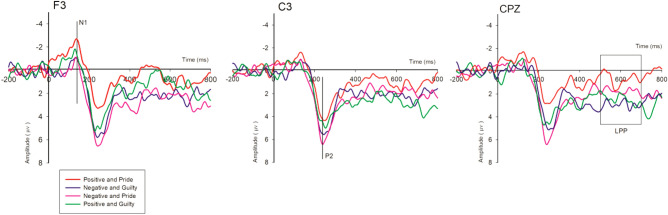
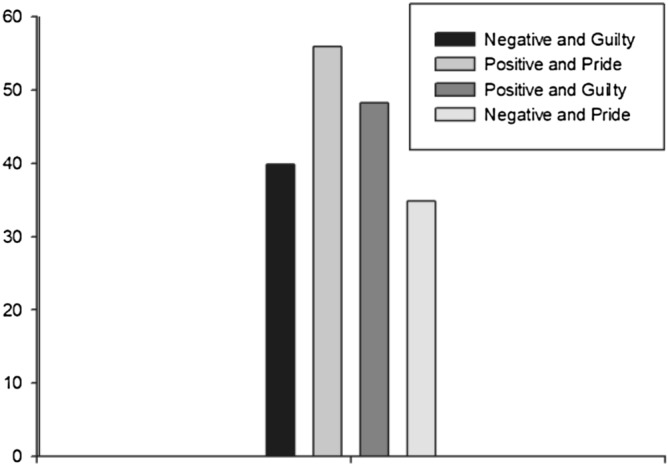
Message framing plays an important role in advertising strategies and has been studied from various perspectives in different behavioral researches. In this study Event Rated Potentials technique helped to examine the neural mechanism of message framing effect on self-conscious emotions of pride and guilt regarding consumer purchase intention in the context of green marketing. Behavioral results showed that participants ranked higher on positive framing compared to negative framing. ERP results declared that N1 component was elicited by positive framed message with emotion of pride and guilt, reflecting use of attentional resources to acquire potential benefits at first stage of processing emotional information. At the second stage P2 was higher for negative framing containing pride and guilt slogan, showing more attention towards processing emotional information about potential loss. At the third stage LPP component portray that both positive and negative framing is supported by guilt emotion when processing emotional information in decision making. Our results delivered strong evidence that how purchase intention can be mediated by message framing under the pride and guilt emotions in the context of green marketing.
信息框架在广告策略中起着重要作用,不同的行为研究从不同的角度对其进行了研究。在这项研究中,事件相关电位技术有助于研究信息框架对绿色营销中消费者购买意向的自我意识情绪(自豪和内疚)的神经机制。行为结果表明,与负面框架相比,参与者对正面框架的评价更高。ERP 结果表明,带有自豪和内疚情绪的正面框架消息引发了 N1 成分,反映了在处理情绪信息的初始阶段利用注意力资源来获取潜在利益。在第二阶段,包含自豪和内疚标语的负面框架的 P2 更高,表明对潜在损失的情绪信息处理更加关注。在第三阶段,LPP 成分表明,在绿色营销中处理决策中的情绪信息时,正面和负面框架都得到了内疚情绪的支持。我们的研究结果有力地证明了在绿色营销中,在自豪和内疚情绪的影响下,信息框架如何能够调节购买意向。