Holt Andrew M, Throckmorton Thomas W
Campbell Clinic, Department of Orthopaedic Surgery and Biomedical Engineering, University of Tennessee, Memphis, Tennesse.
J Shoulder Elb Arthroplast. 2019 Dec 30;3:2471549219897661. doi: 10.1177/2471549219897661. eCollection 2019.
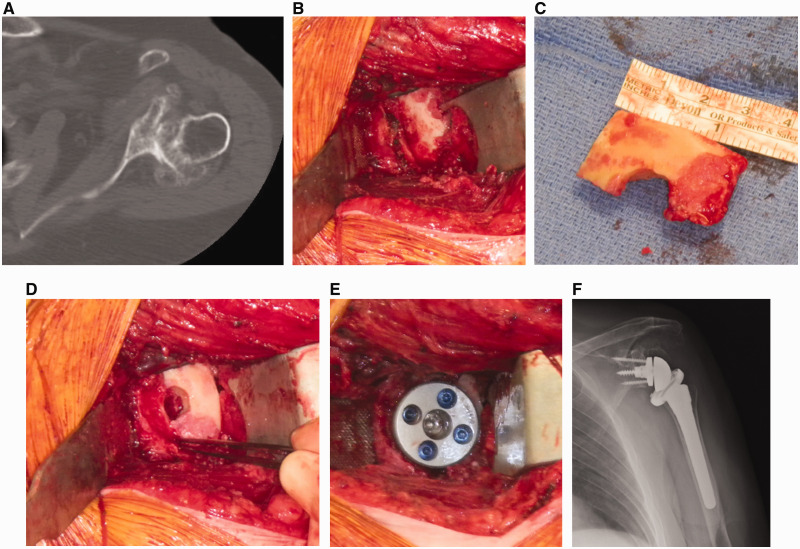
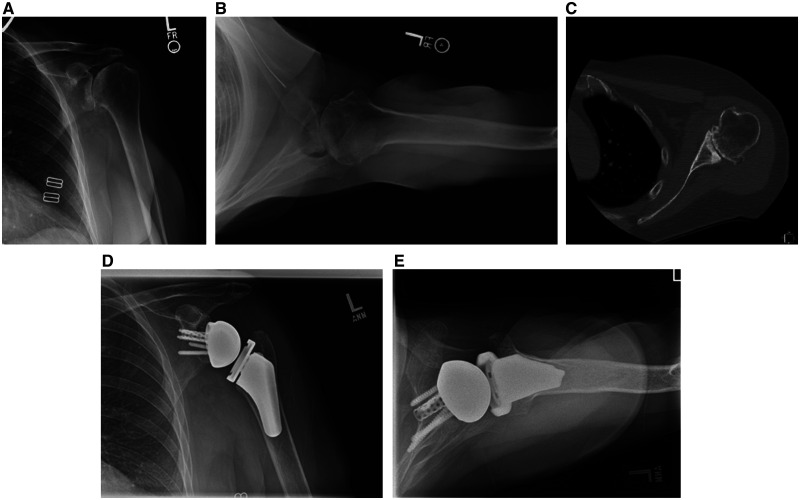
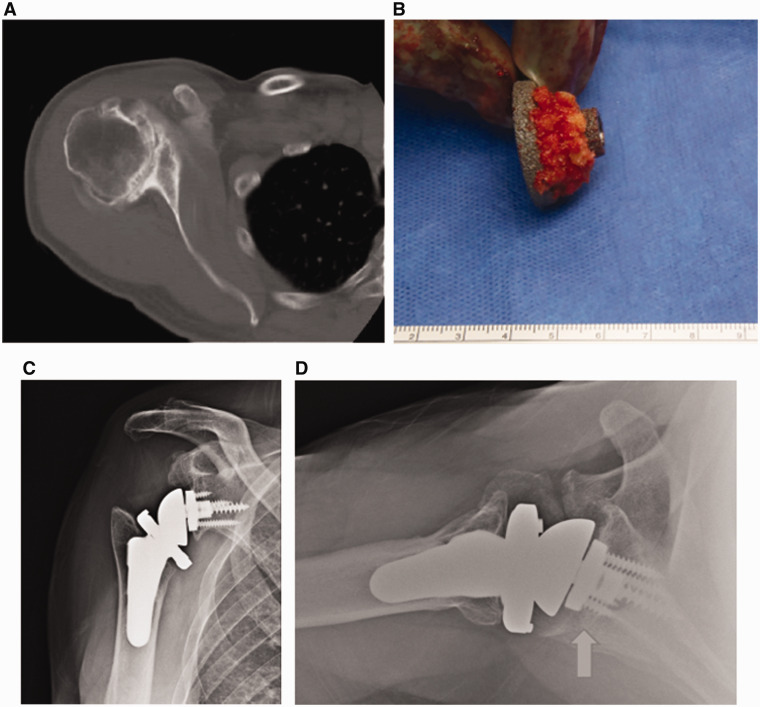
In shoulder osteoarthritis, the B2 glenoid presents challenges in treatment because of the excessive retroversion and posterior deficiency of the glenoid. Correction of retroversion and maintenance of a stable joint line with well-fixed implants are essential for the successful treatment of this deformity with arthroplasty. Reverse shoulder arthroplasty offers several key advantages in achieving this goal, including favorable biomechanics, a well-fixed baseplate, and proven success in other applications. Techniques such as eccentric reaming, bone grafting, and baseplate augmentation allow surgeons to tailor treatment to the patient's altered anatomy. Eccentric reaming is favored for correction of small defects or mild version anomalies. Current trends favor bone grafting for larger corrections, though augmented components have shown early promise with the potential for expanded use. With overall promising results reported in the literature, reverse shoulder arthroplasty is a useful tool for treating older patients with B2 glenoid deformities.
在肩关节骨关节炎中,B2型肩胛盂因其过度后倾和后方缺损而给治疗带来挑战。通过植入固定良好的假体来纠正后倾并维持稳定的关节线,对于通过关节成形术成功治疗这种畸形至关重要。反式肩关节置换术在实现这一目标方面具有几个关键优势,包括良好的生物力学性能、固定良好的基板以及在其他应用中已证实的成功。诸如偏心扩孔、植骨和基板增强等技术使外科医生能够根据患者改变的解剖结构调整治疗方案。偏心扩孔更适合于纠正小的缺损或轻度的形态异常。目前的趋势是对于较大的矫正倾向于植骨,尽管增强型假体已显示出早期前景并有扩大应用的潜力。鉴于文献报道的总体结果很有前景,反式肩关节置换术是治疗患有B2型肩胛盂畸形的老年患者的一种有用工具。