• 文献检索
  • 文档翻译
  • 深度研究
  • 学术资讯
  • Suppr Zotero 插件Zotero 插件
  • 邀请有礼
  • 套餐&价格
  • 历史记录
应用&插件
Suppr Zotero 插件Zotero 插件浏览器插件Mac 客户端Windows 客户端微信小程序
定价
高级版会员购买积分包购买API积分包
服务
文献检索文档翻译深度研究API 文档MCP 服务
关于我们
关于 Suppr公司介绍联系我们用户协议隐私条款
关注我们

Suppr 超能文献

核心技术专利:CN118964589B侵权必究
粤ICP备2023148730 号-1Suppr @ 2026

文献检索

告别复杂PubMed语法,用中文像聊天一样搜索,搜遍4000万医学文献。AI智能推荐,让科研检索更轻松。

立即免费搜索

文件翻译

保留排版,准确专业,支持PDF/Word/PPT等文件格式,支持 12+语言互译。

免费翻译文档

深度研究

AI帮你快速写综述,25分钟生成高质量综述,智能提取关键信息,辅助科研写作。

立即免费体验

硫酸铁对锌厂残渣进行硫化焙烧的机理综合研究

Comprehensive Study on the Mechanism of Sulfating Roasting of Zinc Plant Residue with Iron Sulfates.

作者信息

Grudinsky Pavel, Pankratov Denis, Kovalev Dmitry, Grigoreva Darya, Dyubanov Valery

机构信息

Laboratory of Physical Chemistry and Technology of Iron Ore Processing, A.A. Baikov Institute of Metallurgy and Materials Science, Russian Academy of Science, 49 Leninsky Prosp., 119334 Moscow, Russia.

Department of Radiochemistry, Faculty of Chemistry, Lomonosov Moscow State University, 1-3 Leninskiye Gory, 119991 Moscow, Russia.

出版信息

Materials (Basel). 2021 Sep 2;14(17):5020. doi: 10.3390/ma14175020.

DOI:10.3390/ma14175020
PMID:34501110
原文链接:https://pmc.ncbi.nlm.nih.gov/articles/PMC8456350/
Abstract

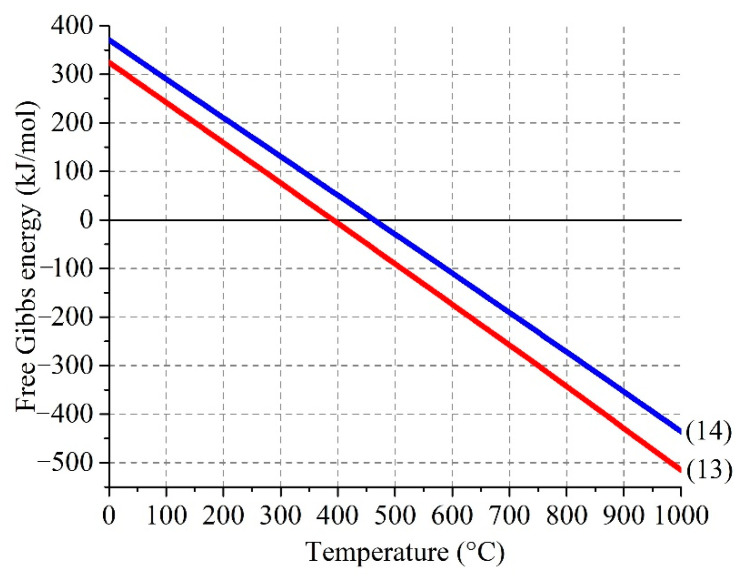
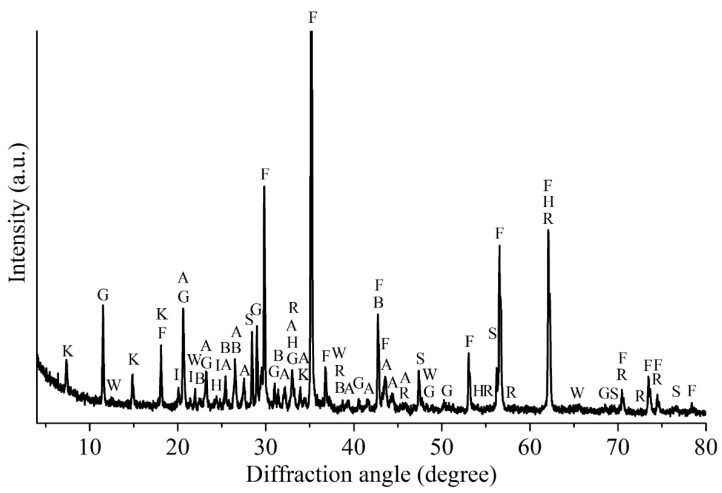
Zinc plant residue (ZPR) is a secondary material generated during hydrometallurgical zinc production that contains considerable contents of valuable elements such as Zn, Cu, Fe, Pb, Cd, Ag, In, Ga, Tl. Zinc, copper and accompanying elements in ZPR are in different minerals, mainly in the ferrites. A promising approach for recycling ZPR is the sulfating roasting using iron sulfates followed by water leaching. In this study, the composition of ZPR and the obtained products were thoroughly investigated by various methods including X-ray diffraction analysis (XRD), chemical phase analysis and Mössbauer spectroscopy. The effect of temperature, amount of iron sulfates and roasting time on the conversion of valuable metals into a water-soluble form was thermodynamically and experimentally studied both using pure ferrites and ZPR. Based on the results of time-resolved XRD analysis and synchronous thermal analysis (STA), a mechanism of the sulfation roasting was elucidated. The rate-controlling step of zinc and copper sulfation process during the ZPR roasting was estimated. The sulfating roasting at 600 °C during 180 min with the optimal Fe(SO)∙9HO addition followed by water leaching enables to recover 99% Zn and 80.3% Cu, while Fe, Pb, Ag, In, Ga retained almost fully in the residue.

摘要

锌厂残渣(ZPR)是湿法冶金锌生产过程中产生的一种二次物料,含有大量诸如锌、铜、铁、铅、镉、银、铟、镓、铊等有价元素。ZPR中的锌、铜及伴生元素存在于不同的矿物中,主要是铁氧体矿物。一种回收ZPR的可行方法是使用硫酸铁进行硫酸化焙烧,随后进行水浸出。在本研究中,通过包括X射线衍射分析(XRD)、化学相分析和穆斯堡尔谱等多种方法对ZPR及其所得产物的组成进行了深入研究。利用纯铁氧体和ZPR从热力学和实验两方面研究了温度、硫酸铁用量和焙烧时间对有价金属转化为水溶性形式的影响。基于时间分辨XRD分析和同步热分析(STA)的结果,阐明了硫酸化焙烧的机理。估算了ZPR焙烧过程中锌和铜硫酸化过程的速率控制步骤。在600℃下焙烧180分钟,加入最佳量的Fe₂(SO₄)₃·9H₂O,随后进行水浸出,能够回收99%的锌和80.3%的铜,而铁、铅、银、铟、镓几乎全部保留在残渣中。

https://cdn.ncbi.nlm.nih.gov/pmc/blobs/46eb/8456350/89e0d7ddd9fa/materials-14-05020-g015.jpg
https://cdn.ncbi.nlm.nih.gov/pmc/blobs/46eb/8456350/35cb7c4c5f98/materials-14-05020-g0A1.jpg
https://cdn.ncbi.nlm.nih.gov/pmc/blobs/46eb/8456350/cd8c2008f9ed/materials-14-05020-g0A2.jpg
https://cdn.ncbi.nlm.nih.gov/pmc/blobs/46eb/8456350/c67282f8b748/materials-14-05020-g0A3.jpg
https://cdn.ncbi.nlm.nih.gov/pmc/blobs/46eb/8456350/b186711ec99d/materials-14-05020-g0A4.jpg
https://cdn.ncbi.nlm.nih.gov/pmc/blobs/46eb/8456350/9cff2a30e981/materials-14-05020-g0A5.jpg
https://cdn.ncbi.nlm.nih.gov/pmc/blobs/46eb/8456350/22e26334e02a/materials-14-05020-g001.jpg
https://cdn.ncbi.nlm.nih.gov/pmc/blobs/46eb/8456350/299f90144d8d/materials-14-05020-g002.jpg
https://cdn.ncbi.nlm.nih.gov/pmc/blobs/46eb/8456350/7dc54df47fad/materials-14-05020-g003.jpg
https://cdn.ncbi.nlm.nih.gov/pmc/blobs/46eb/8456350/bd4b3fb23e1d/materials-14-05020-g004.jpg
https://cdn.ncbi.nlm.nih.gov/pmc/blobs/46eb/8456350/874152802200/materials-14-05020-g005.jpg
https://cdn.ncbi.nlm.nih.gov/pmc/blobs/46eb/8456350/d61d39e1ecff/materials-14-05020-g006.jpg
https://cdn.ncbi.nlm.nih.gov/pmc/blobs/46eb/8456350/ce06229f80a8/materials-14-05020-g007.jpg
https://cdn.ncbi.nlm.nih.gov/pmc/blobs/46eb/8456350/9a6e0b006d03/materials-14-05020-g008.jpg
https://cdn.ncbi.nlm.nih.gov/pmc/blobs/46eb/8456350/af307e379598/materials-14-05020-g009.jpg
https://cdn.ncbi.nlm.nih.gov/pmc/blobs/46eb/8456350/e02d787736fb/materials-14-05020-g010.jpg
https://cdn.ncbi.nlm.nih.gov/pmc/blobs/46eb/8456350/2b83b2a81a60/materials-14-05020-g011.jpg
https://cdn.ncbi.nlm.nih.gov/pmc/blobs/46eb/8456350/28cdb64be719/materials-14-05020-g012.jpg
https://cdn.ncbi.nlm.nih.gov/pmc/blobs/46eb/8456350/0dbfae7dc9e1/materials-14-05020-g013.jpg
https://cdn.ncbi.nlm.nih.gov/pmc/blobs/46eb/8456350/7251beb9514f/materials-14-05020-g014.jpg
https://cdn.ncbi.nlm.nih.gov/pmc/blobs/46eb/8456350/89e0d7ddd9fa/materials-14-05020-g015.jpg
https://cdn.ncbi.nlm.nih.gov/pmc/blobs/46eb/8456350/35cb7c4c5f98/materials-14-05020-g0A1.jpg
https://cdn.ncbi.nlm.nih.gov/pmc/blobs/46eb/8456350/cd8c2008f9ed/materials-14-05020-g0A2.jpg
https://cdn.ncbi.nlm.nih.gov/pmc/blobs/46eb/8456350/c67282f8b748/materials-14-05020-g0A3.jpg
https://cdn.ncbi.nlm.nih.gov/pmc/blobs/46eb/8456350/b186711ec99d/materials-14-05020-g0A4.jpg
https://cdn.ncbi.nlm.nih.gov/pmc/blobs/46eb/8456350/9cff2a30e981/materials-14-05020-g0A5.jpg
https://cdn.ncbi.nlm.nih.gov/pmc/blobs/46eb/8456350/22e26334e02a/materials-14-05020-g001.jpg
https://cdn.ncbi.nlm.nih.gov/pmc/blobs/46eb/8456350/299f90144d8d/materials-14-05020-g002.jpg
https://cdn.ncbi.nlm.nih.gov/pmc/blobs/46eb/8456350/7dc54df47fad/materials-14-05020-g003.jpg
https://cdn.ncbi.nlm.nih.gov/pmc/blobs/46eb/8456350/bd4b3fb23e1d/materials-14-05020-g004.jpg
https://cdn.ncbi.nlm.nih.gov/pmc/blobs/46eb/8456350/874152802200/materials-14-05020-g005.jpg
https://cdn.ncbi.nlm.nih.gov/pmc/blobs/46eb/8456350/d61d39e1ecff/materials-14-05020-g006.jpg
https://cdn.ncbi.nlm.nih.gov/pmc/blobs/46eb/8456350/ce06229f80a8/materials-14-05020-g007.jpg
https://cdn.ncbi.nlm.nih.gov/pmc/blobs/46eb/8456350/9a6e0b006d03/materials-14-05020-g008.jpg
https://cdn.ncbi.nlm.nih.gov/pmc/blobs/46eb/8456350/af307e379598/materials-14-05020-g009.jpg
https://cdn.ncbi.nlm.nih.gov/pmc/blobs/46eb/8456350/e02d787736fb/materials-14-05020-g010.jpg
https://cdn.ncbi.nlm.nih.gov/pmc/blobs/46eb/8456350/2b83b2a81a60/materials-14-05020-g011.jpg
https://cdn.ncbi.nlm.nih.gov/pmc/blobs/46eb/8456350/28cdb64be719/materials-14-05020-g012.jpg
https://cdn.ncbi.nlm.nih.gov/pmc/blobs/46eb/8456350/0dbfae7dc9e1/materials-14-05020-g013.jpg
https://cdn.ncbi.nlm.nih.gov/pmc/blobs/46eb/8456350/7251beb9514f/materials-14-05020-g014.jpg
https://cdn.ncbi.nlm.nih.gov/pmc/blobs/46eb/8456350/89e0d7ddd9fa/materials-14-05020-g015.jpg

相似文献

1
Comprehensive Study on the Mechanism of Sulfating Roasting of Zinc Plant Residue with Iron Sulfates.硫酸铁对锌厂残渣进行硫化焙烧的机理综合研究
Materials (Basel). 2021 Sep 2;14(17):5020. doi: 10.3390/ma14175020.
2
Leaching and selective copper recovery from acidic leachates of Três Marias zinc plant (MG, Brazil) metallurgical purification residues.从巴西米纳斯吉拉斯州特雷斯玛丽亚斯锌厂冶金净化残渣的酸性浸出液中浸出并选择性回收铜
J Environ Manage. 2016 Jul 15;177:26-35. doi: 10.1016/j.jenvman.2016.03.041. Epub 2016 Apr 10.
3
A simple and effective process for recycling zinc-rich paint residue.一种简单有效的回收富锌漆渣的方法。
Waste Manag. 2018 Jun;76:234-241. doi: 10.1016/j.wasman.2018.03.018. Epub 2018 Mar 13.
4
Clean hydrometallurgical route to recover zinc, silver, lead, copper, cadmium and iron from hazardous jarosite residues produced during zinc hydrometallurgy.从湿法炼锌过程中产生的危险黄钾铁矾渣中回收锌、银、铅、铜、镉和铁的清洁水冶路线。
J Hazard Mater. 2011 Aug 30;192(2):554-8. doi: 10.1016/j.jhazmat.2011.05.049. Epub 2011 May 23.
5
A potential industrial waste-waste co-treatment process of utilizing waste SO gas and residue heat to recover Co, Ni, and Cu from copper smelting slag.利用废 SO 气和余热从铜冶炼渣中回收 Co、Ni 和 Cu 的潜在工业废物-废物共同处理工艺。
J Hazard Mater. 2021 Jul 15;414:125541. doi: 10.1016/j.jhazmat.2021.125541. Epub 2021 Feb 26.
6
The enrichment and transformation mechanism of Pb and Cu in suspension magnetization roasting and magnetic separation from iron tailings.悬浮磁化焙烧及磁选从铁尾矿中富集和转化 Pb、Cu 的机理。
Waste Manag. 2024 Jul 15;184:82-91. doi: 10.1016/j.wasman.2024.05.034. Epub 2024 May 25.
7
Efficient Synchronous Extraction of Nickel, Copper, and Cobalt from Low-Nickel Matte by Sulfation Roasting‒Water Leaching Process.通过硫酸化焙烧-水浸工艺从低镍锍中高效同步提取镍、铜和钴
Sci Rep. 2020 Jun 18;10(1):9916. doi: 10.1038/s41598-020-66894-x.
8
Recovery of iron from zinc leaching residue by selective reduction roasting with carbon.用碳进行选择性还原焙烧从锌浸出渣中回收铁。
J Hazard Mater. 2012 Oct 30;237-238:323-30. doi: 10.1016/j.jhazmat.2012.08.052. Epub 2012 Aug 28.
9
Recovering metals from flue dust produced in secondary copper smelting through a novel process combining low temperature roasting, water leaching and mechanochemical reduction.通过一种将低温焙烧、水浸出和机械化学还原相结合的新工艺从二次铜冶炼中回收烟道粉尘中的金属。
J Hazard Mater. 2022 May 15;430:128497. doi: 10.1016/j.jhazmat.2022.128497. Epub 2022 Feb 16.
10
Galvanic sludge metals recovery by pyrometallurgical and hydrometallurgical treatment.通过火法冶金和湿法冶金处理回收电镀污泥中的金属。
J Hazard Mater. 2006 Apr 17;131(1-3):210-6. doi: 10.1016/j.jhazmat.2005.09.035. Epub 2005 Nov 16.

引用本文的文献

1
The Waelz Slag from Electric Arc Furnace Dust Processing: Characterization and Magnetic Separation Studies.电弧炉粉尘处理所得的瓦尔斯炉渣:特性及磁选研究
Materials (Basel). 2024 May 8;17(10):2224. doi: 10.3390/ma17102224.

本文引用的文献

1
Selective recovery of zinc from goethite residue in the zinc industry using deep-eutectic solvents.使用深共熔溶剂从锌工业的针铁矿残渣中选择性回收锌
RSC Adv. 2020 Feb 19;10(12):7328-7335. doi: 10.1039/d0ra00277a. eCollection 2020 Feb 13.
2
A perspective of stepwise utilization of hazardous zinc plant purification residue based on selective alkaline leaching of zinc.基于选择性碱浸锌从危险锌厂净化渣中逐步利用锌的观点。
J Hazard Mater. 2020 May 5;389:122090. doi: 10.1016/j.jhazmat.2020.122090. Epub 2020 Jan 14.
3
Common and rare iron, sulfur, and zinc minerals in technogenically contaminated hydromorphic soil from Southern Russia.
俄罗斯南部技术污染水成土中常见和罕见的铁、硫和锌矿物。
Environ Geochem Health. 2020 Jan;42(1):95-108. doi: 10.1007/s10653-019-00295-6. Epub 2019 Apr 22.
4
Recovery of lead from smelting fly ash of waste lead-acid battery by leaching and electrowinning.从废铅酸电池的熔炼浮渣中浸出-电解回收铅。
Waste Manag. 2016 Jun;52:212-20. doi: 10.1016/j.wasman.2016.03.056. Epub 2016 Apr 9.
5
Influence of spherical assembly of copper ferrite nanoparticles on magnetic properties: orientation of magnetic easy axis.铜铁氧体纳米颗粒的球形组装对磁性能的影响:易磁化轴的取向
Dalton Trans. 2014 Jun 7;43(21):7930-44. doi: 10.1039/c4dt00093e. Epub 2014 Apr 9.