Ow Connie P C, Trask-Marino Anton, Betrie Ashenafi H, Evans Roger G, May Clive N, Lankadeva Yugeesh R
Preclinical Critical Care Unit, Florey Institute of Neuroscience and Mental Health, Melbourne, VIC 3052, Australia.
Department of Cardiac Physiology, National Cerebral and Cardiovascular Center Research Institute, Osaka 564-8565, Japan.
J Clin Med. 2021 Aug 25;10(17):3798. doi: 10.3390/jcm10173798.
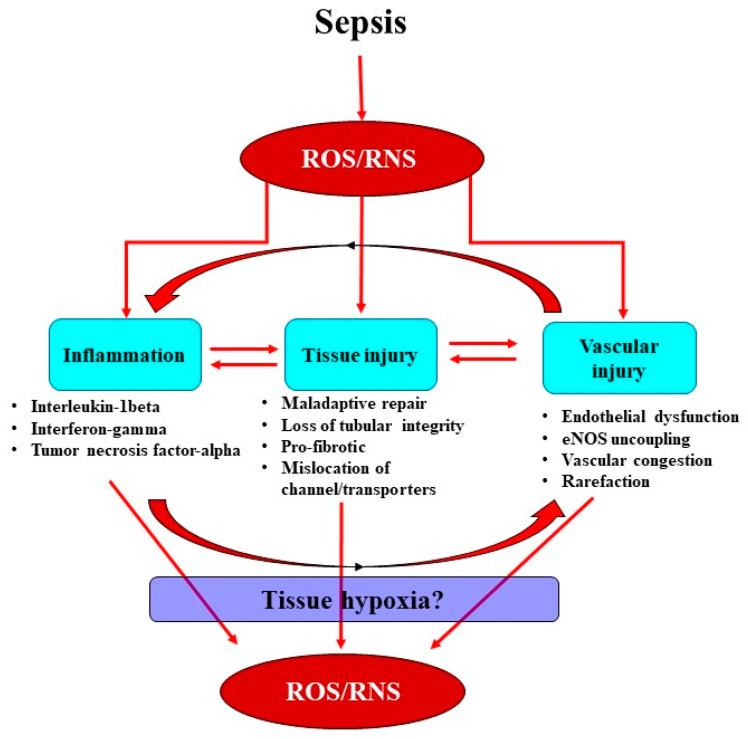
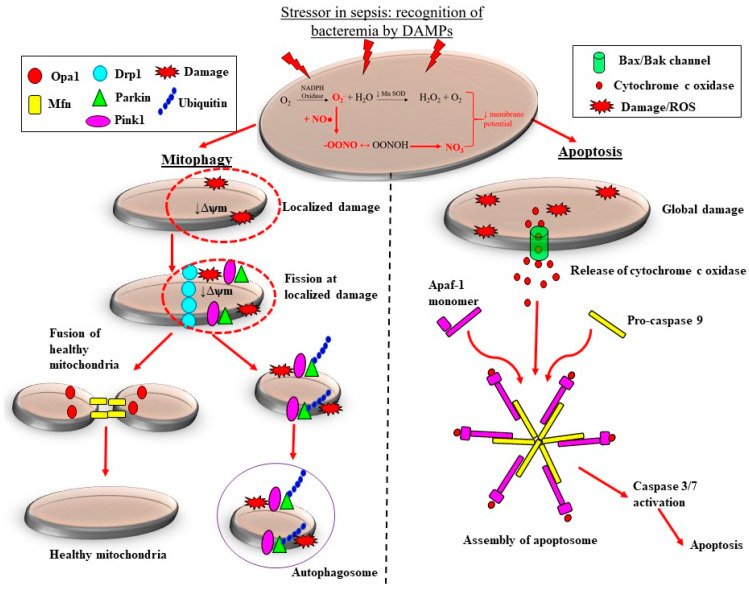
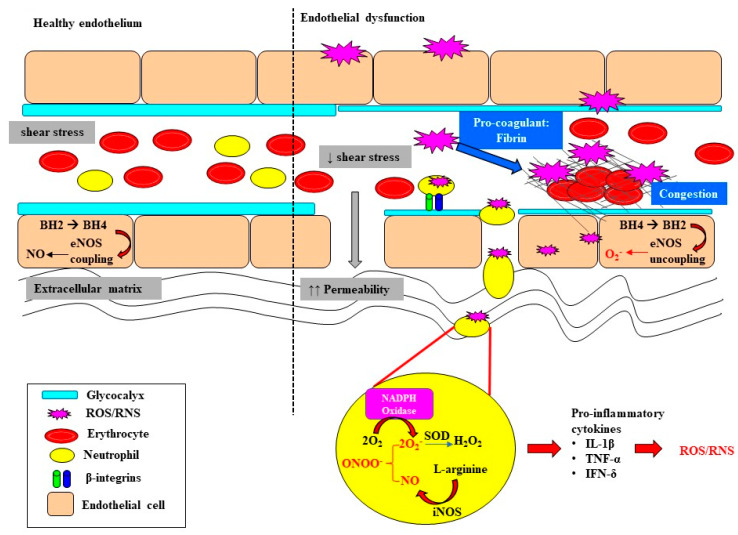
Sepsis is the leading cause of acute kidney injury (AKI) and leads to increased morbidity and mortality in intensive care units. Current treatments for septic AKI are largely supportive and are not targeted towards its pathophysiology. Sepsis is commonly characterized by systemic inflammation and increased production of reactive oxygen species (ROS), particularly superoxide. Concomitantly released nitric oxide (NO) then reacts with superoxide, leading to the formation of reactive nitrogen species (RNS), predominantly peroxynitrite. Sepsis-induced ROS and RNS can reduce the bioavailability of NO, mediating renal microcirculatory abnormalities, localized tissue hypoxia and mitochondrial dysfunction, thereby initiating a propagating cycle of cellular injury culminating in AKI. In this review, we discuss the various sources of ROS during sepsis and their pathophysiological interactions with the immune system, microcirculation and mitochondria that can lead to the development of AKI. We also discuss the therapeutic utility of N-acetylcysteine and potential reasons for its efficacy in animal models of sepsis, and its inefficacy in ameliorating oxidative stress-induced organ dysfunction in human sepsis. Finally, we review the pre-clinical studies examining the antioxidant and pleiotropic actions of vitamin C that may be of benefit for mitigating septic AKI, including future implications for clinical sepsis.
脓毒症是急性肾损伤(AKI)的主要原因,会导致重症监护病房的发病率和死亡率上升。目前针对脓毒症相关性急性肾损伤的治疗主要是支持性治疗,并非针对其病理生理学。脓毒症的常见特征是全身炎症反应以及活性氧(ROS)尤其是超氧阴离子的产生增加。随后释放的一氧化氮(NO)与超氧阴离子反应,导致活性氮(RNS)的形成,主要是过氧亚硝酸根。脓毒症诱导的ROS和RNS会降低NO的生物利用度,介导肾微循环异常、局部组织缺氧和线粒体功能障碍,从而引发细胞损伤的传播循环,最终导致急性肾损伤。在本综述中,我们讨论了脓毒症期间ROS的各种来源及其与免疫系统、微循环和线粒体的病理生理相互作用,这些相互作用可导致急性肾损伤的发生。我们还讨论了N-乙酰半胱氨酸在脓毒症动物模型中的治疗作用及其有效性的潜在原因,以及它在改善人类脓毒症中氧化应激诱导的器官功能障碍方面无效的原因。最后,我们回顾了临床前研究,这些研究探讨了维生素C的抗氧化和多效性作用,这些作用可能有助于减轻脓毒症相关性急性肾损伤,包括对临床脓毒症的未来影响。