Andersen Rikke Sick, Anand Atul, Harwood Dylan Scott Lykke, Kristensen Bjarne Winther
Department of Pathology, Odense University Hospital, 5000 Odense, Denmark.
Department of Clinical Research, University of Southern Denmark, 5000 Odense, Denmark.
Cancers (Basel). 2021 Aug 24;13(17):4255. doi: 10.3390/cancers13174255.
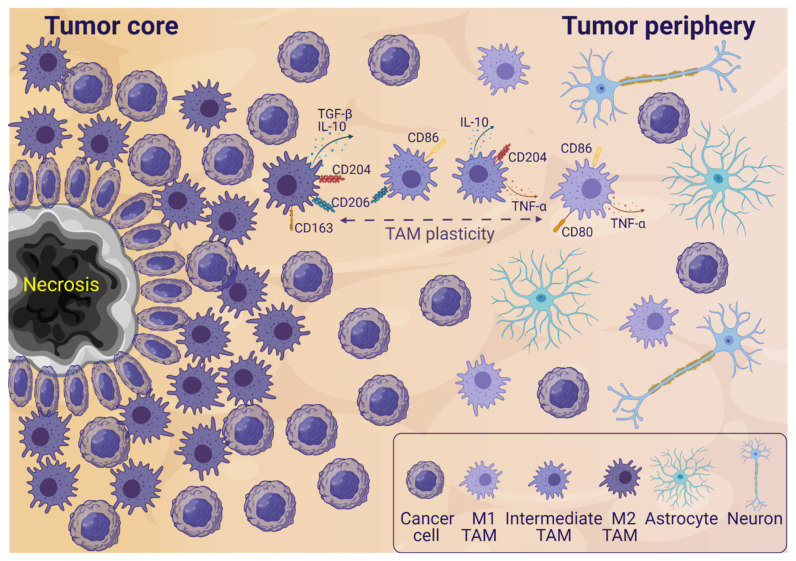
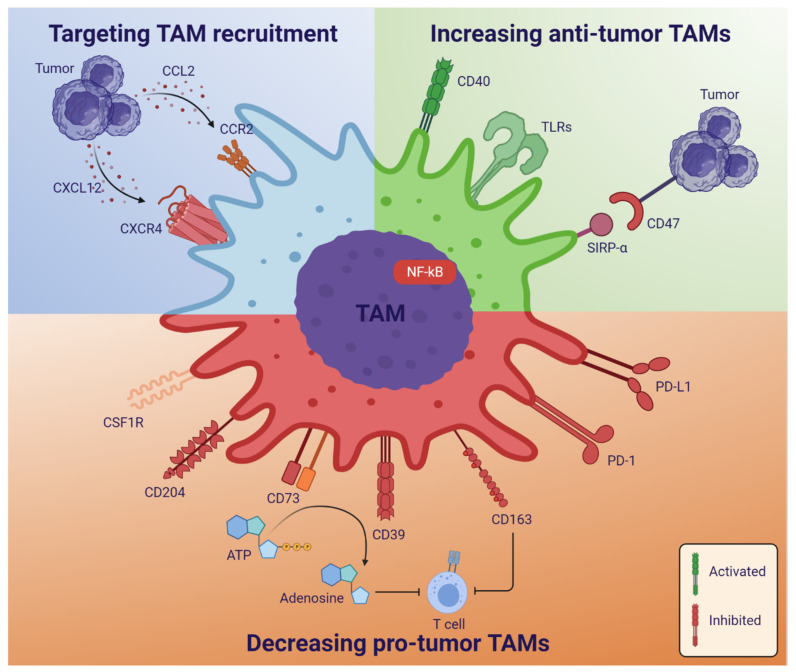
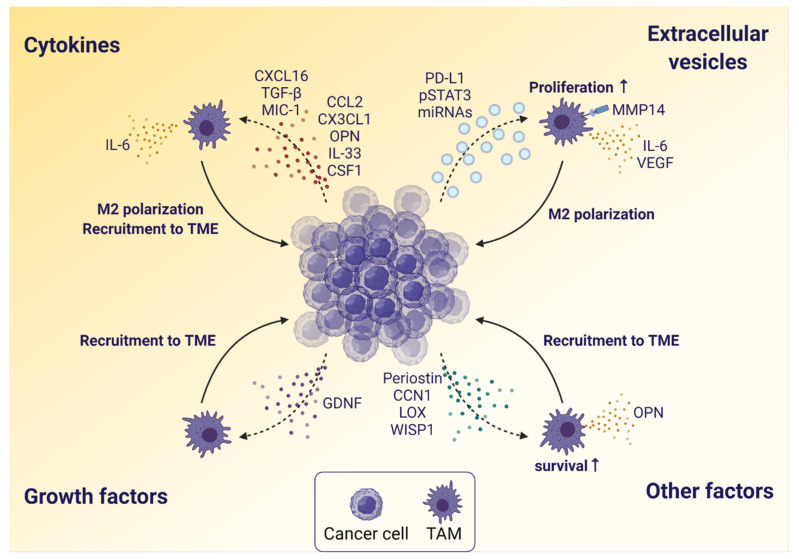
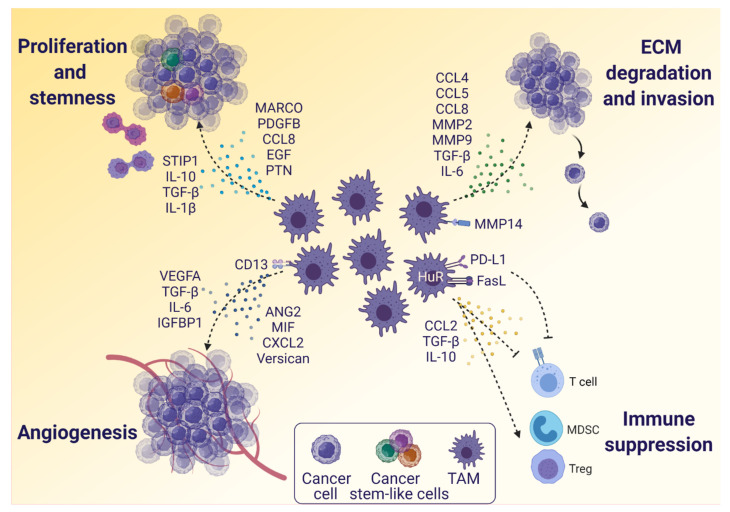
Glioblastoma is the most frequent and malignant primary brain tumor. Standard of care includes surgery followed by radiation and temozolomide chemotherapy. Despite treatment, patients have a poor prognosis with a median survival of less than 15 months. The poor prognosis is associated with an increased abundance of tumor-associated microglia and macrophages (TAMs), which are known to play a role in creating a pro-tumorigenic environment and aiding tumor progression. Most treatment strategies are directed against glioblastoma cells; however, accumulating evidence suggests targeting of TAMs as a promising therapeutic strategy. While TAMs are typically dichotomously classified as M1 and M2 phenotypes, recent studies utilizing single cell technologies have identified expression pattern differences, which is beginning to give a deeper understanding of the heterogeneous subpopulations of TAMs in glioblastomas. In this review, we evaluate the role of TAMs in the glioblastoma microenvironment and discuss how their interactions with cancer cells have an extensive impact on glioblastoma progression and treatment resistance. Finally, we summarize the effects and challenges of therapeutic strategies, which specifically aim to target TAMs.
胶质母细胞瘤是最常见且恶性程度最高的原发性脑肿瘤。标准治疗方案包括手术,随后进行放疗和替莫唑胺化疗。尽管进行了治疗,但患者的预后仍然很差,中位生存期不到15个月。预后不良与肿瘤相关小胶质细胞和巨噬细胞(TAM)的丰度增加有关,已知这些细胞在营造促肿瘤环境和促进肿瘤进展中发挥作用。大多数治疗策略都针对胶质母细胞瘤细胞;然而,越来越多的证据表明,靶向TAM是一种有前景的治疗策略。虽然TAM通常被分为M1和M2两种表型,但最近利用单细胞技术的研究已经确定了表达模式的差异,这开始让人们对胶质母细胞瘤中TAM的异质子群有更深入的了解。在这篇综述中,我们评估了TAM在胶质母细胞瘤微环境中的作用,并讨论了它们与癌细胞的相互作用如何对胶质母细胞瘤的进展和治疗耐药性产生广泛影响。最后,我们总结了专门针对TAM的治疗策略的效果和挑战。