Davey Matthew G, Hynes Sean O, Kerin Michael J, Miller Nicola, Lowery Aoife J
Discipline of Surgery, The Lambe Institute for Translational Research, National University of Ireland, H91 YR71 Galway, Ireland.
Department of Surgery, Galway University Hospitals, H91 YR71 Galway, Ireland.
Cancers (Basel). 2021 Sep 3;13(17):4455. doi: 10.3390/cancers13174455.
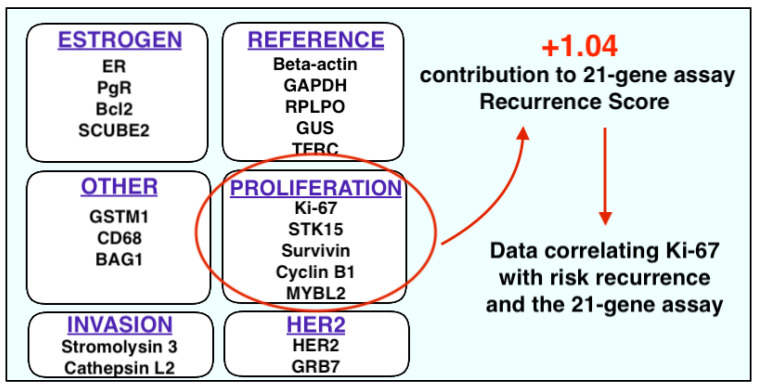
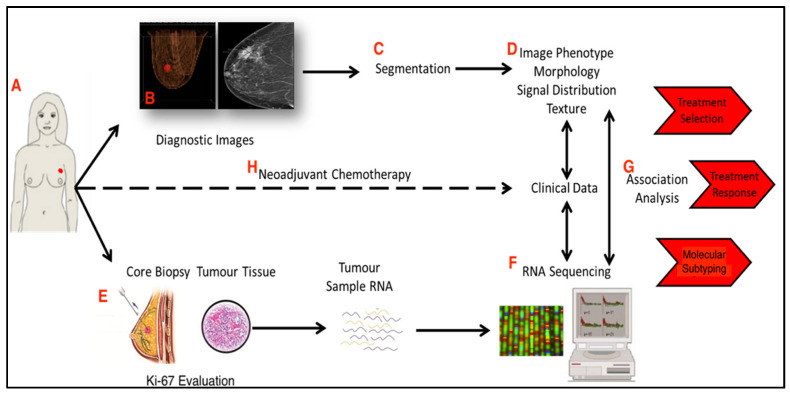
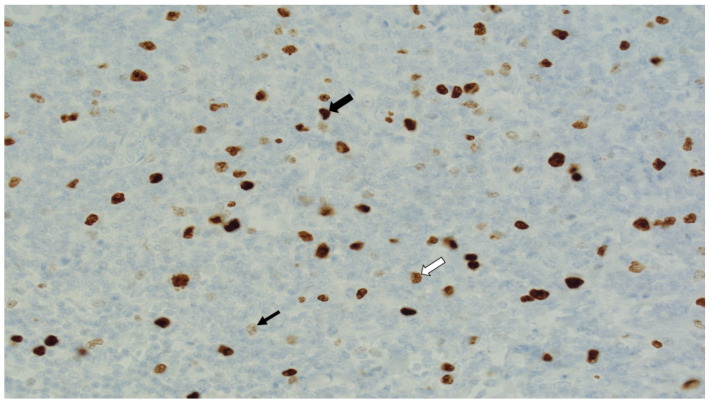
The advent of molecular medicine has transformed breast cancer management. Breast cancer is now recognised as a heterogenous disease with varied morphology, molecular features, tumour behaviour, and response to therapeutic strategies. These parameters are underpinned by a combination of genomic and immunohistochemical tumour factors, with estrogen receptor (ER) status, progesterone receptor (PgR) status, human epidermal growth factor receptor-2 (HER2) status, Ki-67 proliferation indices, and multigene panels all playing a contributive role in the substratification, prognostication and personalization of treatment modalities for each case. The expression of Ki-67 is strongly linked to tumour cell proliferation and growth and is routinely evaluated as a proliferation marker. This review will discuss the clinical utility, current pitfalls, and promising strategies to augment Ki-67 proliferation indices in future breast oncology.
分子医学的出现改变了乳腺癌的治疗方式。如今,乳腺癌被认为是一种异质性疾病,具有不同的形态、分子特征、肿瘤行为以及对治疗策略的反应。这些参数由基因组和免疫组化肿瘤因子共同支撑,其中雌激素受体(ER)状态、孕激素受体(PgR)状态、人表皮生长因子受体2(HER2)状态、Ki-67增殖指数以及多基因检测在每例病例的分层、预后评估和治疗方式个体化中均发挥着重要作用。Ki-67的表达与肿瘤细胞增殖和生长密切相关,并且通常作为一种增殖标志物进行评估。本综述将讨论Ki-67在未来乳腺肿瘤学中的临床应用、当前存在的问题以及提高其增殖指数的前景策略。