O'Neal Catherine Walker, Wickrama Kandauda K A S
Department of Human Development and Family Science, The University of Georgia, Athens, GA, USA.
J Fam Issues. 2021 Mar 1;42(3):553-570. doi: 10.1177/0192513x20921927. Epub 2020 May 22.
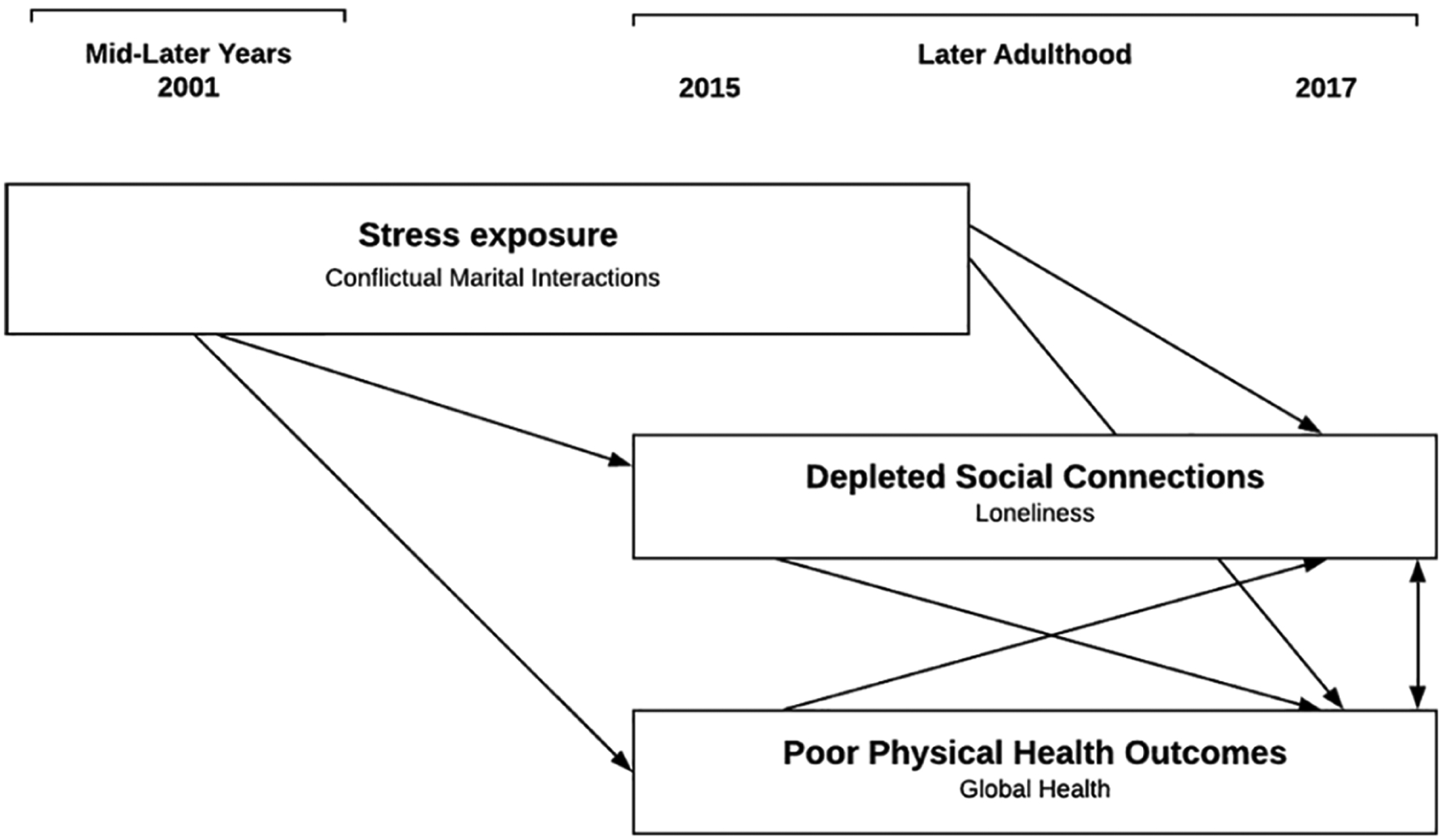
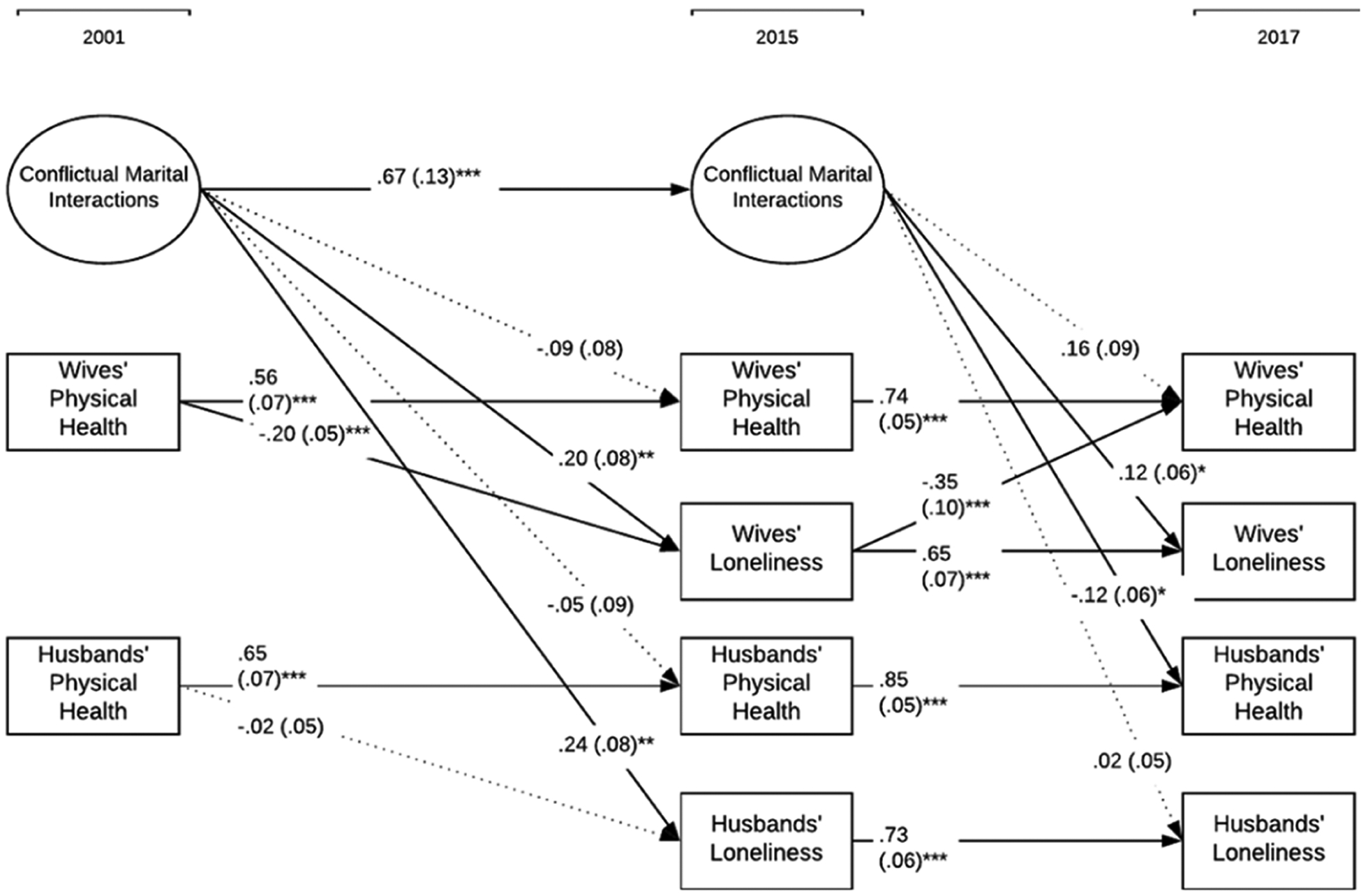
Although past research has noted longitudinal, and sometimes bi-directional, associations between marital interactions, loneliness, and physical health, previous work has not identified long-term associations and differential associations over life-course stages (i.e., mid-life and later adulthood). Utilizing a life-course stress process perspective and a sample of 250 couples in enduring marriages over 17 years (2001-2017), a structural equation model within a dyadic framework assessed the unique influences of stressful marital interactions on loneliness and physical health and the variation in bi-directional influences of loneliness and physical health over time. Marital interactions were relatively stable across life stages, yet marital interactions appear to influence loneliness and physical health. Notable distinctions were evident across life stages (from mid-life to later adulthood and then within later adulthood). Findings are discussed with an emphasis on the implications for health promotion and prevention programs targeting couples' quality of life in later years.
尽管过去的研究已经指出婚姻互动、孤独感和身体健康之间存在纵向的、有时是双向的关联,但以往的研究尚未确定在生命历程各阶段(即中年和老年期)的长期关联和差异关联。本研究采用生命历程压力过程视角,以250对维持了17年(2001 - 2017年)持久婚姻的夫妻为样本,在二元框架内构建结构方程模型,评估压力性婚姻互动对孤独感和身体健康的独特影响,以及孤独感和身体健康的双向影响随时间的变化。婚姻互动在生命各阶段相对稳定,但婚姻互动似乎会影响孤独感和身体健康。在生命各阶段(从中年到老年期,再到老年期内部)存在明显差异。本文将对研究结果进行讨论,重点关注针对晚年夫妻生活质量的健康促进和预防项目的意义。