Park Yu Mi, Lee MinJi, Jeon SungHyun, Hrůzová Dagmar
CHA Advanced Research Institute, 335, Pangyo-ro, Bundang-gu, Seongnam-si, Gyeonggi-do, 13488, Republic of Korea.
Cell Therapy R&D Center, HansBiomed Corp., 7, Jeongui-ro 8-gil, Songpa-gu, Seoul, 05836, Republic of Korea.
Regen Ther. 2021 Aug 24;18:281-291. doi: 10.1016/j.reth.2021.08.003. eCollection 2021 Dec.
When stem cells are grafted into tissues, they differentiate and form specialized cells. However, the proficiency of stem cells to endure and assimilate the host cell is dependent on various growth factors and cytokines. According to various studies, these factors are available in the spent media of harvested stem cells, which can be used for treatment in regenerative medicine and cosmetic products. There are differences in cytokine secretion depending on the culture environment, which are clarified in this paper.
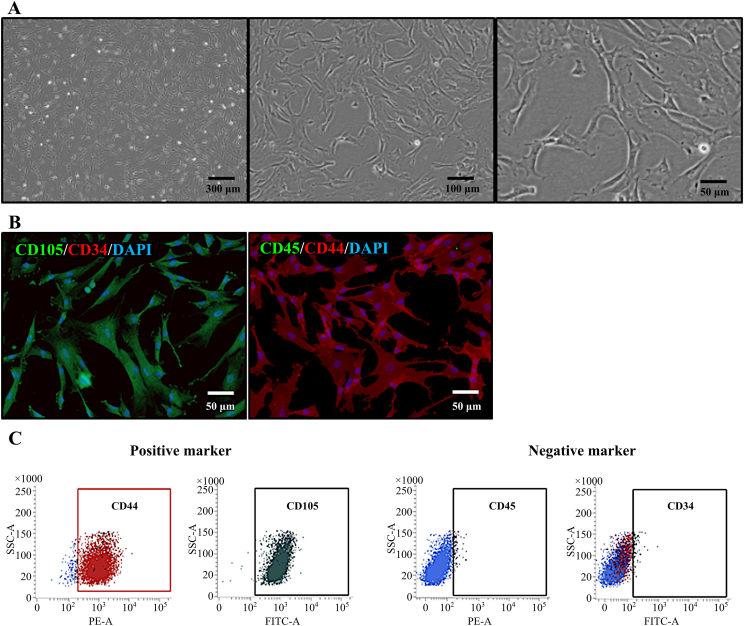
Human umbilical cord-derived mesenchymal stem cells (hUC-MSCs) were cultured either in a bioreactor or in a flask. The conditioned medium from the hUC-MSC cultures in the flask and in the bioreactor was designated as "FM" and "BM", respectively. We assessed the effects of FM and BM on UVB-induced oxidative stress, anti-aging, and melanogenic properties. The amount of growth factors, cell viability, hyaluronic acid (HA), pro-collagen, and pro-melanin were quantitatively evaluated in the FM and BM treated groups. The induction of HA and collagen synthesis was measured in CCD-986SK cells. For melanogenesis, the effects of FM and BM on melanin content and tyrosinase activity were measured in SK-MEL-31 cells.
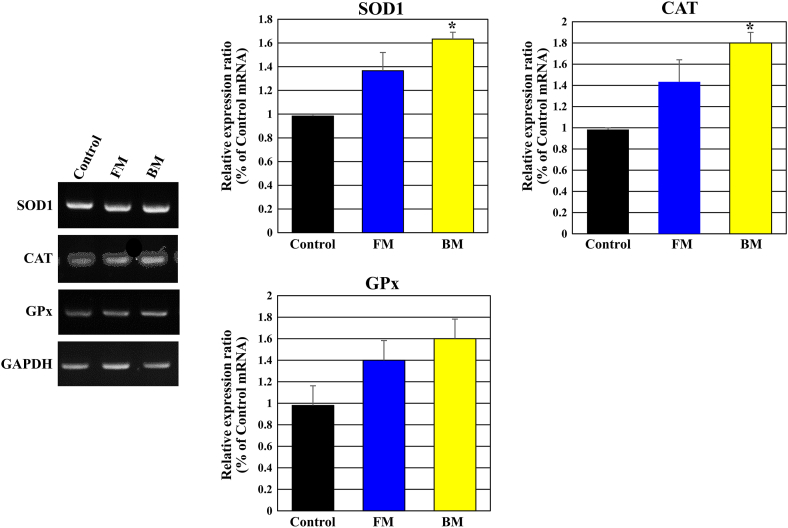
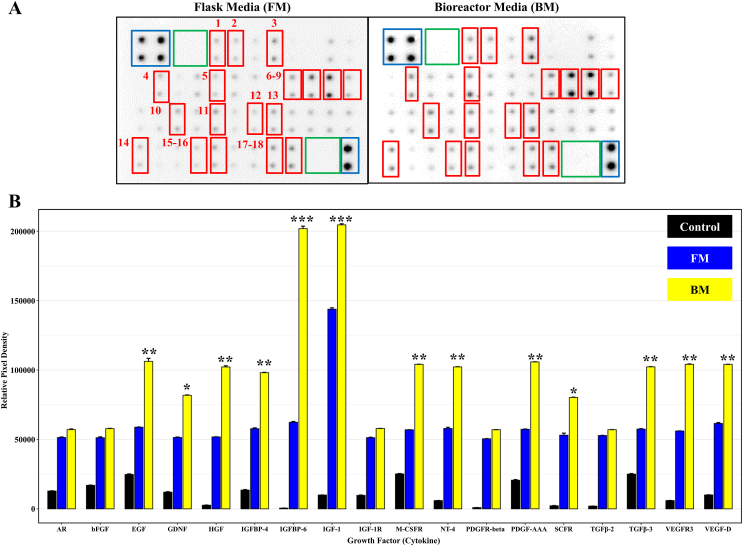
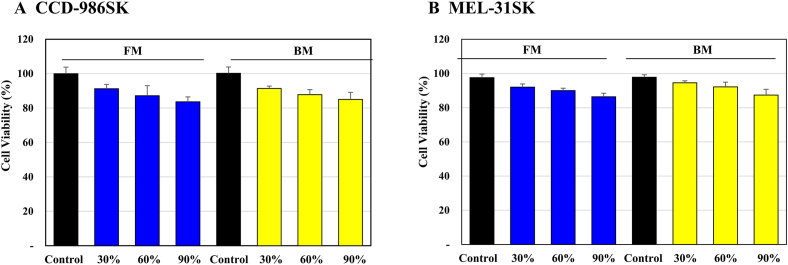
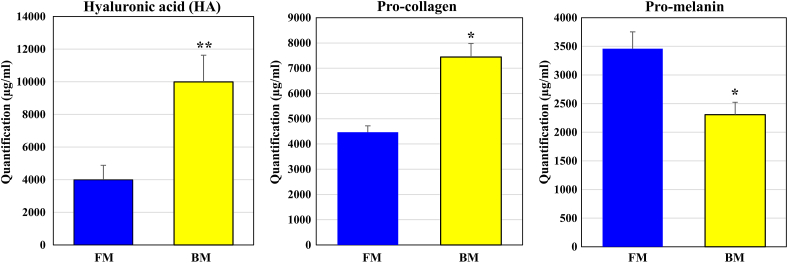
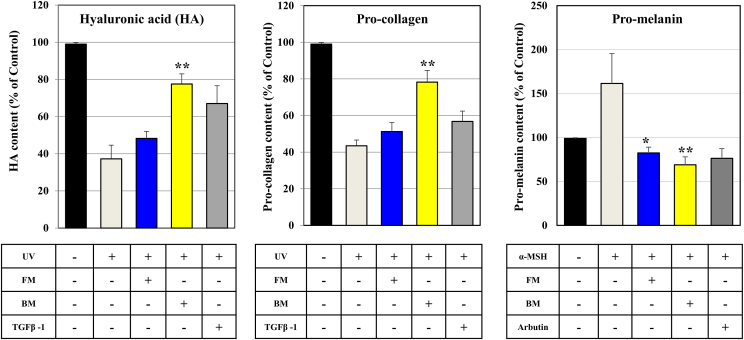
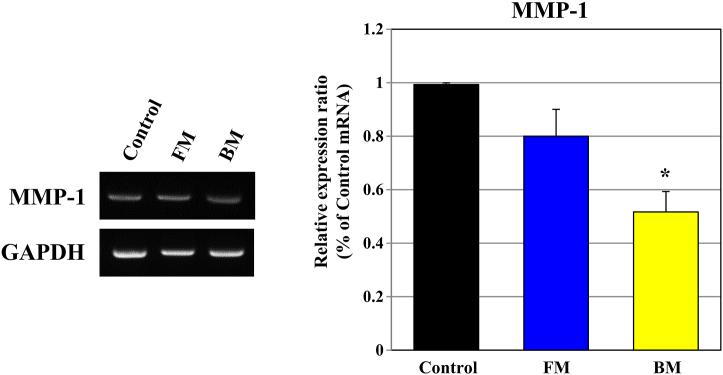
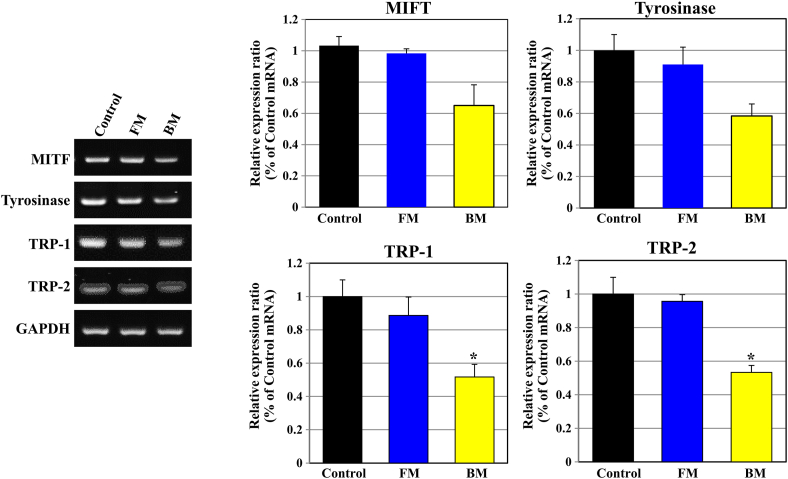
In the present study, the secretion of growth factors, HA, and pro-collagen was significantly higher in the BM treatment, compared to that in the FM treatment. BM protected CCD-986SK cells against death from UVB induced oxidative stress. BM increased the promoter activity of the anti-oxidant genes SOD1, CAT, and GP; and downregulated the accelerating collagen decomposition gene, MMP-1, induced by UVB irradiation. In α-melanocyte-stimulating hormone (α-MSH) stimulated SK-MEL-31 cells, BM reduced melanin production and decreased the levels of MITF, tyrosinase, TRP-1, and TRP-2. These results suggest that BM could be used as a skin protection agent, because of its anti-apoptotic, anti-aging, and anti-melanogenic properties. This could be attributed to the differences in culturing methods; it is difficult to maintain the temperature and sterility in FM culture, when compared to that in the automated culturing conditions of the BM system.
Collectively, our results indicate that using BM-conditioned hUC-MSC medium is very efficient process for producing raw materials for developing functional cosmetics.
当干细胞被移植到组织中时,它们会分化并形成特化细胞。然而,干细胞耐受和同化宿主细胞的能力取决于多种生长因子和细胞因子。根据多项研究,这些因子存在于收获的干细胞的用过的培养基中,可用于再生医学治疗和化妆品中。本文阐明了根据培养环境细胞因子分泌存在差异。
人脐带间充质干细胞(hUC-MSCs)在生物反应器或培养瓶中培养。来自培养瓶和生物反应器中hUC-MSC培养物的条件培养基分别指定为“FM”和“BM”。我们评估了FM和BM对紫外线B(UVB)诱导的氧化应激、抗衰老和黑色素生成特性的影响。对FM和BM处理组中的生长因子量、细胞活力、透明质酸(HA)、前胶原蛋白和前黑色素进行了定量评估。在CCD-986SK细胞中测量了HA和胶原蛋白合成的诱导情况。对于黑色素生成,在SK-MEL-31细胞中测量了FM和BM对黑色素含量和酪氨酸酶活性的影响。
在本研究中,与FM处理相比,BM处理中生长因子、HA和前胶原蛋白的分泌显著更高。BM保护CCD-986SK细胞免受UVB诱导的氧化应激导致的死亡。BM增加了抗氧化基因SOD1、CAT和GP的启动子活性;并下调了UVB照射诱导的加速胶原蛋白分解的基因MMP-1。在α-黑素细胞刺激激素(α-MSH)刺激的SK-MEL-31细胞中,BM减少了黑色素生成并降低了小眼畸形相关转录因子(MITF)、酪氨酸酶、酪氨酸酶相关蛋白-1(TRP-1)和酪氨酸酶相关蛋白-2(TRP-2)的水平。这些结果表明,BM因其抗凋亡、抗衰老和抗黑色素生成特性可作为皮肤保护剂。这可能归因于培养方法的差异;与BM系统的自动化培养条件相比,FM培养中难以维持温度和无菌状态。
总体而言,我们的结果表明,使用BM条件下的hUC-MSC培养基是生产用于开发功能性化妆品的原材料的非常有效的过程。