Li Yangbo, He Pengzhan, Liu Yinghui, Qi Mingming, Dong Weiguo
Department of Gastroenterology, Renmin Hospital of Wuhan University, Wuhan, China.
Central Laboratory, Renmin Hospital of Wuhan University, Wuhan, China.
Front Pharmacol. 2021 Aug 27;12:708093. doi: 10.3389/fphar.2021.708093. eCollection 2021.
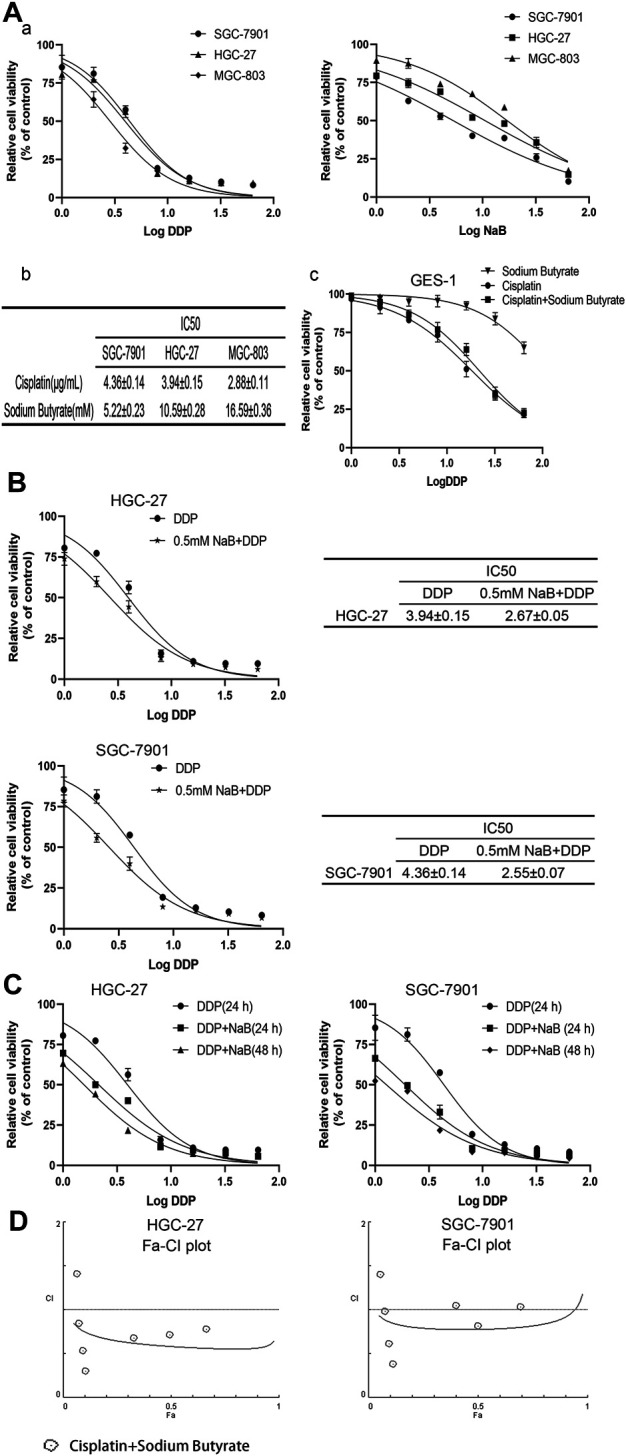
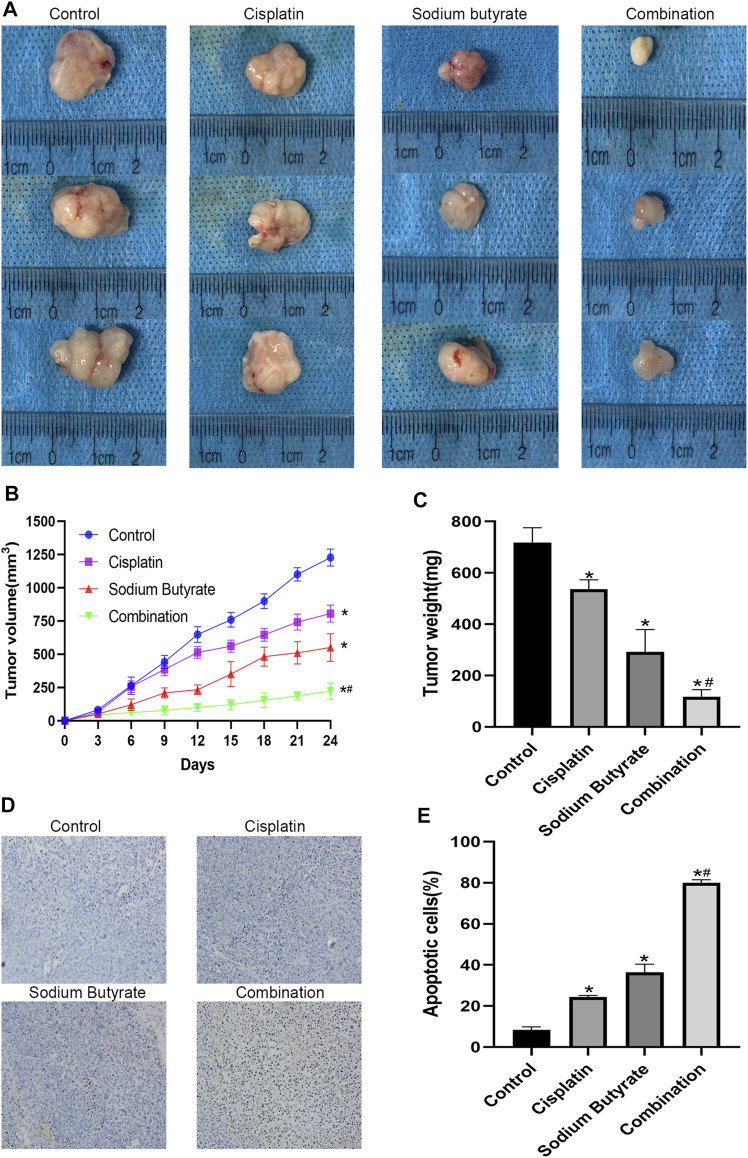
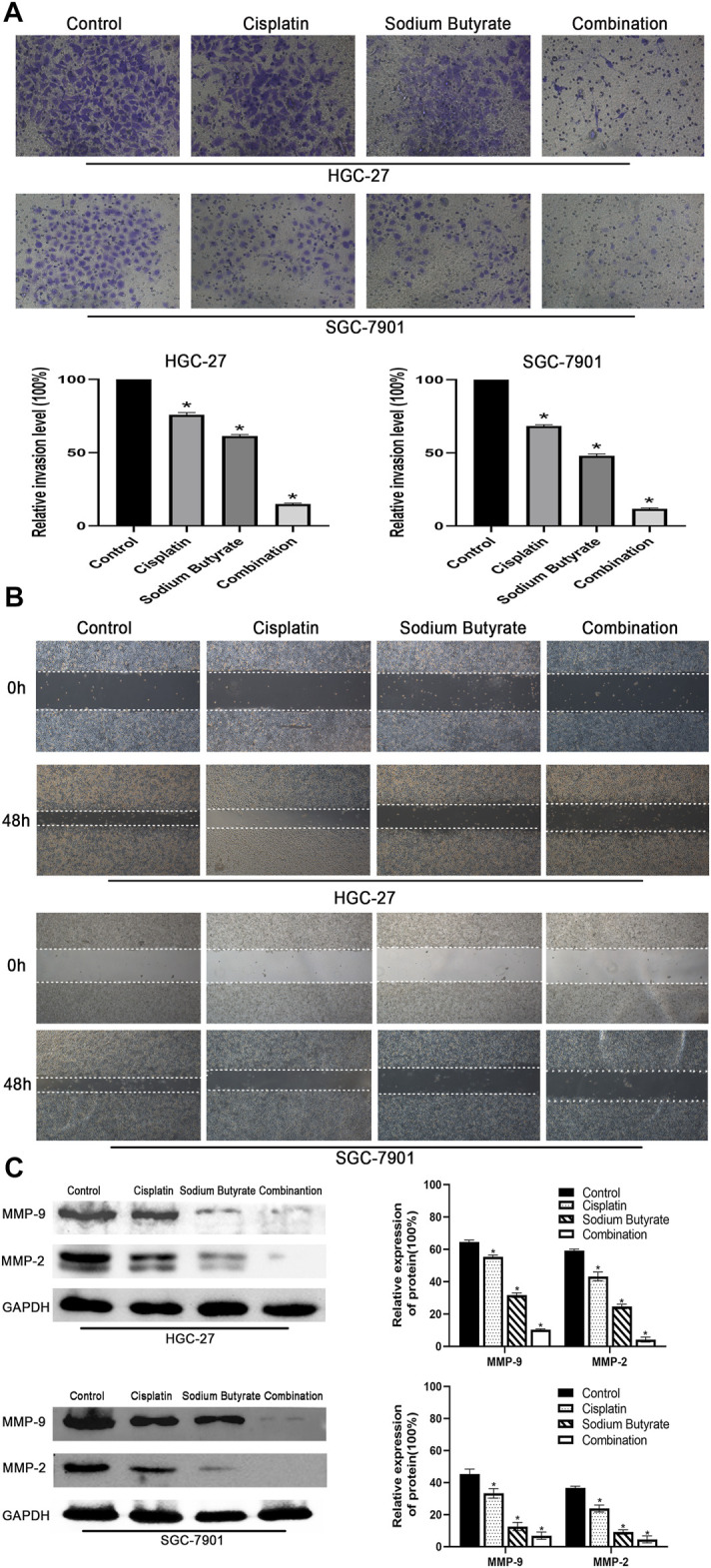
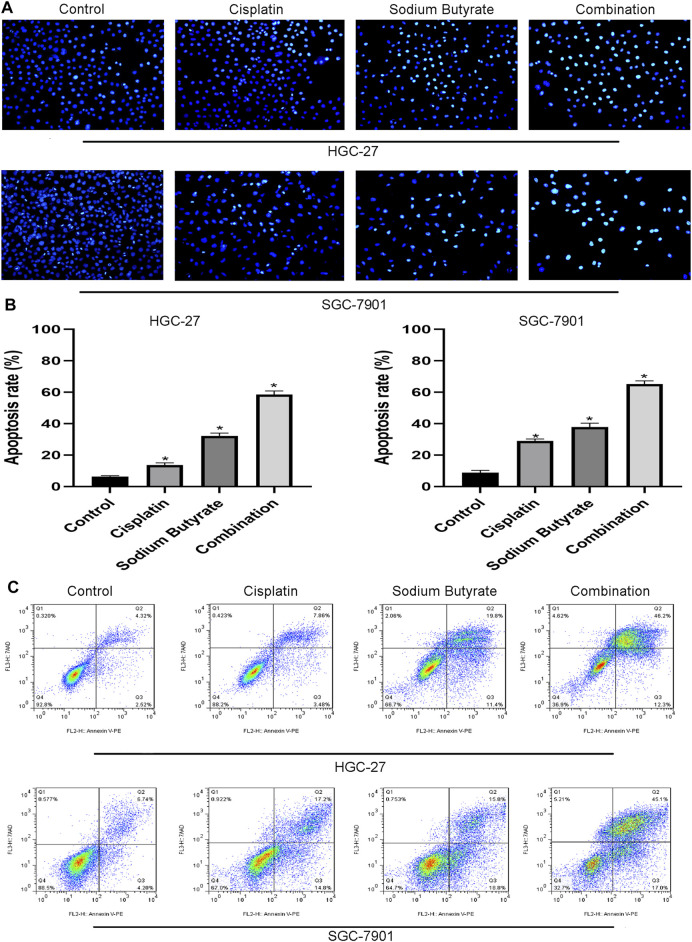
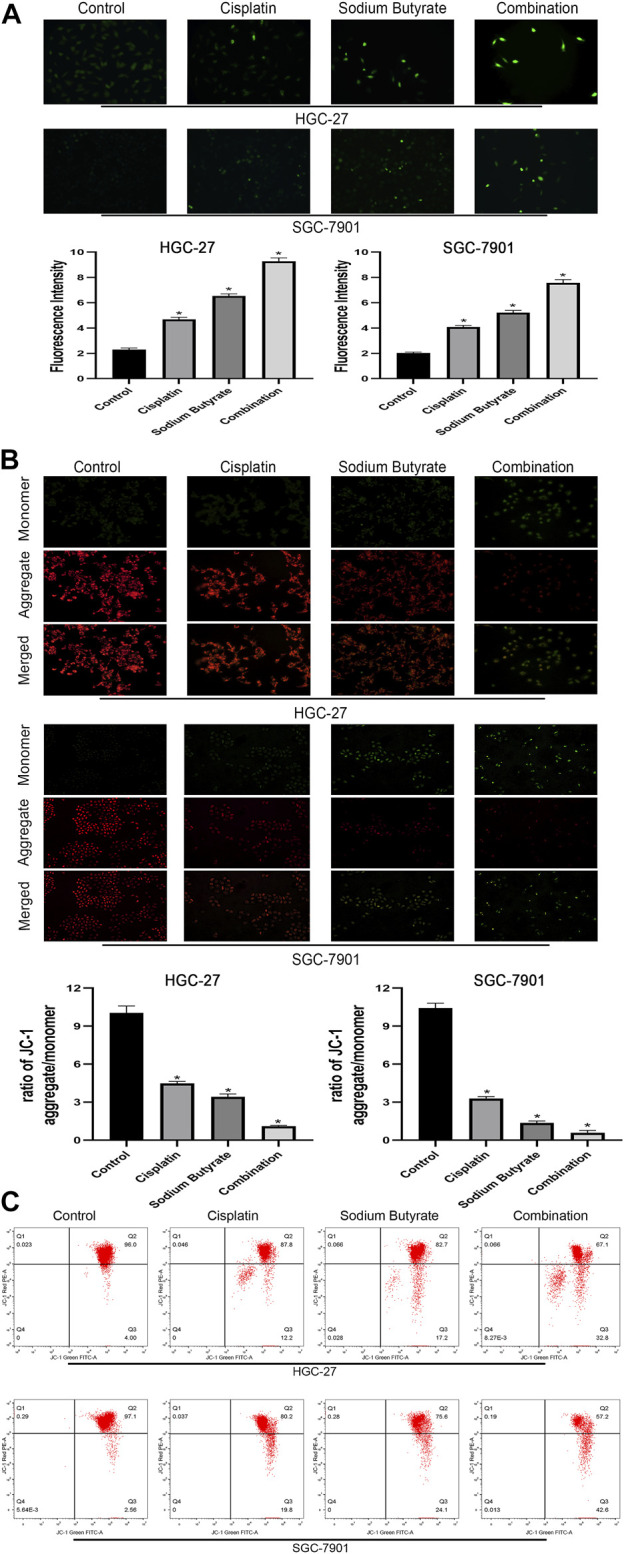
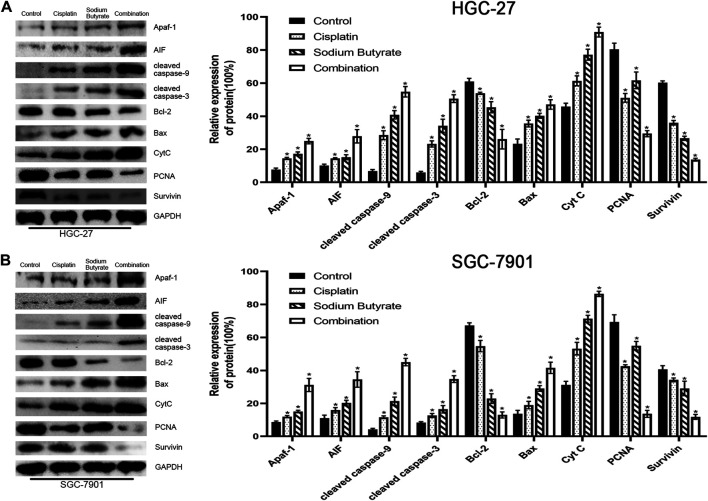
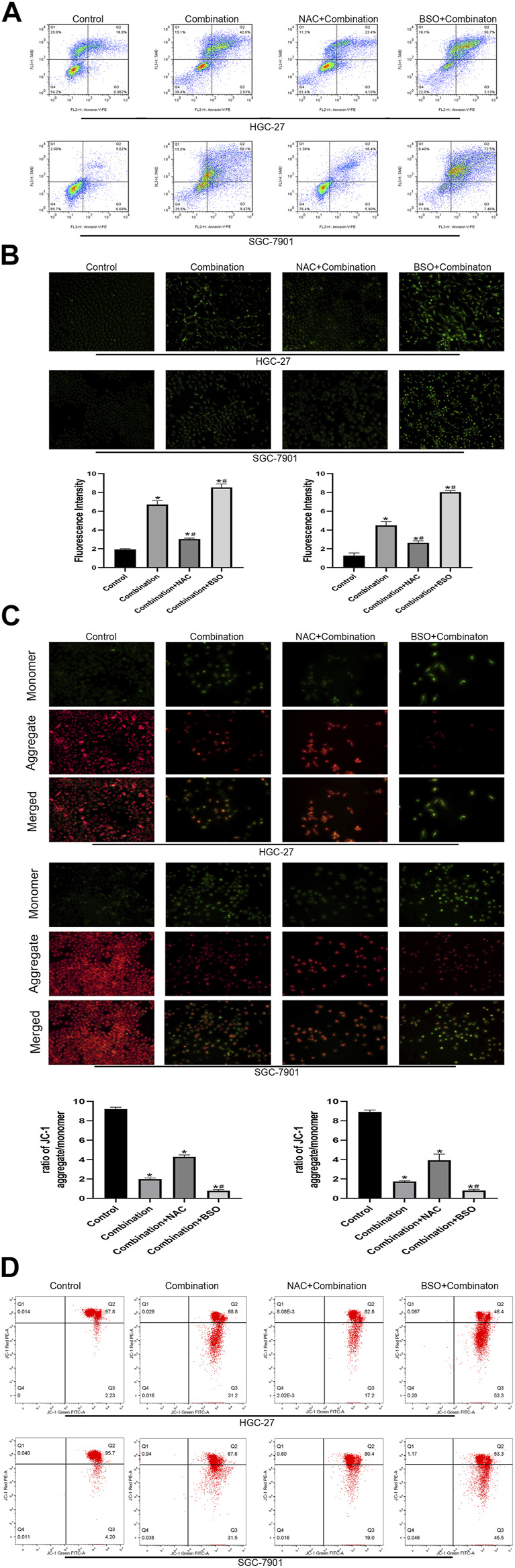
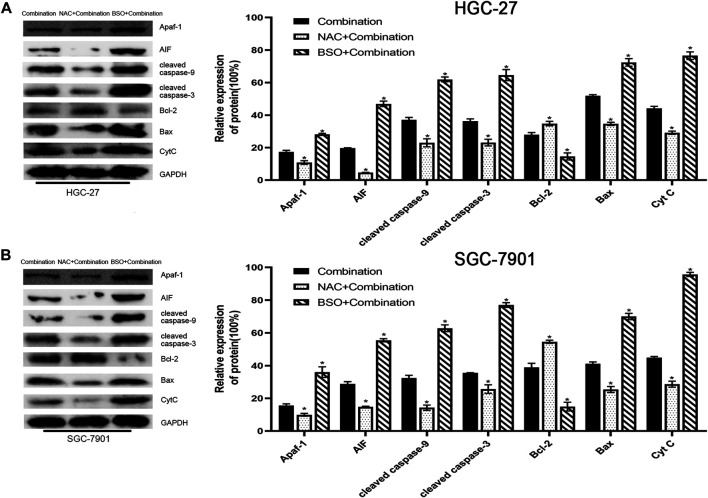
The gastrointestinal malignancy, gastric cancer (GC), has a high incidence worldwide. Cisplatin is a traditional chemotherapeutic drug that is generally applied to treat cancer; however, drug tolerance affects its efficacy. Sodium butyrate is an intestinal flora derivative that has general anti-cancer effects in vitro and in vivo via pro-apoptosis effects and can improve prognosis in combination with traditional chemotherapy drugs. The present study aimed to assess the effect of sodium butyrate combined with cisplatin on GC. A Cell Counting Kit-8 assay was used to assess the viability of GC cells in vitro. Hoechst 33,258 staining and Annexin V-Phycoerythrin/7-Aminoactinomycin D were used to qualitatively and quantitatively detect apoptosis in GC cells. Intracellular reactive oxygen species (ROS) measurement and a mitochondrial membrane potential (MMP) assay kit were used to qualitatively and quantitatively reflect the function of mitochondria in GC cells. Western blotting was used to verify the above experimental results. A nude mouse xenograft tumor model was used to evaluate the anti-tumor efficacity of sodium and cisplatin butyrate in vivo. Cisplatin combined with sodium butyrate increased the apoptosis of GC cells. In the nude mouse xenograft tumor model, sodium butyrate in combination with cisplatin markedly inhibited the growth of the tumor more effectively than either single agent. The combination of sodium butyrate and cisplatin increased the intracellular ROS, decreased the MMP, and suppressed the invasion and migration abilities of GC cells. Western blotting verified that the combination of sodium butyrate and cisplatin remarkably enhanced the levels of mitochondrial apoptosis-related pathway proteins. Sodium butyrate, a histone acetylation inhibitor produced by intestinal flora fermentation, combined with cisplatin enhanced the apoptosis of GC cells through the mitochondrial apoptosis-related pathway, which might be considered as a therapeutic option for GC.
胃肠道恶性肿瘤,即胃癌(GC),在全球范围内发病率较高。顺铂是一种传统的化疗药物,通常用于治疗癌症;然而,药物耐受性会影响其疗效。丁酸钠是一种肠道菌群衍生物,通过促凋亡作用在体外和体内均具有普遍的抗癌作用,并且与传统化疗药物联合使用可改善预后。本研究旨在评估丁酸钠联合顺铂对胃癌的影响。使用细胞计数试剂盒-8法评估胃癌细胞的体外活力。采用Hoechst 33258染色和膜联蛋白V-藻红蛋白/7-氨基放线菌素D定性和定量检测胃癌细胞的凋亡情况。使用细胞内活性氧(ROS)测量和线粒体膜电位(MMP)检测试剂盒定性和定量反映胃癌细胞中线粒体的功能。采用蛋白质免疫印迹法验证上述实验结果。使用裸鼠异种移植瘤模型评估丁酸钠和顺铂在体内的抗肿瘤疗效。顺铂联合丁酸钠可增加胃癌细胞的凋亡。在裸鼠异种移植瘤模型中,丁酸钠联合顺铂比单一药物更显著有效地抑制肿瘤生长。丁酸钠与顺铂联合使用可增加细胞内ROS,降低MMP,并抑制胃癌细胞的侵袭和迁移能力。蛋白质免疫印迹法证实,丁酸钠与顺铂联合使用可显著提高线粒体凋亡相关通路蛋白的水平。丁酸钠是肠道菌群发酵产生的一种组蛋白乙酰化抑制剂,与顺铂联合使用可通过线粒体凋亡相关通路增强胃癌细胞的凋亡,这可能被视为胃癌的一种治疗选择。