Calderón-Hernández María F, Altamirano-Bustamante Nelly F, Revilla-Monsalve Cristina, Mosquera-Andrade María Belen, Altamirano-Bustamante Myriam M
Unidad de Investigación en Enfermedades Metabólicas, Centro Médico Nacional Siglo XXI, IMSS, Mexico 06720, Mexico.
Department of Endocrinology, Instituto Nacional de Pediatría, Mexico 04530, Mexico.
World J Diabetes. 2021 Aug 15;12(8):1325-1362. doi: 10.4239/wjd.v12.i8.1325.
The prevalence of diabetes as a catastrophic disease in childhood is growing in the world. The search for novel biomarkers of β-cell failure has been an elusive task because it requires several clinical and biochemical measurements in order to integrate the risk of metabolic syndrome.
To determine which biomarkers are currently used to identify β-cell failure among children and adolescents with high risk factors for diabetes mellitus.
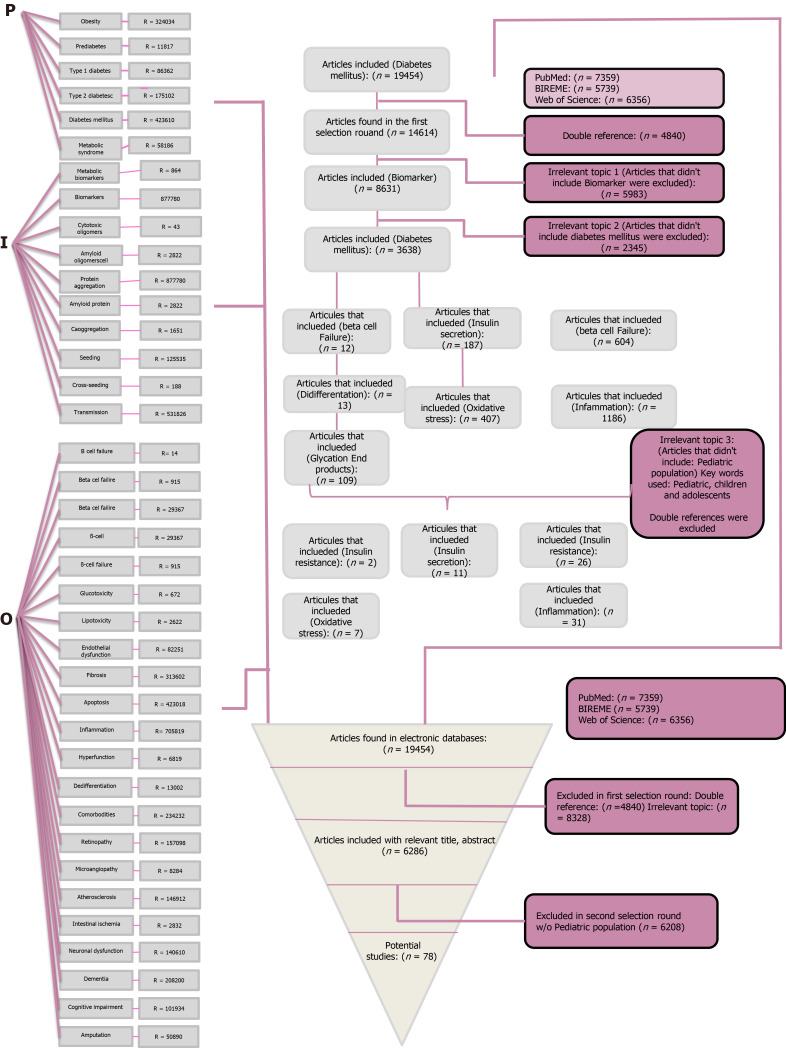
This systematic review was carried out using a modified version of the PICO protocol (Participants/Intervention/Comparison/Outcome). Once our research question was established, terms were individually researched on three different databases (PubMed, BIREME and Web of Science). The total articles obtained underwent a selection process from which the 78 most relevant articles were retrieved to undergo further analysis. They were assessed individually according to quality criteria.
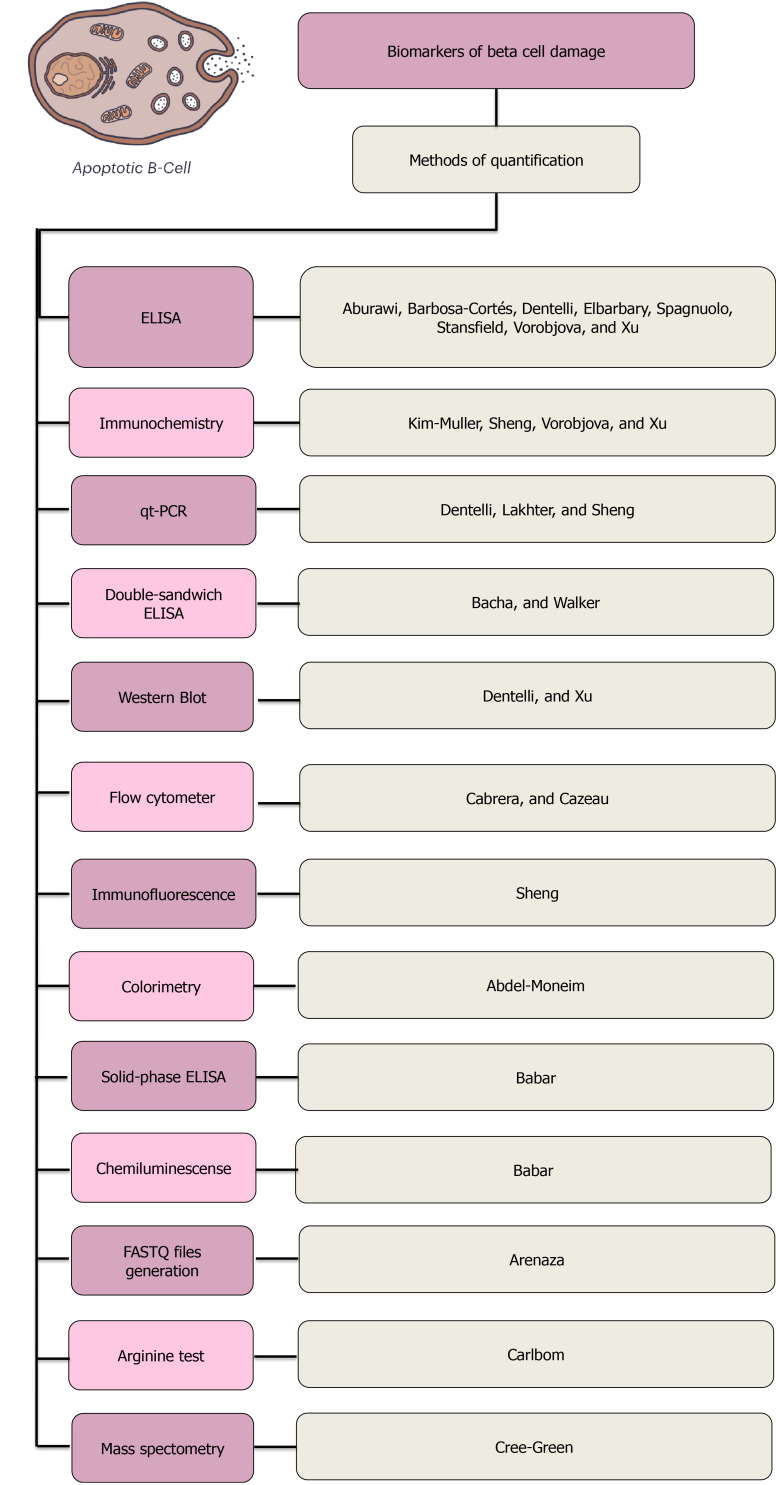
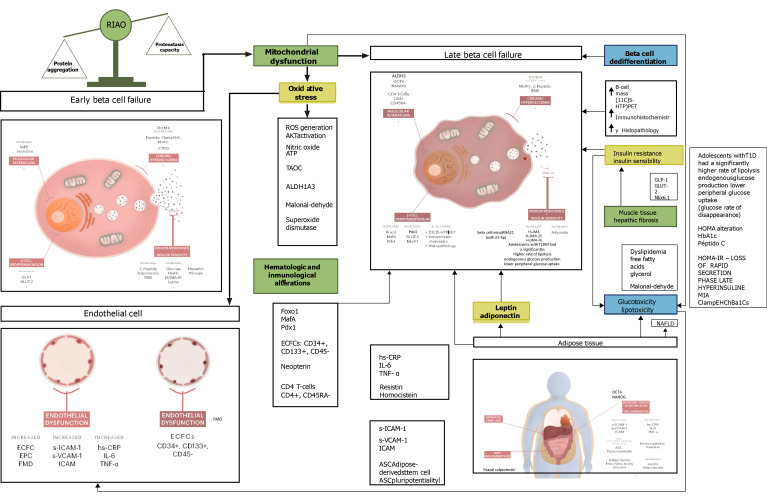
First, we made the classification of the β-cell-failure biomarkers by the target tissue and the evolution of the disease, separating the biomarkers in relation to the types of diabetes. Second, we demonstrated that most biomarkers currently used as early signs of β-cell failure are those that concern local or systemic inflammation processes and oxidative stress as well as those related to endothelial dysfunction processes. Third, we explored the novelties of diabetes as a protein conformational disease and the novel biomarker called real human islet amyloid polypeptide amyloid oligomers. Finally, we ended with a discussion about the best practice of validation and individual control of using different types of biomarkers in type 1 and type 2 diabetes in order to assess the role they play in the progress of diabetes in childhood.
This review makes widely evident that most biomarkers currently used as early signs of β-cell failure are those that concern local or systemic inflammation processes and oxidative stress as well as those related to endothelial dysfunction processes. Landing in the clinical practice we propose that real human islet amyloid polypeptide amyloid oligomers is good for identifying patients with β-cell damage and potentially could substitute many biomarkers.
糖尿病作为一种儿童期灾难性疾病,在全球的患病率正在上升。寻找β细胞功能衰竭的新型生物标志物一直是一项难以捉摸的任务,因为这需要进行多项临床和生化测量,以便综合代谢综合征的风险。
确定目前用于识别有糖尿病高风险因素的儿童和青少年中β细胞功能衰竭的生物标志物。
本系统评价采用改良版的PICO方案(参与者/干预措施/对照/结局)进行。确定研究问题后,分别在三个不同的数据库(PubMed、BIREME和科学网)中检索相关术语。对获得的所有文章进行筛选,从中检索出78篇最相关的文章进行进一步分析。根据质量标准对它们进行单独评估。
首先,我们根据靶组织和疾病进展对β细胞功能衰竭生物标志物进行了分类,根据糖尿病类型对生物标志物进行了区分。其次,我们证明,目前用作β细胞功能衰竭早期迹象的大多数生物标志物是那些与局部或全身炎症过程、氧化应激以及与内皮功能障碍过程相关的生物标志物。第三,我们探讨了糖尿病作为一种蛋白质构象疾病的新情况以及名为真实人胰岛淀粉样多肽淀粉样寡聚体的新型生物标志物。最后,我们讨论了在1型和2型糖尿病中使用不同类型生物标志物进行验证和个体控制的最佳实践,以评估它们在儿童糖尿病进展中所起的作用。
本综述清楚地表明,目前用作β细胞功能衰竭早期迹象的大多数生物标志物是那些与局部或全身炎症过程、氧化应激以及与内皮功能障碍过程相关的生物标志物。在临床实践中,我们提出真实人胰岛淀粉样多肽淀粉样寡聚体有助于识别β细胞受损的患者,并且可能替代许多生物标志物。