York University, McMaster University and Wharton Weight Management Clinic, Toronto, Ontario, Canada.
Novo Nordisk A/S, Søborg, Denmark.
Diabetes Obes Metab. 2022 Jan;24(1):94-105. doi: 10.1111/dom.14551. Epub 2021 Oct 4.
We evaluated gastrointestinal (GI) adverse events (AEs) with once-weekly semaglutide 2.4 mg in adults with overweight or obesity and their contribution to weight loss (WL).
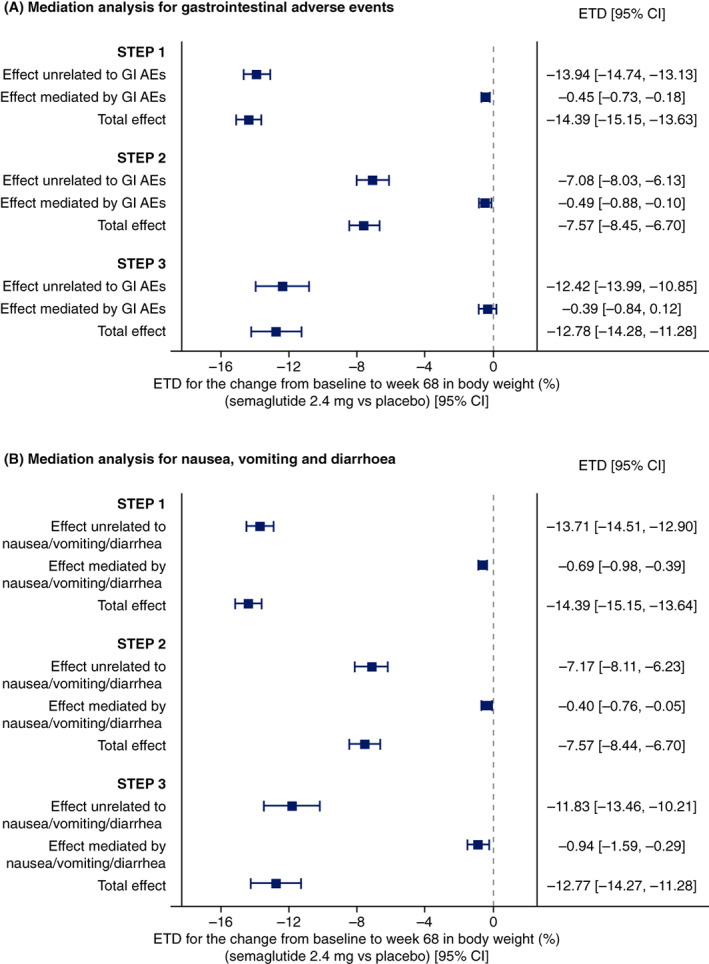
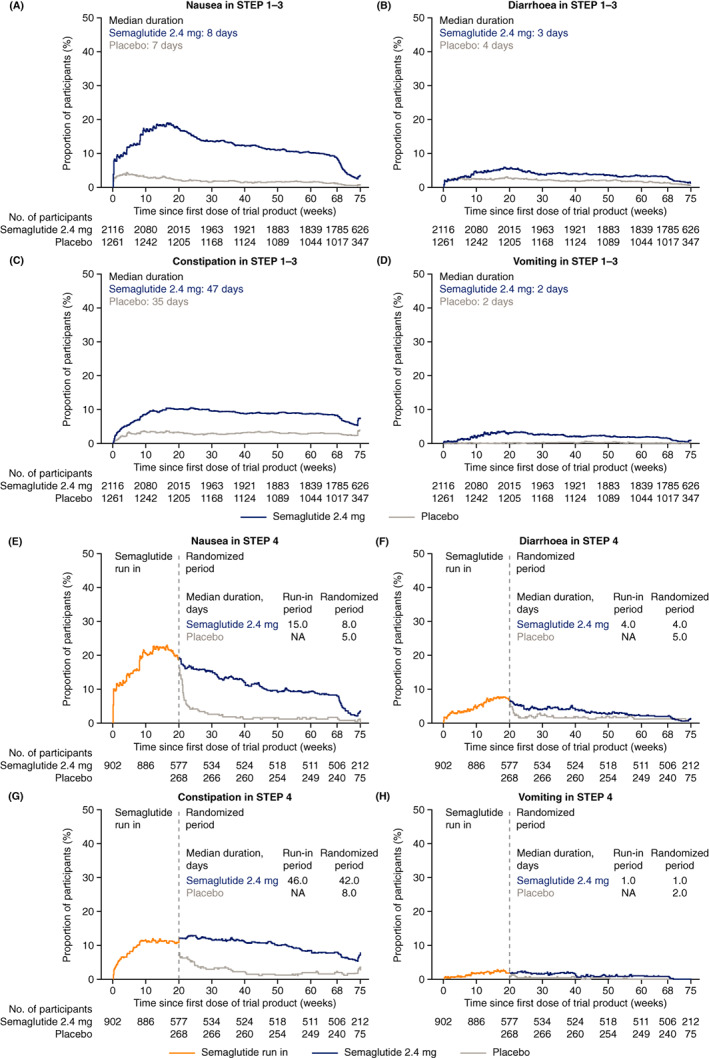
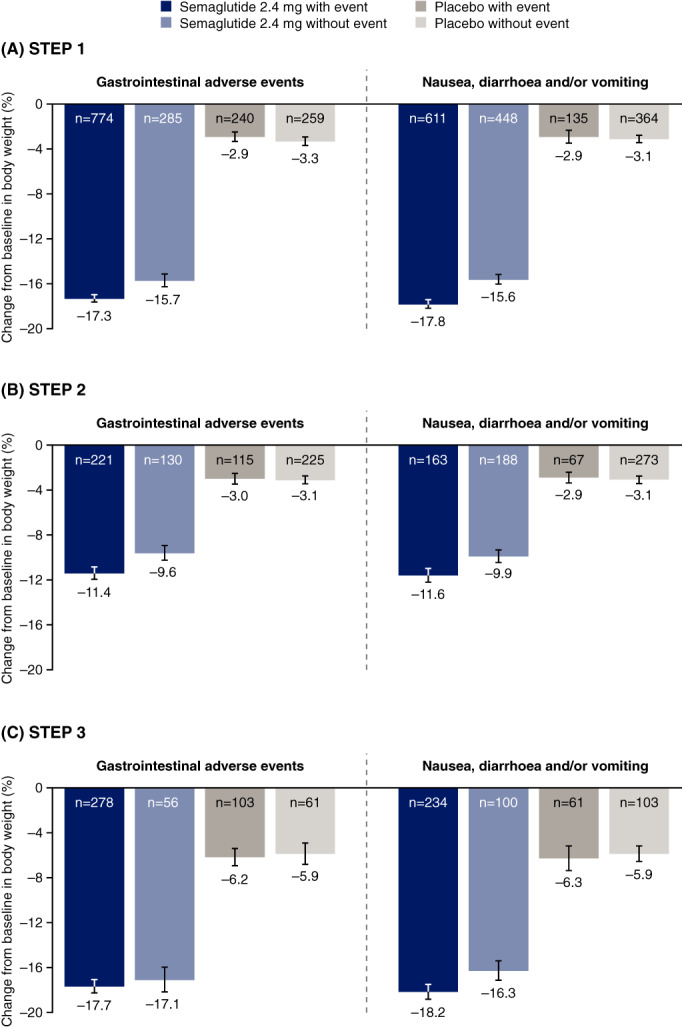
AE analyses pooled data from the Semaglutide Treatment Effect in People With Obesity (STEP) 1-3 trials for participants randomized to 68 weeks of semaglutide 2.4 mg (n = 2117) or placebo (n = 1262). WL was analysed by presence/absence of GI AEs. Mediation analysis estimated WL effects mediated by and unrelated to GI AEs. GI tolerability with semaglutide 2.4 mg maintenance and cessation after dose escalation was evaluated using STEP 4 data among 803 participants tolerating 20 weeks of semaglutide run-in.
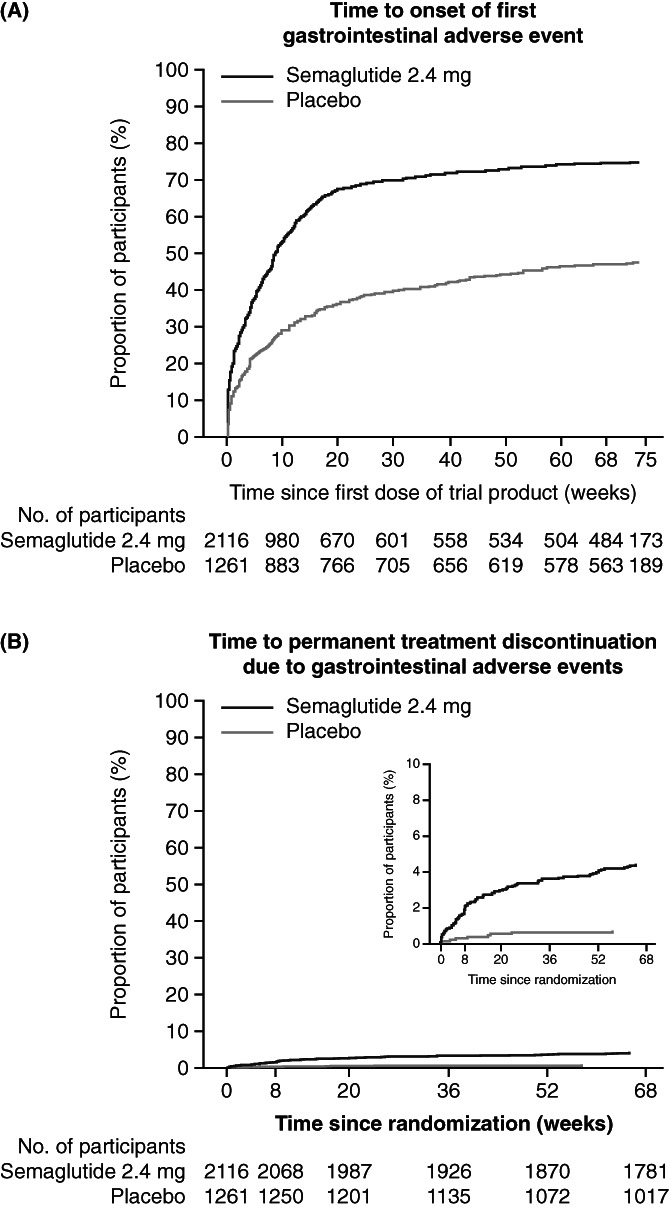
GI AEs were more common with semaglutide 2.4 mg than placebo, with most frequently nausea (43.9% vs. 16.1% of participants), diarrhoea (29.7% vs. 15.9%), vomiting (24.5% vs. 6.3%) and constipation (24.2% vs. 11.1%). Most GI AEs with semaglutide were non-serious (99.5% of AEs), mild-to-moderate (98.1%), transient and occurred most frequently during/shortly after dose escalation. Few semaglutide-treated participants (4.3%) permanently discontinued treatment for GI AEs. In STEP 1-3, mean WL with semaglutide 2.4 mg was similar in participants without (9.6%-17.1%) versus with GI AEs (11.4%-17.7%). Consistent with this observation, mediation analysis found that GI AEs contributed little to semaglutide-induced WL: of the additional 7.6%-14.4% WL with semaglutide versus placebo, <1 percentage point was mediated by GI AEs. In STEP 4, semaglutide 2.4 mg maintenance was well tolerated.
GI AEs were more common with semaglutide 2.4 mg than placebo, but typically mild-to-moderate and transient. Semaglutide-induced WL was largely independent of GI AEs.
我们评估了每周一次给予 2.4mg 司美格鲁肽用于超重或肥胖成人的胃肠道(GI)不良事件(AE)及其对体重减轻(WL)的贡献。
AE 分析汇总了 Semaglutide Treatment Effect in People With Obesity(STEP)1-3 试验中接受 68 周 2.4mg 司美格鲁肽(n=2117)或安慰剂(n=1262)随机分组参与者的数据。通过存在/不存在 GI AE 分析 WL。中介分析估计了与 GI AE 相关和不相关的 WL 效应。在 803 名耐受 20 周司美格鲁肽导入期的参与者中,使用 STEP 4 数据评估了 2.4mg 司美格鲁肽维持治疗和剂量递增后停药的 GI 耐受性。
与安慰剂相比,司美格鲁肽 2.4mg 更常发生 GI AE,最常见的是恶心(43.9%vs.16.1%的参与者)、腹泻(29.7%vs.15.9%)、呕吐(24.5%vs.6.3%)和便秘(24.2%vs.11.1%)。大多数司美格鲁肽的 GI AE 为非严重(99.5%的 AE)、轻度至中度(98.1%)、短暂,并且最常发生在剂量增加期间/之后不久。少数司美格鲁肽治疗的参与者(4.3%)因 GI AE 而永久停止治疗。在 STEP 1-3 中,司美格鲁肽 2.4mg 治疗的参与者中无 GI AE(9.6%-17.1%)与有 GI AE(11.4%-17.7%)的 WL 相似。这一观察结果与中介分析一致,该分析发现 GI AE 对司美格鲁肽诱导的 WL 贡献不大:与安慰剂相比,司美格鲁肽额外增加的 7.6%-14.4% WL 中,<1 个百分点由 GI AE 介导。在 STEP 4 中,司美格鲁肽 2.4mg 维持治疗耐受性良好。
与安慰剂相比,司美格鲁肽 2.4mg 更常发生 GI AE,但通常为轻度至中度和短暂。司美格鲁肽诱导的 WL 主要与 GI AE 无关。