Simeone Diego, Tagliaro Claudia Helena, Beasley Colin Robert
Laboratório de Conservação da Biodiversidade e das Águas Instituto de Estudos Costeiros Universidade Federal do Pará Bragança Brazil.
Ecol Evol. 2021 Aug 13;11(17):11786-11798. doi: 10.1002/ece3.7947. eCollection 2021 Sep.
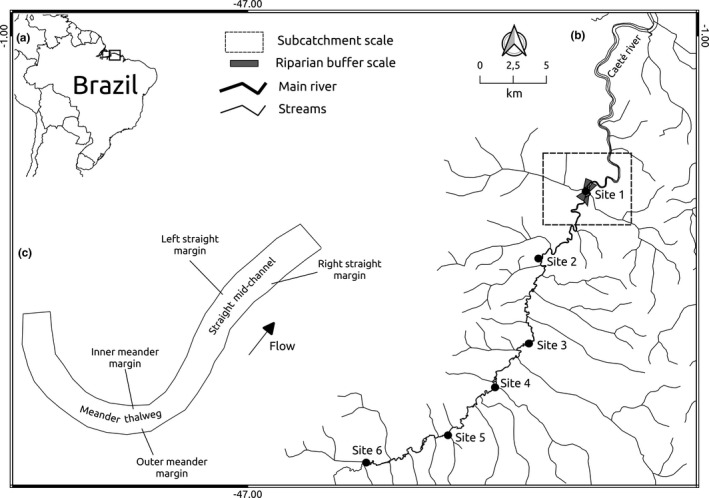
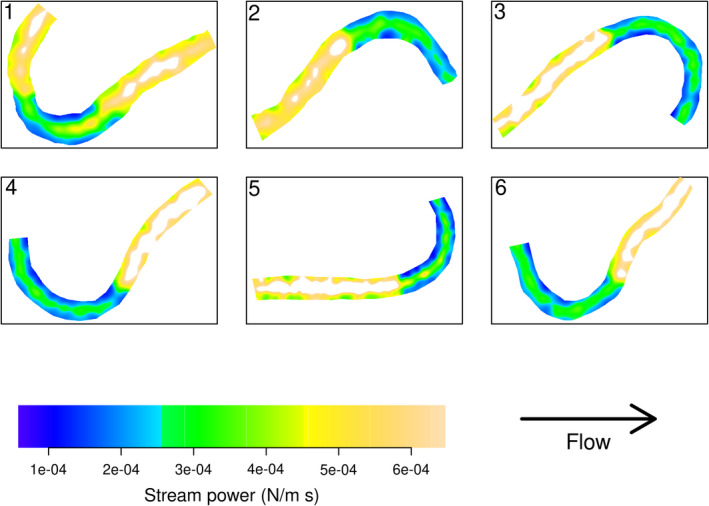
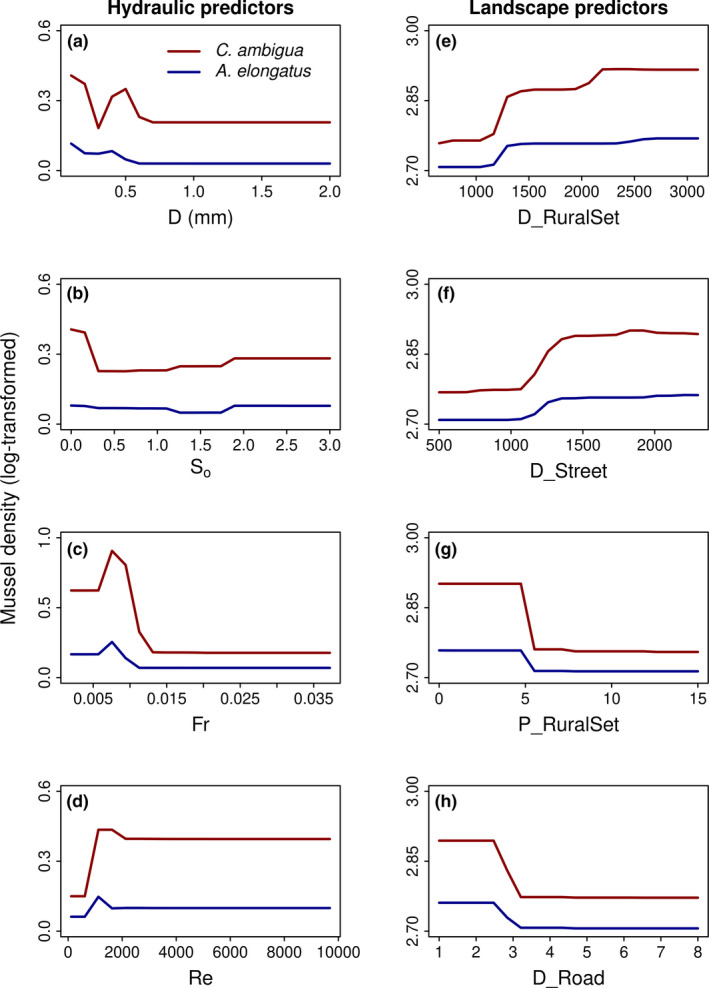
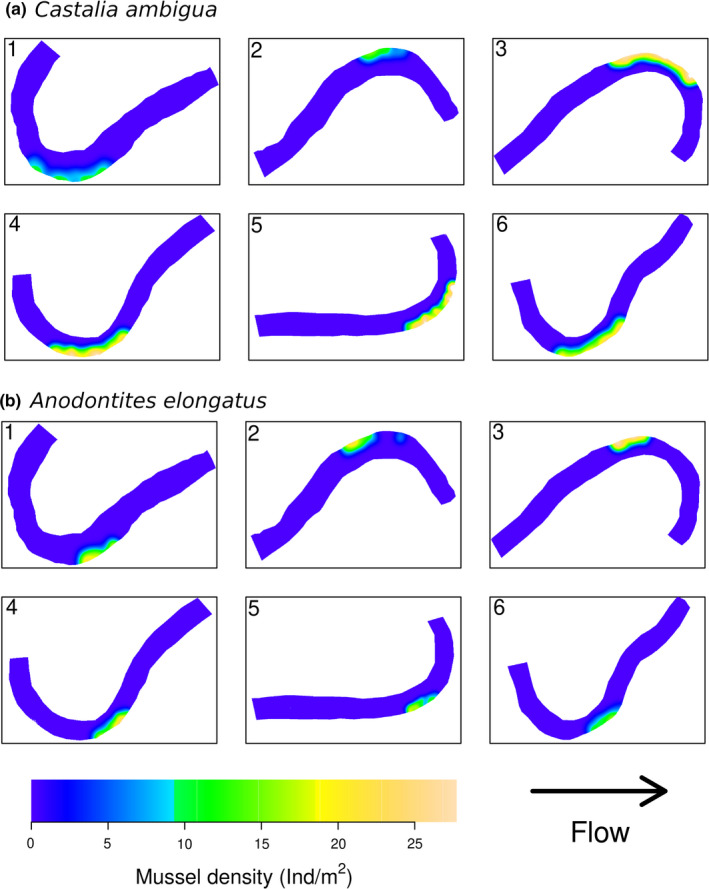
Novel insights into habitat suitability for two Unionida freshwater mussels, Lamarck, 1819 (Hyriidae) and (Swainson, 1823) (Mycetopodidae), are presented on the basis of hydraulic variables linked with the riverbed in six 500-m reaches in an eastern Amazonian river basin. Within the reaches, there was strong habitat heterogeneity in hydrodynamics and substrate composition. In addition, we investigated stressors based on landscape modification that are associated with declines in mussel density. We measured hydraulic variables for each 500-m reach, and landscape stressors at two spatial scales (subcatchment and riparian buffer forest). We used the Random Forest algorithm, a tree-based model, to predict the hydraulic variables linked with habitat suitability for mussels, and to predict which landscape stressors were most associated with mussel density declines. Both mussel species were linked with low substrate heterogeneity and greater riverbed stability (low Froude and Reynolds numbers), especially at high flow (low stream power). Different sediment grain size preferences were observed between mussel species: was associated with medium sand and with medium and fine sand. Declines in mussel density were associated with modifications linked to urbanization at small scales (riparian buffer forest), especially with percent of and distance from rural settlements, distance to the nearest street, and road density. In summary, the high variance explained in both hydraulic and landscape models indicated high predictive power, suggesting that our findings may be extrapolated and used as a baseline to test hypotheses of habitat suitability in other Amazonian rivers for and and also for other freshwater mussel species. Our results highlight the urgent need for aquatic habitat conservation to maintain sheltered habitats during high flow as well as mitigate the effects of landscape modifications at the riparian buffer scale, both of which are important for maintaining dense mussel populations and habitat quality.
基于与亚马逊河东部流域6个500米河段河床相关的水力变量,提出了对两种淡水贻贝(1819年的拉马克氏贻贝(蚶科)和1823年的斯文森氏贻贝(菌足贻贝科))栖息地适宜性的新见解。在这些河段内,水动力和基质组成存在很强的栖息地异质性。此外,我们研究了与贻贝密度下降相关的基于景观改造的压力源。我们测量了每个500米河段的水力变量,以及两个空间尺度(子流域和河岸缓冲林)的景观压力源。我们使用随机森林算法(一种基于树的模型)来预测与贻贝栖息地适宜性相关的水力变量,并预测哪些景观压力源与贻贝密度下降最相关。两种贻贝物种都与低基质异质性和更高的河床稳定性(低弗劳德数和雷诺数)有关,特别是在高流量(低水流功率)时。在贻贝物种之间观察到不同的沉积物粒度偏好:拉马克氏贻贝与中砂有关,斯文森氏贻贝与中砂和细砂有关。贻贝密度的下降与小规模(河岸缓冲林)城市化相关的改造有关,特别是与农村定居点的百分比和距离、到最近街道的距离以及道路密度有关。总之,水力和景观模型中解释的高方差表明具有很高的预测能力,这表明我们的研究结果可以外推,并用作测试其他亚马逊河流域拉马克氏贻贝和斯文森氏贻贝以及其他淡水贻贝物种栖息地适宜性假设的基线。我们的结果强调了迫切需要保护水生生境,以在高流量期间维持庇护生境,并减轻河岸缓冲尺度景观改造的影响,这两者对于维持密集的贻贝种群和生境质量都很重要。