Department of Biological Sciences, Virginia Polytechnic Institute and State University, Blacksburg, Virginia, USA.
Advanced Light Source, Lawrence Berkeley National Laboratory, Berkeley, California, USA.
J Biol Chem. 2021 Oct;297(4):101193. doi: 10.1016/j.jbc.2021.101193. Epub 2021 Sep 13.
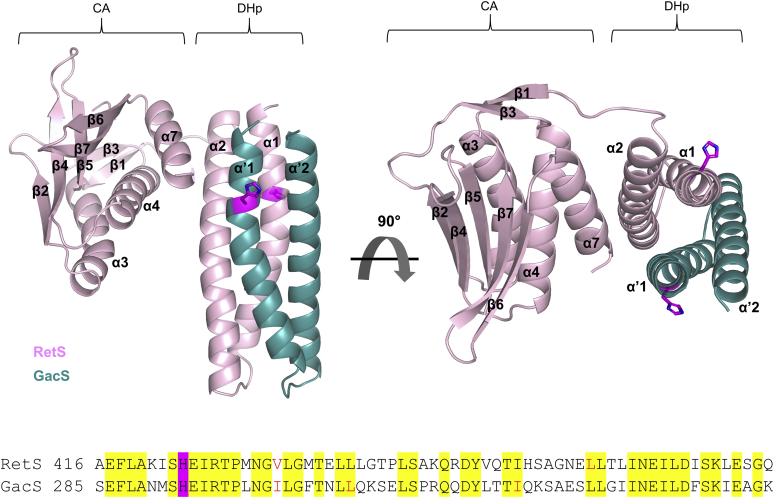
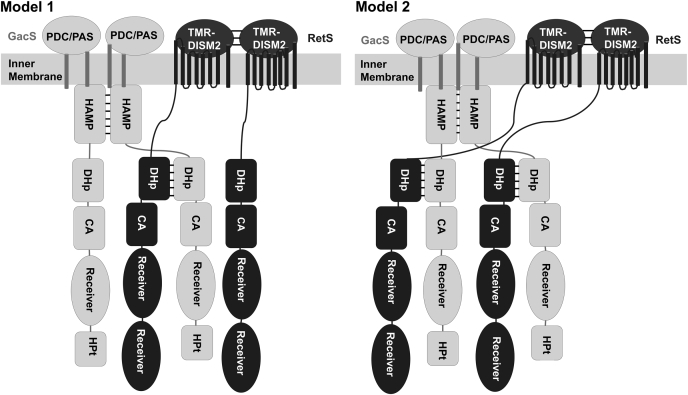
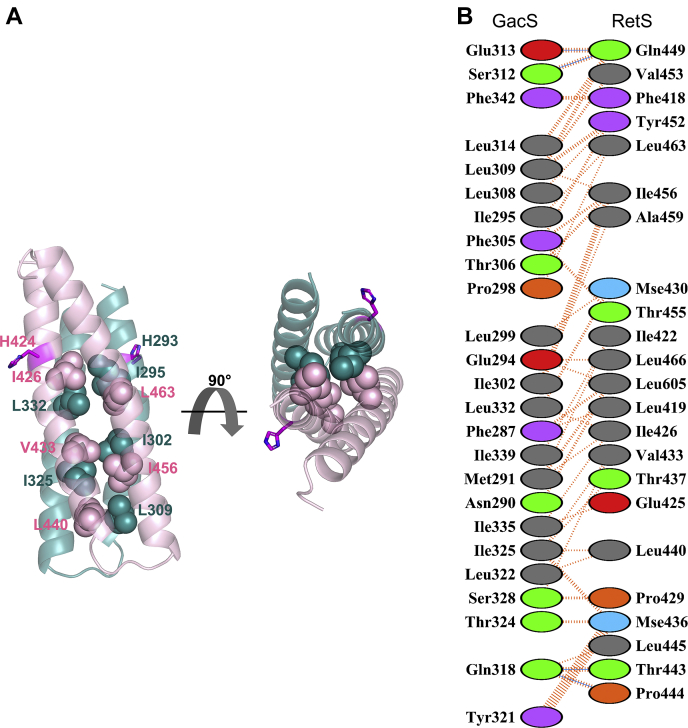
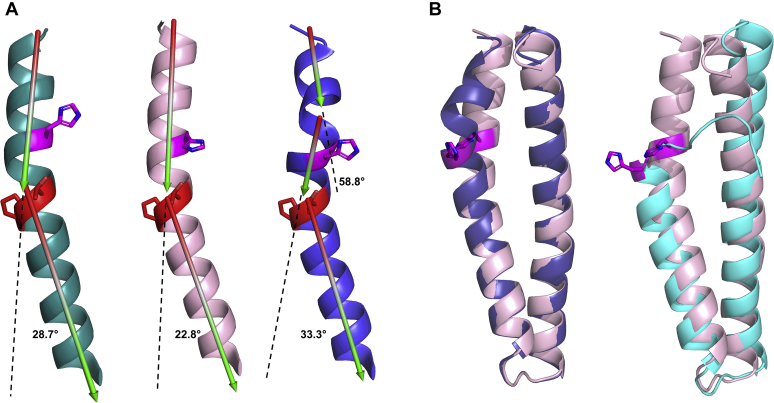
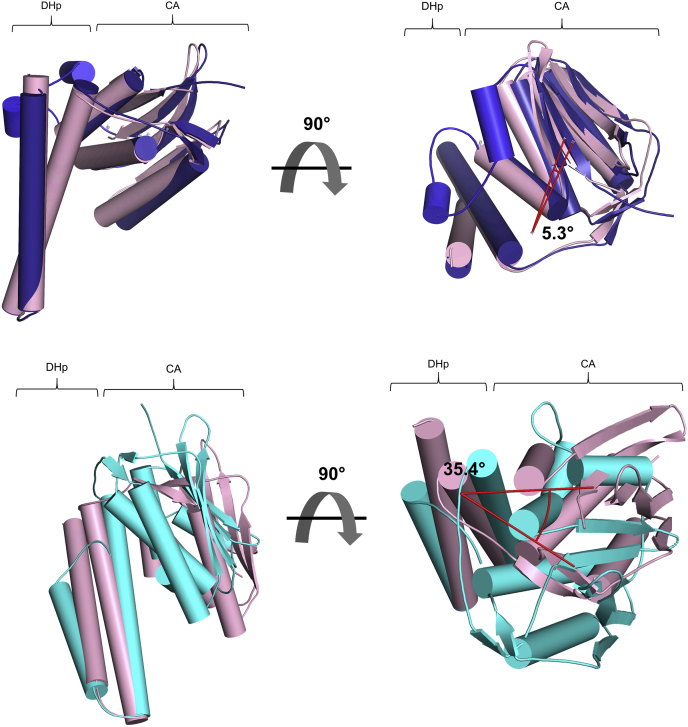
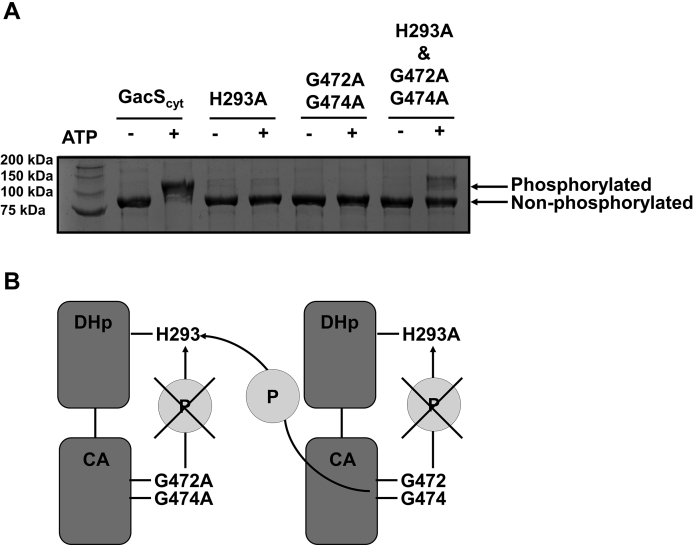
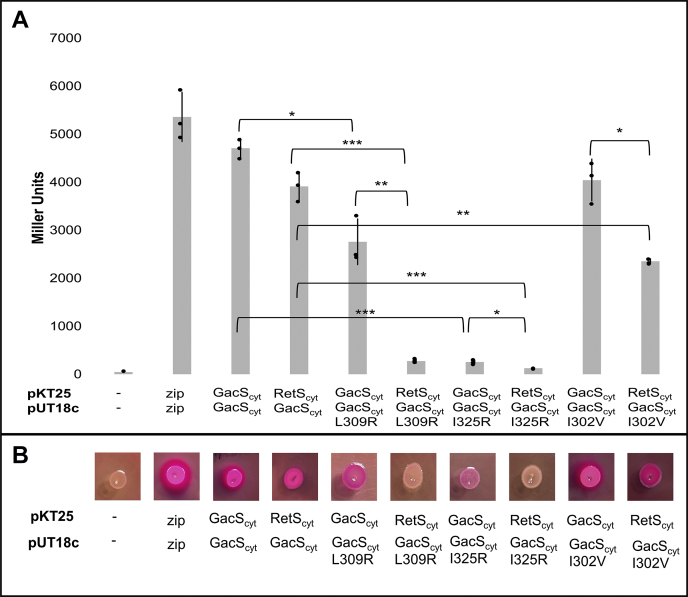
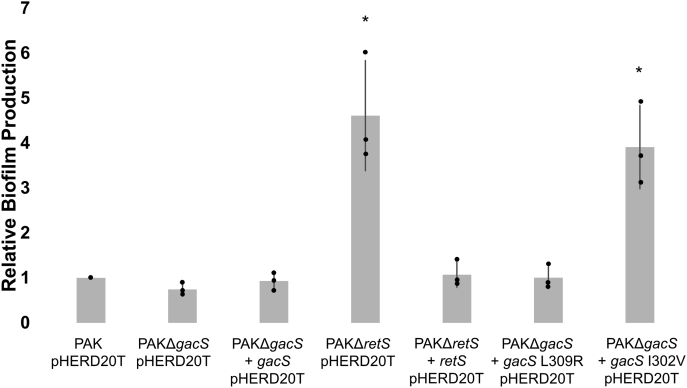
Bacterial signaling histidine kinases (HKs) have long been postulated to function exclusively through linear signal transduction chains. However, several HKs have recently been shown to form complex multikinase networks (MKNs). The most prominent MKN, involving the enzymes RetS and GacS, controls the switch between the motile and biofilm lifestyles in the pathogenic bacterium Pseudomonas aeruginosa. While GacS promotes biofilm formation, RetS counteracts GacS using three distinct mechanisms. Two are dephosphorylating mechanisms. The third, a direct binding between the RetS and GacS HK regions, blocks GacS autophosphorylation. Focusing on the third mechanism, we determined the crystal structure of a cocomplex between the HK region of RetS and the dimerization and histidine phosphotransfer (DHp) domain of GacS. This is the first reported structure of a complex between two distinct bacterial signaling HKs. In the complex, the canonical HK homodimerization interface is replaced by a strikingly similar heterodimeric interface between RetS and GacS. We further demonstrate that GacS autophosphorylates in trans, thus explaining why the formation of a RetS-GacS complex inhibits GacS autophosphorylation. Using mutational analysis in conjunction with bacterial two-hybrid and biofilm assays, we not only corroborate the biological role of the observed RetS-GacS interactions, but also identify a residue critical for the equilibrium between the RetS-GacS complex and the respective RetS and GacS homodimers. Collectively, our findings suggest that RetS and GacS form a domain-swapped hetero-oligomer during the planktonic growth phase of P. aeruginosa before unknown signals cause its dissociation and a relief of GacS inhibition to promote biofilm formation.
细菌信号组氨酸激酶 (HKs) 长期以来一直被认为仅通过线性信号转导链发挥作用。然而,最近有几项研究表明,一些 HK 可以形成复杂的多激酶网络 (MKN)。最著名的 MKN 涉及酶 RetS 和 GacS,控制着病原菌铜绿假单胞菌在游动和生物膜生活方式之间的转换。虽然 GacS 促进生物膜的形成,但 RetS 通过三种不同的机制来拮抗 GacS。两种是去磷酸化机制。第三种是 RetS 和 GacS HK 区域之间的直接结合,阻止 GacS 自身磷酸化。我们专注于第三种机制,确定了 RetS 的 HK 区域与 GacS 的二聚化和组氨酸磷酸转移 (DHp) 结构域的复合物的晶体结构。这是首次报道的两个不同细菌信号 HK 之间的复合物结构。在复合物中,规范的 HK 同源二聚化界面被 RetS 和 GacS 之间惊人相似的异源二聚化界面所取代。我们进一步证明 GacS 以反式方式进行自身磷酸化,从而解释了为什么形成 RetS-GacS 复合物会抑制 GacS 自身磷酸化。我们使用突变分析结合细菌双杂交和生物膜测定,不仅证实了观察到的 RetS-GacS 相互作用的生物学作用,而且还确定了一个对 RetS-GacS 复合物与相应的 RetS 和 GacS 同源二聚体之间的平衡至关重要的残基。总的来说,我们的研究结果表明,RetS 和 GacS 在铜绿假单胞菌浮游生长阶段形成一个交换结构域的异源寡聚体,然后未知信号导致其解离,解除对 GacS 的抑制作用,从而促进生物膜的形成。