Department of Cancer Biology, The University of Texas MD Anderson Cancer Center, Houston, Texas 77030, USA.
Department of Translational Molecular Pathology, The University of Texas MD Anderson Cancer Center, Houston, Texas 77030, USA.
Genes Dev. 2021 Oct 1;35(19-20):1327-1332. doi: 10.1101/gad.348787.121. Epub 2021 Sep 16.
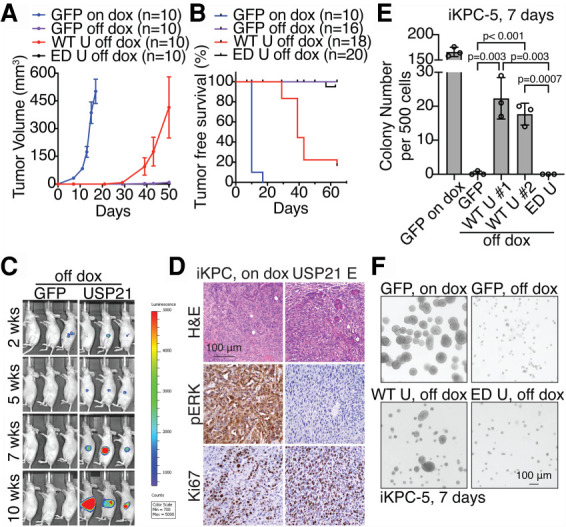
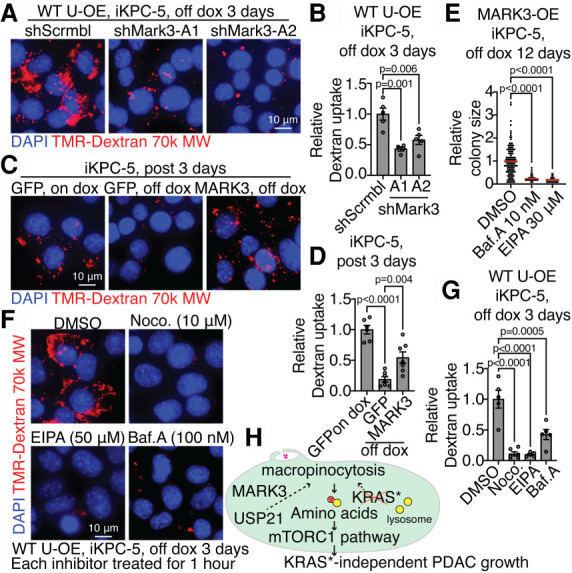
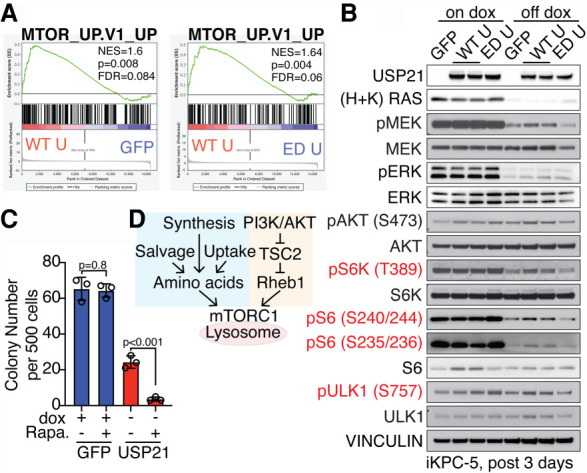
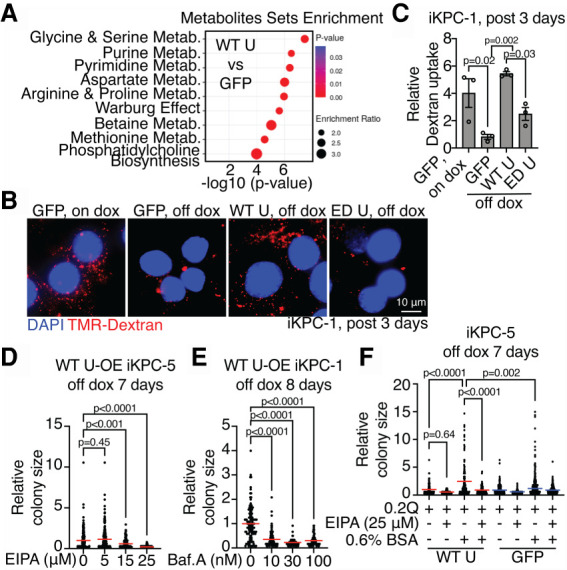
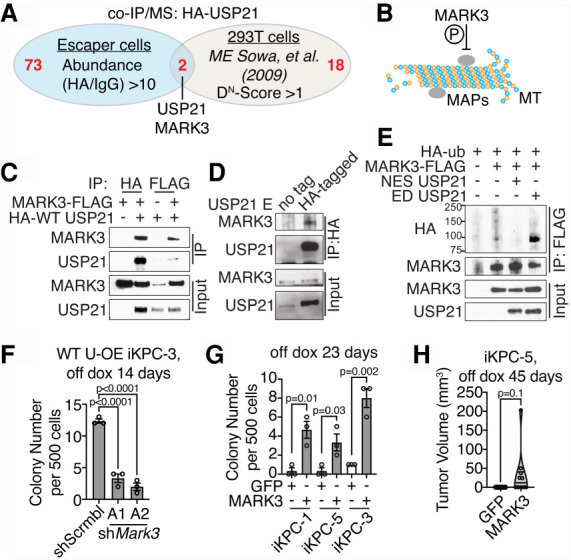
Activating mutations in KRAS (KRAS*) are present in nearly all pancreatic ductal adenocarcinoma (PDAC) cases and critical for tumor maintenance. By using an inducible KRAS* PDAC mouse model, we identified a deubiquitinase USP21-driven resistance mechanism to anti-KRAS* therapy. USP21 promotes KRAS*-independent tumor growth via its regulation of MARK3-induced macropinocytosis, which serves to maintain intracellular amino acid levels for anabolic growth. The USP21-mediated KRAS* bypass, coupled with the frequent amplification of USP21 in human PDAC tumors, encourages the assessment of USP21 as a novel drug target as well as a potential parameter that may affect responsiveness to emergent anti-KRAS* therapy.
KRAS(KRAS*)中的激活突变存在于几乎所有胰腺导管腺癌(PDAC)病例中,对于肿瘤的维持至关重要。通过使用诱导型 KRAS* PDAC 小鼠模型,我们确定了一种去泛素化酶 USP21 驱动的抗 KRAS治疗耐药机制。USP21 通过其对 MARK3 诱导的胞吞作用的调节,促进 KRAS-独立的肿瘤生长,从而维持细胞内氨基酸水平以进行合成代谢生长。USP21 介导的 KRAS旁路,加上人类 PDAC 肿瘤中 USP21 的频繁扩增,鼓励评估 USP21 作为一种新的药物靶点以及可能影响对新兴抗 KRAS治疗反应的潜在参数。