Strauß Tabea, Marvian-Tayaranian Amir, Sadikoglou Eldem, Dhingra Ashutosh, Wegner Florian, Trümbach Dietrich, Wurst Wolfgang, Heutink Peter, Schwarz Sigrid C, Höglinger Günter U
German Center for Neurodegenerative Diseases (DZNE), Munich, Germany.
Department of Neurology, Technical University Munich, Munich, Germany.
Front Cell Dev Biol. 2021 Aug 31;9:726866. doi: 10.3389/fcell.2021.726866. eCollection 2021.
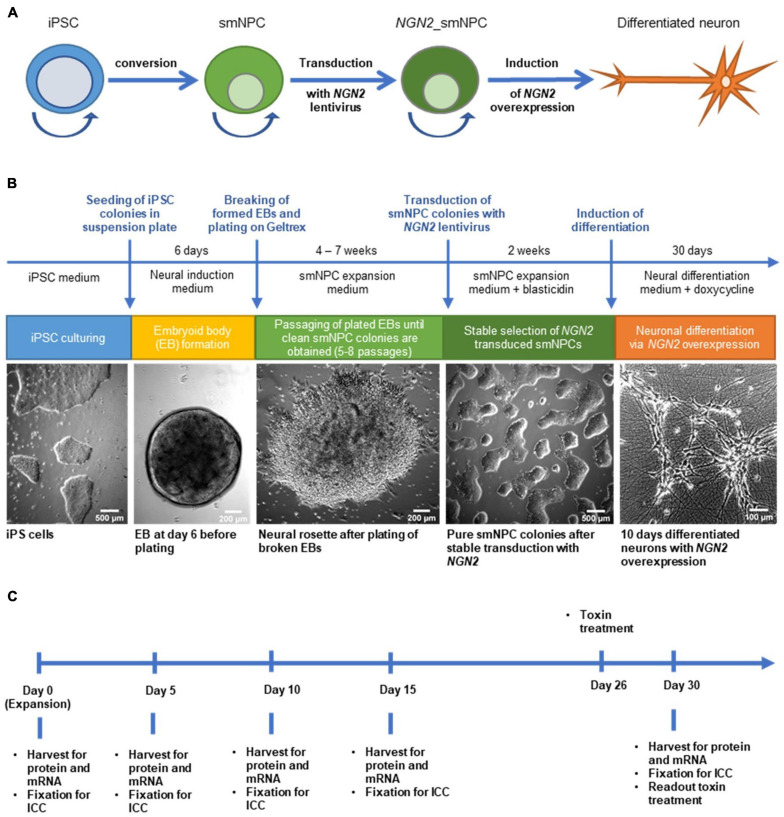
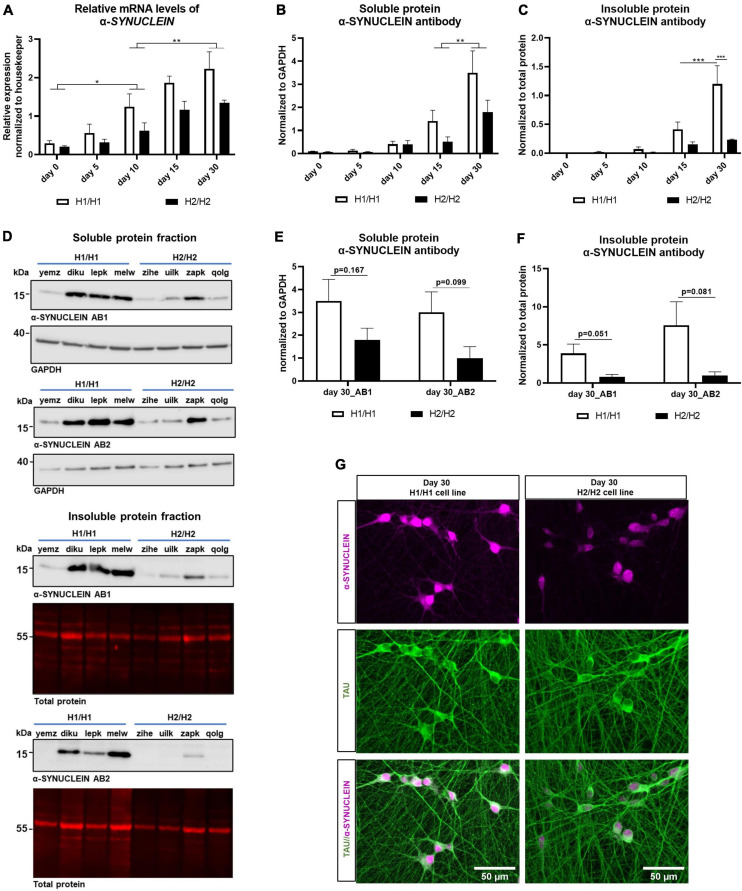
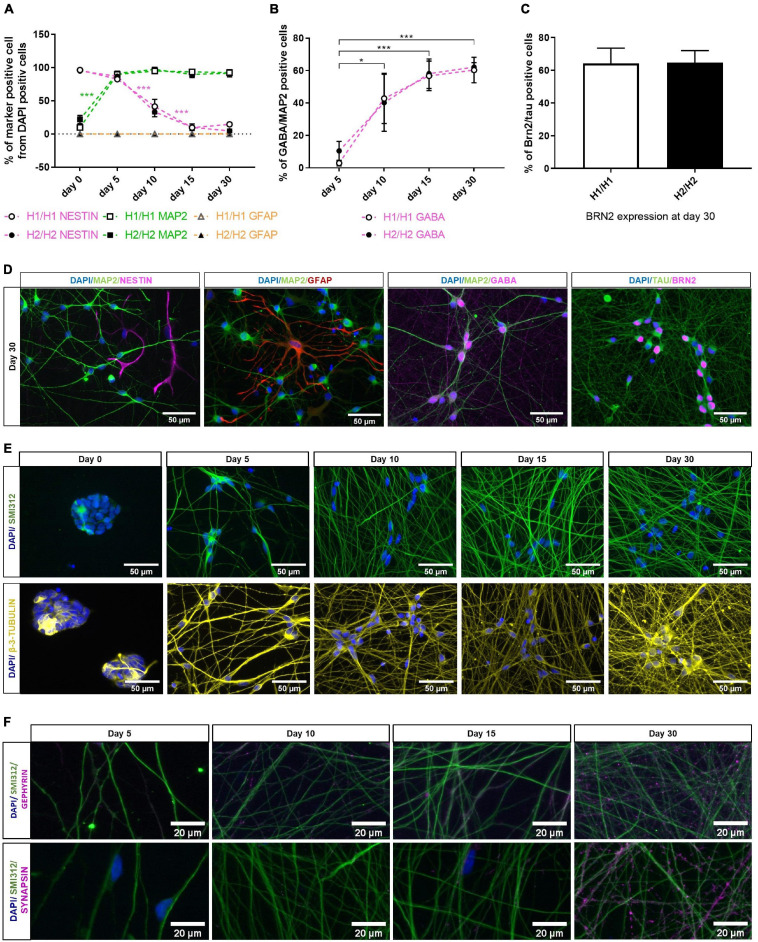
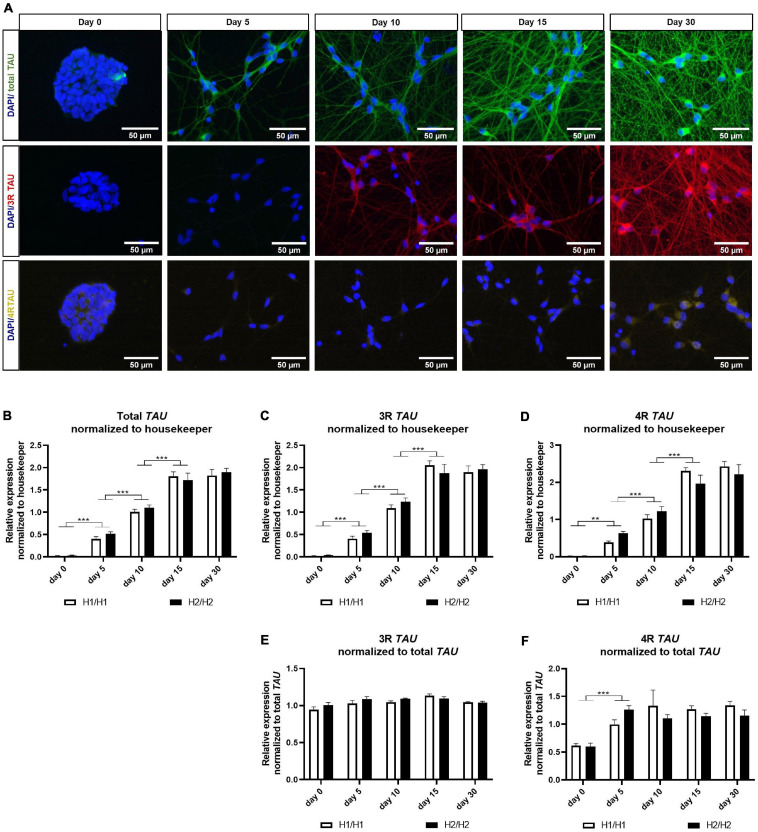
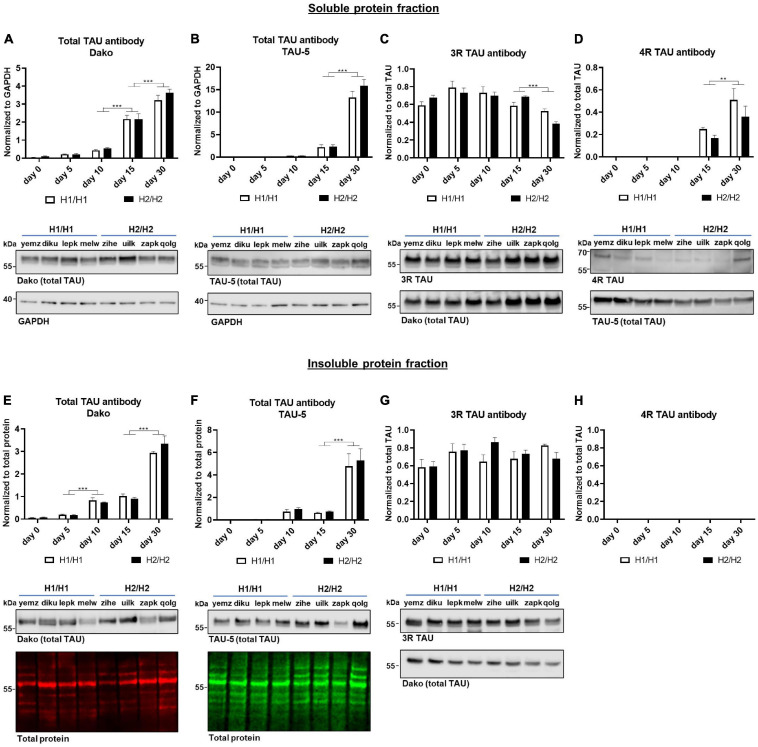
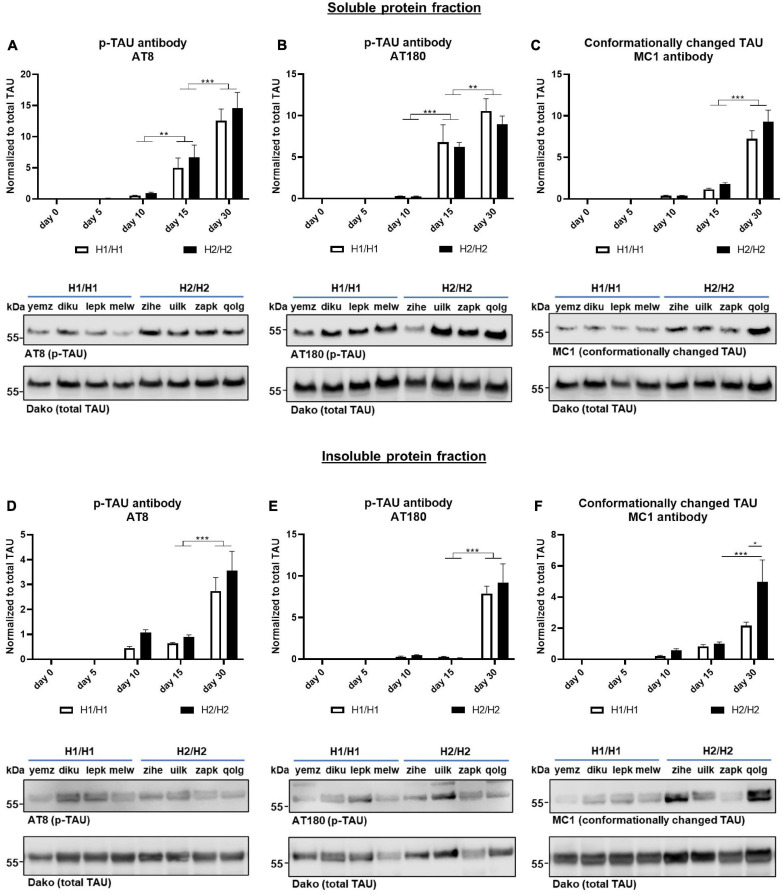
The H1 haplotype of the microtubule-associated protein tau () gene is a common genetic risk factor for some neurodegenerative diseases such as progressive supranuclear palsy, corticobasal degeneration, and Parkinson's disease. The molecular mechanism causing the increased risk for the named diseases, however, remains unclear. In this paper, we present a valuable tool of eight small molecule neural precursor cell lines (smNPC) homozygous for the haplotypes (four H1/H1 and four H2/H2 cell lines), which can be used to identify -dependent phenotypes. The employed differentiation protocol is fast due to overexpression of and therefore suitable for high-throughput approaches. A basic characterization of all human cell lines was performed, and their TAU and α-SYNUCLEIN profiles were compared during a differentiation time of 30 days. We could identify higher levels of conformationally altered TAU in cell lines carrying the H2 haplotype. Additionally, we found increased expression levels of α-SYNUCLEIN in H1/H1 cells. With this resource, we aim to fill a gap in neurodegenerative disease modeling with induced pluripotent stem cells (iPSC) for sporadic tauopathies.
微管相关蛋白tau()基因的H1单倍型是一些神经退行性疾病的常见遗传风险因素,如进行性核上性麻痹、皮质基底节变性和帕金森病。然而,导致上述疾病风险增加的分子机制仍不清楚。在本文中,我们展示了一种有价值的工具,即八个对单倍型纯合的小分子神经前体细胞系(smNPC)(四个H1/H1和四个H2/H2细胞系),可用于识别依赖tau的表型。由于tau的过表达,所采用的分化方案速度很快,因此适用于高通量方法。对所有人类细胞系进行了基本表征,并在30天的分化时间内比较了它们的TAU和α-突触核蛋白谱。我们可以在携带H2单倍型的细胞系中识别出更高水平的构象改变的TAU。此外,我们发现H1/H1细胞中α-突触核蛋白的表达水平增加。利用这一资源,我们旨在填补用诱导多能干细胞(iPSC)对散发性tau蛋白病进行神经退行性疾病建模的空白。