• 文献检索
  • 文档翻译
  • 深度研究
  • 学术资讯
  • Suppr Zotero 插件Zotero 插件
  • 邀请有礼
  • 套餐&价格
  • 历史记录
应用&插件
Suppr Zotero 插件Zotero 插件浏览器插件Mac 客户端Windows 客户端微信小程序
定价
高级版会员购买积分包购买API积分包
服务
文献检索文档翻译深度研究API 文档MCP 服务
关于我们
关于 Suppr公司介绍联系我们用户协议隐私条款
关注我们

Suppr 超能文献

核心技术专利:CN118964589B侵权必究
粤ICP备2023148730 号-1Suppr @ 2026

文献检索

告别复杂PubMed语法,用中文像聊天一样搜索,搜遍4000万医学文献。AI智能推荐,让科研检索更轻松。

立即免费搜索

文件翻译

保留排版,准确专业,支持PDF/Word/PPT等文件格式,支持 12+语言互译。

免费翻译文档

深度研究

AI帮你快速写综述,25分钟生成高质量综述,智能提取关键信息,辅助科研写作。

立即免费体验

多基因风险评分在人类胚胎中的应用:媒体报道的定性研究。

Polygenic risk scoring of human embryos: a qualitative study of media coverage.

机构信息

Department of Public Health and Primary Care, Centre for Biomedical Ethics and Law, KU Leuven, Leuven, Belgium.

Laboratory for Cytogenetics and Genome Research, Department of Human Genetics, Centre for Human Genetics, KU Leuven, Leuven, Belgium.

出版信息

BMC Med Ethics. 2021 Sep 18;22(1):125. doi: 10.1186/s12910-021-00694-4.

DOI:10.1186/s12910-021-00694-4
PMID:34537037
原文链接:https://pmc.ncbi.nlm.nih.gov/articles/PMC8449454/
Abstract

BACKGROUND

Current preimplantation genetic testing (PGT) technologies enable embryo genotyping across the whole genome. This has led to the development of polygenic risk scoring of human embryos (PGT-P). Recent implementation of PGT-P, including screening for intelligence, has been extensively covered by media reports, raising major controversy. Considering the increasing demand for assisted reproduction, we evaluated how information about PGT-P is communicated in press media and explored the diversity of ethical themes present in the public debate.

METHODS

LexisNexis Academic database and Google News were searched to identify articles about polygenic embryo screening. This led to 535 news articles. 59 original articles met the inclusion criteria. Inductive content analysis was used to analyse these articles.

RESULTS

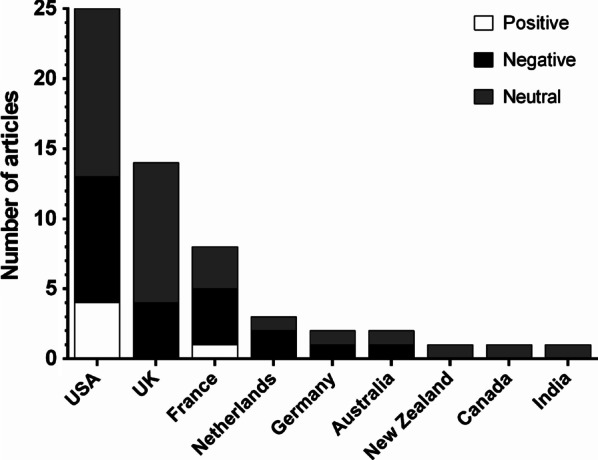
8.8% of articles gave embryo polygenic scoring a positive portrayal, while 36.8% expressed a negative attitude. 54.4% were neutral, mostly highlighting limited practical value of the technology in in vitro fertilization settings. We identified five main ethical themes that are also present in academic literature and the broader debate on reproductive technologies: a slippery slope towards designer babies, well-being of the child and parents, impact on society, deliberate choice and societal readiness.

CONCLUSIONS

Implementation of embryo polygenic profiling engenders a need for specific recommendations. Current media analysis discloses important ethical themes to consider when creating future guidelines for PGT-P.

摘要

背景

目前的胚胎植入前遗传学检测(PGT)技术能够对整个基因组进行胚胎基因分型。这导致了人类胚胎多基因风险评分(PGT-P)的发展。最近,PGT-P 的实施,包括对智力的筛查,已经被媒体广泛报道,引起了重大争议。考虑到辅助生殖的需求不断增加,我们评估了 PGT-P 的信息在新闻媒体中的传播情况,并探讨了公共辩论中存在的伦理主题的多样性。

方法

通过 LexisNexis Academic 数据库和 Google News 搜索了有关多基因胚胎筛查的文章。这导致了 535 篇新闻文章。符合纳入标准的 59 篇原始文章。采用归纳内容分析法对这些文章进行分析。

结果

8.8%的文章对胚胎多基因评分持积极态度,而 36.8%的文章则持消极态度。54.4%的文章持中立态度,主要强调了该技术在体外受精环境中的实际价值有限。我们确定了五个主要的伦理主题,这些主题也存在于学术文献和更广泛的生殖技术辩论中:朝着设计婴儿的滑坡、儿童和父母的幸福、对社会的影响、刻意选择和社会准备。

结论

胚胎多基因分析的实施需要具体的建议。目前的媒体分析揭示了在制定未来 PGT-P 指南时需要考虑的重要伦理主题。
https://cdn.ncbi.nlm.nih.gov/pmc/blobs/65cc/8449454/047f15ee60bd/12910_2021_694_Fig1_HTML.jpg

相似文献

1
Polygenic risk scoring of human embryos: a qualitative study of media coverage.多基因风险评分在人类胚胎中的应用:媒体报道的定性研究。
BMC Med Ethics. 2021 Sep 18;22(1):125. doi: 10.1186/s12910-021-00694-4.
2
Screening embryos for polygenic disease risk: a review of epidemiological, clinical, and ethical considerations.胚胎多基因疾病风险筛查:流行病学、临床和伦理考虑的综述。
Hum Reprod Update. 2024 Oct 1;30(5):529-557. doi: 10.1093/humupd/dmae012.
3
Perspectives of preimplantation genetic testing patients in Belgium on the ethics of polygenic embryo screening.比利时植入前遗传学检测患者对多基因胚胎筛查的伦理观点。
Reprod Biomed Online. 2024 Sep;49(3):104294. doi: 10.1016/j.rbmo.2024.104294. Epub 2024 May 27.
4
Ready for polygenic risk scores? An analysis of regulation of preimplantation genetic testing in European countries.准备好迎接多基因风险评分了吗?欧洲国家植入前基因检测监管情况分析。
Hum Reprod. 2024 May 2;39(5):1117-1130. doi: 10.1093/humrep/deae049.
5
"Are we not going too far?": Socio-ethical considerations of preimplantation genetic testing using polygenic risk scores according to healthcare professionals.“我们是不是走得太远了?”:医疗保健专业人员对使用多基因风险评分进行植入前基因检测的社会伦理考量
Soc Sci Med. 2024 Feb;343:116599. doi: 10.1016/j.socscimed.2024.116599. Epub 2024 Jan 17.
6
Development of an artificial intelligence model for predicting the likelihood of human embryo euploidy based on blastocyst images from multiple imaging systems during IVF.基于体外受精过程中多个成像系统的囊胚图像,开发一种人工智能模型,用于预测人类胚胎整倍体的可能性。
Hum Reprod. 2022 Jul 30;37(8):1746-1759. doi: 10.1093/humrep/deac131.
7
Polygenic embryo screening: quo vadis?多基因胚胎筛查:路在何方?
J Assist Reprod Genet. 2024 Jul;41(7):1719-1726. doi: 10.1007/s10815-024-03169-8. Epub 2024 Jun 15.
8
Limitations, concerns and potential: attitudes of healthcare professionals toward preimplantation genetic testing using polygenic risk scores.局限性、关注点和潜力:医疗保健专业人员对使用多基因风险评分进行胚胎植入前遗传学检测的态度。
Eur J Hum Genet. 2023 Oct;31(10):1133-1138. doi: 10.1038/s41431-023-01333-9. Epub 2023 Mar 20.
9
GENType: all-in-one preimplantation genetic testing by pedigree haplotyping and copy number profiling suitable for third-party reproduction.基因型: 基于家系单体型和拷贝数分析的一站式胚胎植入前遗传学检测, 适用于第三方生殖。
Hum Reprod. 2022 Jun 30;37(7):1678-1691. doi: 10.1093/humrep/deac088.
10
Preimplantation genetic testing for aneuploidies (abnormal number of chromosomes) in in vitro fertilisation.体外受精中对非整倍体(染色体数量异常)进行植入前基因检测。
Cochrane Database Syst Rev. 2020 Sep 8;9(9):CD005291. doi: 10.1002/14651858.CD005291.pub3.

引用本文的文献

1
Eugenics and polygenic embryo screening: Public, clinician, and patient perceptions of conditions versus traits.优生学与多基因胚胎筛查:公众、临床医生及患者对疾病与特征的看法
Genet Med. 2025 Sep;27(9):101507. doi: 10.1016/j.gim.2025.101507. Epub 2025 Jun 21.
2
Foretelling the Future: Preimplantation Genetic Testing and the Coming of Polygenic Embryo Screening.预测未来:植入前基因检测与多基因胚胎筛查的到来
J Clin Med. 2025 May 31;14(11):3885. doi: 10.3390/jcm14113885.
3
Promises and pitfalls of preimplantation genetic testing for polygenic disorders: a narrative review.

本文引用的文献

1
Utility of polygenic embryo screening for disease depends on the selection strategy.多基因胚胎筛查在疾病中的效用取决于选择策略。
Elife. 2021 Oct 12;10:e64716. doi: 10.7554/eLife.64716.
2
Problems with Using Polygenic Scores to Select Embryos.使用多基因评分选择胚胎存在的问题。
N Engl J Med. 2021 Jul 1;385(1):78-86. doi: 10.1056/NEJMsr2105065.
3
Screening embryos for polygenic conditions and traits: ethical considerations for an emerging technology.对胚胎进行多基因疾病和性状筛查:一项新兴技术的伦理考量
多基因疾病植入前基因检测的前景与陷阱:一项叙述性综述
F S Rev. 2025 Jun;6(1). doi: 10.1016/j.xfnr.2024.100085. Epub 2024 Dec 19.
4
Patient perspectives after receiving simulated preconception polygenic risk scores (PRS) for family planning.接受模拟的孕前多基因风险评分(PRS)用于计划生育后的患者观点。
J Assist Reprod Genet. 2025 Mar;42(3):997-1013. doi: 10.1007/s10815-025-03397-6. Epub 2025 Feb 11.
5
Polygenic embryo screening: quo vadis?多基因胚胎筛查:路在何方?
J Assist Reprod Genet. 2024 Jul;41(7):1719-1726. doi: 10.1007/s10815-024-03169-8. Epub 2024 Jun 15.
6
Screening embryos for polygenic disease risk: a review of epidemiological, clinical, and ethical considerations.胚胎多基因疾病风险筛查:流行病学、临床和伦理考虑的综述。
Hum Reprod Update. 2024 Oct 1;30(5):529-557. doi: 10.1093/humupd/dmae012.
7
Islamic Perspectives on Polygenic Testing and Selection of IVF Embryos (PGT-P) for Optimal Intelligence and Other Non-Disease-Related Socially Desirable Traits.关于为获得最佳智力和其他与疾病无关的社会期望性状而进行多基因检测和体外受精胚胎选择(PGT-P)的伊斯兰观点。
J Bioeth Inq. 2024 Sep;21(3):441-448. doi: 10.1007/s11673-023-10293-0. Epub 2023 Dec 4.
8
Research progress and challenges of preimplantation genetic testing for polygenic diseases.多基因疾病植入前遗传学检测的研究进展与挑战。
Zhejiang Da Xue Xue Bao Yi Xue Ban. 2023 Nov 20;53(3):280-287. doi: 10.3724/zdxbyxb-2023-0440.
9
Acceptance of genetic editing and of whole genome sequencing of human embryos by patients with infertility before and after the onset of the COVID-19 pandemic.接受基因编辑和人类胚胎全基因组测序的意愿:在 COVID-19 大流行前后,不孕患者的态度。
Reprod Biomed Online. 2023 Jul;47(1):157-163. doi: 10.1016/j.rbmo.2023.03.013. Epub 2023 Mar 24.
10
Limitations, concerns and potential: attitudes of healthcare professionals toward preimplantation genetic testing using polygenic risk scores.局限性、关注点和潜力:医疗保健专业人员对使用多基因风险评分进行胚胎植入前遗传学检测的态度。
Eur J Hum Genet. 2023 Oct;31(10):1133-1138. doi: 10.1038/s41431-023-01333-9. Epub 2023 Mar 20.
Genet Med. 2021 Mar;23(3):432-434. doi: 10.1038/s41436-020-01019-3. Epub 2020 Oct 27.
4
ESHRE PGT Consortium good practice recommendations for the detection of monogenic disorders.欧洲人类生殖与胚胎学会(ESHRE)植入前基因检测联盟关于单基因疾病检测的良好实践建议。
Hum Reprod Open. 2020 May 29;2020(3):hoaa018. doi: 10.1093/hropen/hoaa018. eCollection 2020.
5
ESHRE PGT Consortium good practice recommendations for the detection of structural and numerical chromosomal aberrations.欧洲人类生殖与胚胎学会植入前遗传学检测联盟关于结构和数目染色体畸变检测的良好实践建议。
Hum Reprod Open. 2020 May 29;2020(3):hoaa017. doi: 10.1093/hropen/hoaa017. eCollection 2020.
6
Hidden in plain sight: the overstated benefits and underestimated losses of potential implantations associated with advertised PGT-A success rates.隐藏在明显之处:与广告宣传的 PGT-A 成功率相关的潜在植入物的过度夸大的益处和低估的损失。
Hum Reprod. 2020 Mar 27;35(3):490-493. doi: 10.1093/humrep/dez280.
7
Utility and First Clinical Application of Screening Embryos for Polygenic Disease Risk Reduction.用于降低多基因疾病风险的胚胎筛查的效用及首次临床应用
Front Endocrinol (Lausanne). 2019 Dec 4;10:845. doi: 10.3389/fendo.2019.00845. eCollection 2019.
8
Screening Human Embryos for Polygenic Traits Has Limited Utility.筛查多基因性状的人类胚胎实用性有限。
Cell. 2019 Nov 27;179(6):1424-1435.e8. doi: 10.1016/j.cell.2019.10.033. Epub 2019 Nov 21.
9
Do à la carte menus serve infertility patients? The ethics and regulation of in vitro fertility add-ons.点菜式菜单是否适合不孕患者?体外生育附加条件的伦理与监管。
Fertil Steril. 2019 Dec;112(6):973-977. doi: 10.1016/j.fertnstert.2019.09.028. Epub 2019 Nov 5.
10
Regulating Preimplantation Genetic Testing across the World: A Comparison of International Policy and Ethical Perspectives.全球范围内对植入前基因检测的监管:国际政策与伦理视角比较
Cold Spring Harb Perspect Med. 2020 May 1;10(5):a036681. doi: 10.1101/cshperspect.a036681.