Child and Adolescent Psychiatry Department, Robert Debré Hospital, APHP, Paris University, Paris, France.
Immunology-Immunopathology-Immunotherapy (i3), INSERM U959, Sorbonne University, Paris, France.
Mol Autism. 2021 Sep 18;12(1):60. doi: 10.1186/s13229-021-00464-4.
Fever during pregnancy is a relatively common and most often trivial event. However, under specific conditions, it could affect significantly fetal brain development. Few studies, with inconsistent results, investigated whether fever, regardless the pathogen, could represent a risk factor for neurodevelopmental disorders (NDD) in the offspring. We aimed to explore further this question by performing a systematic review and meta-analysis.
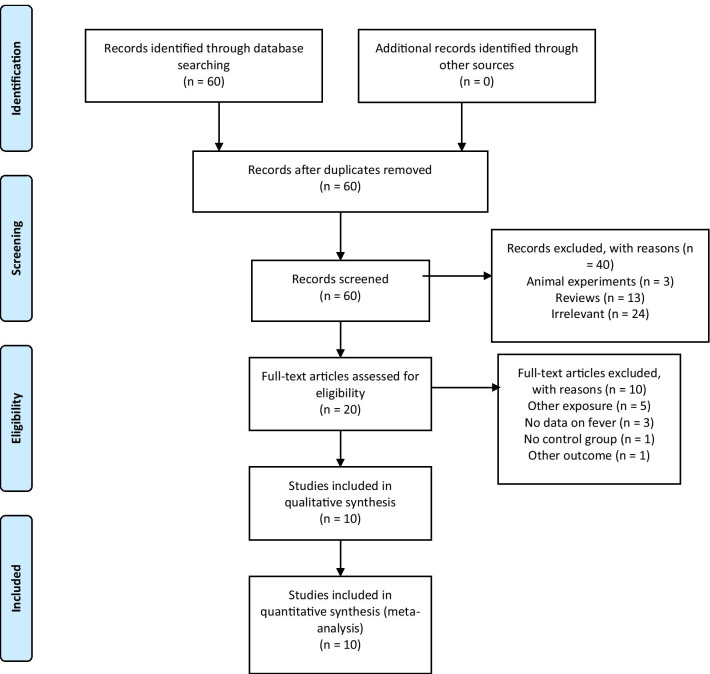
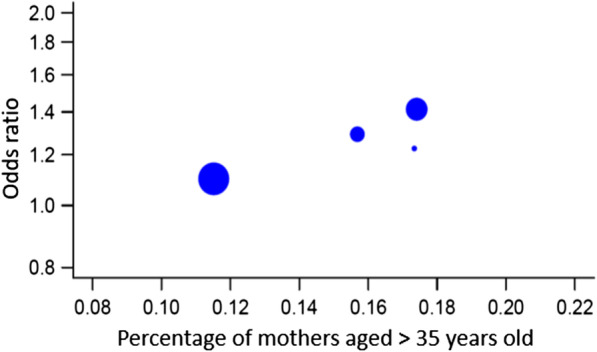
Peer-reviewed studies exploring the occurrence of NDD in offspring after a fetal exposure to maternal fever were included. We specifically considered the impact of fever severity and duration, taking into consideration some confounding variables such as the use of antipyretic during pregnancy, the trimester in which the fever arose, the maternal age or smoking at time of gestation. MEDLINE, EMBASE, PsycINFO, Cochrane and Web of Science were searched without language restriction. PRISMA recommendations were followed. Odds ratio (OR) were pooled using random-effects meta-analysis. Heterogeneity in effect size across studies was studied using random-effects meta-regression analysis. (PROSPERO CRD42020182801).
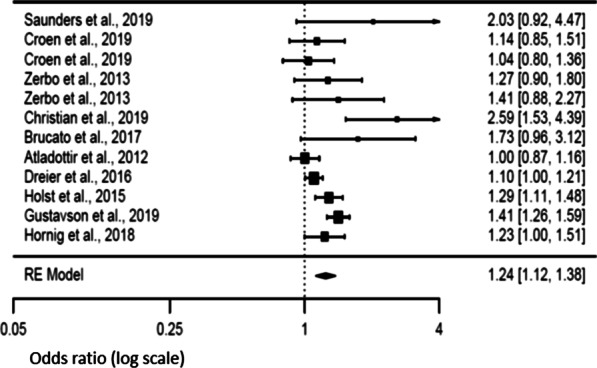
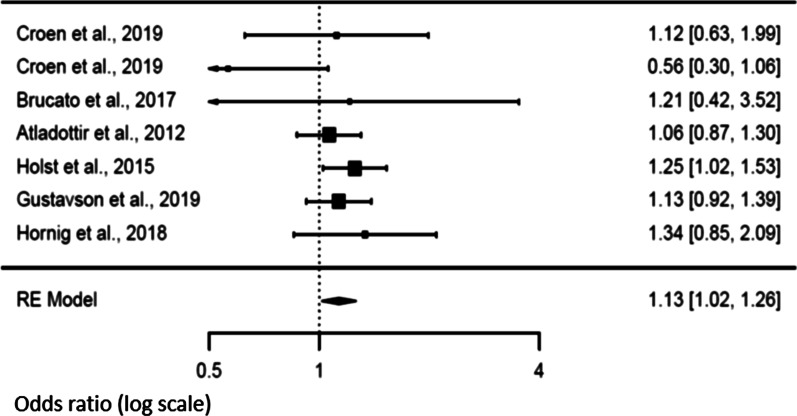
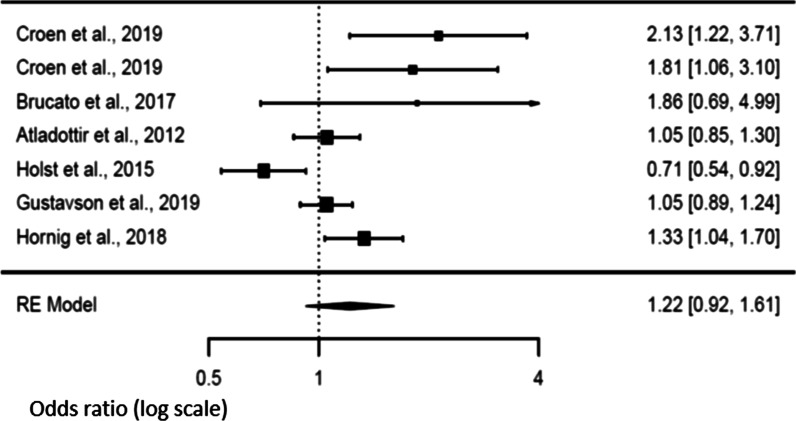
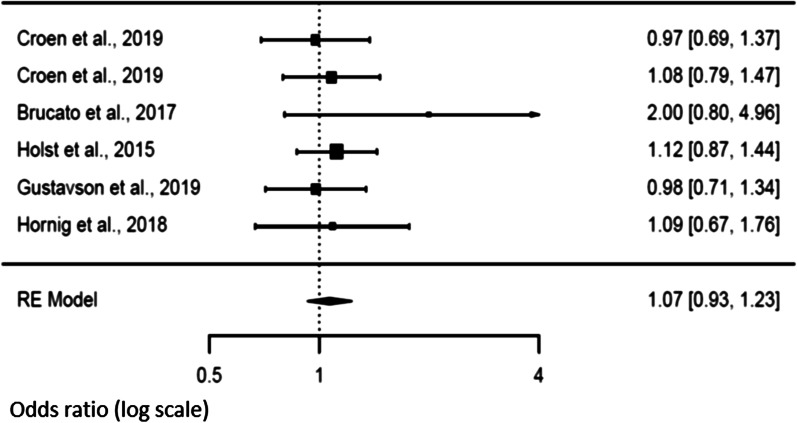
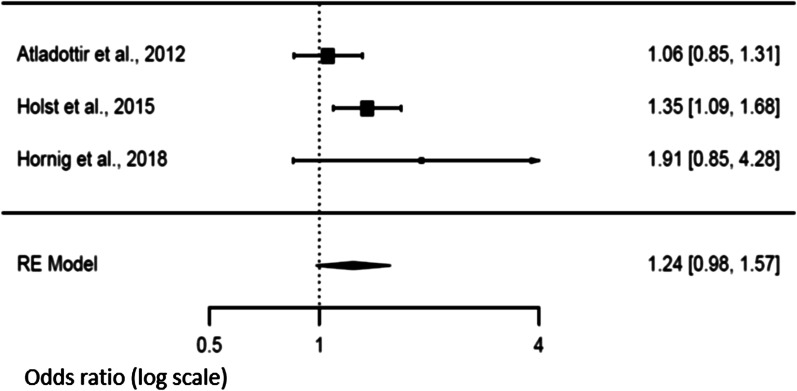
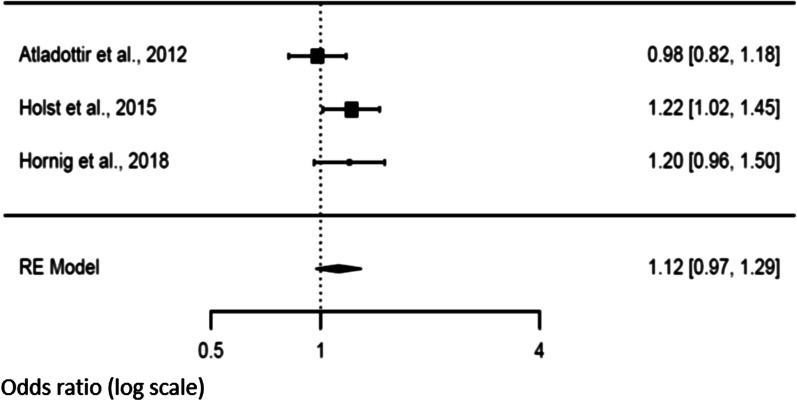
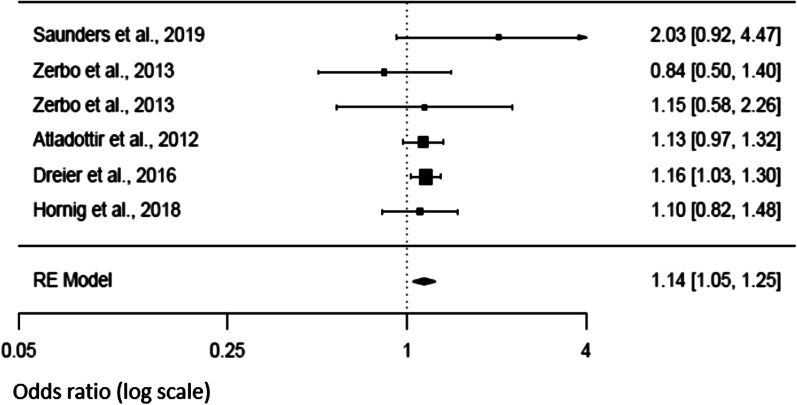
We finally considered ten studies gathering a total of 10,304 children with NDD. Among them, 1394 were exposed to fever during pregnancy. The selected studies were divided into 5 case-control studies and 5 cohort studies. Maternal exposure to fever during pregnancy increased the risk of NDD in offspring with an OR of 1.24 [95% CI: 1.12-1.38]. Secondary analysis revealed an increased risk for NDD when fever occurred during the first trimester of gestation [OR 1.13-95% CI: 1.02-1.26].
We excluded studies that considered infections with no evidence of fever. Another potential limitation may be the possible heterogeneity between study designs (cohorts and case-control).
Additional evidence supported the association between fever during pregnancy and increased risk for NDD in offspring. Careful monitoring should be considered for children born from mothers with a febrile episode during pregnancy (specifically during the first trimester).
孕期发热较为常见,且通常无大碍。但在某些特殊情况下,发热可能会对胎儿大脑发育造成严重影响。虽然有一些研究探讨了发热(无论病原体如何)是否会成为后代神经发育障碍(NDD)的危险因素,但结果并不一致。本研究旨在通过系统综述和荟萃分析进一步探讨这一问题。
纳入研究孕期母亲发热与后代发生 NDD 的相关性,特别考虑了发热严重程度和持续时间的影响,并纳入了一些混杂变量,如孕期使用退烧药、发热发生的孕期阶段、母亲年龄或孕期吸烟等。检索 MEDLINE、EMBASE、PsycINFO、Cochrane 和 Web of Science 等数据库,无语言限制。采用随机效应荟萃分析汇总优势比(OR)。使用随机效应荟萃回归分析研究各研究间效应大小的异质性。(PROSPERO CRD42020182801)。
最终纳入 10 项研究,共纳入 10304 名患有 NDD 的儿童。其中,1394 名儿童的母亲在孕期发热。纳入的研究分为 5 项病例对照研究和 5 项队列研究。母亲孕期发热会增加后代发生 NDD 的风险,OR 为 1.24(95%CI:1.12-1.38)。进一步分析显示,孕早期发热与 NDD 风险增加相关(OR 1.13-95%CI:1.02-1.26)。
我们排除了那些仅考虑无发热证据的感染的研究。另一个潜在的局限性可能是研究设计(队列研究和病例对照研究)之间的异质性。
更多证据支持孕期发热与后代发生 NDD 风险增加之间的关联。对于母亲在孕期出现发热(尤其是孕早期)的儿童,应进行仔细监测。