Pennsylvania College of Optometry, Salus University, Elkins Park, Pennsylvania, USA.
Pennsylvania College of Optometry, Salus University, Elkins Park, Pennsylvania, USA.
J Biol Chem. 2021 Oct;297(4):101201. doi: 10.1016/j.jbc.2021.101201. Epub 2021 Sep 16.
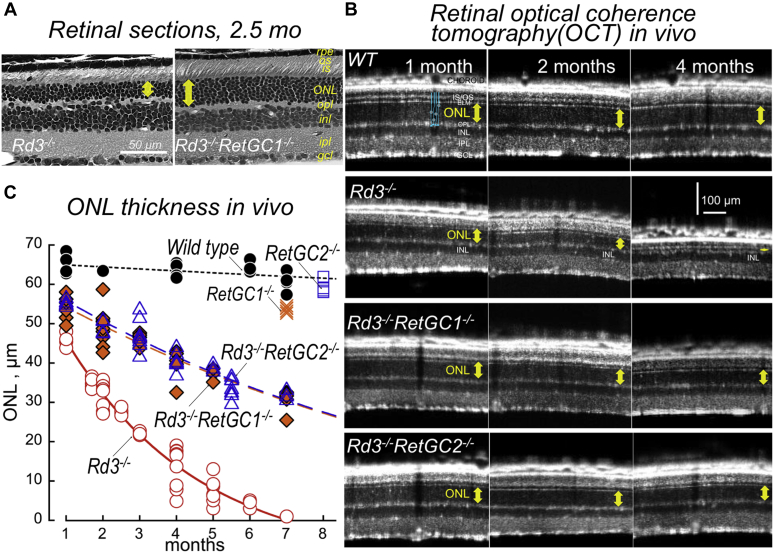
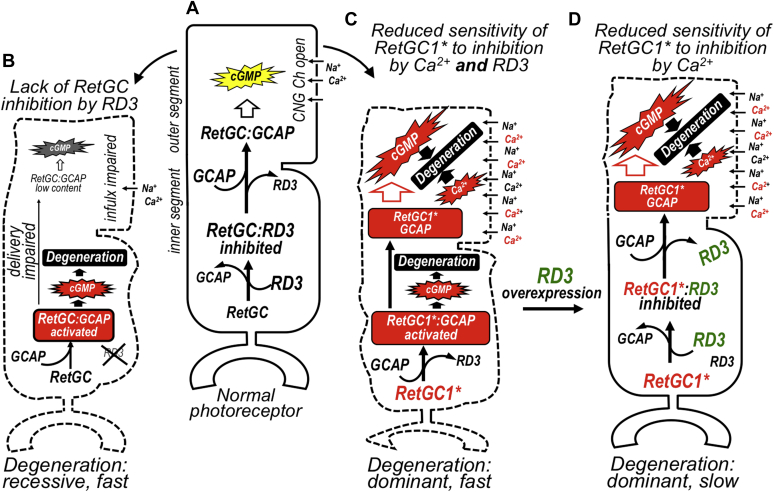
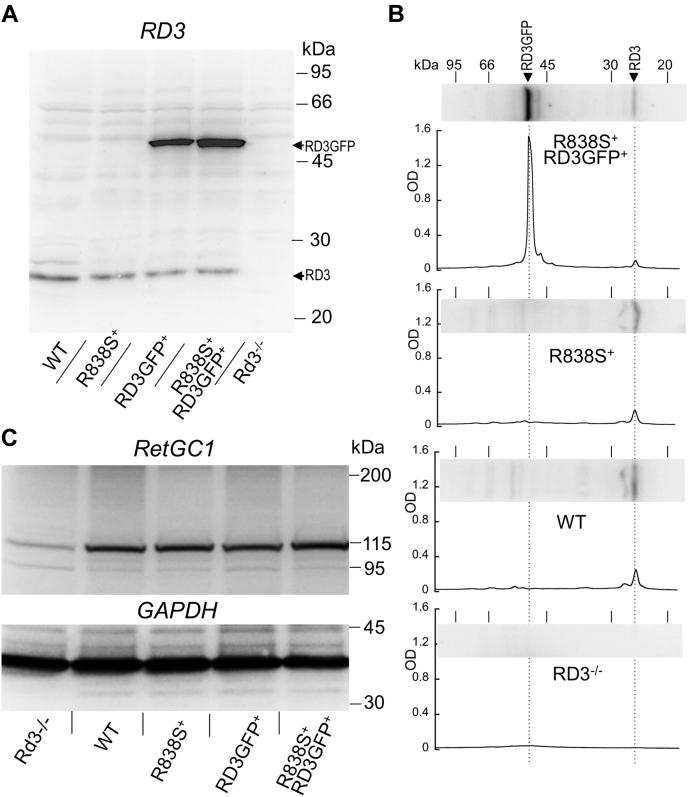
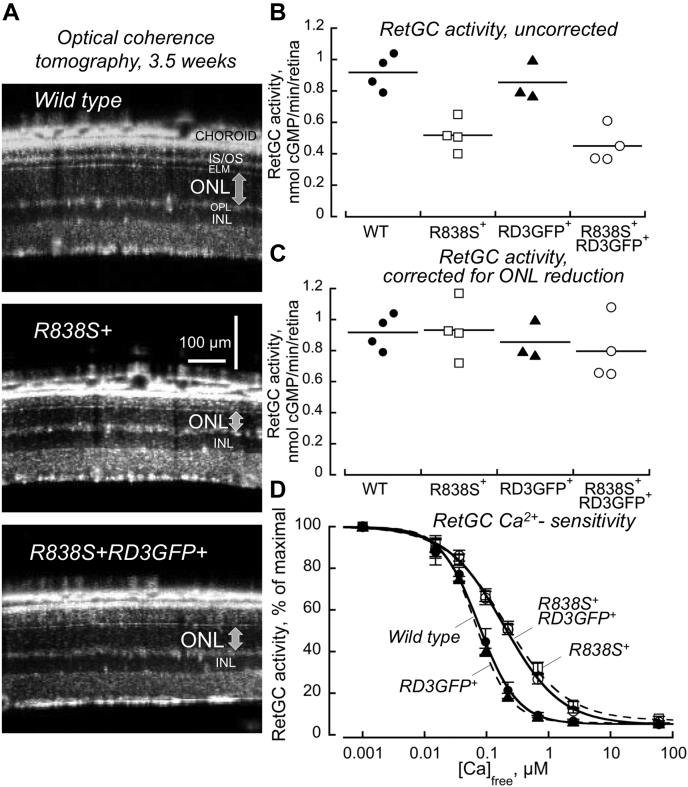
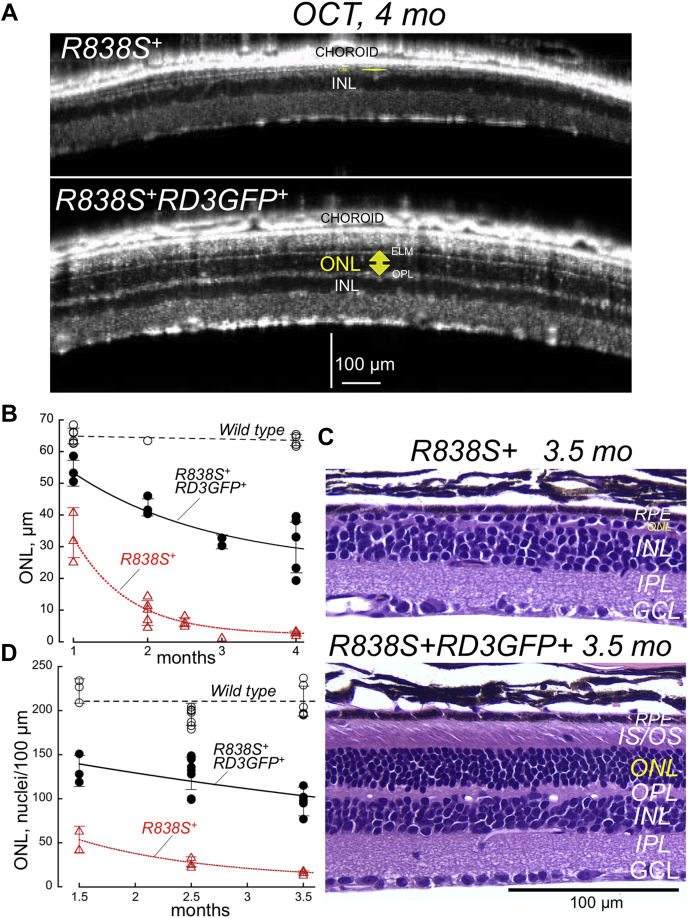
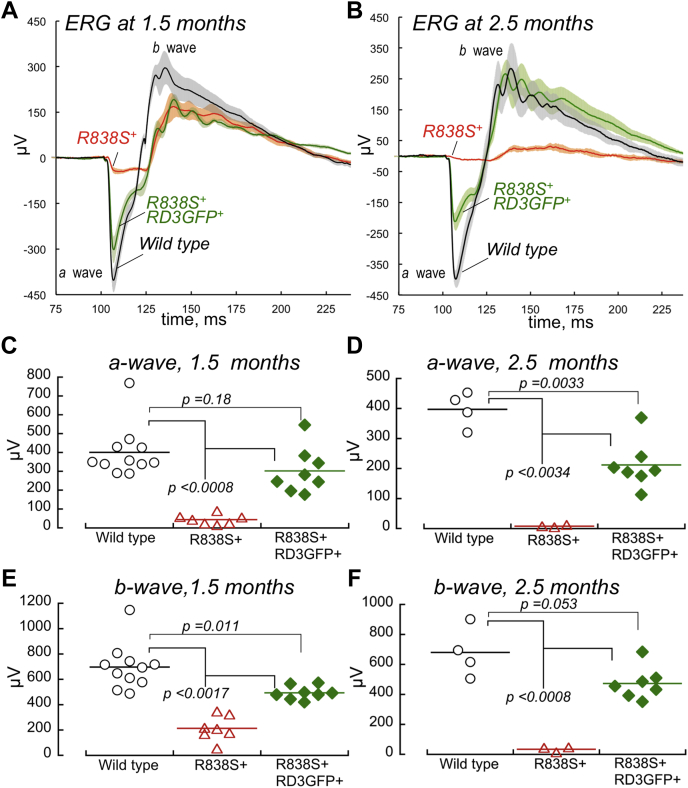
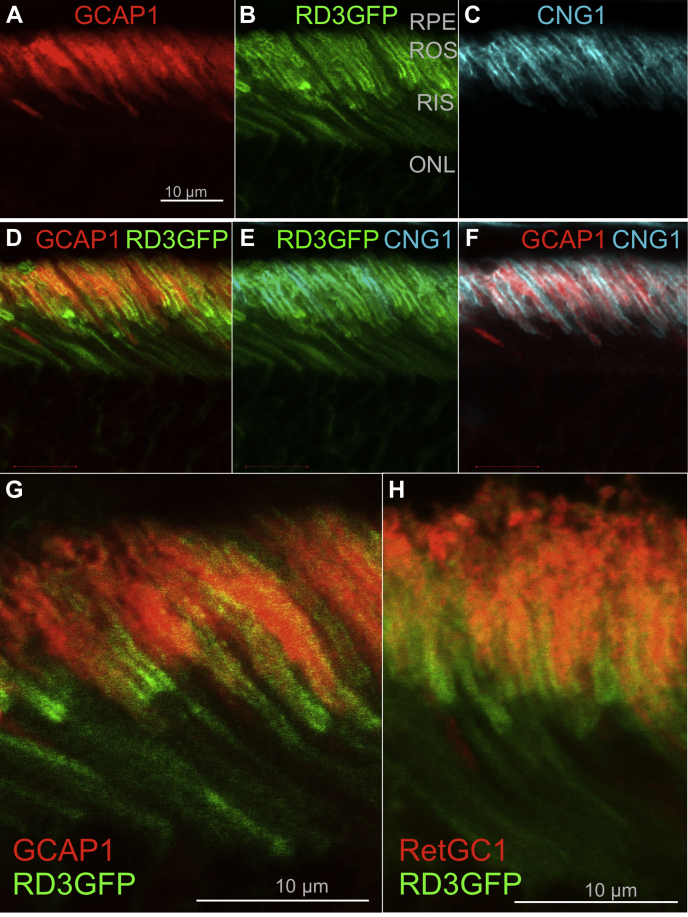
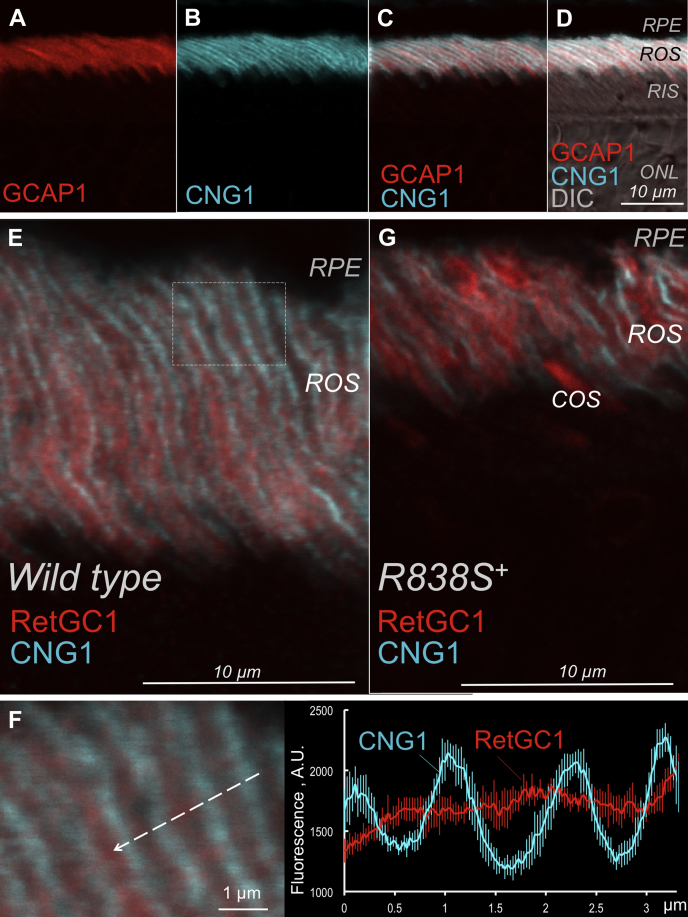
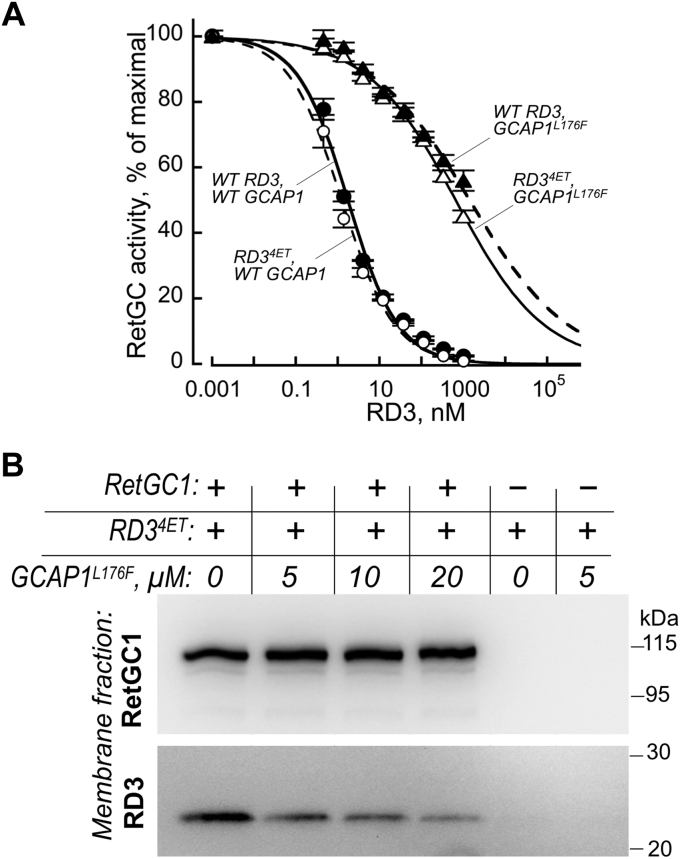
Different forms of photoreceptor degeneration cause blindness. Retinal degeneration-3 protein (RD3) deficiency in photoreceptors leads to recessive congenital blindness. We proposed that aberrant activation of the retinal membrane guanylyl cyclase (RetGC) by its calcium-sensor proteins (guanylyl cyclase-activating protein [GCAP]) causes this retinal degeneration and that RD3 protects photoreceptors by preventing such activation. We here present in vivo evidence that RD3 protects photoreceptors by suppressing activation of both RetGC1 and RetGC2 isozymes. We further suggested that insufficient inhibition of RetGC by RD3 could contribute to some dominant forms of retinal degeneration. The R838S substitution in RetGC1 that causes autosomal-dominant cone-rod dystrophy 6, not only impedes deceleration of RetGC1 activity by CaGCAPs but also elevates this isozyme's resistance to inhibition by RD3. We found that RD3 prolongs the survival of photoreceptors in transgenic mice harboring human R838S RetGC1 (R838S). Overexpression of GFP-tagged human RD3 did not improve the calcium sensitivity of cGMP production in R838S retinas but slowed the progression of retinal blindness and photoreceptor degeneration. Fluorescence of the GFP-tagged RD3 in the retina only partially overlapped with immunofluorescence of RetGC1 or GCAP1, indicating that RD3 separates from the enzyme before the RetGC1:GCAP1 complex is formed in the photoreceptor outer segment. Most importantly, our in vivo results indicate that, in addition to the abnormal Ca sensitivity of R838S RetGC1 in the outer segment, the mutated RetGC1 becomes resistant to inhibition by RD3 in a different cellular compartment(s) and suggest that RD3 overexpression could be utilized to reduce the severity of cone-rod dystrophy 6 pathology.
不同形式的光感受器变性会导致失明。光感受器中的视网膜变性-3 蛋白(RD3)缺乏会导致隐性先天性失明。我们提出,其钙传感器蛋白(鸟苷酸环化酶激活蛋白 [GCAP])使视网膜膜鸟苷酸环化酶(RetGC)异常激活,导致这种视网膜变性,而 RD3 通过阻止这种激活来保护光感受器。我们在这里提供了体内证据,表明 RD3 通过抑制两种 RetGC1 和 RetGC2 同工酶的激活来保护光感受器。我们进一步提出,RD3 对 RetGC 的抑制不足可能导致一些显性形式的视网膜变性。导致常染色体显性圆锥-杆营养不良 6 的 RetGC1 中的 R838S 取代不仅阻碍了 CaGCAPs 对 RetGC1 活性的减速,而且还提高了该同工酶对 RD3 抑制的抵抗力。我们发现,RD3 延长了携带人类 R838S RetGC1(R838S)的转基因小鼠中光感受器的存活时间。GFP 标记的人 RD3 的过表达并没有改善 R838S 视网膜中 cGMP 产生的钙敏感性,但减缓了视网膜失明和光感受器变性的进展。GFP 标记的 RD3 在视网膜中的荧光仅与 RetGC1 或 GCAP1 的免疫荧光部分重叠,表明 RD3 在光感受器外段形成 RetGC1:GCAP1 复合物之前与酶分离。最重要的是,我们的体内结果表明,除了外段中 R838S RetGC1 的异常 Ca 敏感性外,突变的 RetGC1 在不同的细胞区室中对 RD3 的抑制作用产生抗性,并表明 RD3 的过表达可用于减轻圆锥-杆营养不良 6 病变的严重程度。