Nobukawa Sou, Wagatsuma Nobuhiko, Nishimura Haruhiko, Doho Hirotaka, Takahashi Tetsuya
Department of Computer Science, Chiba Institute of Technology, Chiba, Japan.
Department of Information Science, Faculty of Science, Toho University, Chiba, Japan.
Front Comput Neurosci. 2021 Sep 1;15:726641. doi: 10.3389/fncom.2021.726641. eCollection 2021.
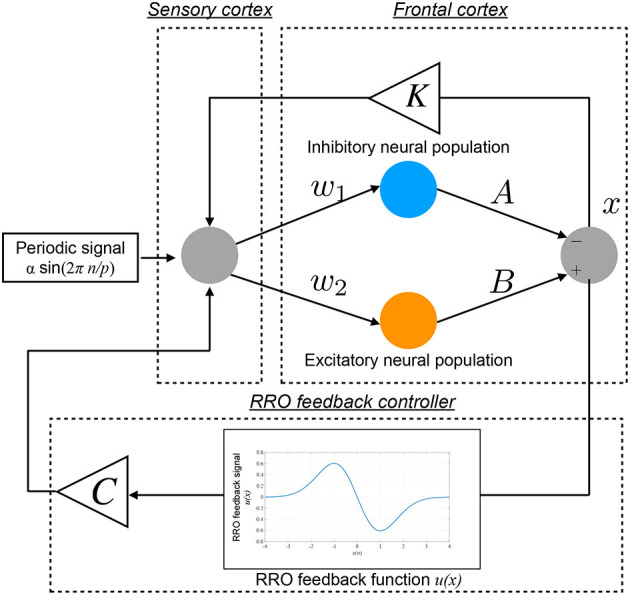
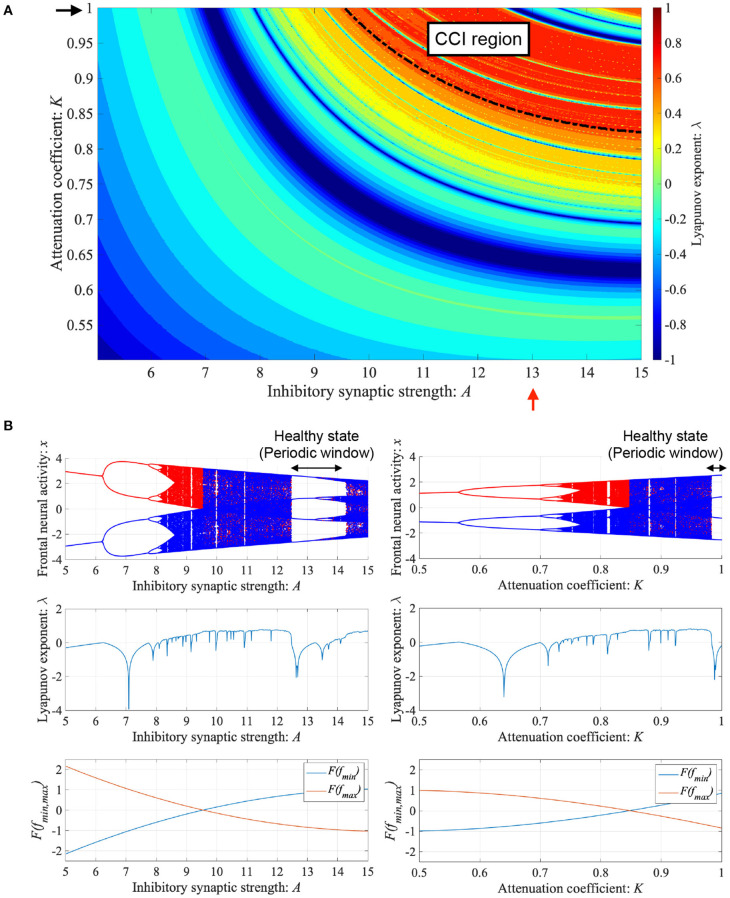
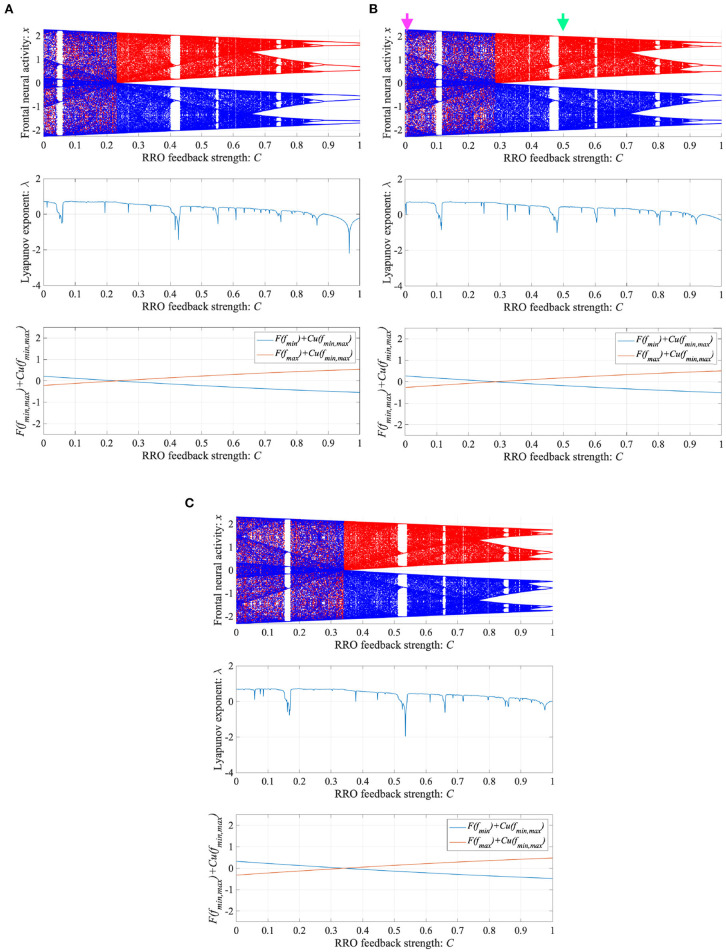
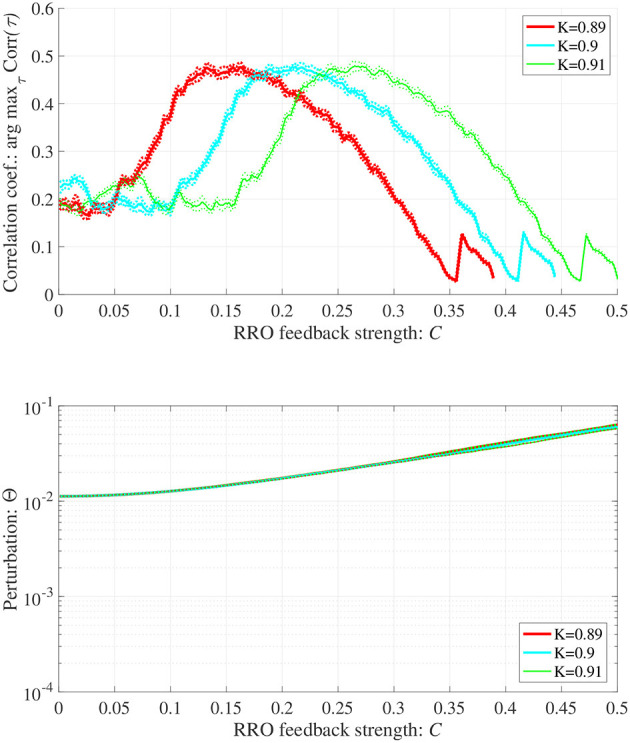
Reduced integrity of neural pathways from frontal to sensory cortices has been suggested as a potential neurobiological basis of attention-deficit hyperactivity disorder. Neurofeedback has been widely applied to enhance reduced neural pathways in attention-deficit hyperactivity disorder by repeated training on a daily temporal scale. Clinical and model-based studies have demonstrated that fluctuations in neural activity underpin sustained attention deficits in attention-deficit hyperactivity disorder. These aberrant neural fluctuations may be caused by the chaos-chaos intermittency state in frontal-sensory neural systems. Therefore, shifting the neural state from an aberrant chaos-chaos intermittency state to a normal stable state with an optimal external sensory stimulus, termed chaotic resonance, may be applied in neurofeedback for attention-deficit hyperactivity disorder. In this study, we applied a neurofeedback method based on chaotic resonance induced by "reduced region of orbit" feedback signals in the Baghdadi model for attention-deficit hyperactivity disorder. We evaluated the stabilizing effect of reduced region of orbit feedback and its robustness against noise from errors in estimation of neural activity. The effect of chaotic resonance successfully shifted the abnormal chaos-chaos intermittency of neural activity to the intended stable activity. Additionally, evaluation of the influence of noise due to measurement errors revealed that the efficiency of chaotic resonance induced by reduced region of orbit feedback signals was maintained over a range of certain noise strengths. In conclusion, applying chaotic resonance induced by reduced region of orbit feedback signals to neurofeedback methods may provide a promising treatment option for attention-deficit hyperactivity disorder.
从额叶到感觉皮层的神经通路完整性降低被认为是注意力缺陷多动障碍潜在的神经生物学基础。神经反馈已被广泛应用,通过在每日时间尺度上的重复训练来增强注意力缺陷多动障碍中降低的神经通路。临床和基于模型的研究表明,神经活动的波动是注意力缺陷多动障碍持续注意力缺陷的基础。这些异常的神经波动可能是由额叶 - 感觉神经系统中的混沌 - 混沌间歇性状态引起的。因此,利用最佳外部感觉刺激将神经状态从异常的混沌 - 混沌间歇性状态转变为正常稳定状态,即所谓的混沌共振,可能应用于注意力缺陷多动障碍的神经反馈治疗。在本研究中,我们应用了一种基于巴格达迪模型中“眼眶缩小区域”反馈信号诱导的混沌共振的神经反馈方法来治疗注意力缺陷多动障碍。我们评估了眼眶缩小区域反馈的稳定作用及其对神经活动估计误差产生的噪声的鲁棒性。混沌共振的作用成功地将神经活动的异常混沌 - 混沌间歇性转变为预期的稳定活动。此外,对测量误差引起的噪声影响的评估表明,眼眶缩小区域反馈信号诱导的混沌共振效率在一定噪声强度范围内得以维持。总之,将眼眶缩小区域反馈信号诱导的混沌共振应用于神经反馈方法可能为注意力缺陷多动障碍提供一种有前景的治疗选择。