Cong Lele, Yi Junxuan, Qiu Shuang, Wang Rui, Jin Shunzi, Jiang Rihua, Cong Xianling
Department of Dermatology, China-Japan Union Hospital, Jilin University, Changchun 130033, Jilin, China.
NHC Key Laboratory of Radiobiology, School of Public Health, Jilin University, Changchun, 130021, China.
J Cancer. 2021 Aug 24;12(20):6105-6117. doi: 10.7150/jca.56123. eCollection 2021.
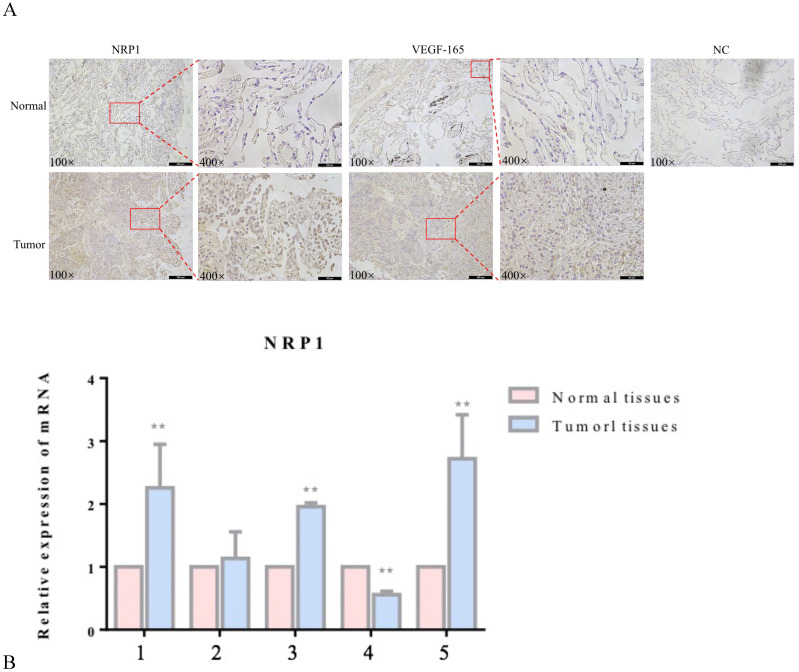
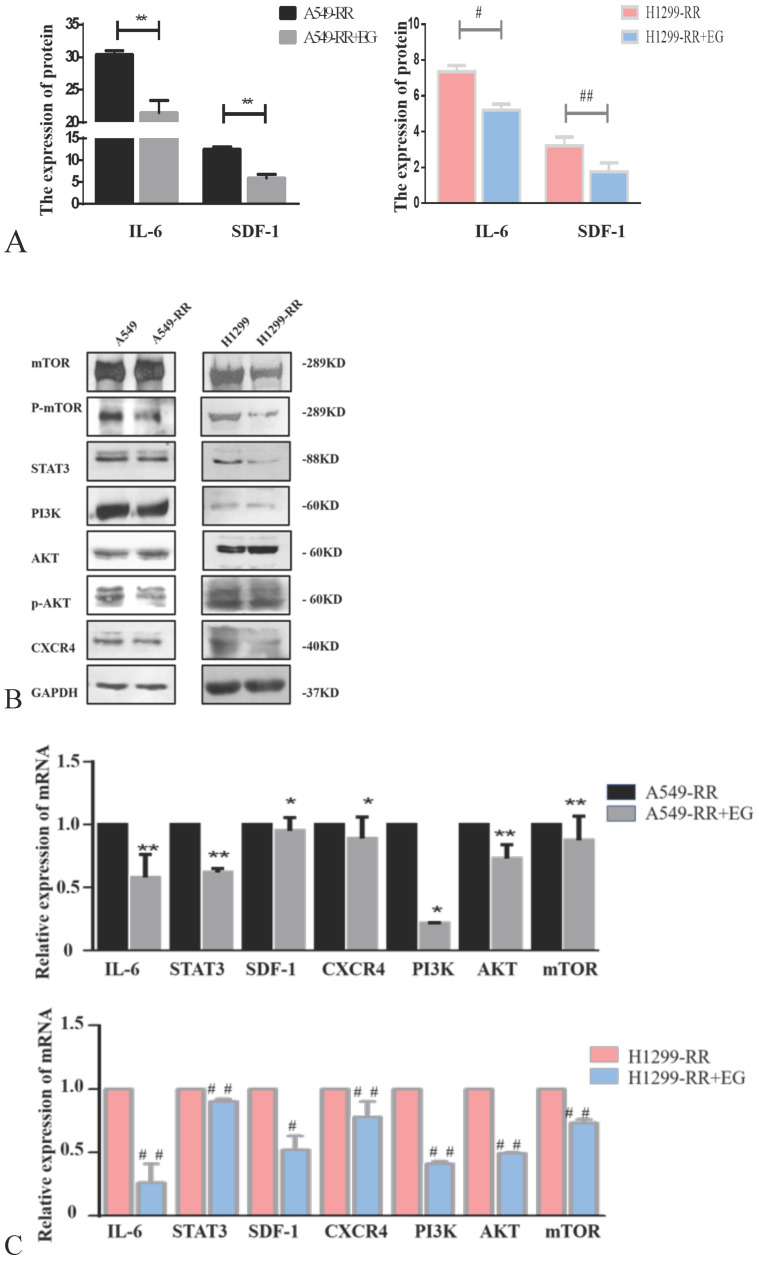
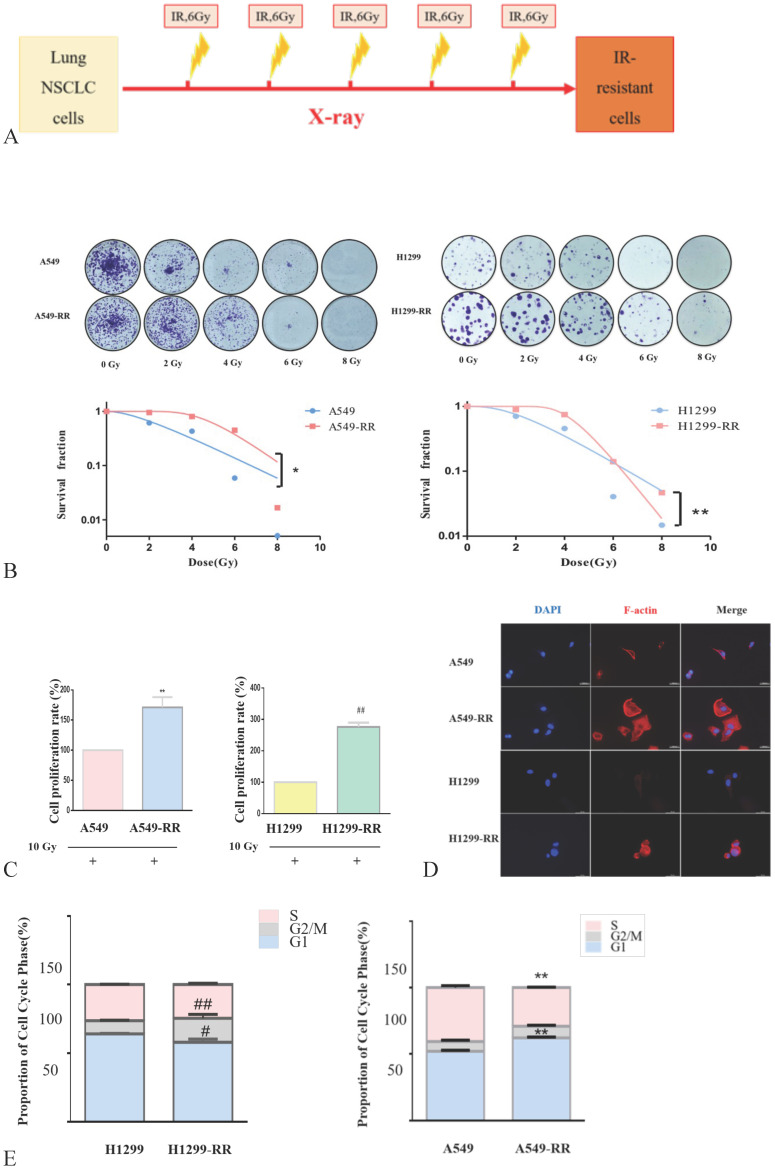
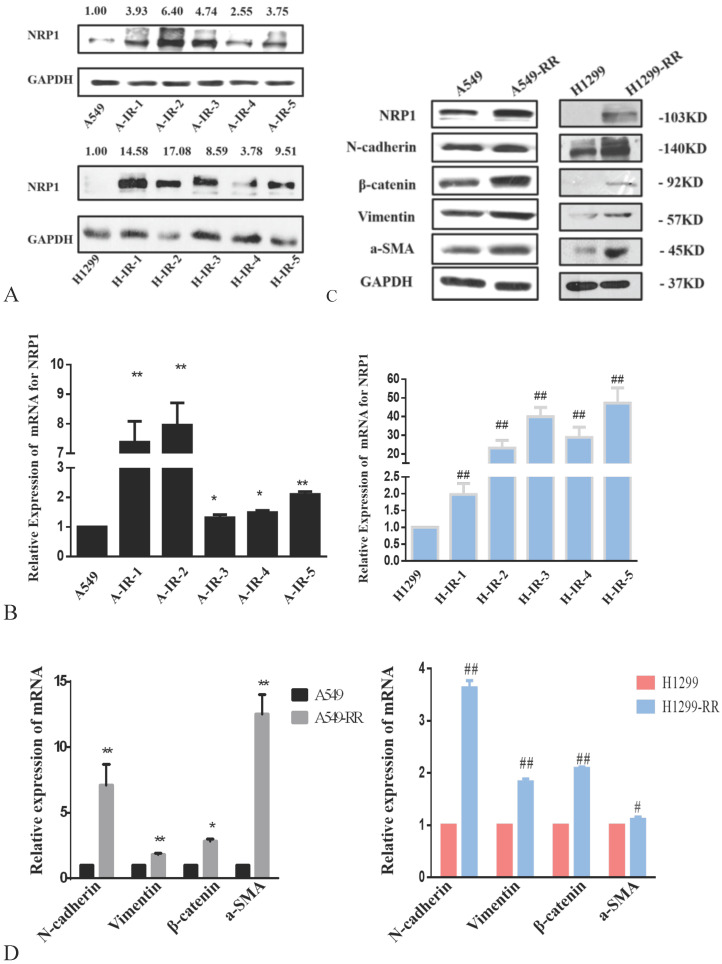
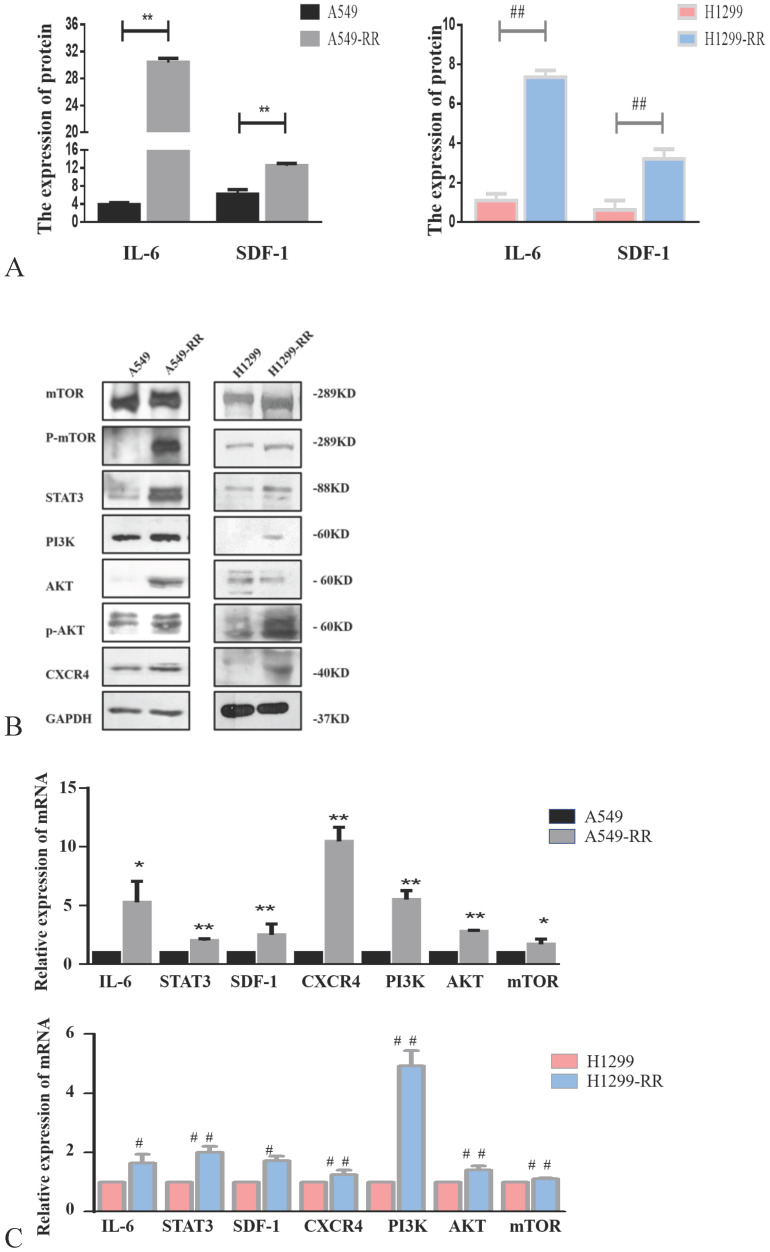
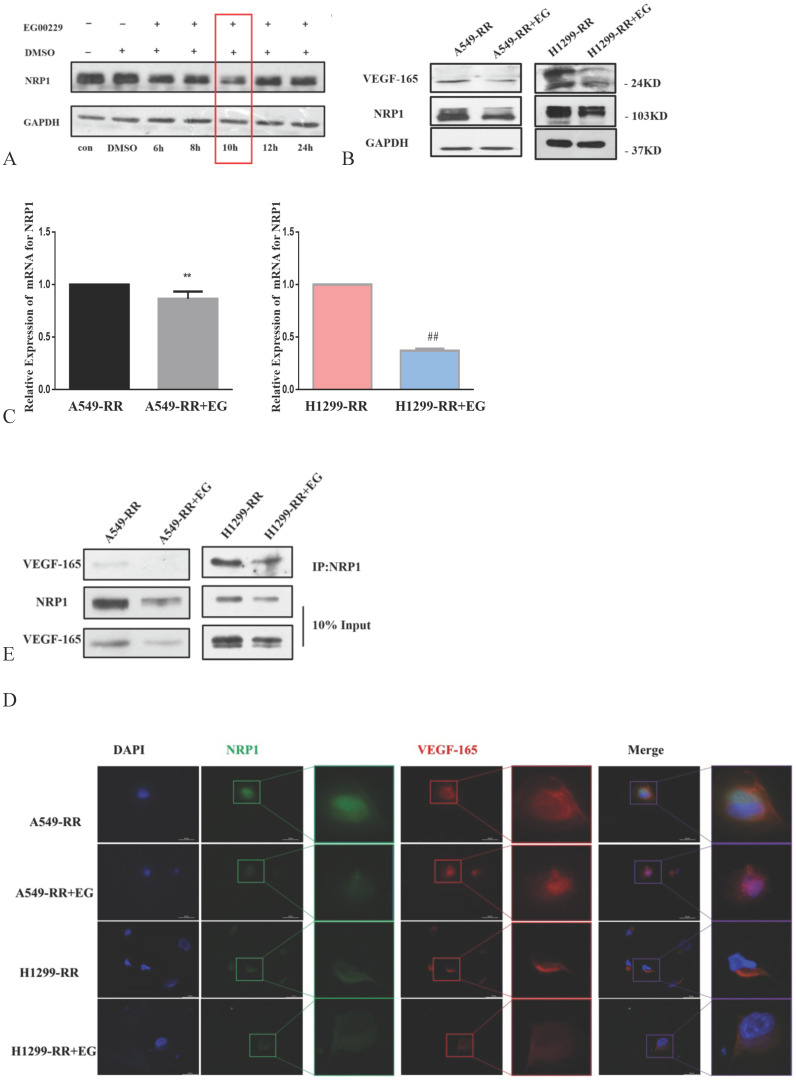
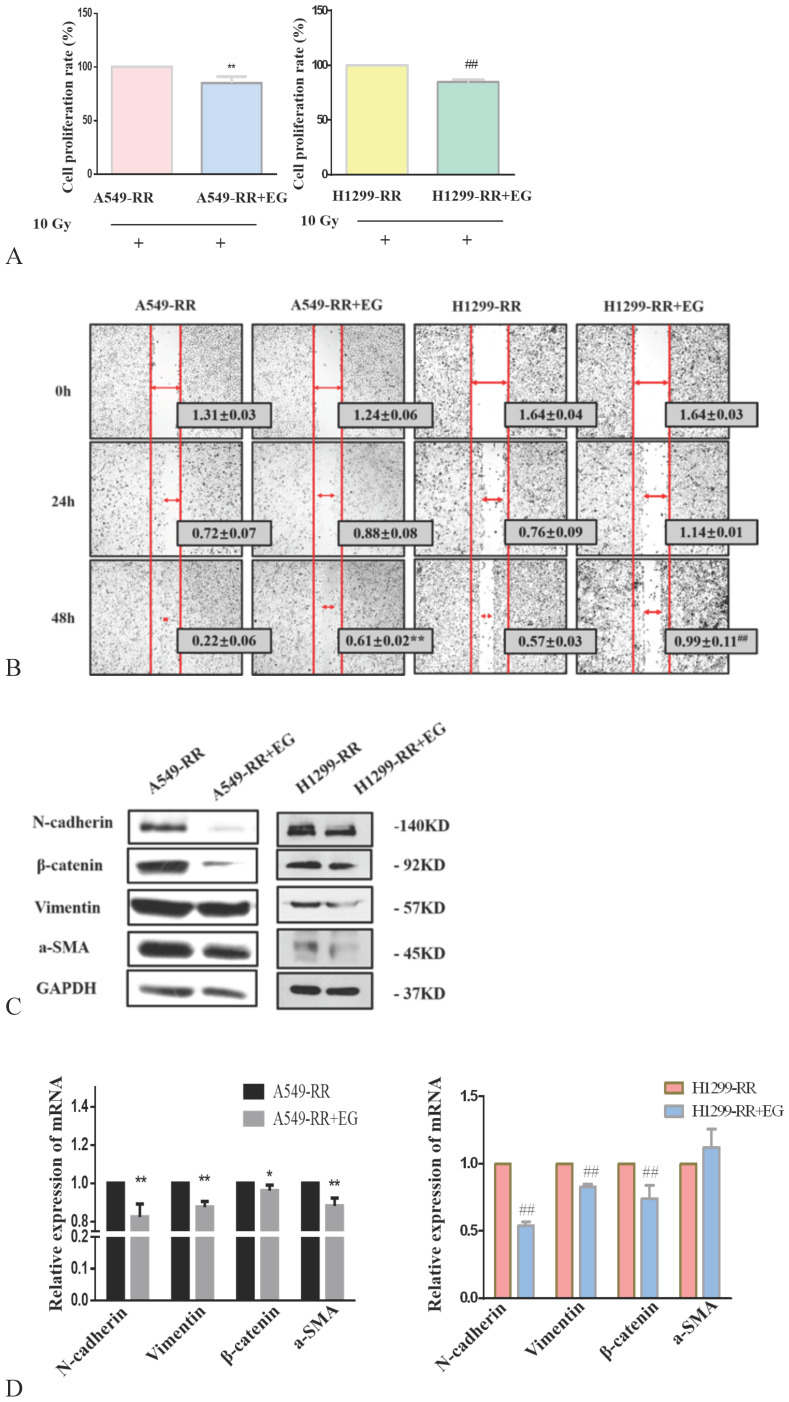
Neuropilin 1 (NRP1) is a pleiotropic receptor that interacts with multiple ligands and their receptors and plays a critical role in the process of tumor metastasis and radiation resistance in endothelial cells and tumor cells. In this study, we sought to investigate the mechanistic role of NRP1 in the radiation resistance of non-small cell lung cancer (NSCLC) cells and the role of EG00229 (an inhibitor of NRP1) on reversing radiation resistance. A549 and H1299 NSCLC cells were used to construct radiation resistance models. Western blot, ELISA, and qRT-PCR were used to detect protein and mRNA levels of NRP1, epithelial-mesenchymal transition (EMT) markers, and molecules in signaling pathways. Immunofluorescence was used to measure changes in co-expression of NRP1 and VEGF-165 in radiation-resistant model cells. An immunoprecipitation assay was used to detect the binding capacity of NRP1 and VEGF-165. We successfully created two radiation resistant models (A549RR and H1299-RR). The expression levels of NRP1, EMT-related proteins, and proteins in metastasis-related pathways were increased in NSCLC cells with radiation resistance. After adding EG00229, the expression levels and binding capacity of NRP1 and VEGF-165 proteins were significantly reduced. The expression of EMT-related proteins and proteins in metastasis-related pathways were reduced in NSCLC cells with radiation resistance. Our data provide an insight into the molecular mechanisms of radiation resistance and suggest that EG00229 may contribute to reversing the radiation resistance of NSCLC cells by inhibiting the binding of NRP1 and VEGF-165. Our findings could provide a novel theoretical and experimental foundation for improving the efficacy of lung cancer radiotherapy.
神经纤毛蛋白1(NRP1)是一种多效性受体,可与多种配体及其受体相互作用,并在内皮细胞和肿瘤细胞的肿瘤转移和辐射抗性过程中发挥关键作用。在本研究中,我们试图研究NRP1在非小细胞肺癌(NSCLC)细胞辐射抗性中的机制作用以及EG00229(一种NRP1抑制剂)在逆转辐射抗性方面的作用。使用A549和H1299 NSCLC细胞构建辐射抗性模型。采用蛋白质免疫印迹法、酶联免疫吸附测定法和定量逆转录聚合酶链反应检测NRP1、上皮-间质转化(EMT)标志物及信号通路中分子的蛋白质和mRNA水平。利用免疫荧光法检测辐射抗性模型细胞中NRP1和血管内皮生长因子-165(VEGF-165)共表达的变化。采用免疫沉淀试验检测NRP1与VEGF-165的结合能力。我们成功创建了两个辐射抗性模型(A549RR和H1299-RR)。具有辐射抗性的NSCLC细胞中NRP1、EMT相关蛋白及转移相关通路中蛋白的表达水平升高。加入EG00229后,NRP1和VEGF-165蛋白的表达水平及结合能力显著降低。具有辐射抗性的NSCLC细胞中EMT相关蛋白及转移相关通路中蛋白的表达降低。我们的数据为辐射抗性的分子机制提供了见解,并表明EG00229可能通过抑制NRP1与VEGF-165的结合来逆转NSCLC细胞的辐射抗性。我们的研究结果可为提高肺癌放疗疗效提供新的理论和实验基础。