Zhao Yuxi, Shu Rui, Liu Jiang
State Key Laboratory of Oral Diseases, National Clinical Research Center for Oral Diseases, Chinese Academy of Medical Sciences Research Unit of Oral Carcinogenesis and Management, West China Hospital of Stomatology, Sichuan University, Chengdu 610041, China.
Mol Ther Nucleic Acids. 2021 Dec 3;26:997-1013. doi: 10.1016/j.omtn.2021.09.002. Epub 2021 Sep 14.
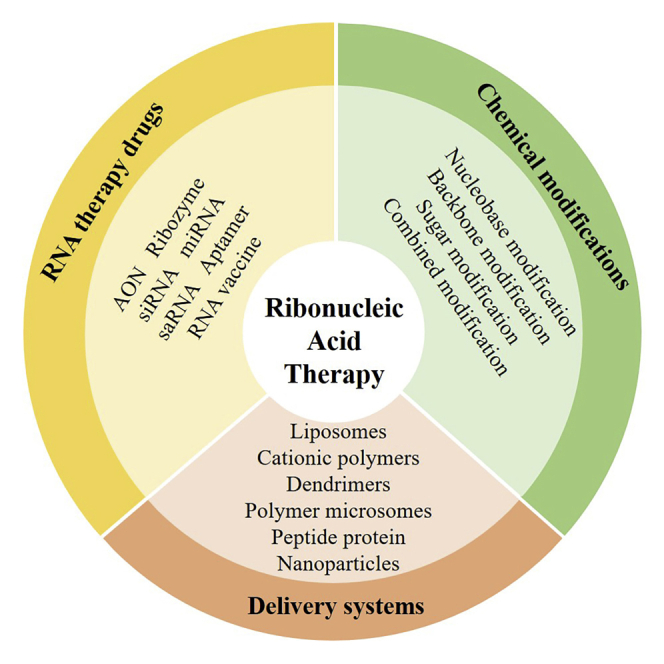
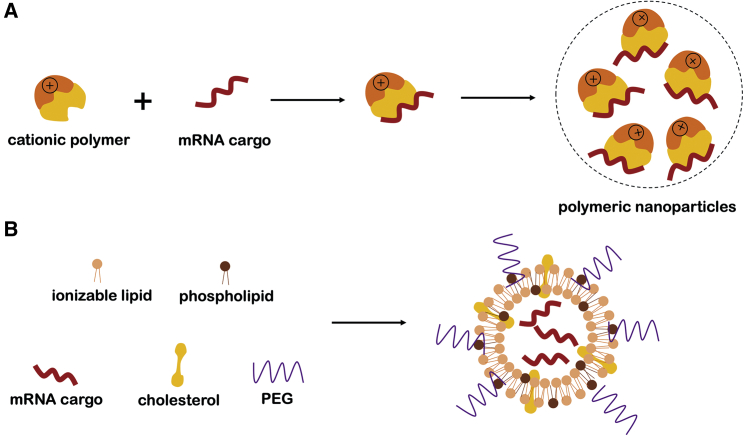
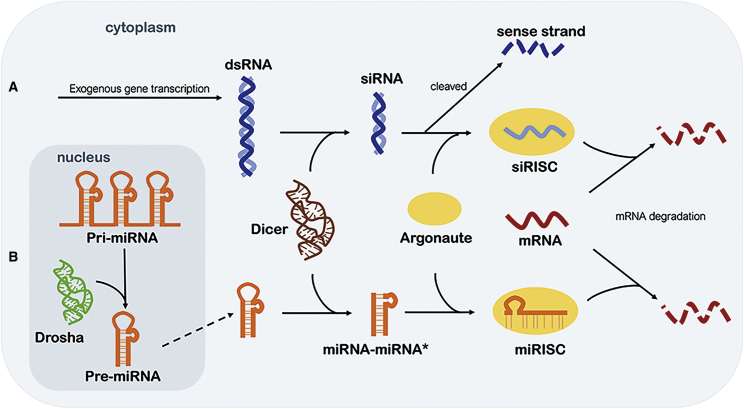
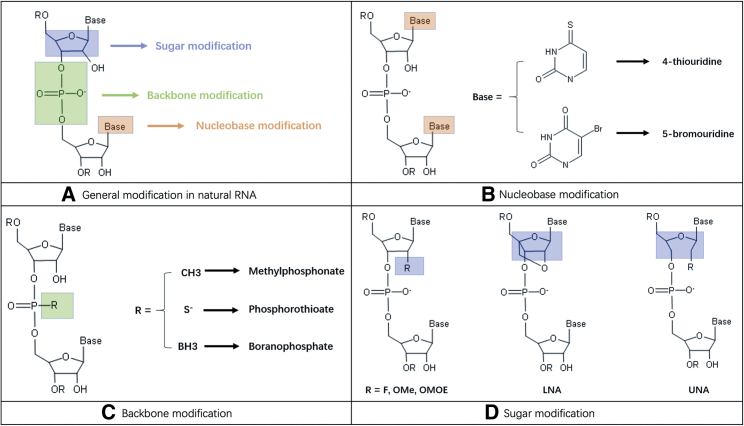
The biological understanding of RNA has evolved since the discovery of catalytic RNAs in the early 1980s and the establishment of RNA interference (RNAi) in the 1990s. RNA is no longer seen as the simple mid-product between transcription and translation but as potential molecules to be developed as RNA therapeutic drugs. RNA-based therapeutic drugs have gained recognition because of their ability to regulate gene expression and perform cellular functions. Various nucleobase, backbone, and sugar-modified oligonucleotides have been synthesized, as natural oligonucleotides have some limitations such as poor low nuclease resistance, binding affinity, poor cellular uptake, and toxicity, which affect their use as RNA therapeutic drugs. In this review, we briefly discuss different RNA therapeutic drugs and their internal connections, including antisense oligonucleotides, small interfering RNAs (siRNAs) and microRNAs (miRNAs), aptamers, small activating RNAs (saRNAs), and RNA vaccines. We also discuss the important roles of RNA vaccines and their use in the fight against COVID-19. In addition, various chemical modifications and delivery systems used to improve the performance of RNA therapeutic drugs and overcome their limitations are discussed.
自20世纪80年代初发现催化性RNA以及90年代建立RNA干扰(RNAi)以来,对RNA的生物学认识不断发展。RNA不再被视为转录和翻译之间简单的中间产物,而是被视为有潜力开发成RNA治疗药物的分子。基于RNA的治疗药物因其调节基因表达和执行细胞功能的能力而获得认可。由于天然寡核苷酸存在一些局限性,如核酸酶抗性差、结合亲和力低、细胞摄取不良和毒性等,影响了它们作为RNA治疗药物的应用,因此人们合成了各种碱基、骨架和糖修饰的寡核苷酸。在这篇综述中,我们简要讨论不同的RNA治疗药物及其内在联系,包括反义寡核苷酸、小干扰RNA(siRNA)和微小RNA(miRNA)、适体、小激活RNA(saRNA)以及RNA疫苗。我们还讨论了RNA疫苗的重要作用及其在抗击新冠疫情中的应用。此外,还讨论了用于改善RNA治疗药物性能并克服其局限性的各种化学修饰和递送系统。