Cervena Klara, Novosadova Vendula, Pardini Barbara, Naccarati Alessio, Opattova Alena, Horak Josef, Vodenkova Sona, Buchler Tomas, Skrobanek Pavel, Levy Miroslav, Vodicka Pavel, Vymetalkova Veronika
Department of Molecular Biology of Cancer, Institute of Experimental Medicine of the Czech Academy of Sciences, Prague, Czechia.
Institute of Biology and Medical Genetics, 1stMedical Faculty, Charles University, Prague, Czechia.
Front Oncol. 2021 Sep 2;11:702258. doi: 10.3389/fonc.2021.702258. eCollection 2021.
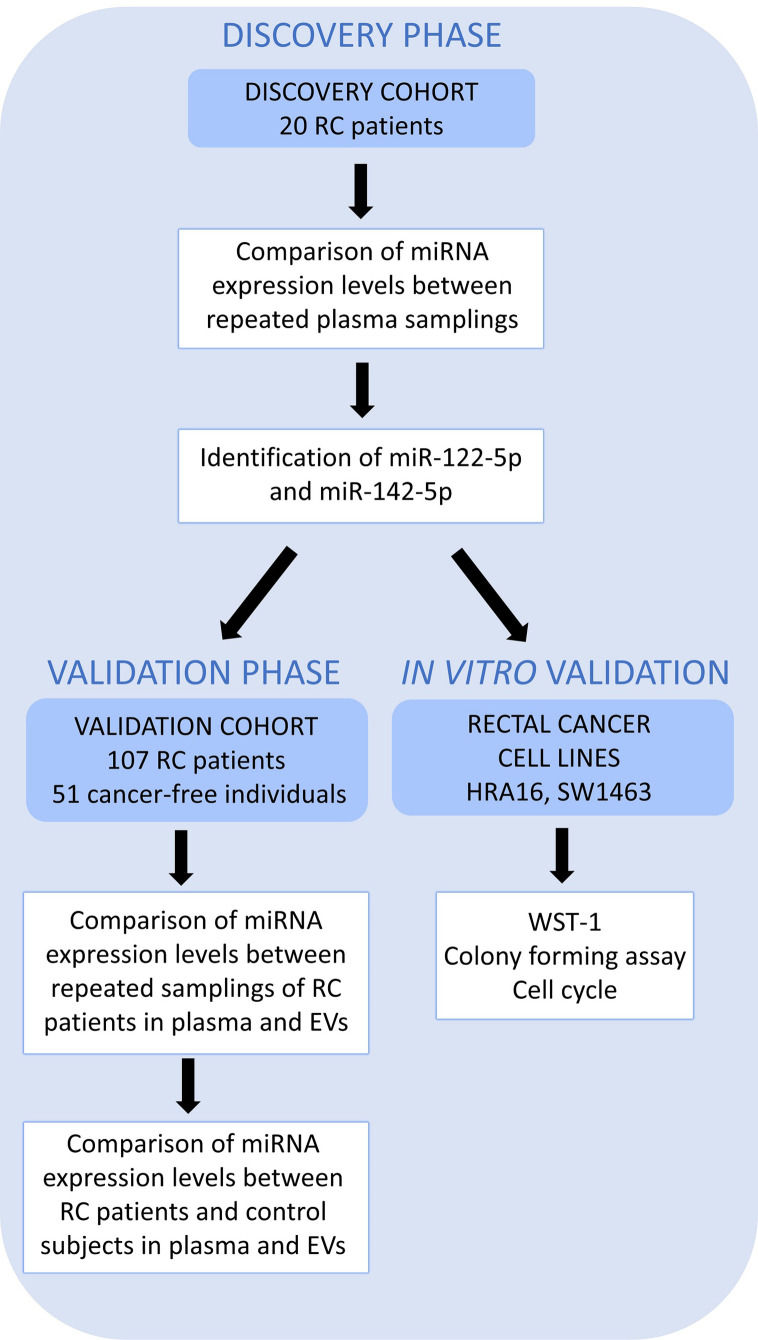
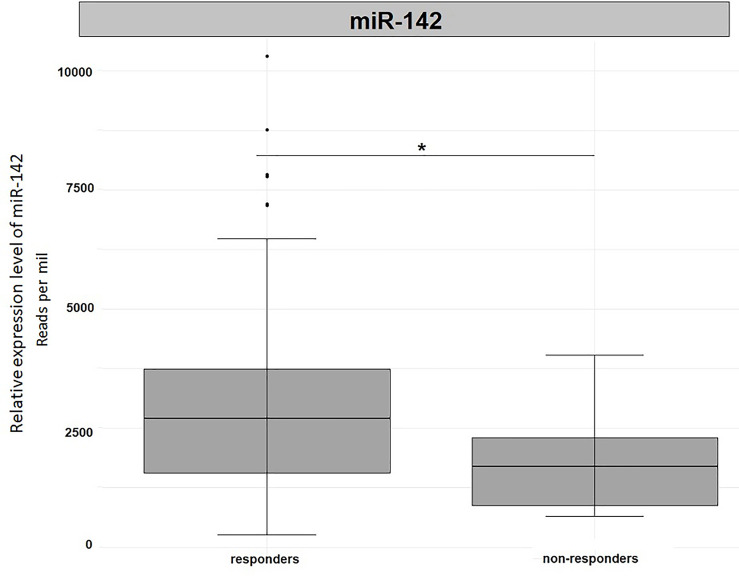
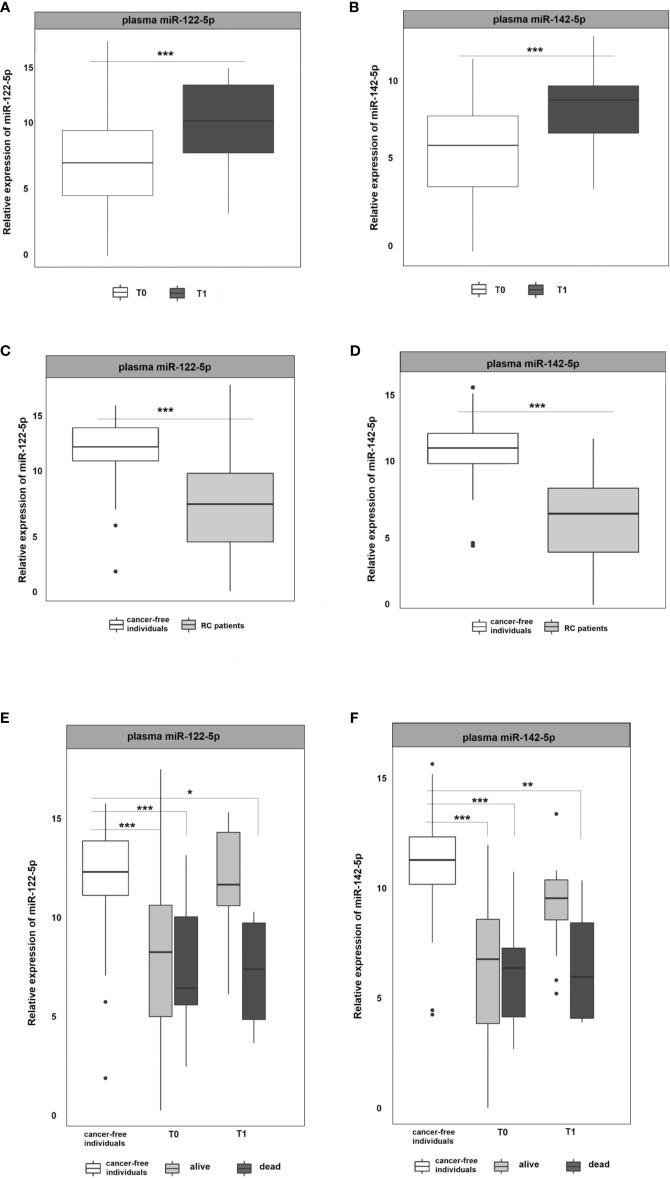
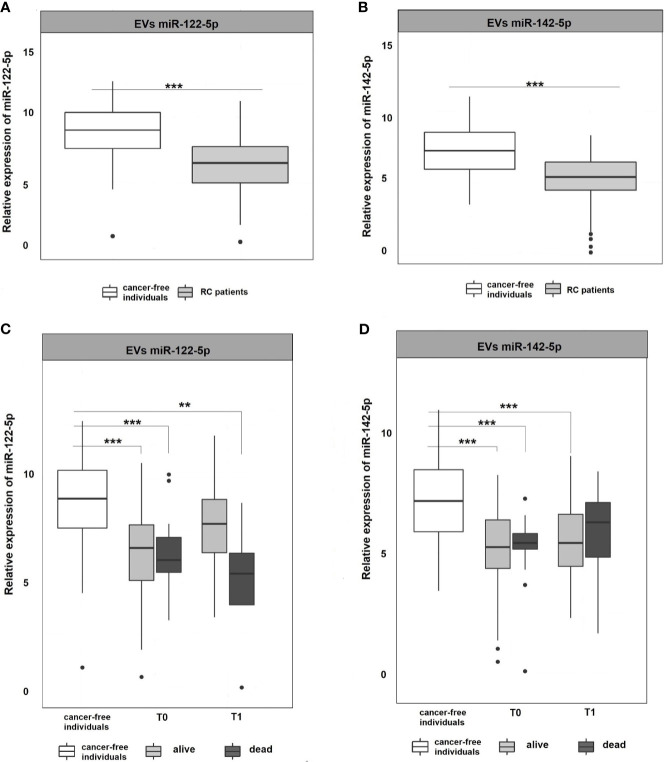
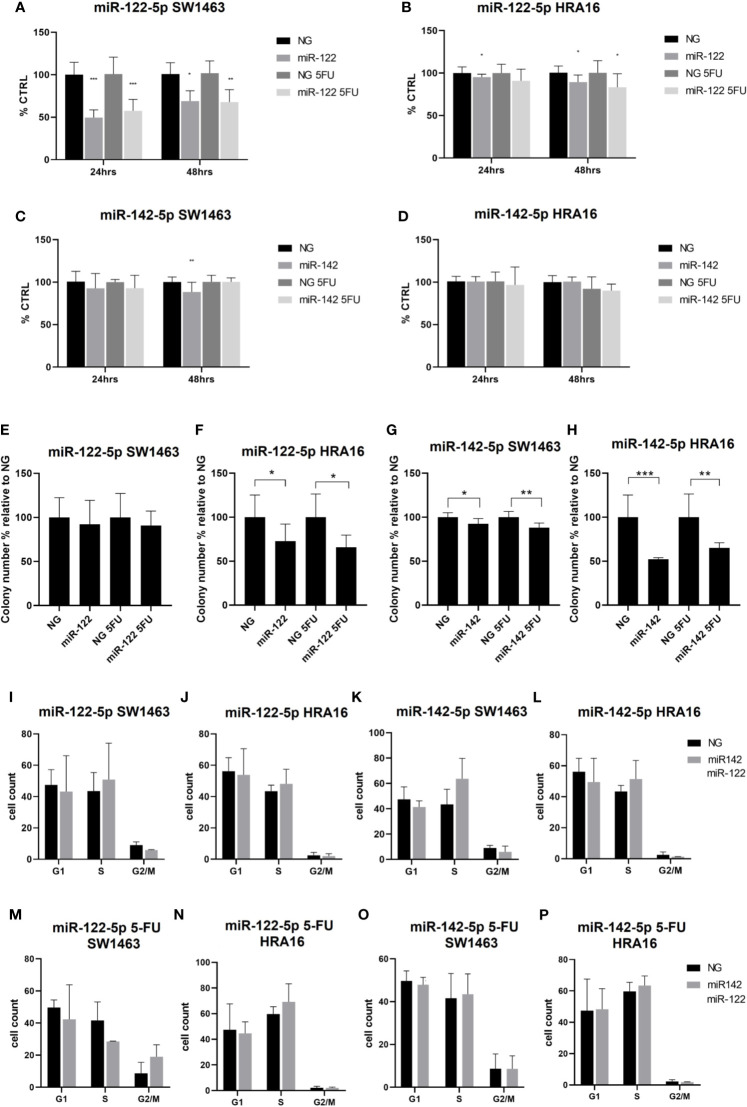
MicroRNAs (miRNAs) regulate gene expression in a tissue-specific manner. However, little is known about the miRNA expression changes induced by the therapy in rectal cancer (RC) patients. We evaluated miRNA expression levels before and after therapy and identified specific miRNA signatures reflecting disease course and treatment responses of RC patients. First, miRNA expression levels were assessed by next-generation sequencing in two plasma samplings (at the time of diagnosis and a year after) from 20 RC patients. MiR-122-5p and miR-142-5p were classified for subsequent validation in plasma and plasma extracellular vesicles (EVs) on an independent group of RC patients (n=107). Due to the intrinsic high differences in miRNA expression levels between samplings, cancer-free individuals (n=51) were included in the validation phase to determine the baseline expression levels of the selected miRNAs. Expression levels of these miRNAs were significantly different between RC patients and controls (for all p <0.001). A year after diagnosis, miRNA expression profiles were significantly modified in patients responding to treatment and were no longer different from those measured in cancer-free individuals. On the other hand, patients not responding to therapy maintained low expression levels in their second sampling (miR-122-5p: plasma: p=0.05, EVs: p=0.007; miR-142-5p: plasma: p=0.008). Besides, overexpression of miR-122-5p and miR-142-5p in RC cell lines inhibited cell growth and survival. This study provides novel evidence that circulating miR-122-5p and miR-142-5p have a high potential for RC screening and early detection as well as for the assessment of patients' outcomes and the effectiveness of treatment schedule.
微小RNA(miRNA)以组织特异性方式调节基因表达。然而,关于直肠癌(RC)患者治疗引起的miRNA表达变化知之甚少。我们评估了治疗前后的miRNA表达水平,并确定了反映RC患者病程和治疗反应的特定miRNA特征。首先,通过下一代测序评估了20例RC患者的两个血浆样本(诊断时和诊断后一年)中的miRNA表达水平。对miR-122-5p和miR-142-5p进行分类,以便在一组独立的RC患者(n=107)的血浆和血浆细胞外囊泡(EV)中进行后续验证。由于样本间miRNA表达水平存在内在的高度差异,在验证阶段纳入了无癌个体(n=51)以确定所选miRNA的基线表达水平。这些miRNA在RC患者和对照组之间的表达水平存在显著差异(所有p<0.001)。诊断后一年,对治疗有反应的患者的miRNA表达谱有显著改变,且与无癌个体中测得的表达谱不再不同。另一方面,对治疗无反应的患者在第二次采样时维持低表达水平(miR-122-5p:血浆:p=0.05,EV:p=0.007;miR-142-5p:血浆:p=0.008)。此外,RC细胞系中miR-122-5p和miR-142-5p的过表达抑制了细胞生长和存活。本研究提供了新的证据,表明循环miR-122-5p和miR-142-5p在RC筛查、早期检测以及评估患者预后和治疗方案有效性方面具有很高的潜力。