College of Veterinary Medicine, Northwest A&F University, Yangling, China.
PLoS Pathog. 2021 Sep 20;17(9):e1009940. doi: 10.1371/journal.ppat.1009940. eCollection 2021 Sep.
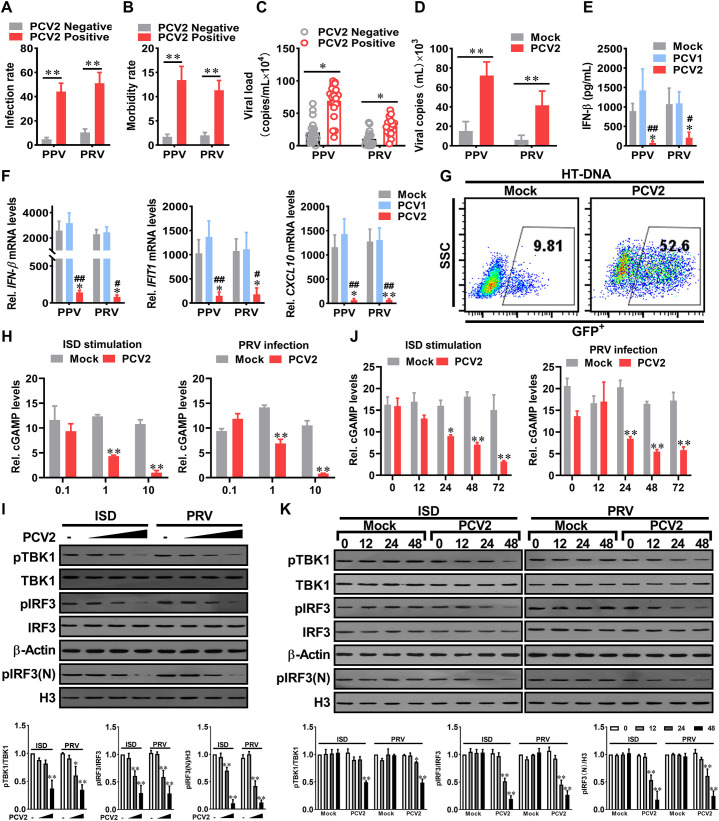
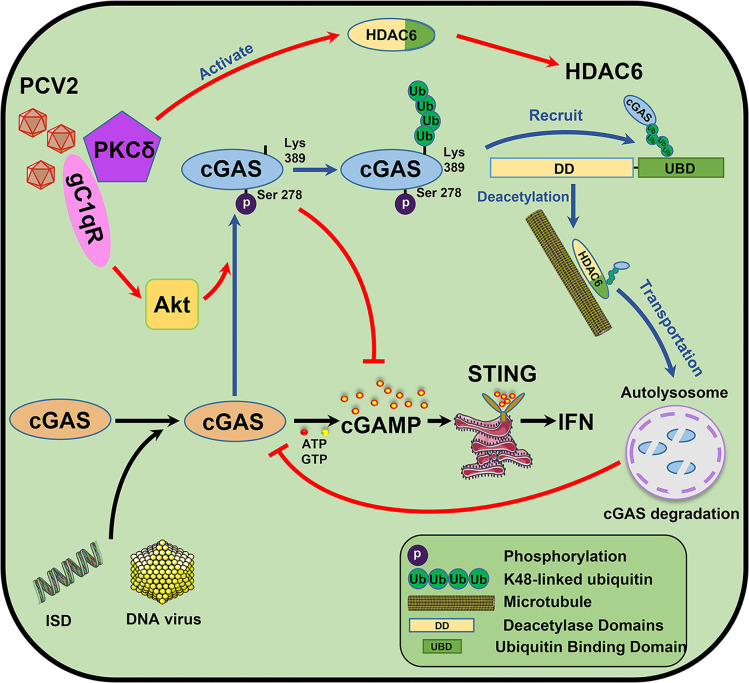
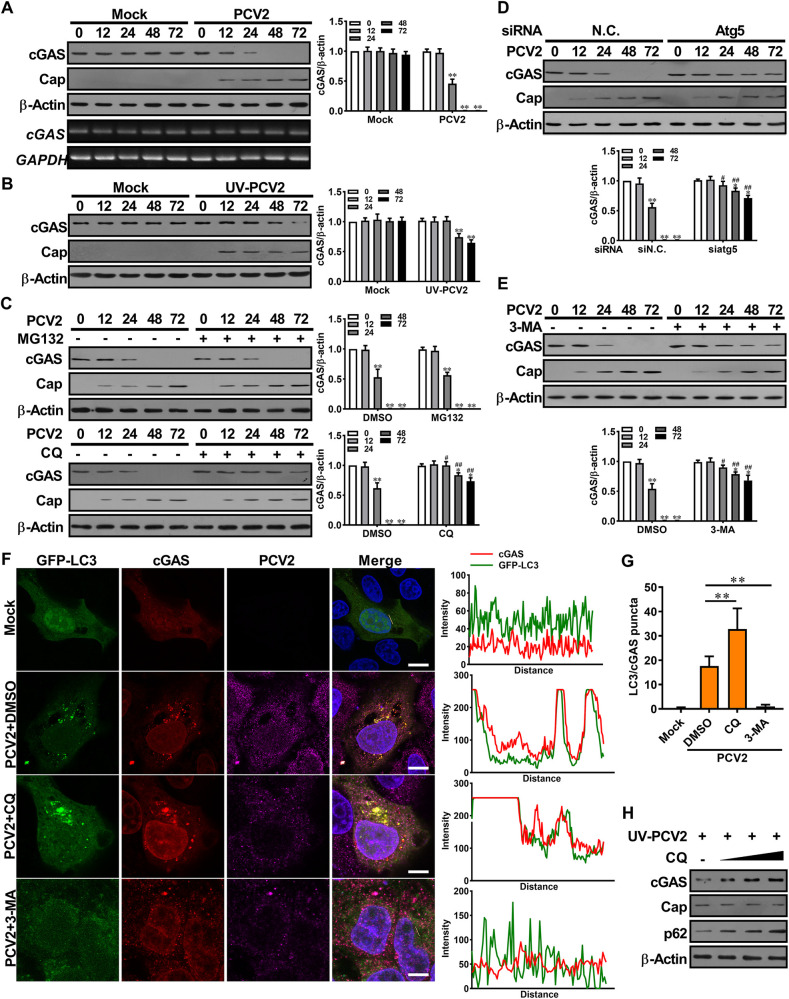
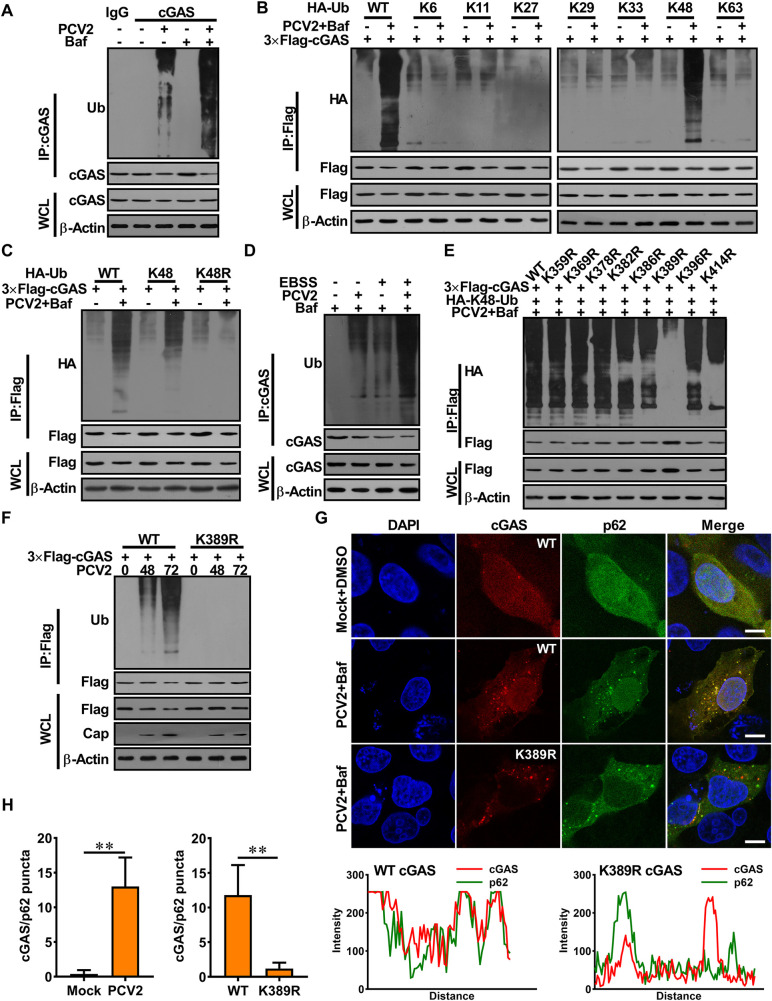
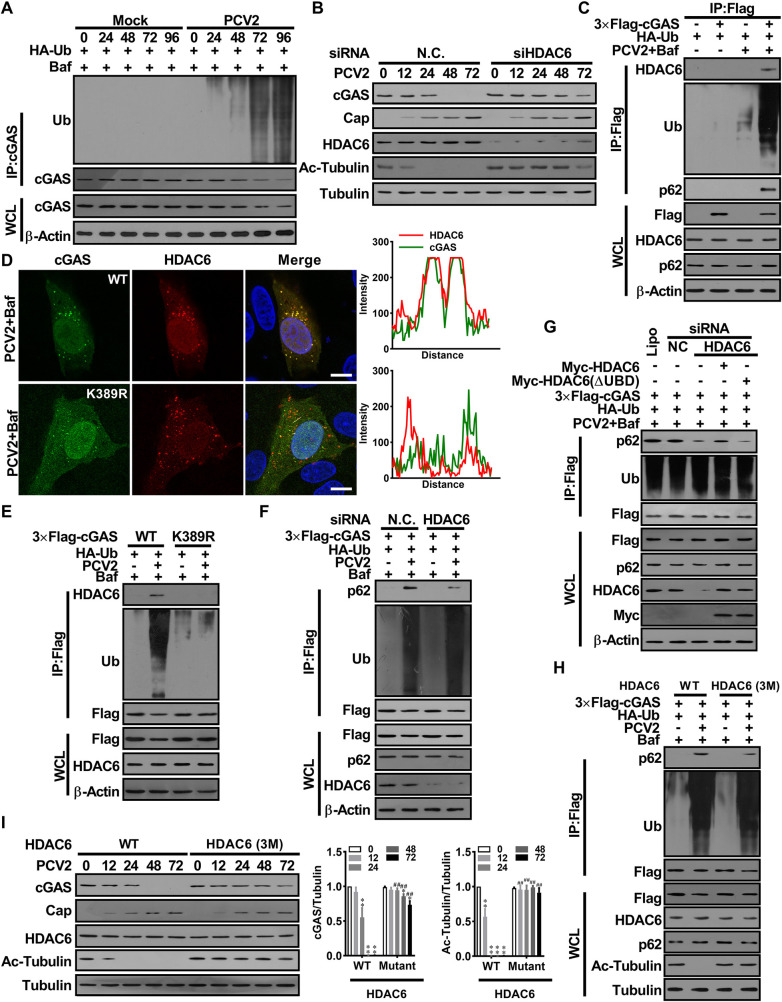
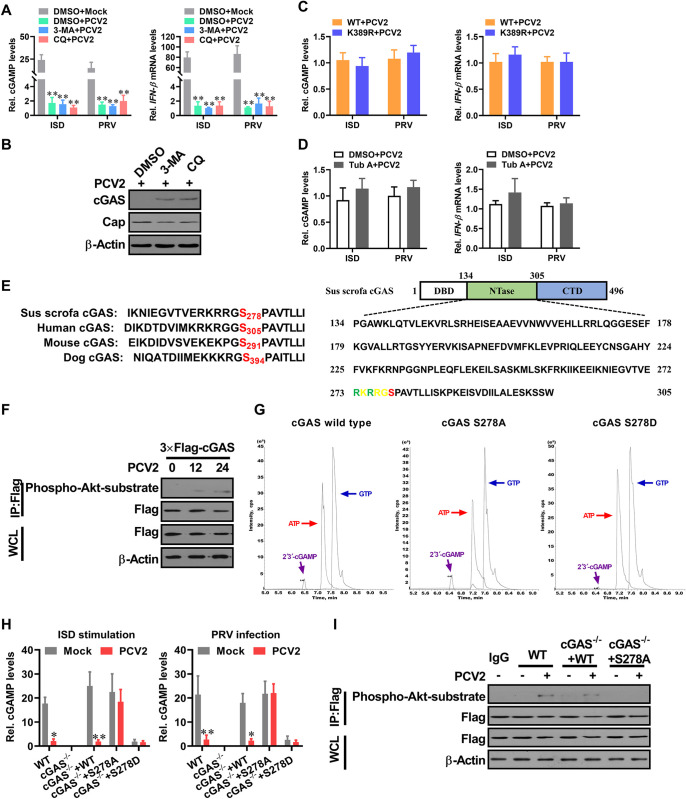
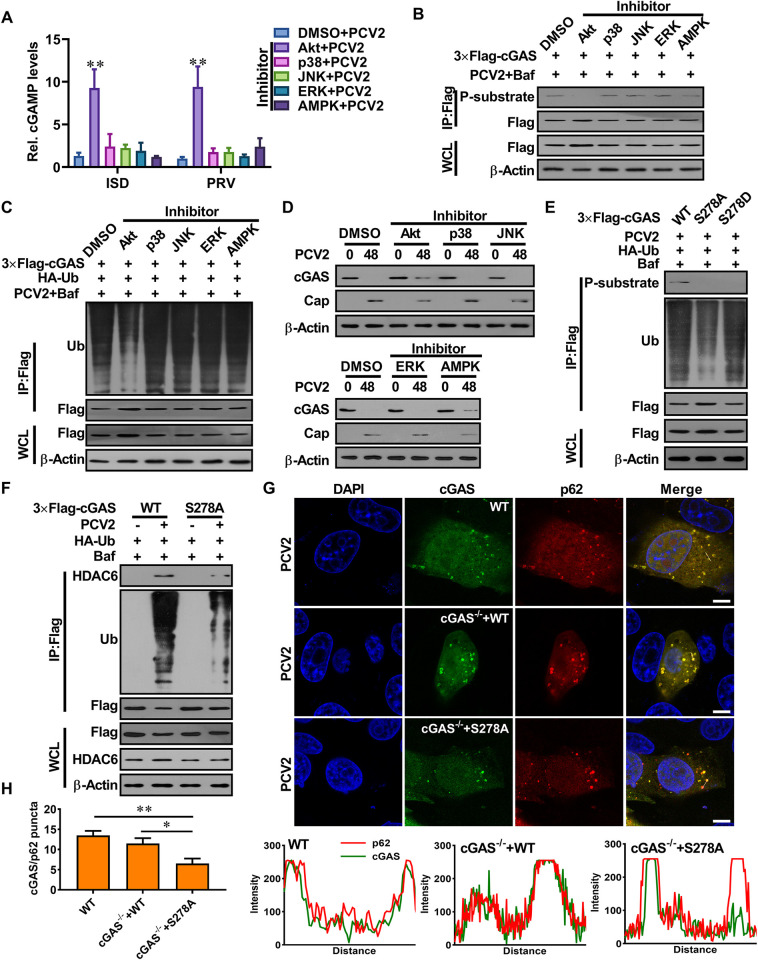
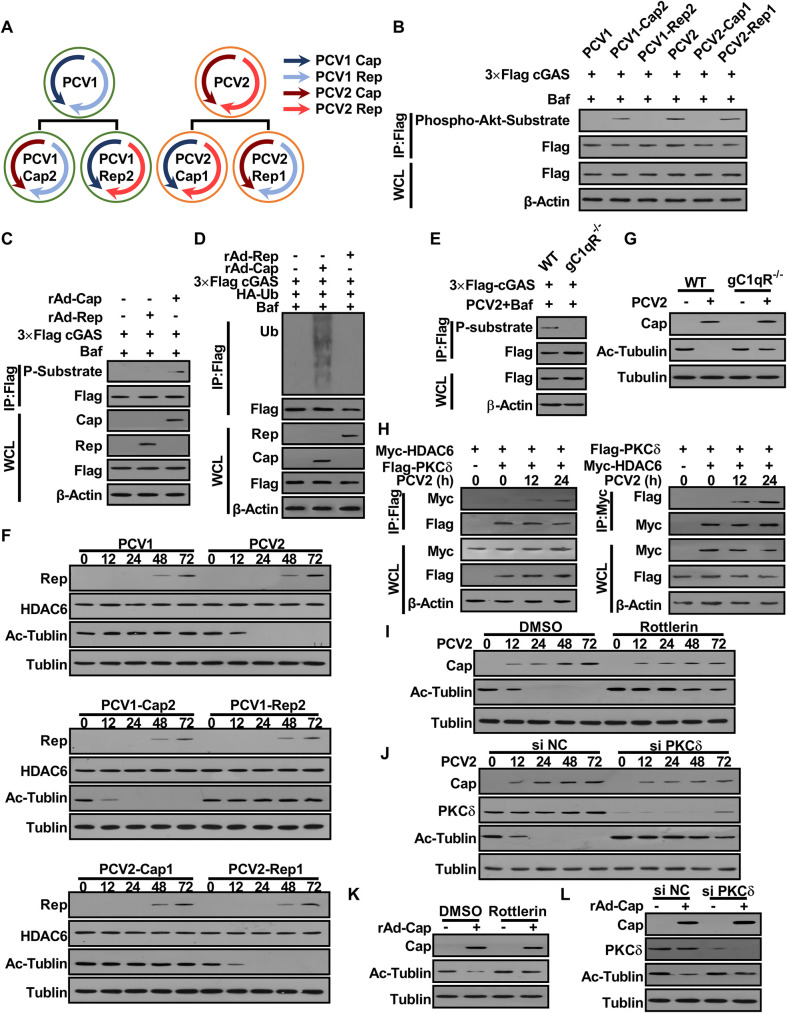
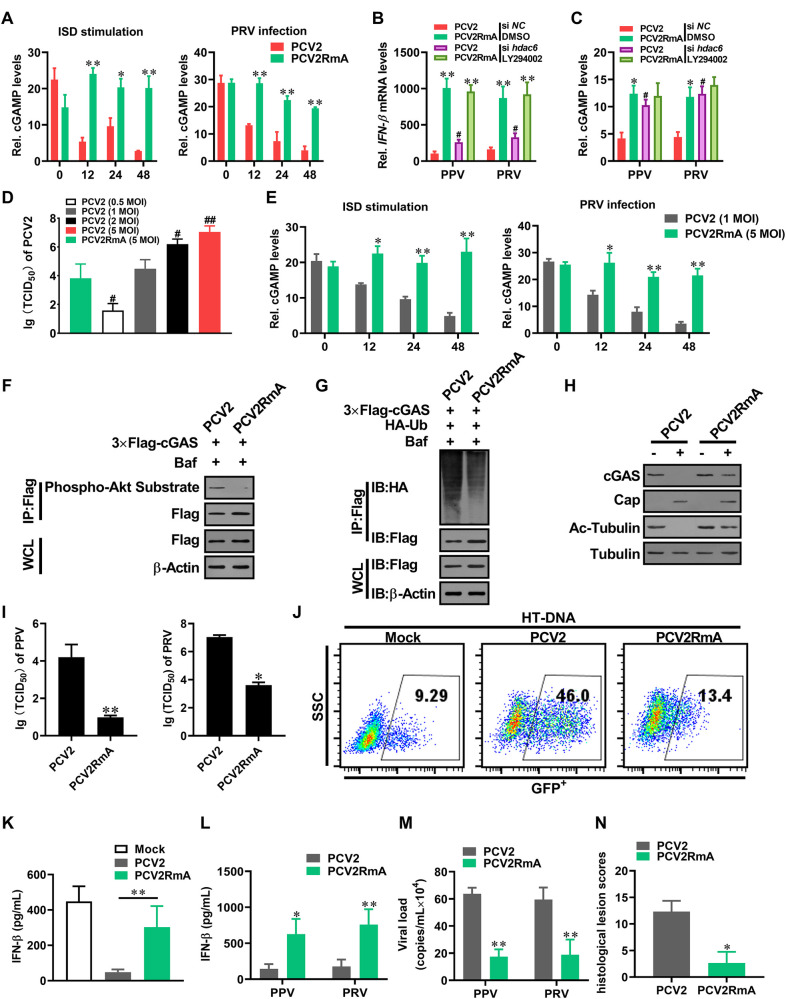
Viruses use diverse strategies to impair the antiviral immunity of host in order to promote infection and pathogenesis. Herein, we found that PCV2 infection promotes the infection of DNA viruses through inhibiting IFN-β induction in vivo and in vitro. In the early phase of infection, PCV2 promotes the phosphorylation of cGAS at S278 via activation of PI3K/Akt signaling, which directly silences the catalytic activity of cGAS. Subsequently, phosphorylation of cGAS at S278 can facilitate the K48-linked poly-ubiquitination of cGAS at K389, which can been served as a signal for recognizing by the ubiquitin-binding domain of histone deacetylase 6 (HDAC6), to promote the translocation of K48-ubiquitinated-cGAS from cytosol to autolysosome depending on the deacetylase activity of HDAC6, thereby eventually resulting in a markedly increased cGAS degradation in PCV2 infection-induced autophagic cells relative to Earle's Balanced Salt Solution (EBSS)-induced autophagic cells (a typical starving autophagy). Importantly, we found that PCV2 Cap and its binding protein gC1qR act as predominant regulators to promote porcine cGAS phosphorylation and HDAC6 activation through mediating PI3K/AKT signaling and PKCδ signaling activation. Based on this finding, gC1qR-binding activity deficient PCV2 mutant (PCV2RmA) indeed shows a weakened inhibitory effect on IFN-β induction and a weaker boost effect for other DNA viruses infection compared to wild-type PCV2. Collectively, our findings illuminate a systematic regulation mechanism by which porcine circovirus counteracts the cGAS-STING signaling pathway to inhibit the type I interferon induction and promote DNA virus infection, and identify gC1qR as an important regulator for the immunosuppression induced by PCV2.
病毒利用多种策略来削弱宿主的抗病毒免疫,以促进感染和发病机制。在此,我们发现 PCV2 感染通过在体内和体外抑制 IFN-β的诱导来促进 DNA 病毒的感染。在感染的早期阶段,PCV2 通过激活 PI3K/Akt 信号通路促进 cGAS 在 S278 处的磷酸化,从而直接沉默 cGAS 的催化活性。随后,cGAS 在 S278 处的磷酸化可以促进 cGAS 在 K389 处的 K48 连接多泛素化,这可以作为被组蛋白去乙酰化酶 6(HDAC6)的泛素结合域识别的信号,以促进 K48-泛素化-cGAS 从细胞质到自噬溶酶体的易位,这依赖于 HDAC6 的去乙酰化酶活性,从而最终导致在 PCV2 感染诱导的自噬细胞中,cGAS 的降解明显增加,而不是在 Earle 的平衡盐溶液(EBSS)诱导的自噬细胞中(一种典型的饥饿自噬)。重要的是,我们发现 PCV2 Cap 和其结合蛋白 gC1qR 通过介导 PI3K/AKT 信号和 PKCδ信号的激活,作为主要的调节因子促进猪 cGAS 的磷酸化和 HDAC6 的激活。基于这一发现,gC1qR 结合活性缺失的 PCV2 突变体(PCV2RmA)与野生型 PCV2 相比,确实对 IFN-β的诱导表现出较弱的抑制作用,对其他 DNA 病毒的感染也表现出较弱的促进作用。总之,我们的研究结果阐明了一个系统的调控机制,即猪圆环病毒通过拮抗 cGAS-STING 信号通路来抑制 I 型干扰素的诱导,并促进 DNA 病毒的感染,并确定 gC1qR 是 PCV2 诱导免疫抑制的一个重要调节因子。