Balint Elisabeth M, Jarczok Marc N, Langgartner Dominik, Reber Stefan O, Endes Simon, Schmidt-Trucksäss Arno, Funk Alexandra, Klinghammer Julia, Campbell Susanne, Gündel Harald, Waller Christiane
Ulm University Medical Center, Department of Psychosomatic Medicine and Psychotherapy, Ulm, Germany.
Laboratory for Molecular Psychosomatics, Department of Psychosomatic Medicine and Psychotherapy, University Ulm, Ulm, Germany.
Front Psychiatry. 2021 Sep 9;12:718919. doi: 10.3389/fpsyt.2021.718919. eCollection 2021.
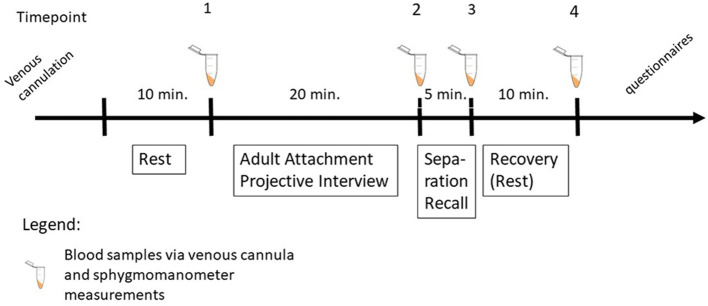
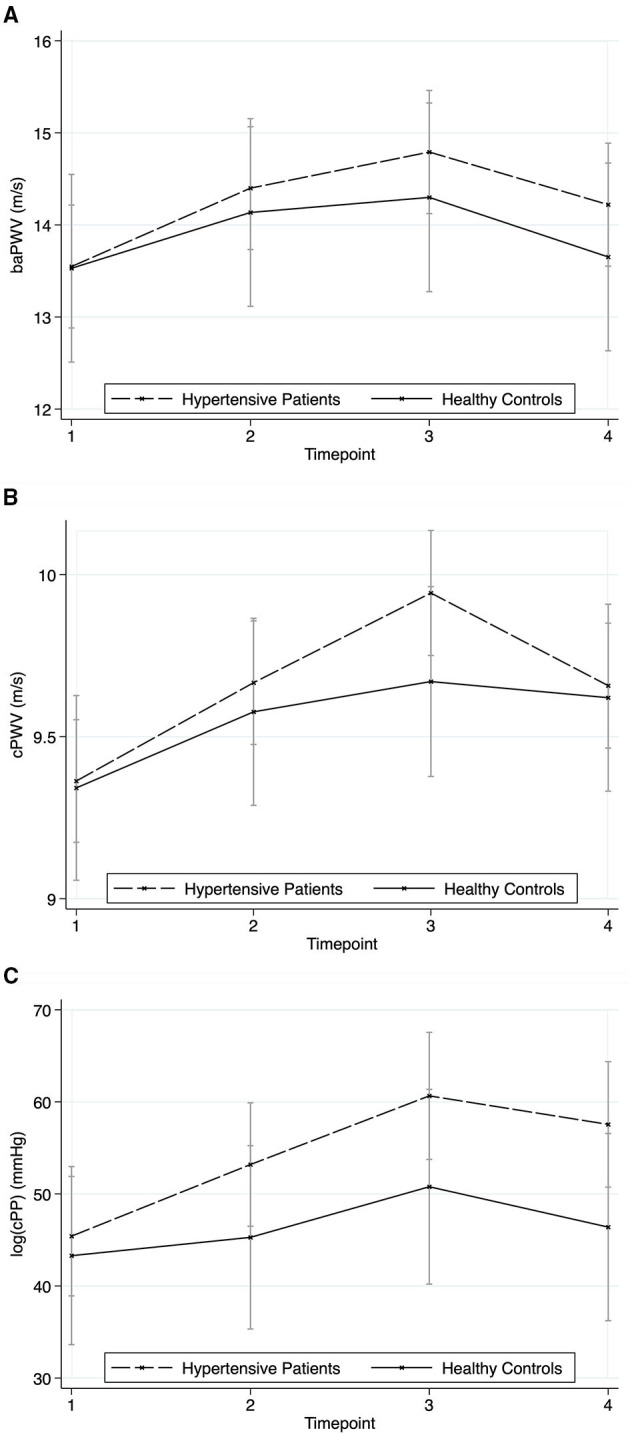
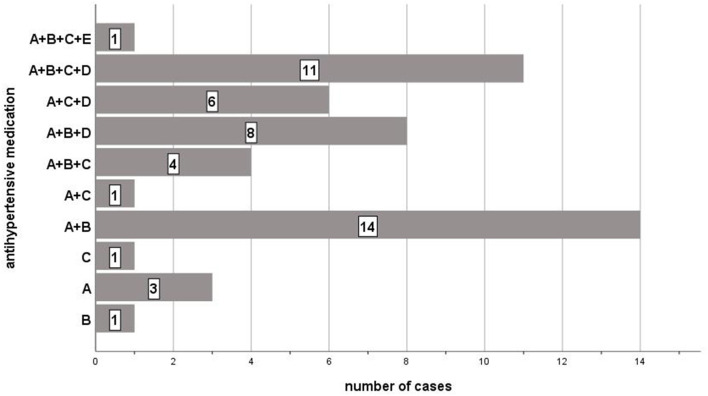
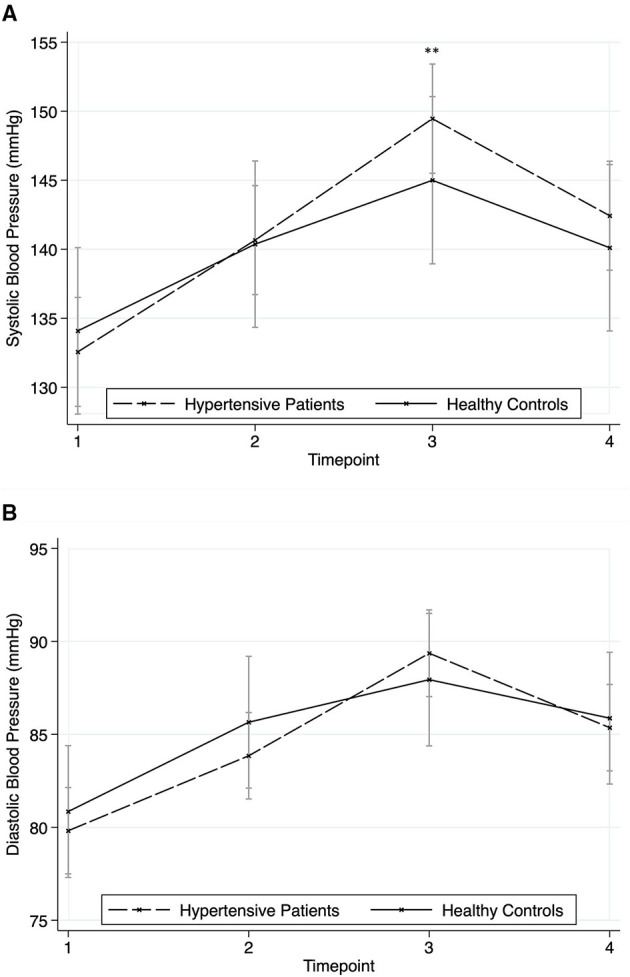
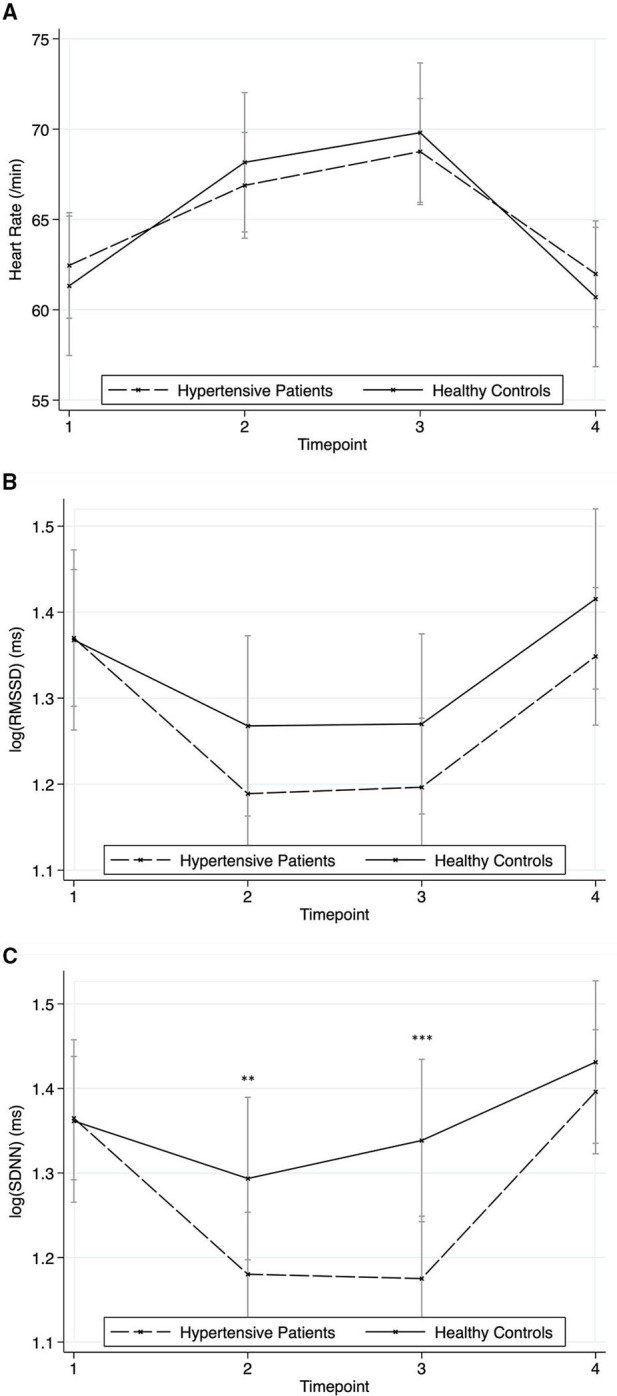
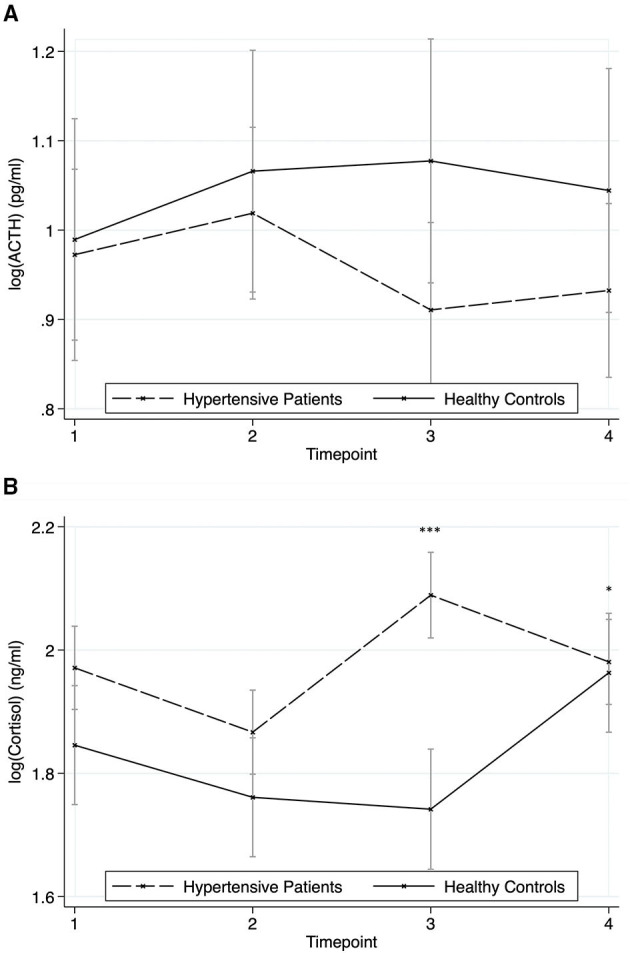
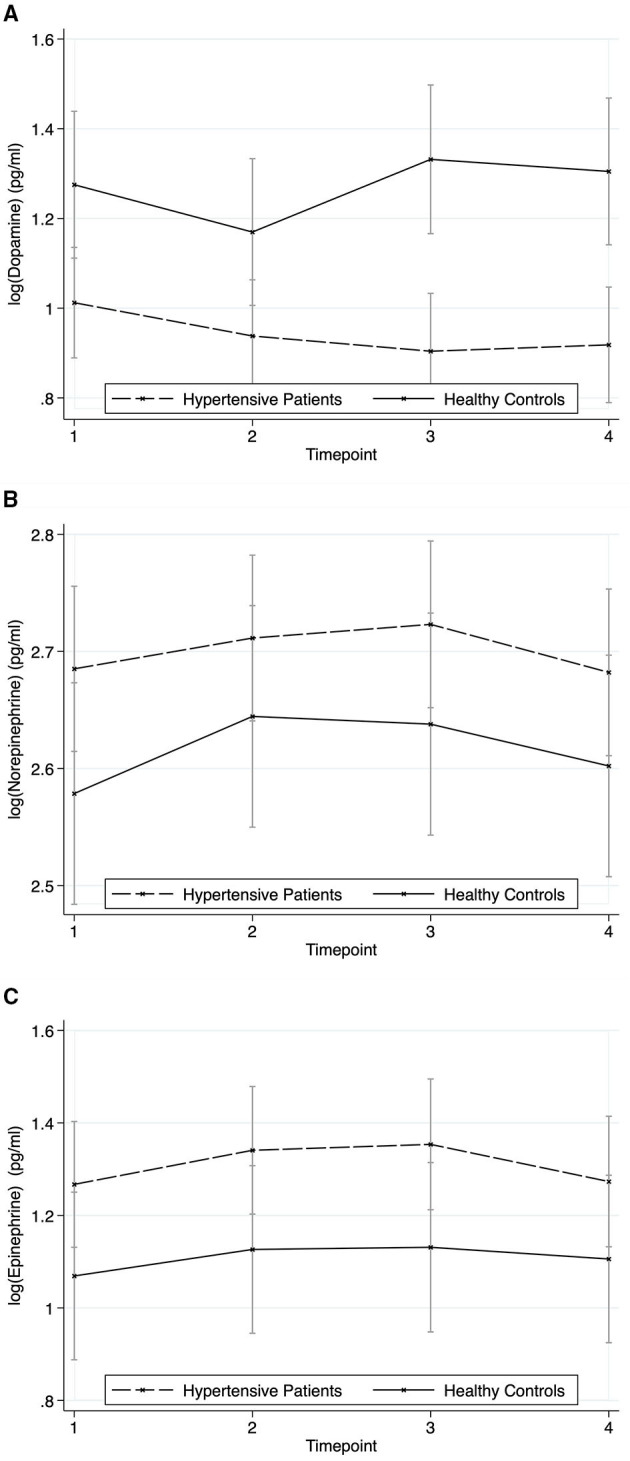
A heightened stress reactivity to mental stress tasks has been shown in hypertensive patients and might contribute to a higher disease risk. We investigated this hyperreactivity with regard to an attachment related stressor that focuses on emotions instead of performance and we examined whether this effect can also be found in patients on antihypertensive drugs. Fifty patients with primary hypertension, treated with at least one antihypertensive drug, were compared with 25 healthy individuals. After 10 min of rest, they participated in an attachment-related interview (Adult Attachment Projective picture system, AAP) and were exposed to an attachment-related stressor (Separation Recall, SR), a short-time stressor which activates attachment-related emotions and thoughts by talking 5 min about a personal experience of loneliness. Blood samples to measure adrenocorticotrope hormone (ACTH), cortisol, norepinephrine, epinephrine, and dopamine were taken. Blood pressure, heart rate and arterial stiffness were measured at rest, after AAP, after SR and 10 min after recovery. Standard deviation of normal-to-normal intervals (SDNN) and root mean square of successive differences (RMSSD) were calculated. Parameters were compared using Mann Whitney -test and linear mixed-effects regression models controlling for age and body mass index (BMI) after logarithmic transformation if appropriate. Healthy test persons were younger and had lower BMI than patients. Comparing the two groups there were no significant differences in blood pressure and heart rate at rest. Both stressors provoked a significant response in almost all parameters. Results of the post-estimation of contrasts from linear mixed-effects regression models showed a steeper rise in systolic BP and arterial stiffness as well as a more pronounced decline in SDNN in hypertensive patients than in healthy controls. Levels of cortisol rose earlier and higher in hypertensive patients than in healthy controls. Vascular, autonomic, and hypothalamic pituitary adrenal axis response is heightened in medicated subjects with hypertension in response to attachment-focused stressors compared to healthy subjects. We conclude that the remaining hyper-reactivity even with sufficient antihypertensive medication still poses a substantial risk for affected patients. New ways to diminish this risk should be developed.
高血压患者对精神应激任务表现出更高的应激反应性,这可能会增加患病风险。我们针对一种与依恋相关的应激源展开了此项研究,该应激源侧重于情绪而非表现,并探究了这种效应是否也存在于服用抗高血压药物的患者中。选取了50名接受至少一种抗高血压药物治疗的原发性高血压患者,并与25名健康个体进行比较。休息10分钟后,他们参与了一次与依恋相关的访谈(成人依恋投射图片系统,AAP),并暴露于一种与依恋相关的应激源(分离回忆,SR)中,这是一种通过谈论5分钟个人孤独经历来激活与依恋相关的情绪和想法的短时应激源。采集血样以测量促肾上腺皮质激素(ACTH)、皮质醇、去甲肾上腺素、肾上腺素和多巴胺。在休息时、AAP后、SR后以及恢复10分钟后测量血压、心率和动脉僵硬度。计算正常到正常间期的标准差(SDNN)和逐次差值的均方根(RMSSD)。如果合适,在对数转换后,使用曼-惠特尼检验和控制年龄和体重指数(BMI)的线性混合效应回归模型对参数进行比较。健康测试者比患者更年轻且BMI更低。比较两组发现,休息时血压和心率无显著差异。两种应激源几乎在所有参数上都引发了显著反应。线性混合效应回归模型对比后的估计结果显示,与健康对照组相比,高血压患者的收缩压和动脉僵硬度上升更陡,SDNN下降更明显。高血压患者的皮质醇水平比健康对照组升高得更早且更高。与健康受试者相比,服用药物的高血压受试者在面对以依恋为重点的应激源时,其血管、自主神经和下丘脑-垂体-肾上腺轴反应增强。我们得出结论,即使服用了足够的抗高血压药物,剩余的高反应性仍会给受影响的患者带来重大风险。应开发降低这种风险的新方法。