Thokala Radhika, Binder Zev A, Yin Yibo, Zhang Logan, Zhang Jiasi Vicky, Zhang Daniel Y, Milone Michael C, Ming Guo-Li, Song Hongjun, O'Rourke Donald M
Department of Neurosurgery, Perelman School of Medicine, University of Pennsylvania, Philadelphia, PA, United States.
Glioblastoma Translational Center of Excellence, Abramson Cancer Center, Perelman School of Medicine, University of Pennsylvania, Philadelphia, PA, United States.
Front Oncol. 2021 Sep 10;11:664236. doi: 10.3389/fonc.2021.664236. eCollection 2021.
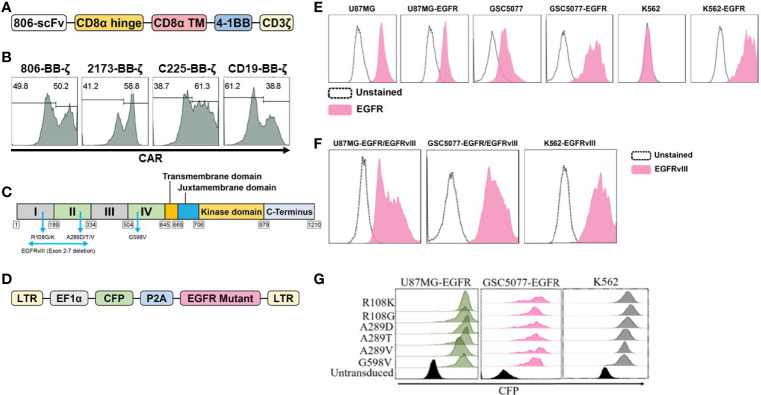
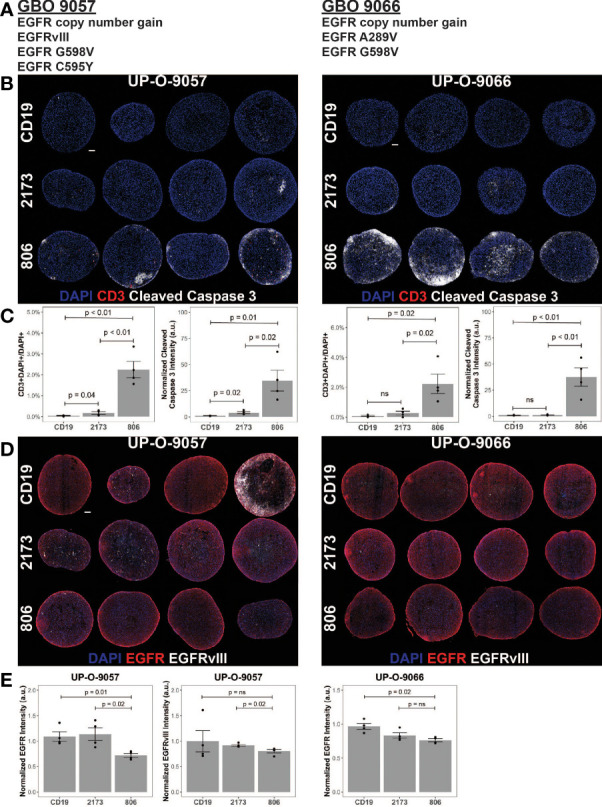
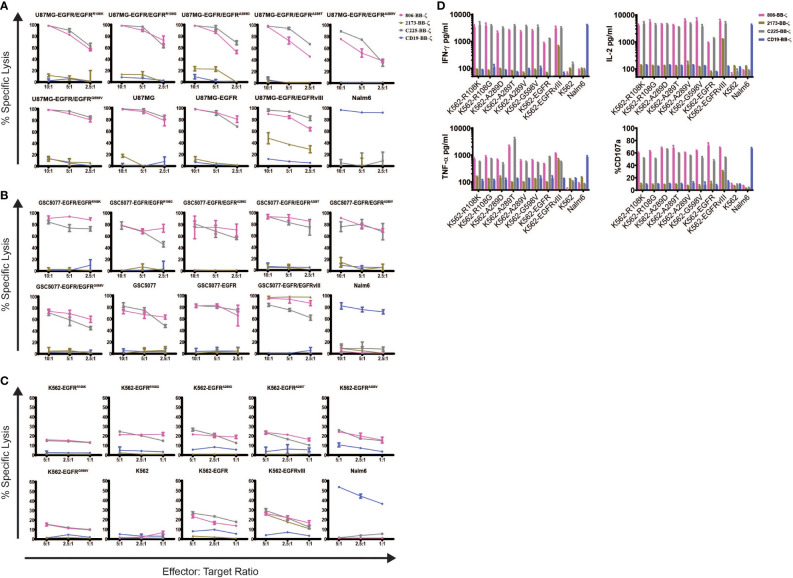
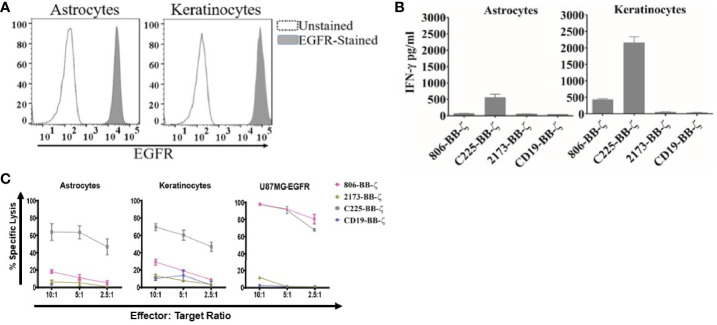
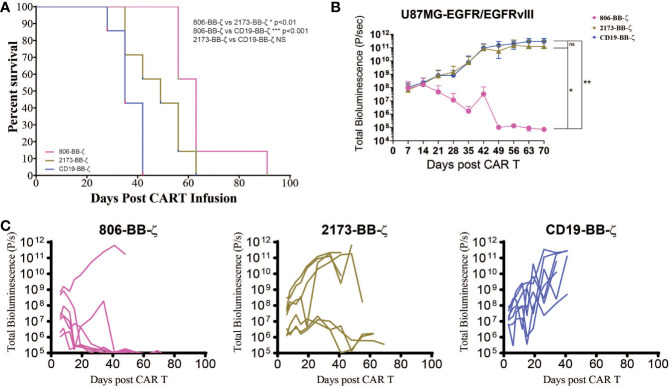
Tumor heterogeneity is a key reason for therapeutic failure and tumor recurrence in glioblastoma (GBM). Our chimeric antigen receptor (CAR) T cell (2173 CAR T cells) clinical trial (NCT02209376) against epidermal growth factor receptor (EGFR) variant III (EGFRvIII) demonstrated successful trafficking of T cells across the blood-brain barrier into GBM active tumor sites. However, CAR T cell infiltration was associated only with a selective loss of EGFRvIII+ tumor, demonstrating little to no effect on EGFRvIII tumor cells. Post-CAR T-treated tumor specimens showed continued presence of EGFR amplification and oncogenic EGFR extracellular domain (ECD) missense mutations, despite loss of EGFRvIII. To address tumor escape, we generated an EGFR-specific CAR by fusing monoclonal antibody (mAb) 806 to a 4-1BB co-stimulatory domain. The resulting construct was compared to 2173 CAR T cells in GBM, using and models. 806 CAR T cells specifically lysed tumor cells and secreted cytokines in response to amplified EGFR, EGFRvIII, and EGFR-ECD mutations in U87MG cells, GBM neurosphere-derived cell lines, and patient-derived GBM organoids. 806 CAR T cells did not lyse fetal brain astrocytes or primary keratinocytes to a significant degree. They also exhibited superior antitumor activity when compared to 2173 CAR T cells. The broad specificity of 806 CAR T cells to EGFR alterations gives us the potential to target multiple clones within a tumor and reduce opportunities for tumor escape antigen loss.
肿瘤异质性是胶质母细胞瘤(GBM)治疗失败和肿瘤复发的关键原因。我们针对表皮生长因子受体(EGFR)变体III(EGFRvIII)的嵌合抗原受体(CAR)T细胞(2173 CAR T细胞)临床试验(NCT02209376)表明,T细胞成功穿过血脑屏障进入GBM活跃肿瘤部位。然而,CAR T细胞浸润仅与EGFRvIII +肿瘤的选择性缺失相关,对EGFRvIII肿瘤细胞几乎没有影响。CAR T细胞治疗后的肿瘤标本显示,尽管EGFRvIII缺失,但仍持续存在EGFR扩增和致癌性EGFR细胞外结构域(ECD)错义突变。为了解决肿瘤逃逸问题,我们通过将单克隆抗体(mAb)806与4-1BB共刺激结构域融合,生成了一种EGFR特异性CAR。使用U87MG细胞、GBM神经球衍生细胞系和患者来源的GBM类器官模型,将所得构建体与GBM中的2173 CAR T细胞进行比较。806 CAR T细胞在响应U87MG细胞、GBM神经球衍生细胞系和患者来源的GBM类器官中的EGFR扩增、EGFRvIII和EGFR-ECD突变时,特异性裂解肿瘤细胞并分泌细胞因子。806 CAR T细胞在很大程度上不会裂解胎儿脑星形胶质细胞或原代角质形成细胞。与2173 CAR T细胞相比,它们还表现出更强的抗肿瘤活性。806 CAR T细胞对EGFR改变的广泛特异性使我们有可能靶向肿瘤内的多个克隆,并减少肿瘤通过抗原丢失逃逸的机会。