Bharmal Mohammed-Husain M, Gega Alisa, Schrader Jared M
Department of Biological Sciences, Wayne State University, Detroit, MI 48202, USA.
NAR Genom Bioinform. 2021 Sep 23;3(3):lqab081. doi: 10.1093/nargab/lqab081. eCollection 2021 Sep.
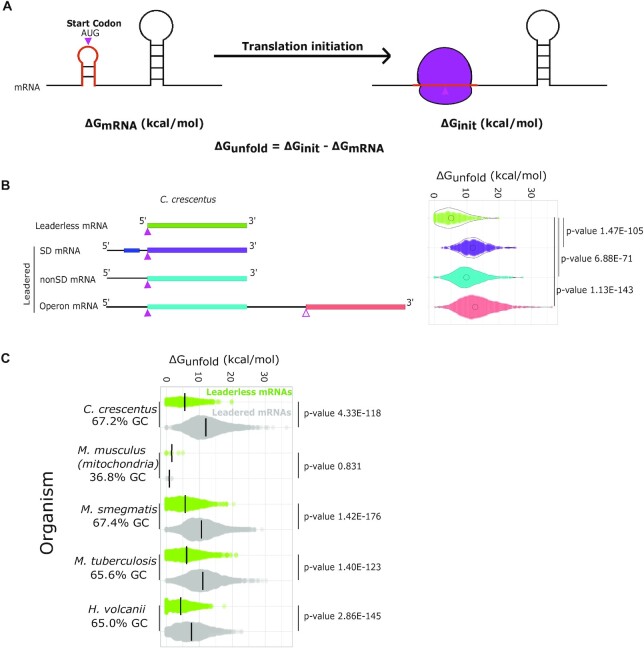
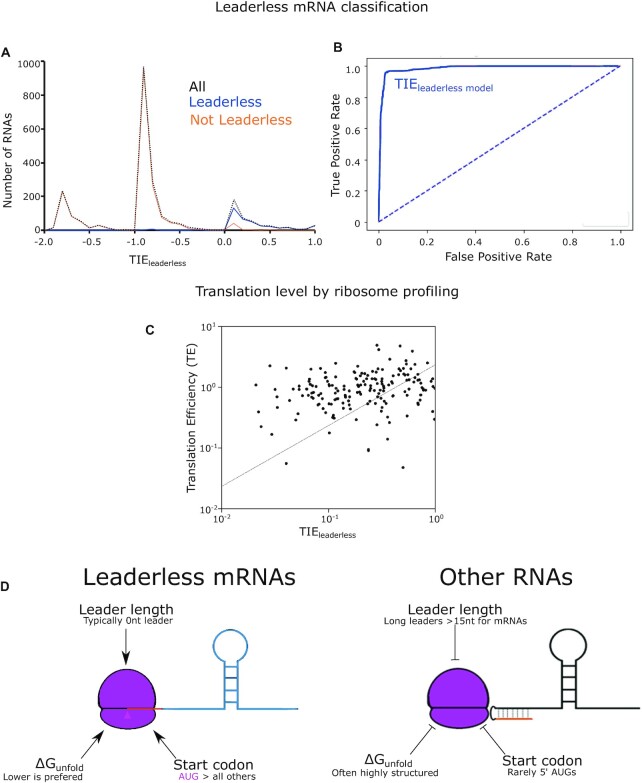
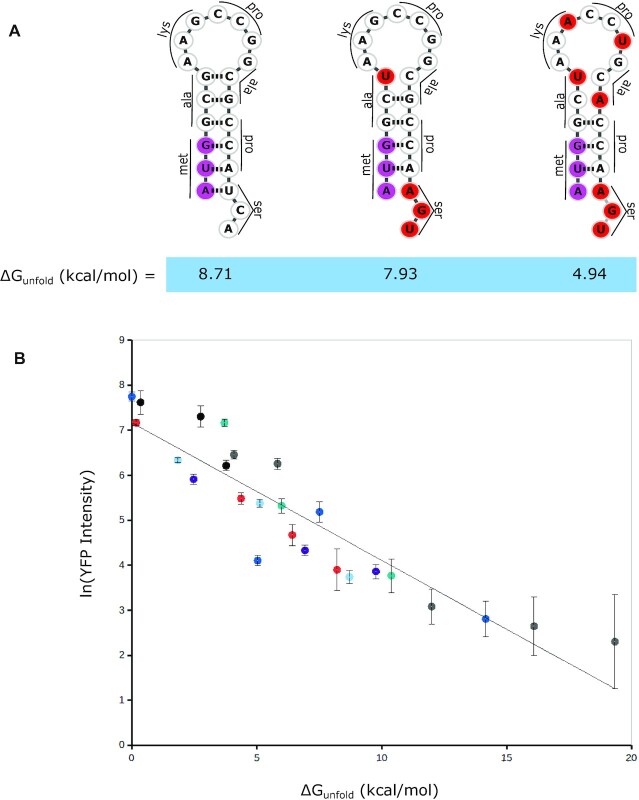
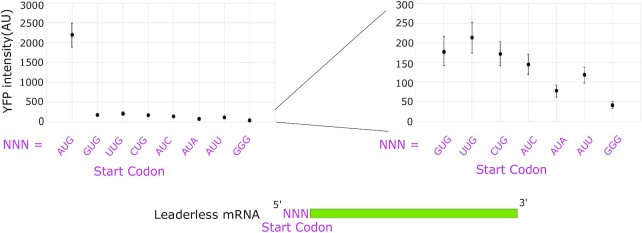
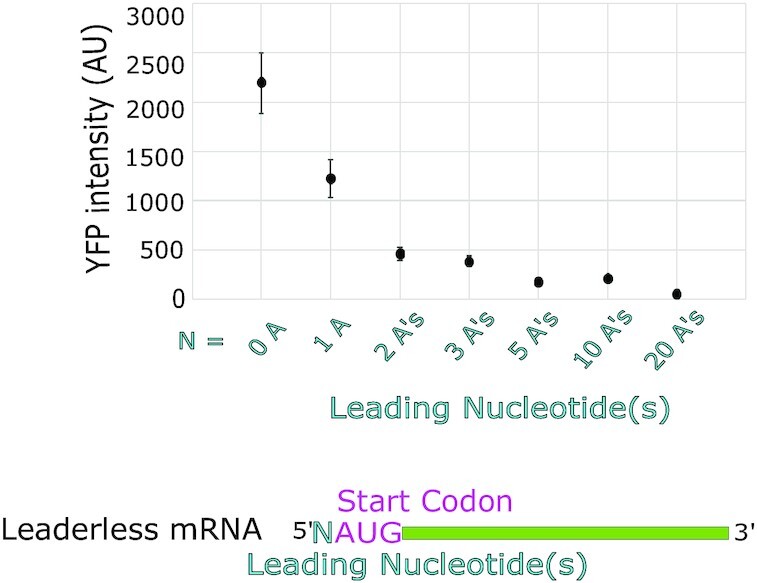
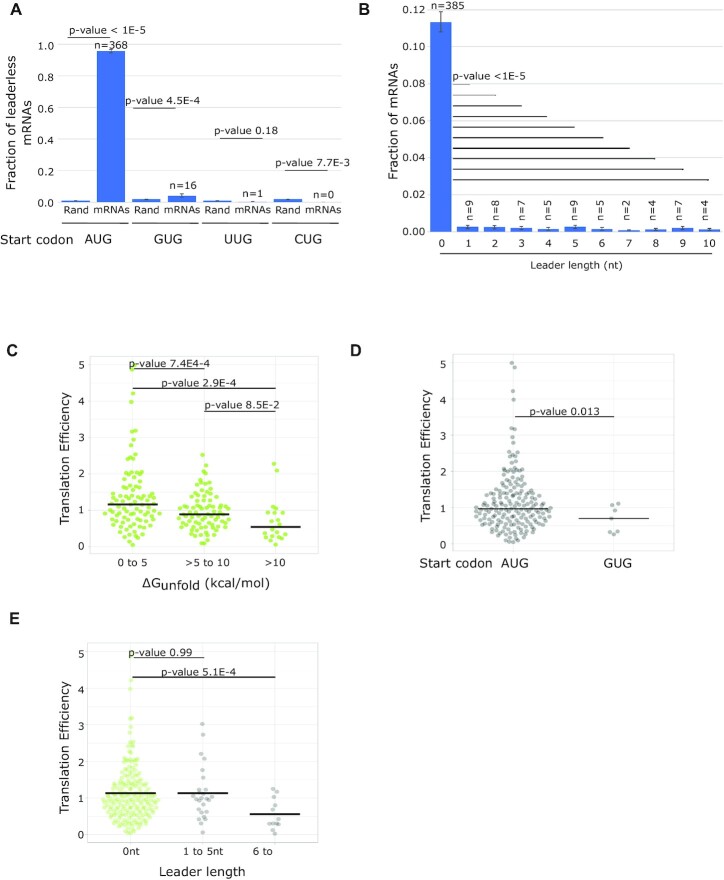
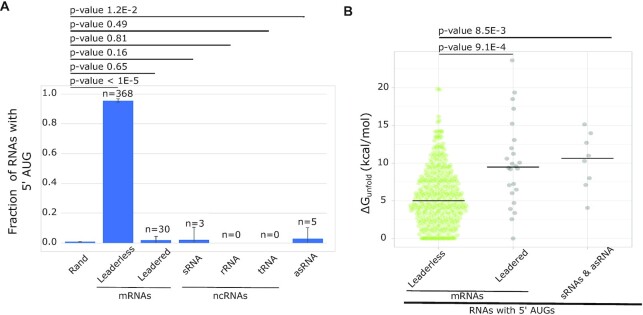
Bacterial translation is thought to initiate by base pairing of the 16S rRNA and the Shine-Dalgarno sequence in the mRNA's 5' untranslated region (UTR). However, transcriptomics has revealed that leaderless mRNAs, which completely lack any 5' UTR, are broadly distributed across bacteria and can initiate translation in the absence of the Shine-Dalgarno sequence. To investigate the mechanism of leaderless mRNA translation initiation, synthetic translation reporters were designed that systematically tested the effects of start codon accessibility, leader length, and start codon identity on leaderless mRNA translation initiation. Using these data, a simple computational model was built based on the combinatorial relationship of these mRNA features that can accurately classify leaderless mRNAs and predict the translation initiation efficiency of leaderless mRNAs. Thus, start codon accessibility, leader length, and start codon identity combine to define leaderless mRNA translation initiation in bacteria.
细菌翻译被认为是通过16S rRNA与mRNA 5'非翻译区(UTR)中的Shine-Dalgarno序列进行碱基配对来起始的。然而,转录组学研究表明,完全缺乏任何5'UTR的无领导mRNA广泛分布于细菌中,并且在没有Shine-Dalgarno序列的情况下也能起始翻译。为了研究无领导mRNA翻译起始的机制,设计了合成翻译报告基因,系统地测试起始密码子可及性、前导长度和起始密码子身份对无领导mRNA翻译起始的影响。利用这些数据,基于这些mRNA特征的组合关系构建了一个简单的计算模型,该模型可以准确地对无领导mRNA进行分类,并预测无领导mRNA的翻译起始效率。因此,起始密码子可及性、前导长度和起始密码子身份共同决定了细菌中无领导mRNA的翻译起始。