Corrias Angelica, Cortes Gian Mario, Bardanzellu Flaminia, Melis Alice, Fanos Vassilios, Marcialis Maria Antonietta
Neonatal Intensive Care Unit, Department of Surgical Sciences, AOU and University of Cagliari, SS 554 km 4500, 09042 Monserrato, Italy.
Children (Basel). 2021 Aug 30;8(9):753. doi: 10.3390/children8090753.
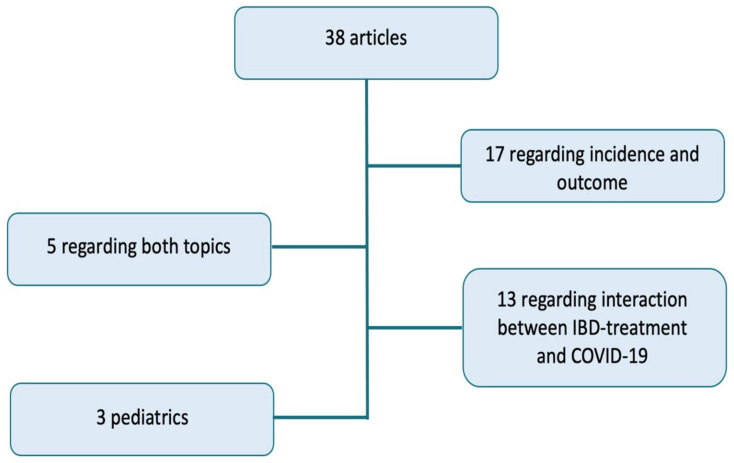
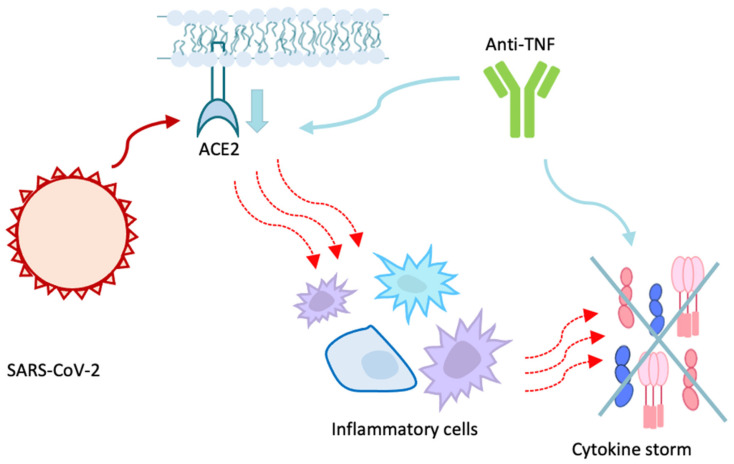
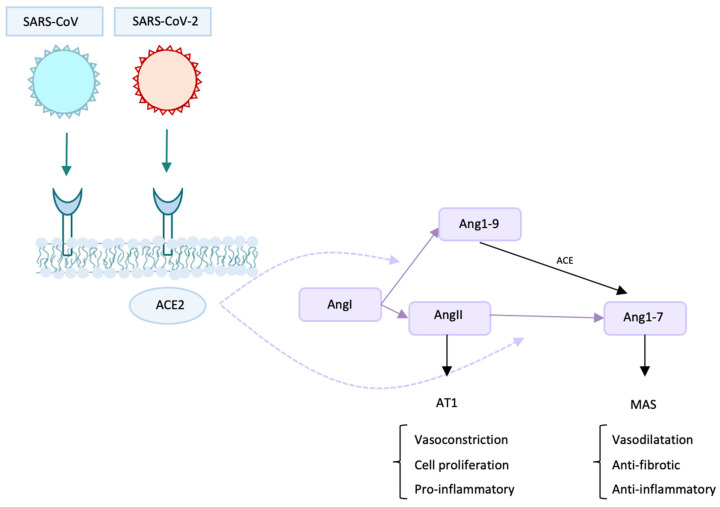
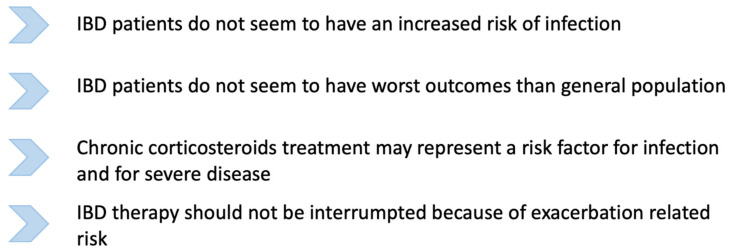
Susceptibility and disease course of COVID-19 among patients with inflammatory bowel diseases (IBD) are unclear and epidemiological data on the topic are still limited. There is some concern that patients with immuno-mediated diseases such as IBD, which are frequently treated with immunosuppressive therapies, may have an increased risk of SARS-CoV-2 infection with its related serious adverse outcomes, including intensive care unit (ICU) admission and death. Corticosteroids, immunomodulators, and biologic drugs, which are commonly prescribed to these patients, have been associated with higher rates of severe viral and bacterial infections including influenza and pneumonia. It is not known whether these drugs can be so harmful as to justify their interruption during COVID-19 infection or if, on the contrary, patients with IBD can benefit from them. As shown by recent reports, it cannot be excluded that drugs that suppress the immune system can block the characteristic cytokine storm of severe forms of COVID-19 and consequently reduce mortality. Another cause for concern is the up-regulation of angiotensin converting enzyme-2 (ACE2) receptors that has been noticed in these patients, which could facilitate the entry and replication of SARS-CoV-2. The aim of this narrative review is to clarify the susceptibility of SARS-CoV-2 infection in patients with IBD, the clinical characteristics of patients who contract the infection, and the relationship between the severity of COVID-19 and immunosuppressive treatment.
炎症性肠病(IBD)患者对2019冠状病毒病(COVID-19)的易感性和疾病进程尚不清楚,关于该主题的流行病学数据仍然有限。有人担心,像IBD这样经常接受免疫抑制治疗的免疫介导疾病患者,感染严重急性呼吸综合征冠状病毒2(SARS-CoV-2)及其相关严重不良后果(包括入住重症监护病房(ICU)和死亡)的风险可能会增加。通常开给这些患者的皮质类固醇、免疫调节剂和生物药物,与包括流感和肺炎在内的严重病毒和细菌感染的较高发生率有关。目前尚不清楚这些药物是否有害到在COVID-19感染期间需要停用,或者相反,IBD患者是否能从中受益。正如最近的报告所示,不能排除抑制免疫系统的药物可以阻断重症COVID-19特征性的细胞因子风暴,从而降低死亡率。另一个令人担忧的原因是,在这些患者中发现血管紧张素转换酶2(ACE2)受体上调,这可能会促进SARS-CoV-2的进入和复制。本叙述性综述的目的是阐明IBD患者对SARS-CoV-2感染的易感性、感染患者的临床特征以及COVID-19严重程度与免疫抑制治疗之间的关系。