Sarawi Wedad S, Alhusaini Ahlam M, Fadda Laila M, Alomar Hatun A, Albaker Awatif B, Aljrboa Amjad S, Alotaibi Areej M, Hasan Iman H, Mahmoud Ayman M
Pharmacology and Toxicology Department, Faculty of Pharmacy, King Saud University, Riyadh 11451, Saudi Arabia.
Department of Pharmacology and Toxicology, College of Pharmacy, Umm Al-Qura University, Makkah 21955, Saudi Arabia.
Antioxidants (Basel). 2021 Sep 3;10(9):1414. doi: 10.3390/antiox10091414.
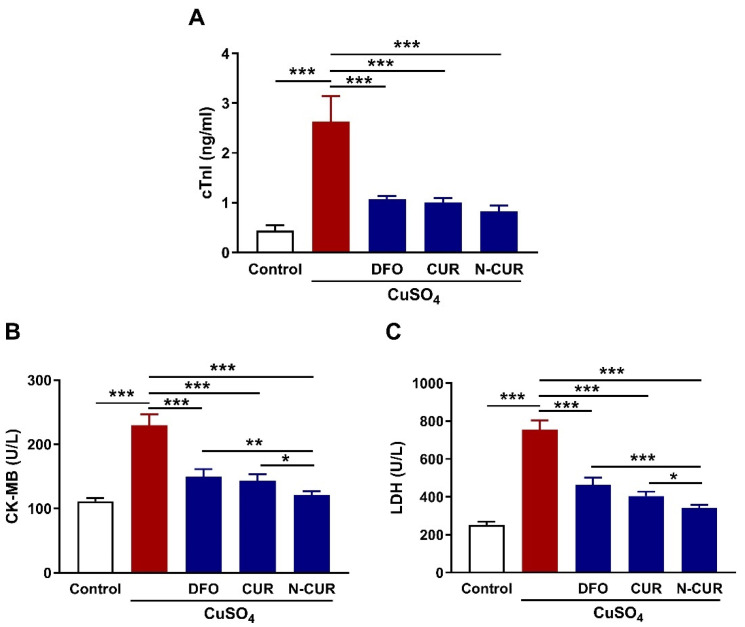
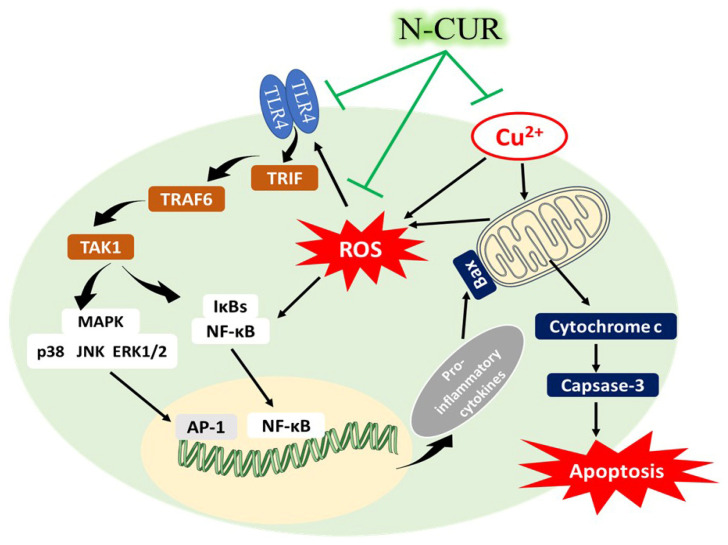
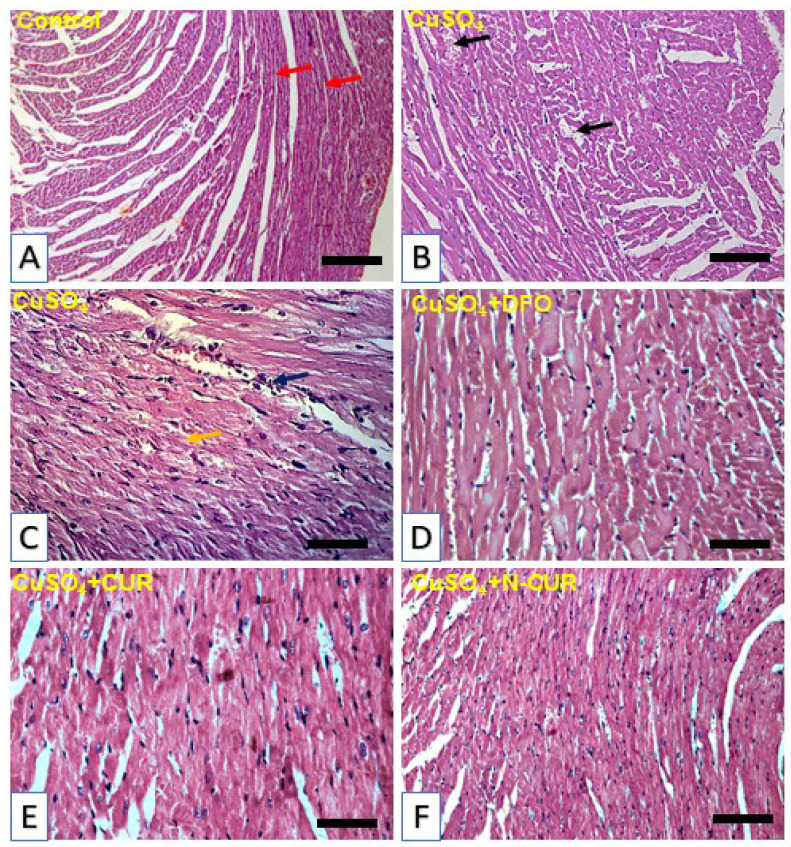
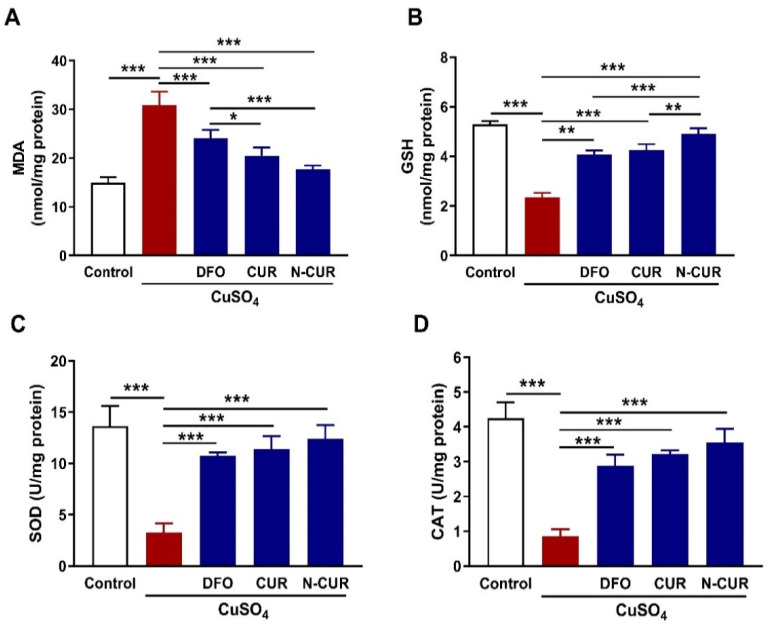
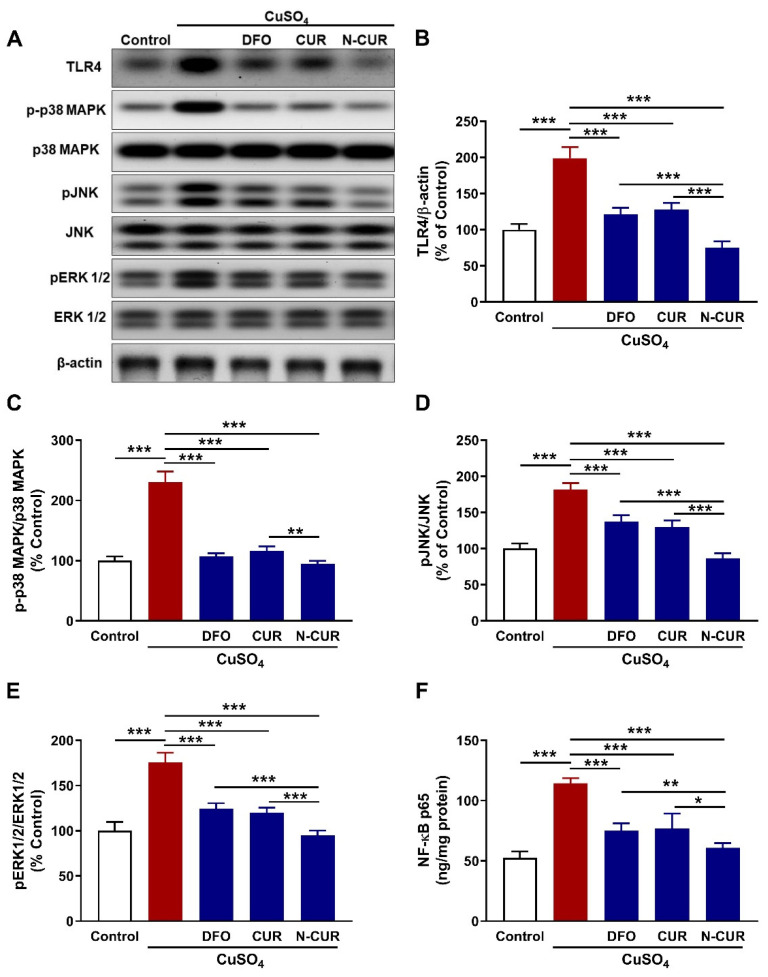
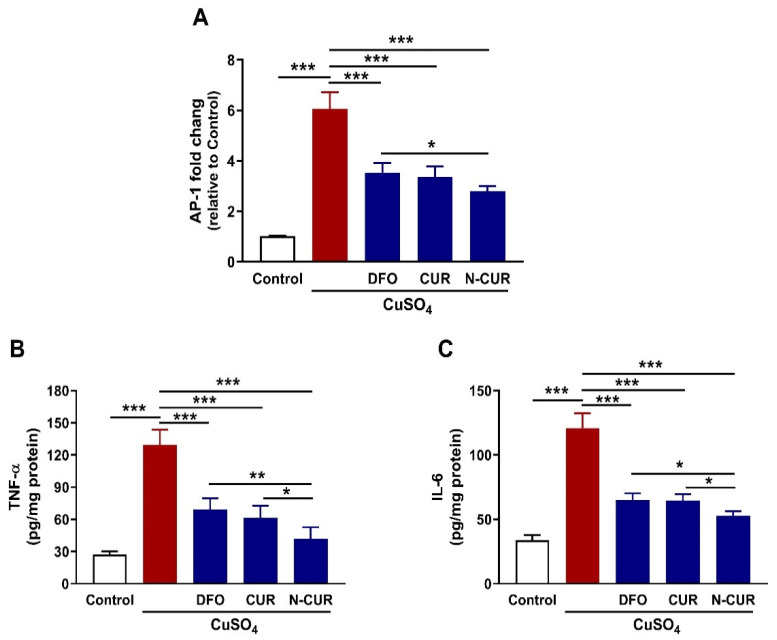
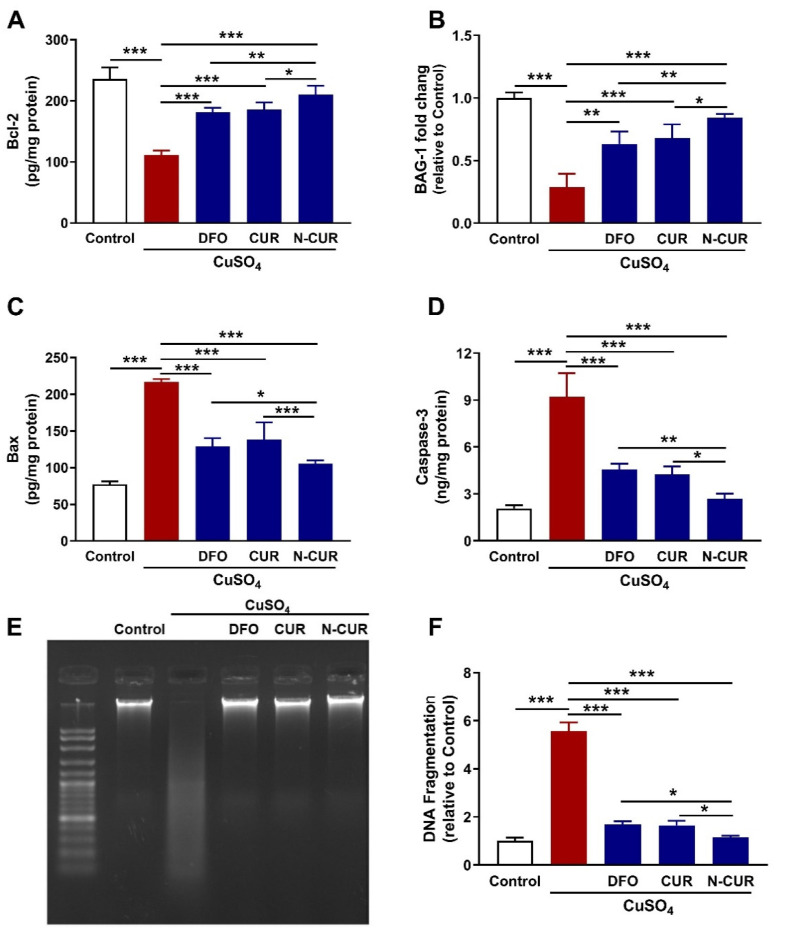
Copper (Cu) is essential for a plethora of biological processes; however, its high redox reactivity renders it potentially toxic. This study investigated the protective effect of curcumin (CUR) and nano-CUR (N-CUR) against Cu cardiotoxicity, emphasizing the role of oxidative stress, TLR4/NF-κB and mitogen-activated protein kinase (MAPK) signaling and cell death in rats. Rats received 100 mg/kg copper sulfate (CuSO), a pesticide used for repelling pests, and were concurrently treated with CUR or N-CUR for 7 days. Cu caused cardiac injury manifested by elevated serum cardiac troponin I (cTnI), creatine kinase (CK)-MB, and lactate dehydrogenase (LDH), as well as histopathological alterations. Cardiac malondialdehyde (MDA), NF-κB p65, TNF-α, and IL-6 were increased, and reduced glutathione (GSH), superoxide dismutase (SOD) and catalase were decreased in Cu-treated rats. CUR and N-CUR prevented cardiac tissue injury, decreased serum cTnI, CK-MB, and LDH, and cardiac MDA, NF-κB p65, TNF-α, and IL-6, and enhanced cellular antioxidants. CUR and N-CUR downregulated TLR4 and AP-1, and decreased the phosphorylation levels of p38 MAPK, JNK, and ERK1/2. In addition, CUR and N-CUR increased cardiac Bcl-2 and BAG-1, decreased Bax and caspase-3, and prevented DNA fragmentation. In conclusion, N-CUR prevents Cu cardiotoxicity by attenuating oxidative injury, inflammatory response, and apoptosis, and modulating TLR4/NF-κB and MAPK signaling. The cardioprotective effect of N-CUR was more potent than the native form.
铜(Cu)对众多生物过程至关重要;然而,其高氧化还原反应性使其具有潜在毒性。本研究调查了姜黄素(CUR)和纳米姜黄素(N-CUR)对铜心脏毒性的保护作用,重点关注氧化应激、Toll样受体4(TLR4)/核因子κB(NF-κB)和丝裂原活化蛋白激酶(MAPK)信号传导以及细胞死亡在大鼠中的作用。大鼠接受100mg/kg硫酸铜(CuSO),一种用于驱避害虫的杀虫剂,并同时用CUR或N-CUR处理7天。铜导致心脏损伤,表现为血清心肌肌钙蛋白I(cTnI)、肌酸激酶(CK)-MB和乳酸脱氢酶(LDH)升高,以及组织病理学改变。铜处理的大鼠心脏丙二醛(MDA)、NF-κB p65、肿瘤坏死因子-α(TNF-α)和白细胞介素-6(IL-6)增加,而还原型谷胱甘肽(GSH)、超氧化物歧化酶(SOD)和过氧化氢酶减少。CUR和N-CUR预防了心脏组织损伤,降低了血清cTnI、CK-MB和LDH,以及心脏MDA、NF-κB p65、TNF-α和IL-6,并增强了细胞抗氧化剂。CUR和N-CUR下调了TLR4和活化蛋白-1(AP-1),并降低了p38 MAPK、c-Jun氨基末端激酶(JNK)和细胞外信号调节激酶1/2(ERK1/2)的磷酸化水平。此外,CUR和N-CUR增加了心脏B细胞淋巴瘤-2(Bcl-2)和BAG-1,降低了Bax和半胱天冬酶-3,并预防了DNA片段化。总之,N-CUR通过减轻氧化损伤、炎症反应和细胞凋亡以及调节TLR4/NF-κB和MAPK信号传导来预防铜心脏毒性。N-CUR的心脏保护作用比天然形式更强。