Pause Bettina M, Schäfer Annika S, Hoenen Matthias, Lübke Katrin T, Stockhorst Ursula
Department of Experimental Psychology, Heinrich-Heine-University Düsseldorf, D-40225 Düsseldorf, Germany.
FOM University of Applied Sciences, D-45141 Essen, Germany.
Brain Sci. 2021 Aug 30;11(9):1152. doi: 10.3390/brainsci11091152.
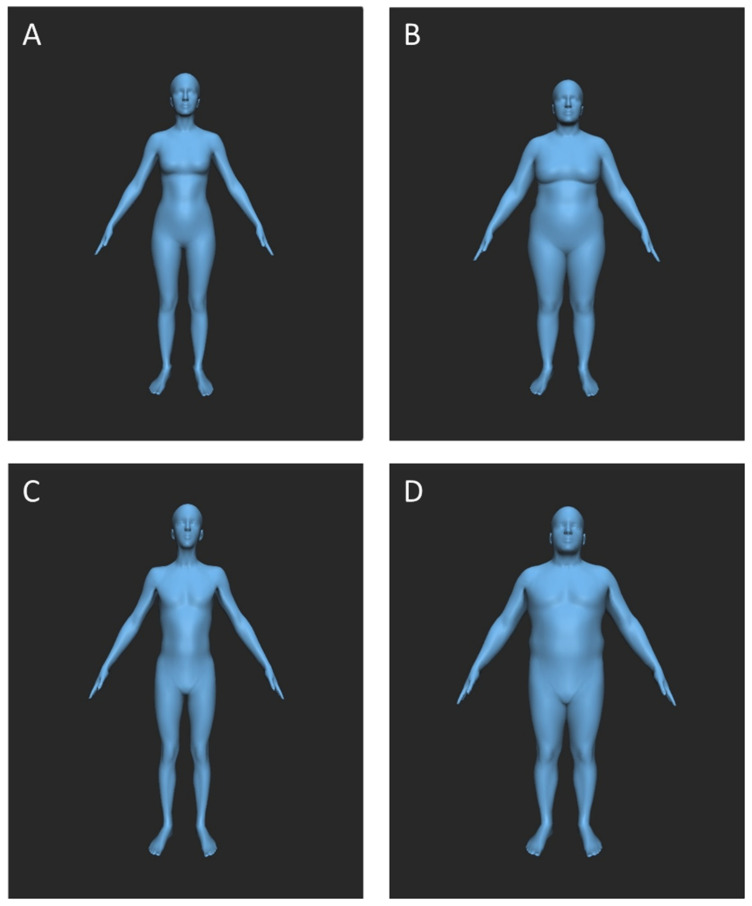
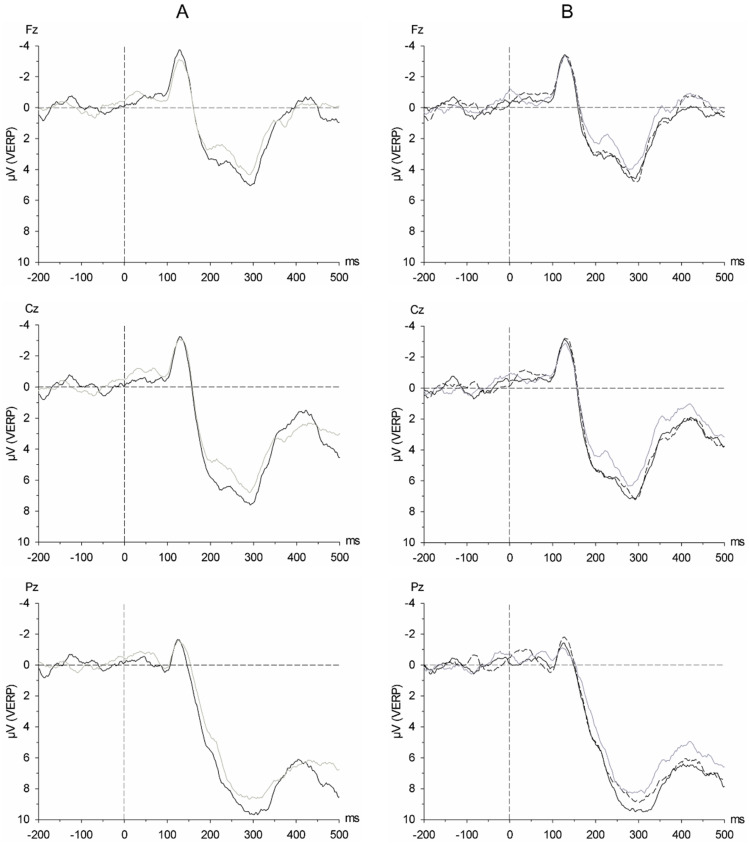
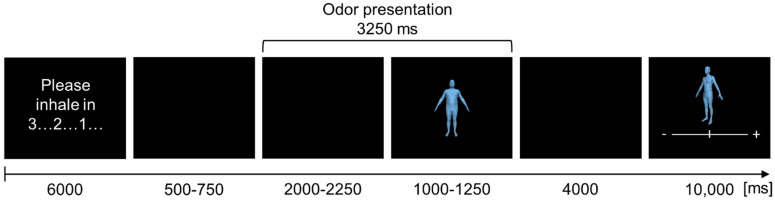
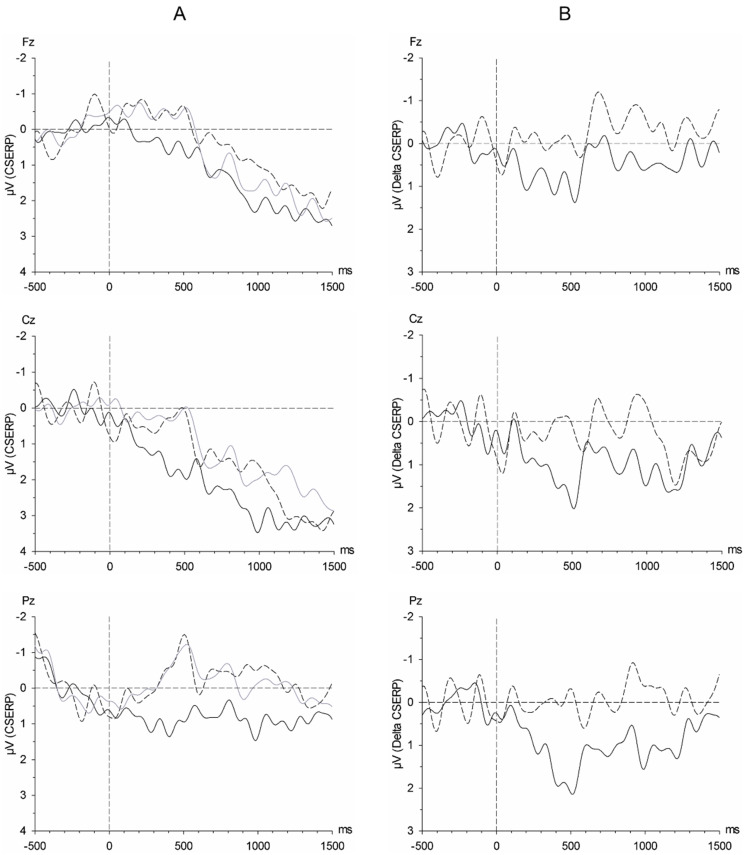
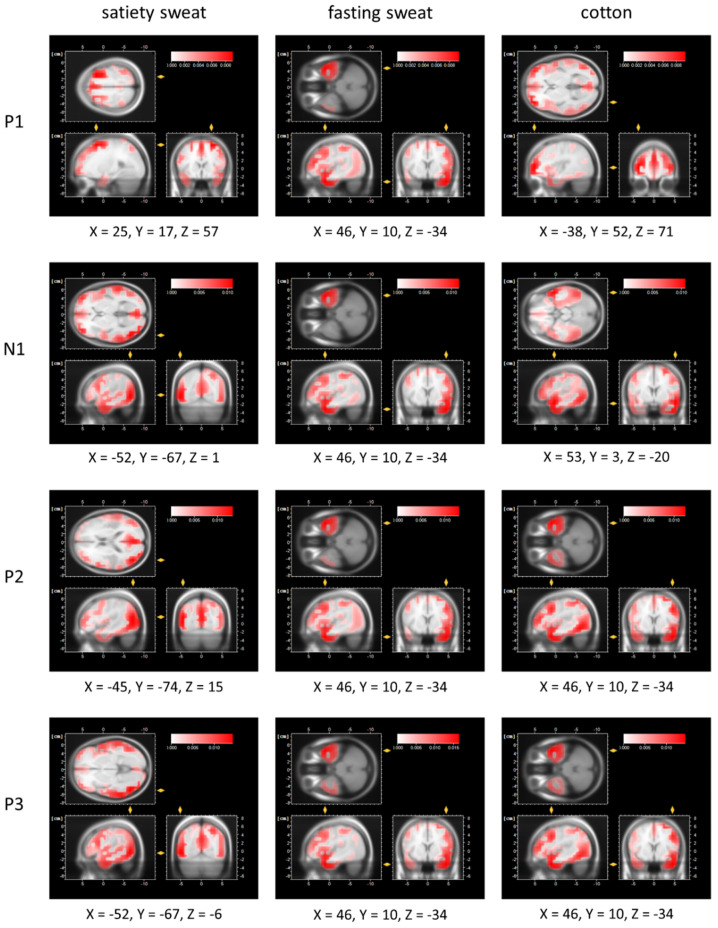
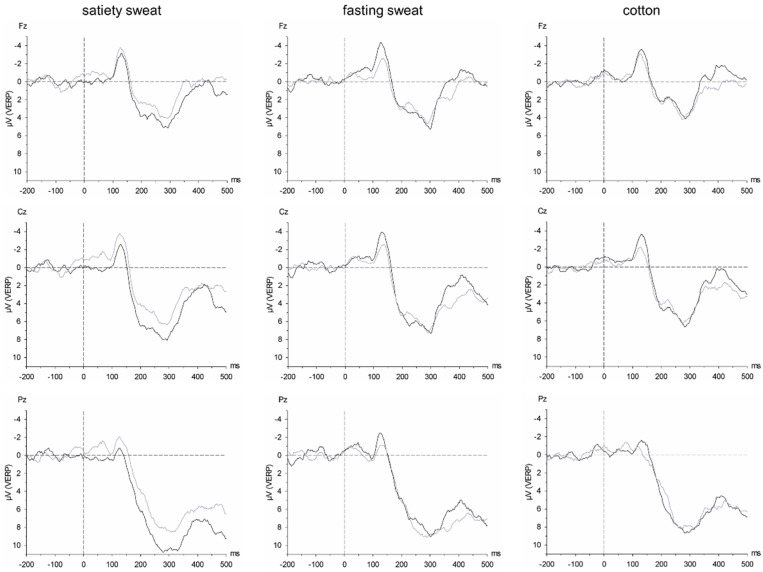
The current study examines neural responses to satiety- and fasting-related volatiles and their effect on the processing of body shapes. Axillary sweat was sampled with cotton pads from 10 individuals after 12 h of fasting, and after having consumed a standard breakfast. Pure cotton pads served as the control. The chemosensory stimuli were presented to 20 participants (via a constant-flow olfactometer) exclusively, and additionally as context to images of overweight and underweight avatars. EEG was recorded (61 electrodes), and chemosensory (CSERPs; P1, N1, P2, P3) and visual event-related potentials (VERPs; N1, P2, P3a, P3b) were analyzed. The amplitudes of all positive CSERP components differed more strongly from cotton in response to chemosensory satiety cues as compared to fasting cues (P1: = 0.023, P2: = 0.083, P3: = 0.031), paralleled by activity within the middle frontal and temporal gyrus. Overweight compared to underweight body shapes tended to elicit larger VERP P2 amplitudes ( = 0.068), and chemosensory satiety cues amplified the VERP amplitudes in response to any body shape (P2, P3a, P3b; all ≤ 0.017) as compared to the cotton control. The results indicate that chemosensory satiety cues transmit complex social information, overriding the processing of analogous visual input.
当前的研究考察了对与饱腹感和禁食相关的挥发性物质的神经反应及其对体型加工的影响。在禁食12小时后以及食用标准早餐后,用棉垫从10名个体采集腋窝汗液。纯棉垫作为对照。化学感觉刺激仅呈现给20名参与者(通过恒流嗅觉计),并且还作为超重和体重过轻的虚拟形象图片的背景。记录脑电图(61个电极),并分析化学感觉事件相关电位(CSERP;P1、N1、P2、P3)和视觉事件相关电位(VERP;N1、P2、P3a、P3b)。与禁食线索相比,所有正性CSERP成分的波幅在对化学感觉饱腹感线索的反应中与棉垫相比差异更显著(P1: = 0.023,P2: = 0.083,P3: = 0.031),同时伴有额中回和颞回内的活动。与体重过轻的体型相比,超重体型往往会引发更大的VERP P2波幅( = 0.068),并且与棉垫对照相比,化学感觉饱腹感线索会放大对任何体型的VERP波幅(P2、P3a、P3b;所有 ≤ 0.017)。结果表明,化学感觉饱腹感线索传递复杂的社会信息,优先于类似视觉输入的加工。