Li Xin, Wang Yue-Meng, Sun Cheng-Feng, Lv Jian-Hao, Yang Yan-Jun
School of Life Sciences, Yantai University, Yantai 264005, China.
School of Food and Biological Engineering, Yantai Institute of Technology, Yantai 264003, China.
Foods. 2021 Sep 21;10(9):2238. doi: 10.3390/foods10092238.
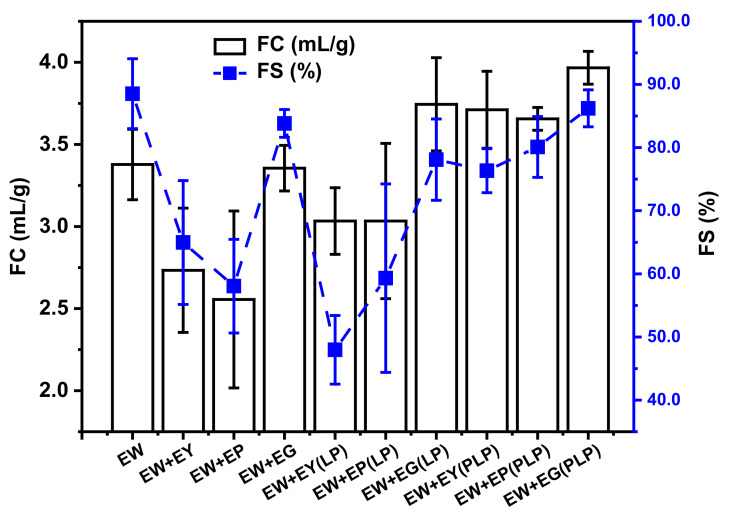
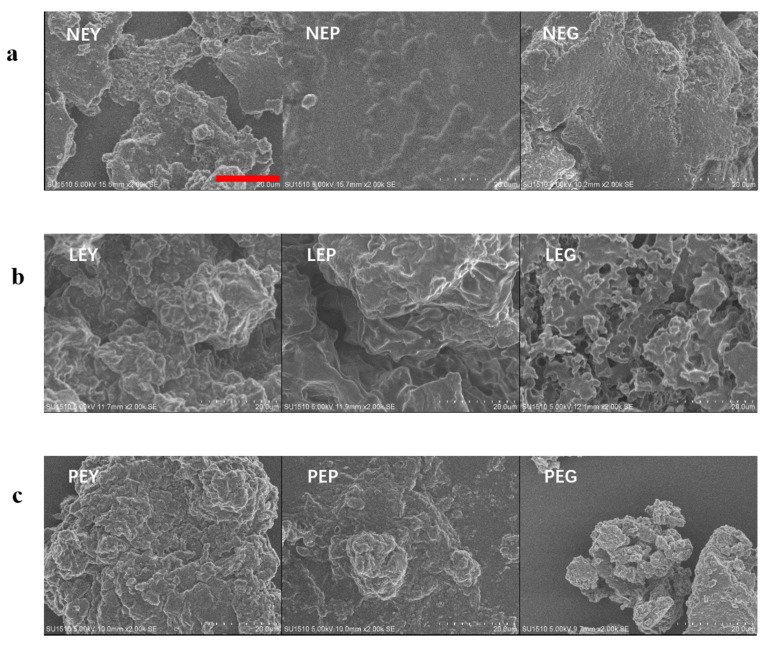
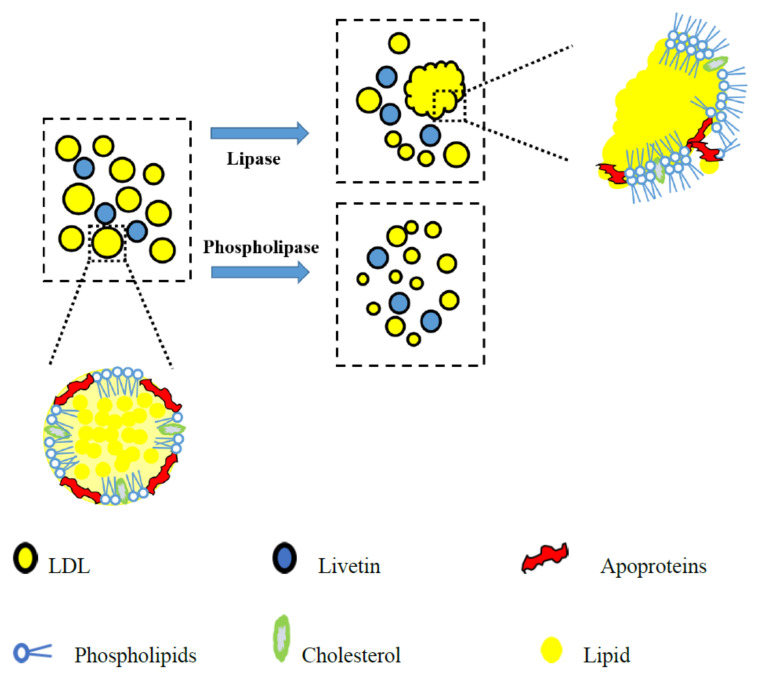
As an excellent foaming agent, egg white protein (EWP) is always contaminated by egg yolk in the industrial processing, therefore, decreasing its foaming properties. The aim of this study was to simulate the industrial EWP (egg white protein with 0.5% of egg yolk) and characterize their foaming and structural properties when hydrolyzed by two types of esterase (lipase and phospholipase A). Results showed that egg yolk plasma might have been the main fraction, which led to the poor foaming properties of the contaminated egg white protein compared with egg yolk granules. After hydrolyzation, both foamability and foam stability of investigated systems thereof (egg white protein with egg yolk, egg white protein with egg yolk plasma, and egg white protein with egg yolk granules) increased significantly compared with unhydrolyzed ones. However, phospholipids A (PLP) seemed to be more effective on increasing their foaming properties as compared to those systems hydrolyzed by lipase (LP). The schematic diagrams of yolk fractions were proposed to explain the aggregation and dispersed behavior exposed in their changes of structures after hydrolysis, suggesting the aggregated effects of LP on yolk plasma and destructive effects of PLP on yolk granules, which may directly influence their foaming properties.
作为一种优良的发泡剂,蛋清蛋白(EWP)在工业加工过程中总是会被蛋黄污染,从而降低其发泡性能。本研究的目的是模拟工业用EWP(含0.5%蛋黄的蛋清蛋白),并表征其在两种酯酶(脂肪酶和磷脂酶A)水解时的发泡和结构特性。结果表明,蛋黄血浆可能是导致受污染蛋清蛋白发泡性能不如蛋黄颗粒的主要成分。水解后,所研究体系(含蛋黄的蛋清蛋白、含蛋黄血浆的蛋清蛋白和含蛋黄颗粒的蛋清蛋白)的发泡性和泡沫稳定性与未水解的相比均显著提高。然而,与脂肪酶(LP)水解的体系相比,磷脂酶A(PLP)似乎在提高其发泡性能方面更有效。提出了蛋黄组分的示意图来解释其水解后结构变化中呈现的聚集和分散行为,表明LP对蛋黄血浆的聚集作用以及PLP对蛋黄颗粒的破坏作用,这可能直接影响它们的发泡性能。