Reddy Micaela B, Bolger Michael B, Fraczkiewicz Grace, Del Frari Laurence, Luo Laibin, Lukacova Viera, Mitra Amitava, Macwan Joyce S, Mullin Jim M, Parrott Neil, Heikkinen Aki T
Early Clinical Development, Department of Clinical Pharmacology Oncology, Pfizer, Boulder, CO 80301, USA.
Simulations Plus Inc., Lancaster, CA 93534, USA.
Pharmaceutics. 2021 Aug 24;13(9):1325. doi: 10.3390/pharmaceutics13091325.
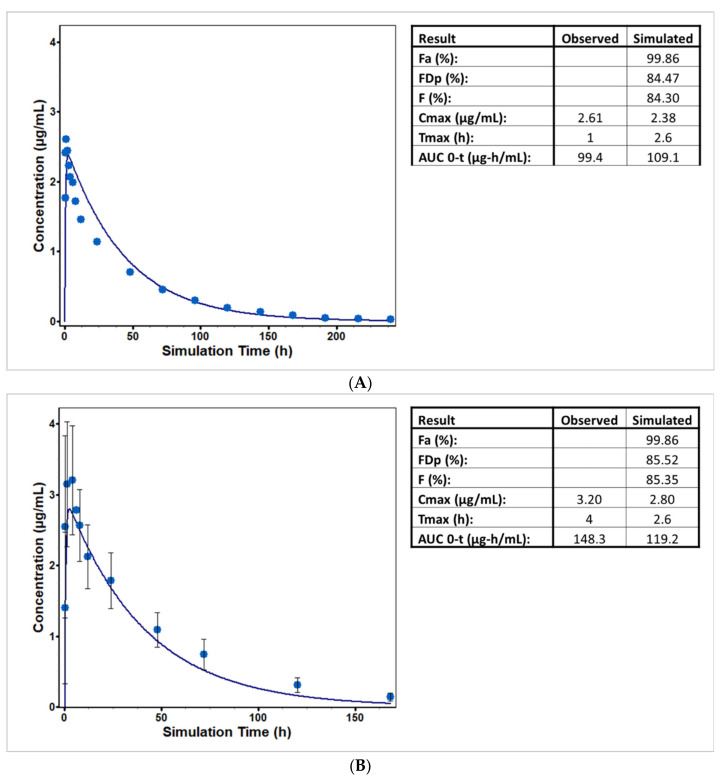
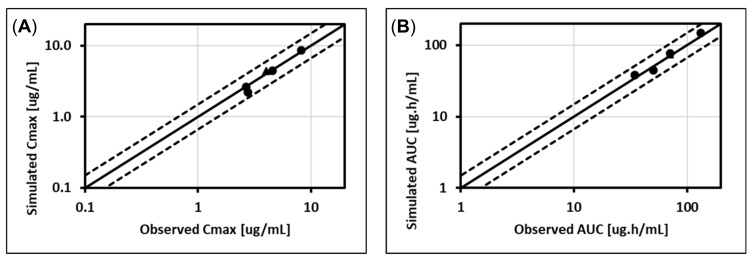
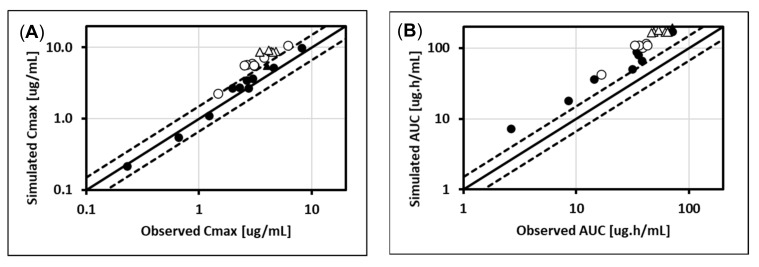
Uridine 5'-diphospho-glucuronosyltransferases (UGTs) are expressed in the small intestines, but prediction of first-pass extraction from the related metabolism is not well studied. This work assesses physiologically based pharmacokinetic (PBPK) modeling as a tool for predicting intestinal metabolism due to UGTs in the human gastrointestinal tract. Available data for intestinal UGT expression levels and in vitro approaches that can be used to predict intestinal metabolism of UGT substrates are reviewed. Human PBPK models for UGT substrates with varying extents of UGT-mediated intestinal metabolism (lorazepam, oxazepam, naloxone, zidovudine, cabotegravir, raltegravir, and dolutegravir) have demonstrated utility for predicting the extent of intestinal metabolism. Drug-drug interactions (DDIs) of UGT1A1 substrates dolutegravir and raltegravir with UGT1A1 inhibitor atazanavir have been simulated, and the role of intestinal metabolism in these clinical DDIs examined. Utility of an in silico tool for predicting substrate specificity for UGTs is discussed. Improved in vitro tools to study metabolism for UGT compounds, such as coculture models for low clearance compounds and better understanding of optimal conditions for in vitro studies, may provide an opportunity for improved in vitro-in vivo extrapolation (IVIVE) and prospective predictions. PBPK modeling shows promise as a useful tool for predicting intestinal metabolism for UGT substrates.
尿苷5'-二磷酸葡萄糖醛酸基转移酶(UGTs)在小肠中表达,但对于从相关代谢预测首过提取的研究并不充分。本研究评估基于生理的药代动力学(PBPK)模型作为预测人胃肠道中UGT介导的肠道代谢的工具。综述了肠道UGT表达水平的现有数据以及可用于预测UGT底物肠道代谢的体外方法。针对具有不同程度UGT介导的肠道代谢的UGT底物(劳拉西泮、奥沙西泮、纳洛酮、齐多夫定、卡博特韦、拉替拉韦和多替拉韦)建立的人PBPK模型已证明可用于预测肠道代谢程度。模拟了UGT1A1底物多替拉韦和拉替拉韦与UGT1A1抑制剂阿扎那韦之间的药物-药物相互作用(DDIs),并研究了肠道代谢在这些临床DDIs中的作用。讨论了一种用于预测UGT底物特异性的计算机模拟工具的实用性。改进用于研究UGT化合物代谢的体外工具,如低清除率化合物的共培养模型以及更好地了解体外研究的最佳条件,可能为改进体外-体内外推(IVIVE)和前瞻性预测提供机会。PBPK模型有望成为预测UGT底物肠道代谢的有用工具。