Redrado Marta, Benedi Andrea, Marzo Isabel, Gimeno M Concepción, Fernández-Moreira Vanesa
Departamento de Química Inorgánica, Instituto de Síntesis Química y Catálisis Homogénea (ISQCH), CSIC-Universidad de Zaragoza, 50009 Zaragoza, Spain.
Departamento de Bioquímica y Biología Celular, Universidad de Zaragoza-CSIC, 50009 Zaragoza, Spain.
Pharmaceutics. 2021 Sep 1;13(9):1382. doi: 10.3390/pharmaceutics13091382.
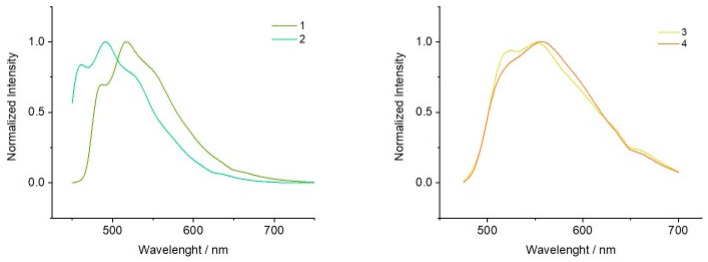
Photodynamic therapy (PDT) is a cancer treatment still bearing enormous prospects of improvement. Within the toolbox of PDT, developing photosensitizers (PSs) that can specifically reach tumor cells and promote the generation of high concentration of reactive oxygen species (ROS) is a constant research goal. Mitochondria is known as a highly appealing target for PSs, thus being able to assess the biodistribution of the PSs prior to its light activation would be crucial for therapeutic maximization. Bifunctional Ir(III) complexes of the type [Ir(C^N)(N^N-R)], where N^C is either phenylpyridine (ppy) or benzoquinoline (bzq), N^N is 2,2'-dipyridylamine (dpa) and R either anthracene ( and ) or acridine ( and ), have been developed as novel trackable PSs agents. Activation of the tracking or therapeutic function could be achieved specifically by irradiating the complex with a different light wavelength (405 nm vs. 470 nm respectively). Only complex ([Ir(bzq)(dpa-acr)]) clearly showed dual emissive pattern, acridine based emission between 407-450 nm vs. Ir(III) based emission between 521 and 547 nm. The sensitivity of A549 lung cancer cells to evidenced the importance of involving the metal center within the activation process of the PS, reaching values of photosensitivity over 110 times higher than in dark conditions. Moreover, complex promoted apoptotic cell death and possibly the paraptotic pathway, as well as higher ROS generation under irradiation than in dark conditions. Complexes - accumulated in the mitochondria but species and also localizes in other subcellular organelles.
光动力疗法(PDT)是一种仍具有巨大改进前景的癌症治疗方法。在PDT的工具库中,开发能够特异性到达肿瘤细胞并促进高浓度活性氧(ROS)生成的光敏剂(PSs)是一个持续的研究目标。线粒体是PSs的一个极具吸引力的靶点,因此在光激活之前能够评估PSs的生物分布对于实现最大治疗效果至关重要。已开发出新型可追踪PSs试剂,即[Ir(C^N)(N^N-R)]类型的双功能Ir(III)配合物,其中N^C为苯基吡啶(ppy)或苯并喹啉(bzq),N^N为2,2'-二吡啶胺(dpa),R为蒽(和)或吖啶(和)。通过分别用不同的光波长(分别为405 nm和470 nm)照射该配合物,可以特异性地实现追踪或治疗功能的激活。只有配合物([Ir(bzq)(dpa-acr)])明显呈现出双发射模式,基于吖啶的发射在407 - 450 nm之间,而基于Ir(III)的发射在521和547 nm之间。A549肺癌细胞对的敏感性证明了在PS激活过程中涉及金属中心的重要性,其光敏性值比黑暗条件下高出110倍以上。此外,配合物促进了凋亡性细胞死亡以及可能的副凋亡途径,并且在照射下比黑暗条件下产生更高的ROS。配合物 - 在线粒体中积累,但物种和也定位于其他亚细胞器中。