MTA-SZTE "Momentum" Noble Metal Nanostructures Research Group, Interdisciplinary Excellence Center, Department of Physical Chemistry and Materials Science, University of Szeged, Rerrich B. Sqr. 1, H-6720 Szeged, Hungary.
MTA-SZTE Biomimetic Systems Research Group, Department of Medical Chemistry, University of Szeged, Dóm Sqr. 8, H-6720 Szeged, Hungary.
Int J Mol Sci. 2021 Sep 12;22(18):9851. doi: 10.3390/ijms22189851.
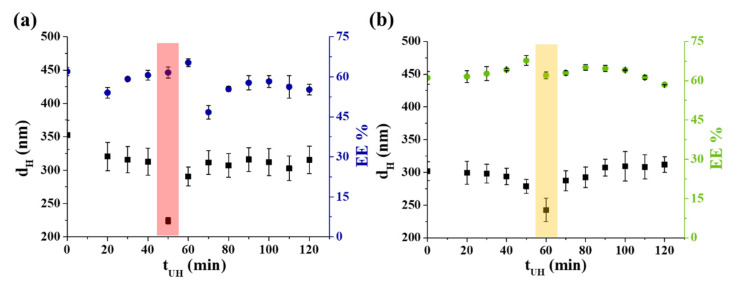
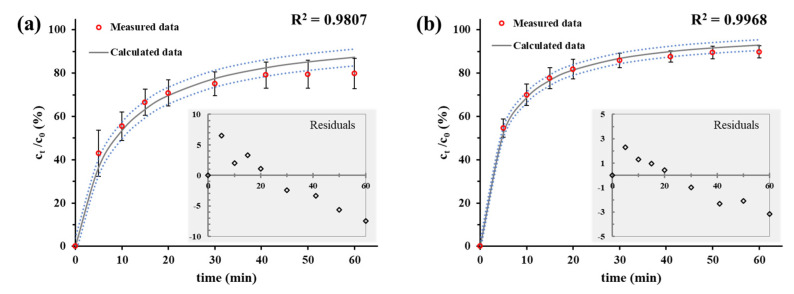
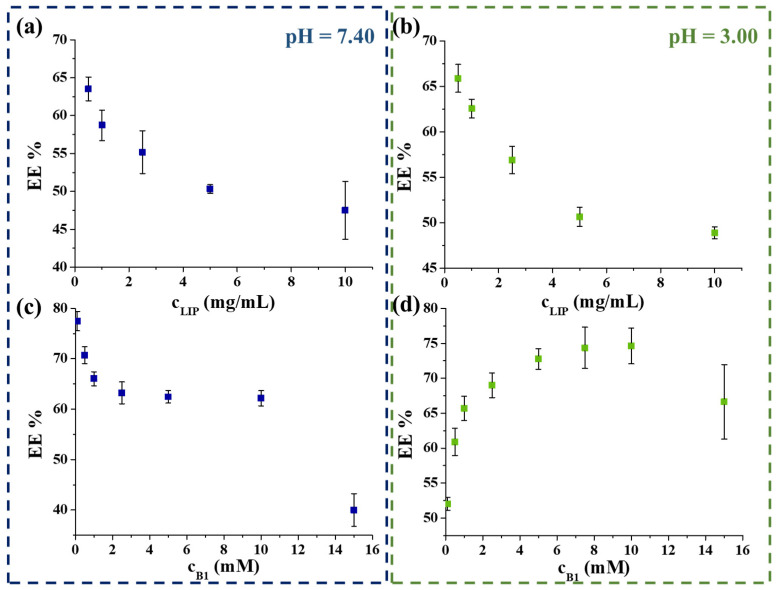
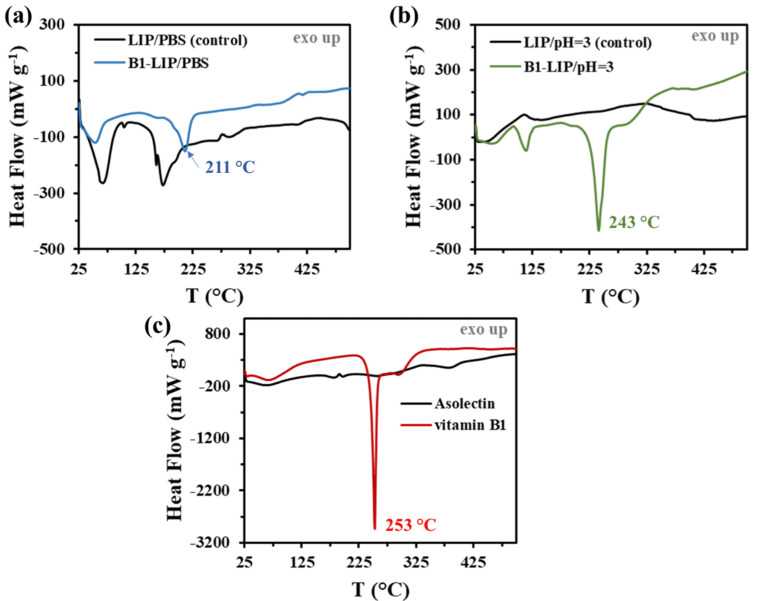
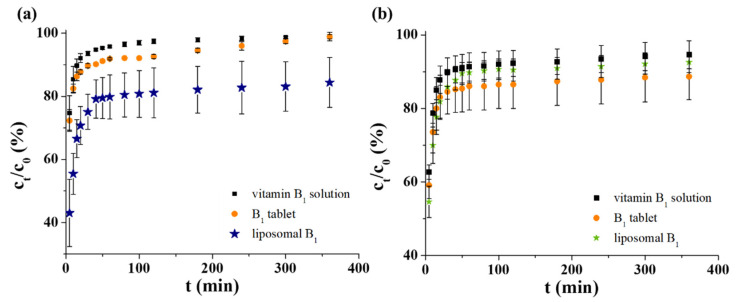
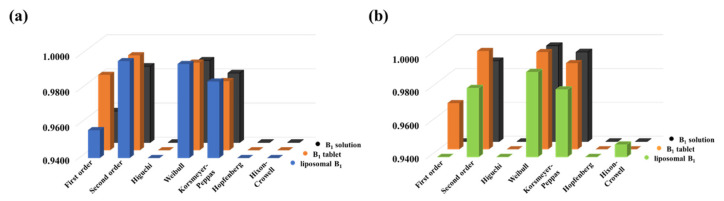
In this work, we firstly presented a simple encapsulation method to prepare thiamine hydrochloride (vitamin B)-loaded asolectin-based liposomes with average hydrodynamic diameter of ca. 225 and 245 nm under physiological and acidic conditions, respectively. In addition to the optimization of the sonication and magnetic stirring times used for size regulation, the effect of the concentrations of both asolectin carrier and initial vitamin B on the entrapment efficiency (EE %) was also investigated. Thermoanalytical measurements clearly demonstrated that after the successful encapsulation, only weak interactions were discovered between the carriers and the drug molecules. Moreover, the dissolution profiles under physiological (pH = 7.40) and gastric conditions (pH = 1.50) were also registered and the release profiles of our liposomal B system were compared with the dissolution profile of the pure drug solution and a manufactured tablet containing thiamin hydrochloride as active ingredient. The release curves were evaluated by nonlinear fitting of six different kinetic models. The best goodness of fit, where the correlation coefficients in the case of all three systems were larger than 0.98, was reached by application of the well-known second-order kinetic model. Based on the evaluation, it was estimated that our liposomal nanocarrier system shows 4.5-fold and 1.5-fold larger drug retention compared to the unpackaged vitamin B under physiological conditions and in artificial gastric juice, respectively.
在这项工作中,我们首先提出了一种简单的封装方法,以制备盐酸硫胺素(维生素 B)负载的大豆卵磷脂基脂质体,在生理条件和酸性条件下,其平均水动力直径分别约为 225nm 和 245nm。除了优化用于尺寸调节的超声和磁力搅拌时间外,还研究了大豆卵磷脂载体和初始维生素 B 的浓度对包封效率(EE%)的影响。热分析测量清楚地表明,成功封装后,载体和药物分子之间仅发现了弱相互作用。此外,还记录了在生理条件(pH = 7.40)和胃条件(pH = 1.50)下的溶解曲线,并将我们的脂质体 B 系统的释放曲线与纯药物溶液和含有盐酸硫胺素作为活性成分的市售片剂的溶解曲线进行了比较。通过对六个不同动力学模型的非线性拟合来评估释放曲线。在所有三种系统中,相关系数均大于 0.98,采用著名的二级动力学模型得到了最佳拟合度。根据评估结果,估计与未封装的维生素 B 相比,我们的脂质体纳米载体系统在生理条件下和人工胃液中的药物保留率分别提高了 4.5 倍和 1.5 倍。