Misiura Magdalena, Ościłowska Ilona, Bielawska Katarzyna, Pałka Jerzy, Miltyk Wojciech
Department of Analysis and Bioanalysis of Medicines, Medical University of Bialystok, Kilińskiego1, 15-089 Bialystok, Poland.
Department of Medicinal Chemistry, Medical University of Bialystok, Kilińskiego 1, 15-089 Bialystok, Poland.
Pharmaceuticals (Basel). 2021 Aug 29;14(9):874. doi: 10.3390/ph14090874.
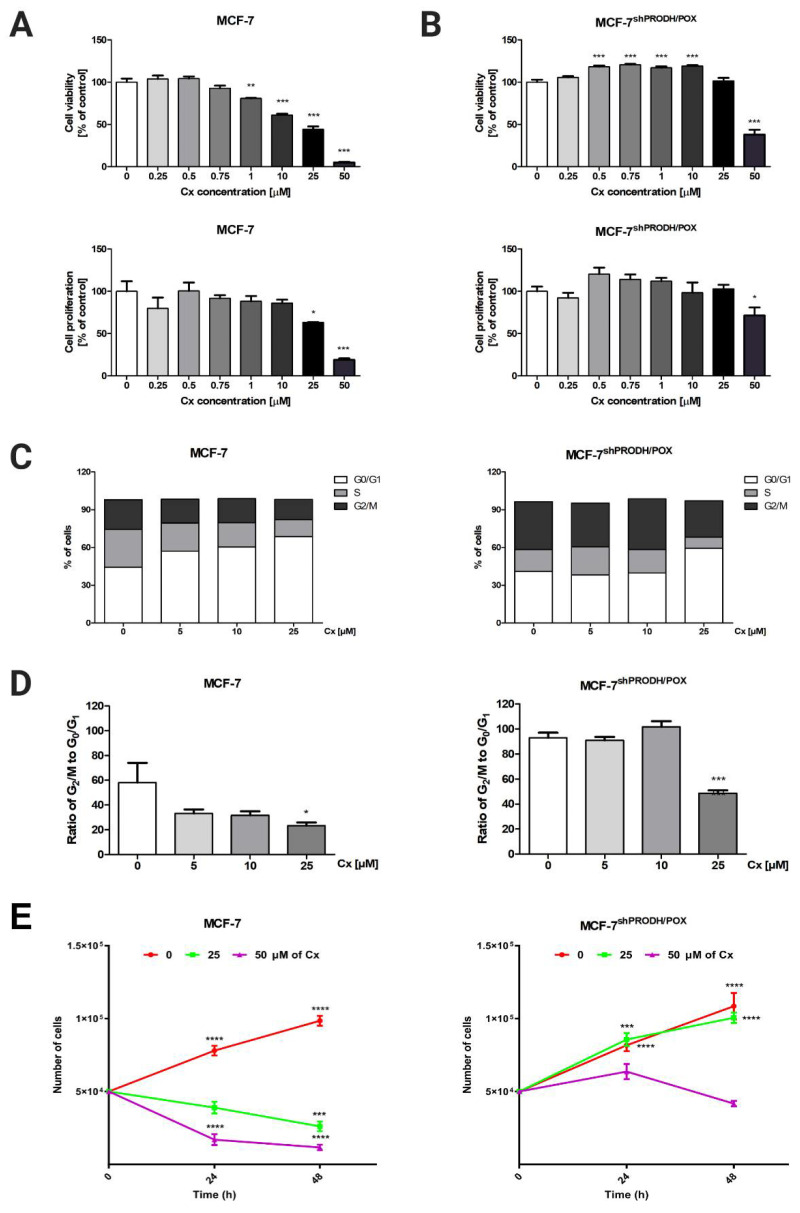
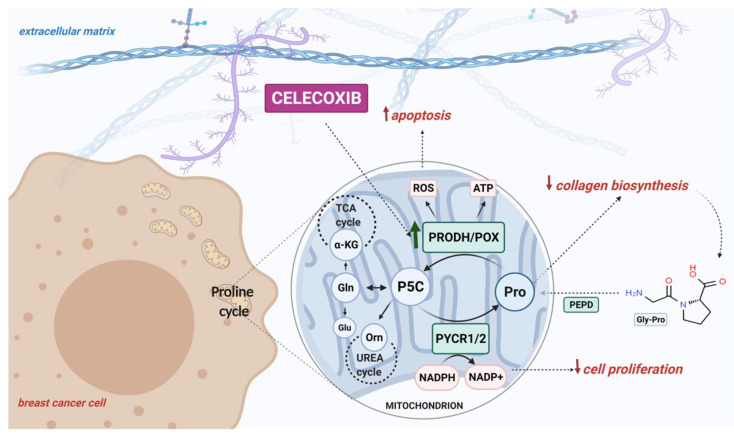
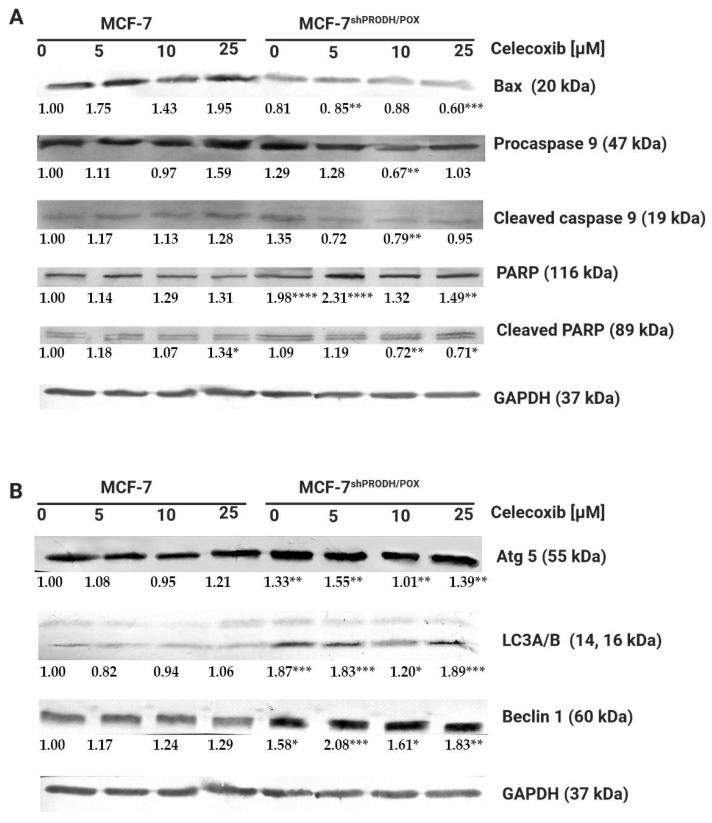
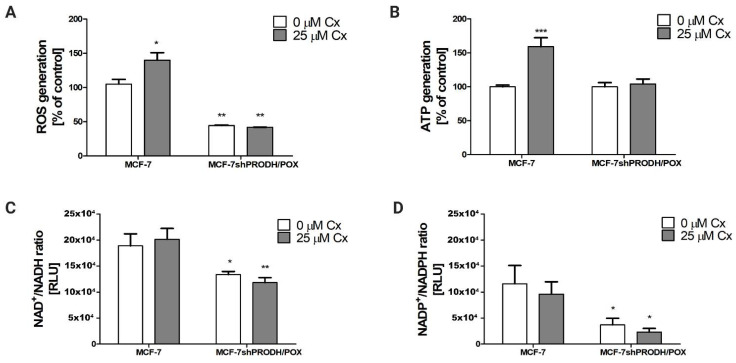
Celecoxib (Cx), an inhibitor of cyclooxygenase 2, induces apoptosis of cancer cells. However, the mechanism of the chemopreventive effect remains not fully understood. We aimed to investigate the role of PRODH/POX that is involved in the regulation of apoptosis induced by celecoxib. MCF-7 breast cancer cell line and the corresponding MCF-7 cell line with silenced PRODH/POX (MCF-7) were used. The effects of Cx on cell viability, proliferation, and cell cycle were evaluated. The expressions of protein markers for apoptosis (Bax, caspase 9, and PARP) and autophagy (Atg5, Beclin 1, and LC3A/B) were investigated by Western immunoblotting. To analyze the proline metabolism, collagen biosynthesis, prolidase activity, proline concentration, and the expression of proline-related proteins were evaluated. The generation of ATP, ROS, and the ratio of NAD+/NADH and NADP+/NADPH were determined to test the effect of Cx on energetic metabolism in breast cancer cells. It has been found that Cx attenuated MCF-7 cell proliferation via arresting the cell cycle. Cx induced apoptosis in MCF-7 breast cancer cells, while in MCF-7, autophagy occurred more predominantly. In MCF-7 breast cancer cells, Cx affected proline metabolism through upregulation of proline biosynthesis, PRODH/POX and PYCRs expressions, PEPD activity, and downregulation of collagen biosynthesis. In MCF-7 clones, these processes, as well as energetic metabolism, were remarkably suppressed. The data for the first time suggest that celecoxib induces apoptosis through upregulation of PRODH/POX in MCF-7 breast cancer cells.
塞来昔布(Cx)是一种环氧化酶2抑制剂,可诱导癌细胞凋亡。然而,其化学预防作用的机制仍未完全阐明。我们旨在研究脯氨酸脱氢酶/吡咯氧化酶(PRODH/POX)在塞来昔布诱导的细胞凋亡调控中的作用。使用了MCF-7乳腺癌细胞系以及相应的PRODH/POX沉默的MCF-7细胞系(MCF-7)。评估了Cx对细胞活力、增殖和细胞周期的影响。通过蛋白质免疫印迹法研究了凋亡蛋白标志物(Bax、半胱天冬酶9和聚(ADP-核糖)聚合酶)和自噬蛋白标志物(Atg5、Beclin 1和LC3A/B)的表达。为了分析脯氨酸代谢,评估了胶原蛋白生物合成、脯氨酰肽酶活性、脯氨酸浓度以及脯氨酸相关蛋白的表达。测定了ATP、活性氧的生成以及NAD+/NADH和NADP+/NADPH的比值,以测试Cx对乳腺癌细胞能量代谢的影响。研究发现,Cx通过阻滞细胞周期来减弱MCF-7细胞的增殖。Cx诱导MCF-7乳腺癌细胞凋亡,而在MCF-7中,自噬更为显著。在MCF-7乳腺癌细胞中,Cx通过上调脯氨酸生物合成、PRODH/POX和PYCRs的表达、PEPD活性以及下调胶原蛋白生物合成来影响脯氨酸代谢。在MCF-7克隆中,这些过程以及能量代谢均受到显著抑制。这些数据首次表明,塞来昔布通过上调MCF-7乳腺癌细胞中的PRODH/POX诱导细胞凋亡。