Baig Nadeem, Kammakakam Irshad
Interdisciplinary Research Center for Membranes and Water Security, King Fahd University of Petroleum and Minerals, Dhahran 31261, Saudi Arabia.
Department of Chemical & Biological Engineering, University of Alabama, Tuscaloosa, AL 35487-0203, USA.
Polymers (Basel). 2021 Sep 18;13(18):3163. doi: 10.3390/polym13183163.
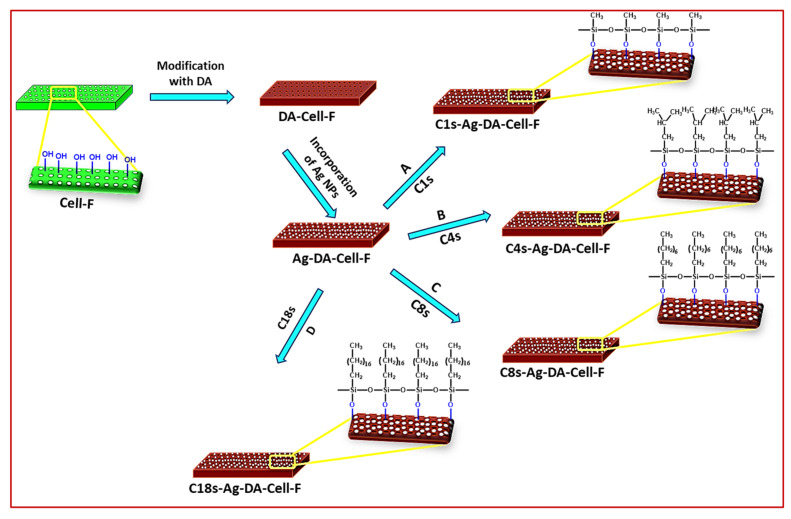
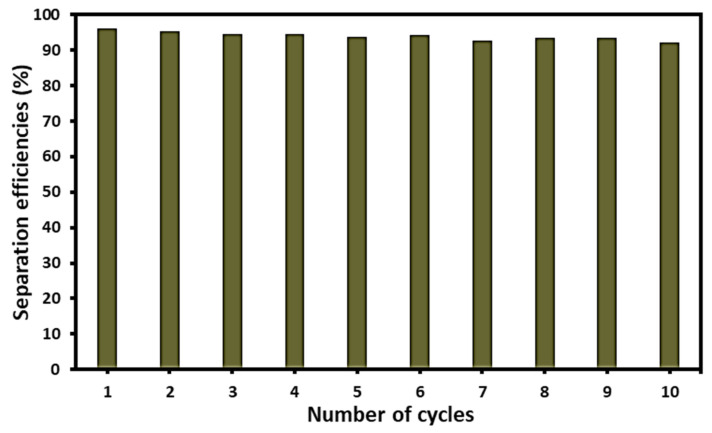
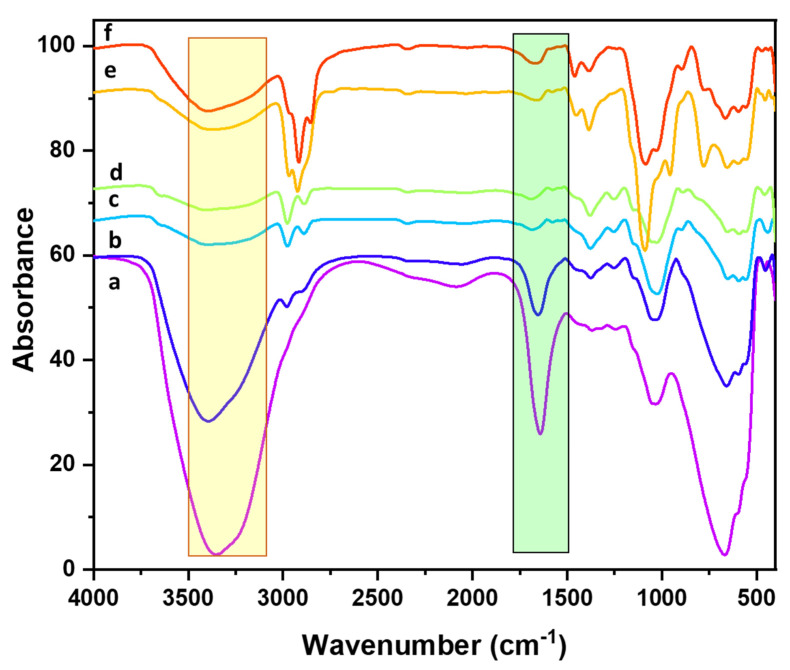
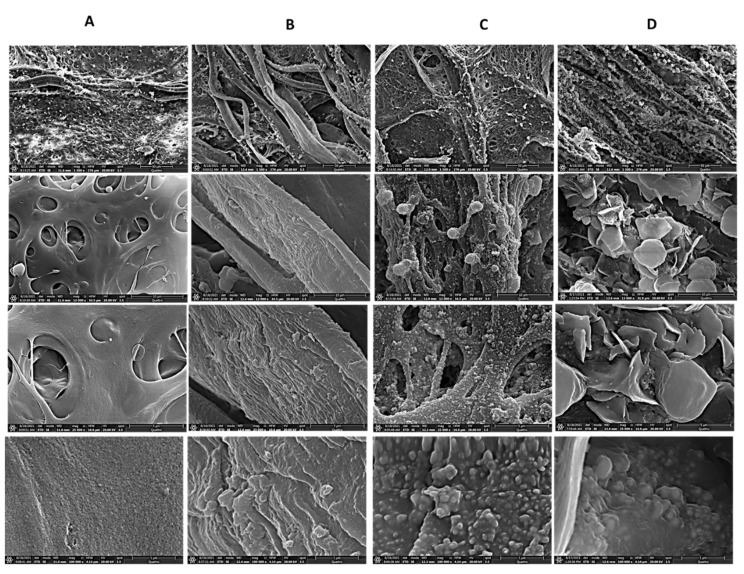
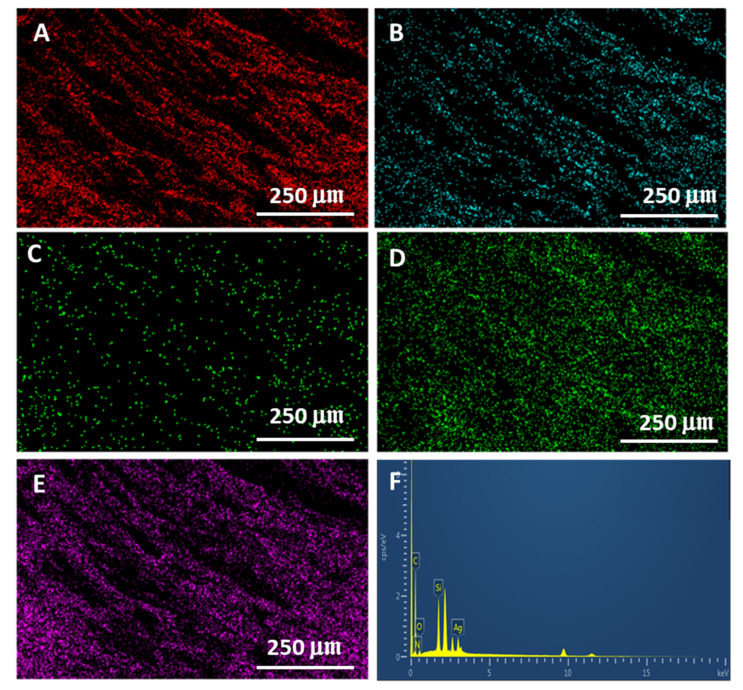
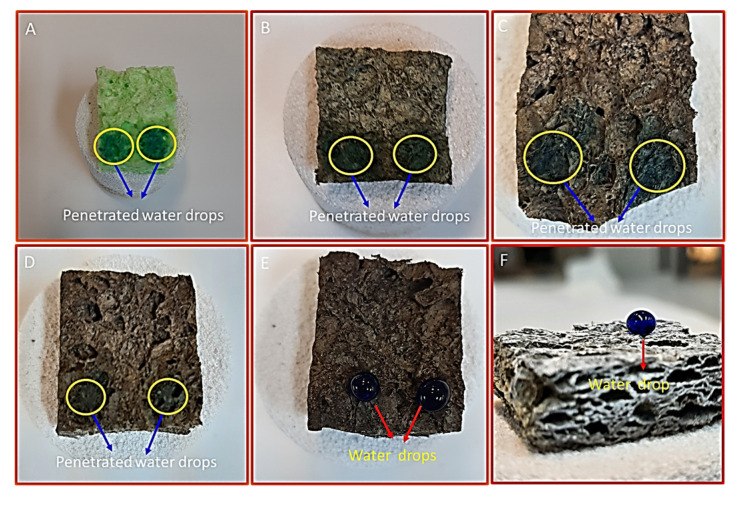
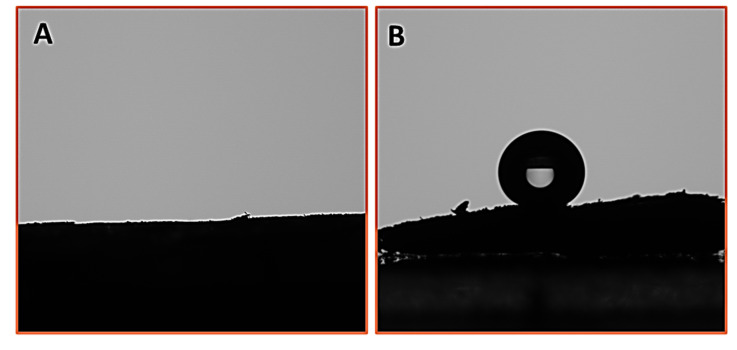
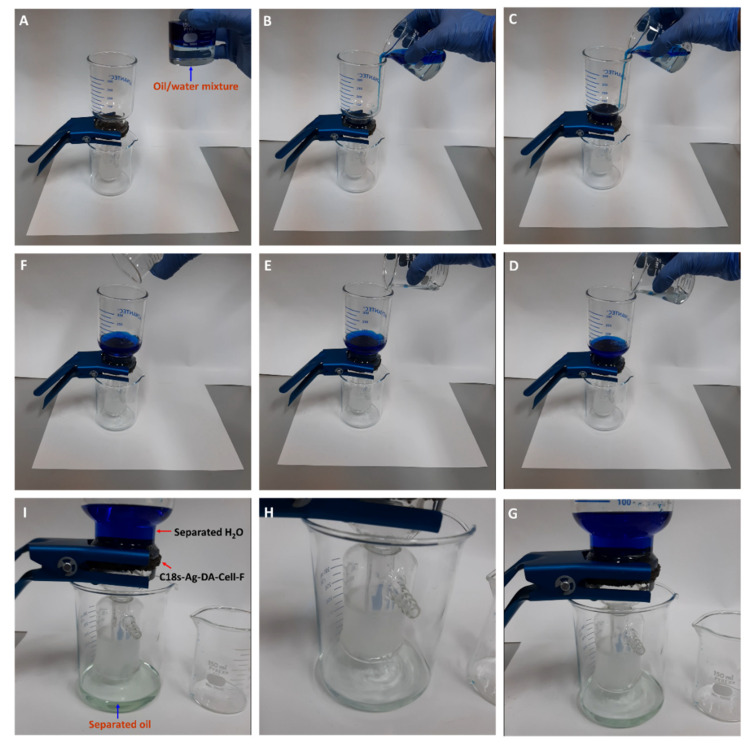
The presence of oil-related contaminants in water has emerged as a severe threat to the environment. The separation of these contaminants from water has become a great challenge, and extensive efforts are being made to develop suitable, environmentally friendly materials. Highly hydrophobic materials are effective in the selective separation of oil from water. In this work, silver (Ag)-incorporated, highly hydrophobic dopamine-modified cellulose sponge was prepared by functionalizing with the range of alkyl silanes. The Ag nanoparticle-incorporated dopamine provided the appropriate roughness, whereas the alkyl component provided the low surface energy that made it selective towards oil. It was found that the alkyl groups with a longer chain length were more effective in enhancing the hydrophobicity of the Ag nanoparticle-incorporated, dopamine-modified cellulose. The developed materials were characterized by Fourier transform infrared spectroscopy (FTIR), field emission-scanning electron microscopy (FE-SEM), energy-dispersive X-ray spectroscopy (EDX), elemental mapping, and contact angle goniometry. The maximum water contact angle on the functionalized surfaces was observed at 148.4°. The surface of the C18s-Ag-DA-Cell-F showed excellent selectivity towards the oily component that rapidly permeated, and water was rejected wholly. The developed material showed a separation efficiency of 96.2% for the oil/water mixture. The C18s-Ag-DA-Cell-F material showed excellent reusability. Due to their environmentally friendly nature, excellent selectivity, and good separation efficiency, the functionalized cellulose materials can be used to separate oil and water effectively.
水中与油相关污染物的存在已成为对环境的严重威胁。将这些污染物从水中分离出来已成为一项巨大挑战,人们正在做出广泛努力来开发合适的、环保的材料。高疏水性材料在从水中选择性分离油方面很有效。在这项工作中,通过用一系列烷基硅烷进行功能化制备了掺银的、高疏水性多巴胺改性纤维素海绵。掺银纳米颗粒的多巴胺提供了合适的粗糙度,而烷基成分提供了低表面能,使其对油具有选择性。发现链长较长的烷基在增强掺银纳米颗粒的多巴胺改性纤维素的疏水性方面更有效。通过傅里叶变换红外光谱(FTIR)、场发射扫描电子显微镜(FE-SEM)、能量色散X射线光谱(EDX)、元素映射和接触角测角法对所开发的材料进行了表征。在功能化表面上观察到的最大水接触角为148.4°。C18s-Ag-DA-Cell-F的表面对迅速渗透的油性成分表现出优异的选择性,并且水被完全排斥。所开发的材料对油水混合物的分离效率为96.2%。C18s-Ag-DA-Cell-F材料表现出优异的可重复使用性。由于其环保性质、优异的选择性和良好的分离效率,功能化纤维素材料可有效地用于分离油和水。