Gómez Carmen Elena, Perdiguero Beatriz, Usero Lorena, Marcos-Villar Laura, Miralles Laia, Leal Lorna, Sorzano Carlos Óscar S, Sánchez-Corzo Cristina, Plana Montserrat, García Felipe, Esteban Mariano
Centro Nacional de Biotecnología (CNB), Department of Molecular and Cellular Biology, Consejo Superior de Investigaciones Científicas (CSIC), 28049 Madrid, Spain.
AIDS Research Group, Institut d'Investigacions Biomèdiques August Pi i Sunyer (IDIBAPS), Hospital Clinic, University of Barcelona, 08036 Barcelona, Spain.
Vaccines (Basel). 2021 Aug 27;9(9):959. doi: 10.3390/vaccines9090959.
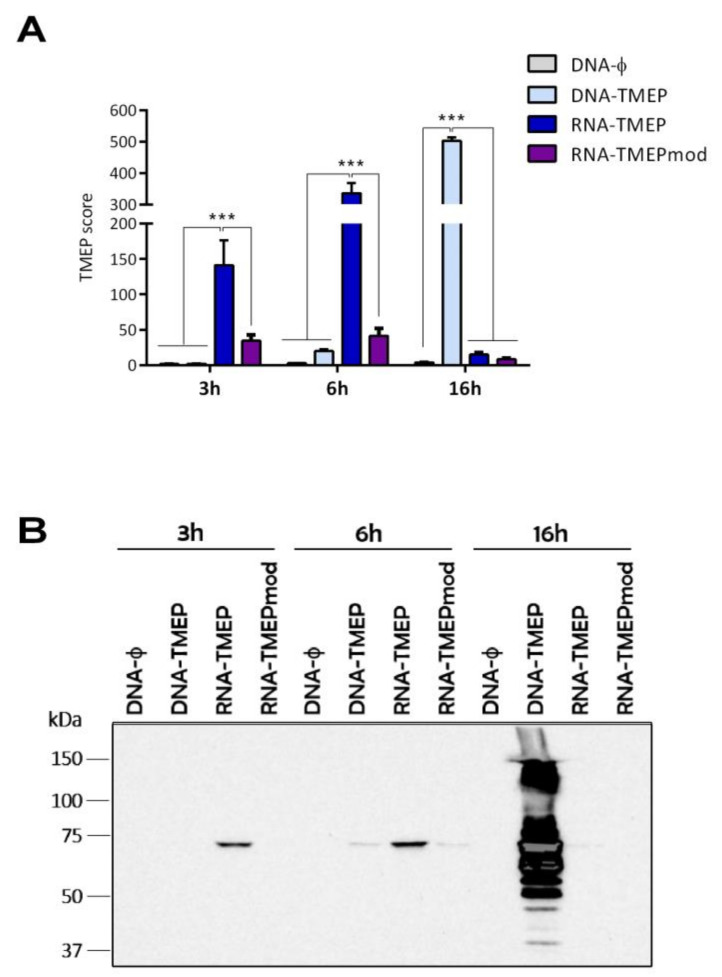
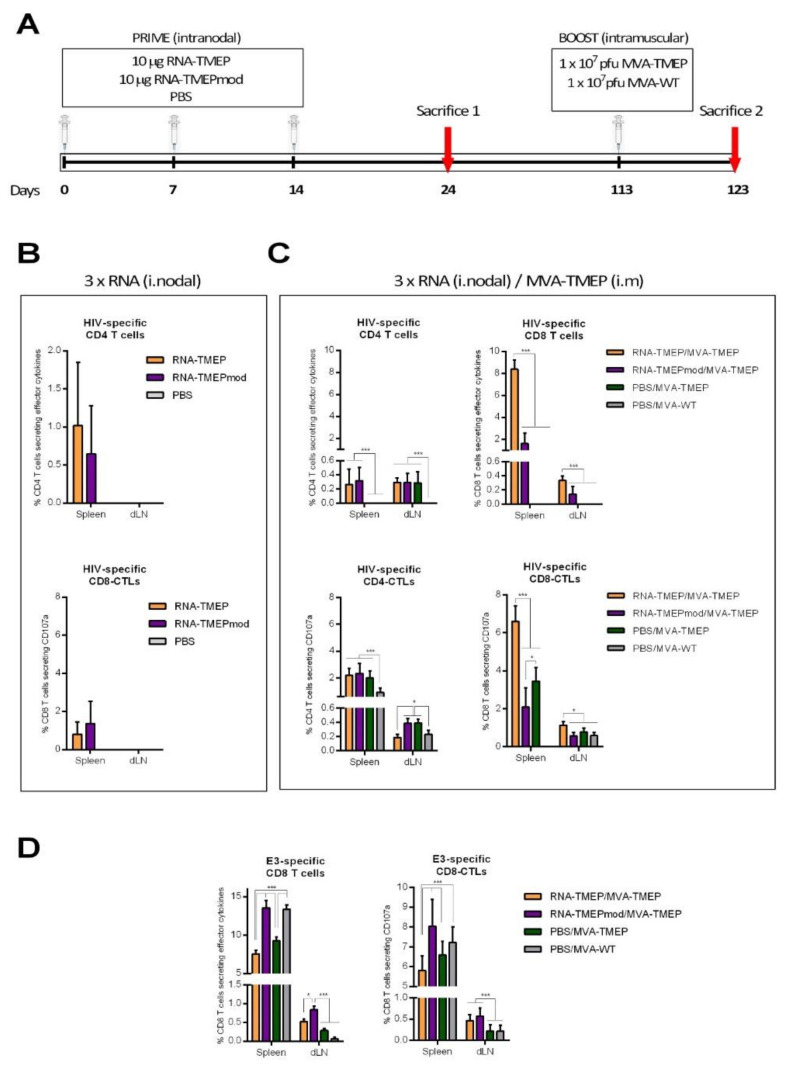
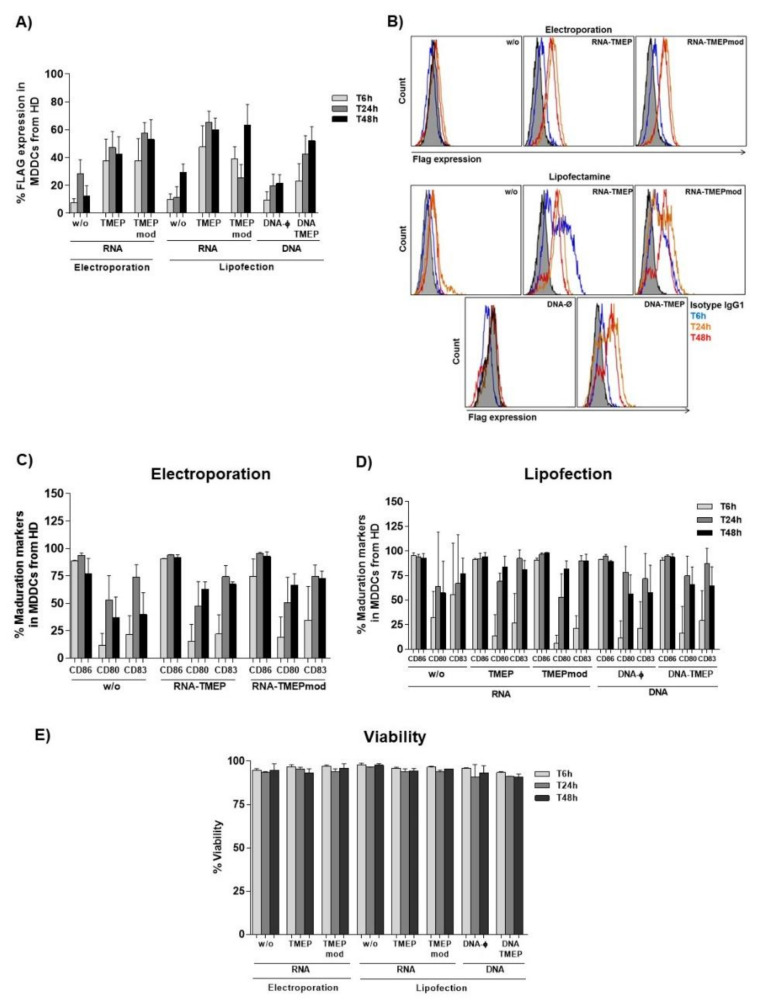
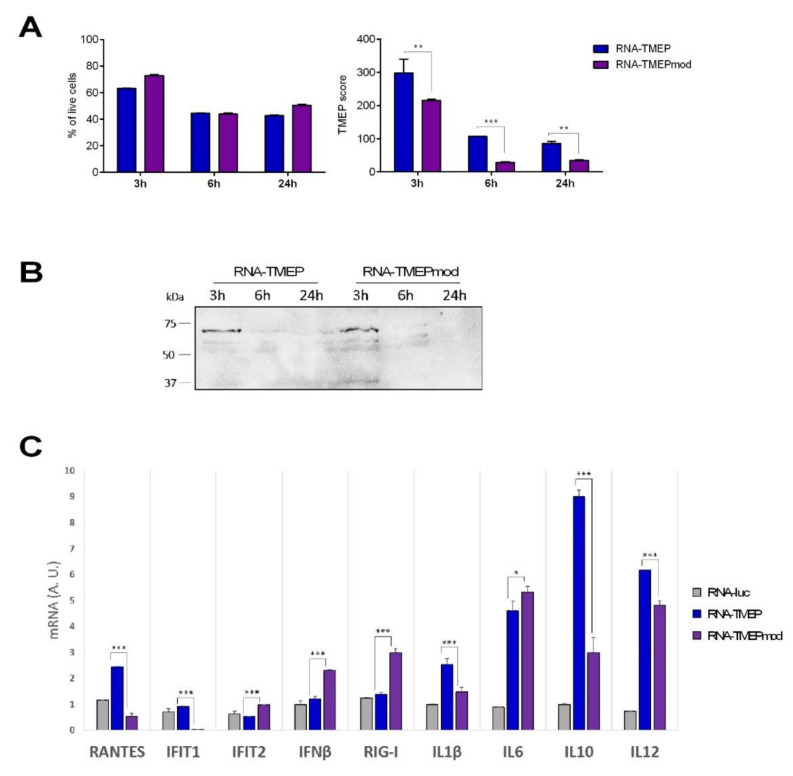
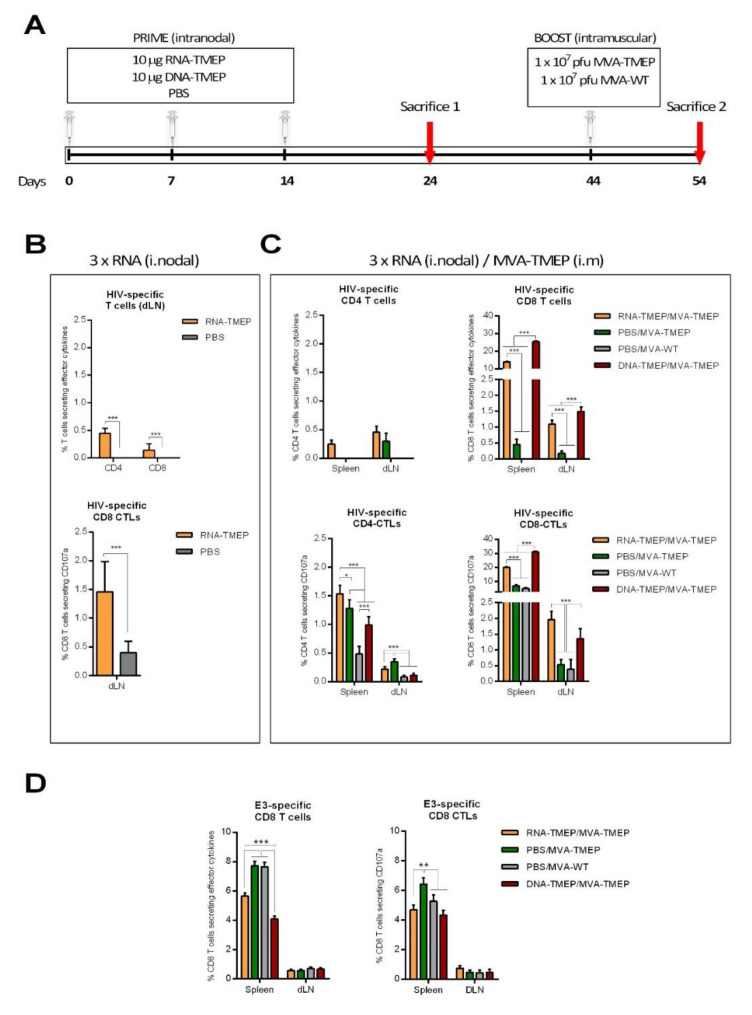
Development of a vaccine against HIV remains a major target goal in the field. The recent success of mRNA vaccines against the coronavirus SARS-CoV-2 is pointing out a new era of vaccine designs against pathogens. Here, we have generated two types of mRNA vaccine candidates against HIV-1; one based on unmodified vectors and the other on 1-methyl-3'-pseudouridylyl modified vectors expressing a T cell multiepitopic construct including protective conserved epitopes from HIV-1 Gag, Pol and Nef proteins (referred to as RNA-TMEP and RNA-TMEPmod, respectively) and defined their biological and immunological properties in cultured cells and in mice. In cultured cells, both mRNA vectors expressed the corresponding protein, with higher levels observed in the unmodified mRNA, leading to activated macrophages with differential induction of innate immune molecules. In mice, intranodal administration of the mRNAs induced the activation of specific T cell (CD4 and CD8) responses, and the levels were markedly enhanced after a booster immunization with the poxvirus vector MVA-TMEP expressing the same antigen. This immune activation was maintained even three months later. These findings revealed a potent combined immunization regimen able to enhance the HIV-1-specific immune responses induced by an mRNA vaccine that might be applicable to human vaccination programs with mRNA and MVA vectors.
开发抗HIV疫苗仍然是该领域的一个主要目标。针对冠状病毒SARS-CoV-2的mRNA疫苗最近取得的成功,标志着针对病原体的疫苗设计进入了一个新时代。在此,我们制备了两种针对HIV-1的mRNA候选疫苗;一种基于未修饰的载体,另一种基于表达包含来自HIV-1 Gag、Pol和Nef蛋白的保护性保守表位的T细胞多表位构建体的1-甲基-3'-假尿苷修饰载体(分别称为RNA-TMEP和RNA-TMEPmod),并在培养细胞和小鼠中确定了它们的生物学和免疫学特性。在培养细胞中,两种mRNA载体均表达相应蛋白,未修饰的mRNA中观察到更高水平的表达,导致巨噬细胞活化,并差异诱导先天免疫分子。在小鼠中,mRNA的结内给药诱导了特异性T细胞(CD4和CD8)反应的激活,在用表达相同抗原的痘病毒载体MVA-TMEP进行加强免疫后,反应水平显著提高。这种免疫激活甚至在三个月后仍得以维持。这些发现揭示了一种有效的联合免疫方案,能够增强由mRNA疫苗诱导的HIV-1特异性免疫反应,这可能适用于使用mRNA和MVA载体的人类疫苗接种计划。