New York State Psychiatric Institute, Columbia University Irving Medical Center.
Department of Psychiatry, Columbia University Irving Medical Center.
Psychol Trauma. 2022 May;14(4):578-586. doi: 10.1037/tra0001109. Epub 2021 Sep 16.
Psychotherapy noncompletion rates for veterans and their families are high. This study sought to (a) measure noncompletion rates of such patients at a university-based treatment center, (b) compare veteran and family member attrition rates, (c) identify dropout predictors, and (d) explore clinicians' perspectives on treatment noncompletion.
Using quantitative and qualitative approaches, we analyzed demographic and clinical characteristics of 141 patients (90 military veterans; 51 family members) in a university treatment center. We defined dropout as not completing the time-limited therapy contract. Reviewing semistructured interview data assessing clinicians' perspectives on their patients' dropout, three independent raters agreed on key themes, with interrater coefficient kappa range .74 to 1.
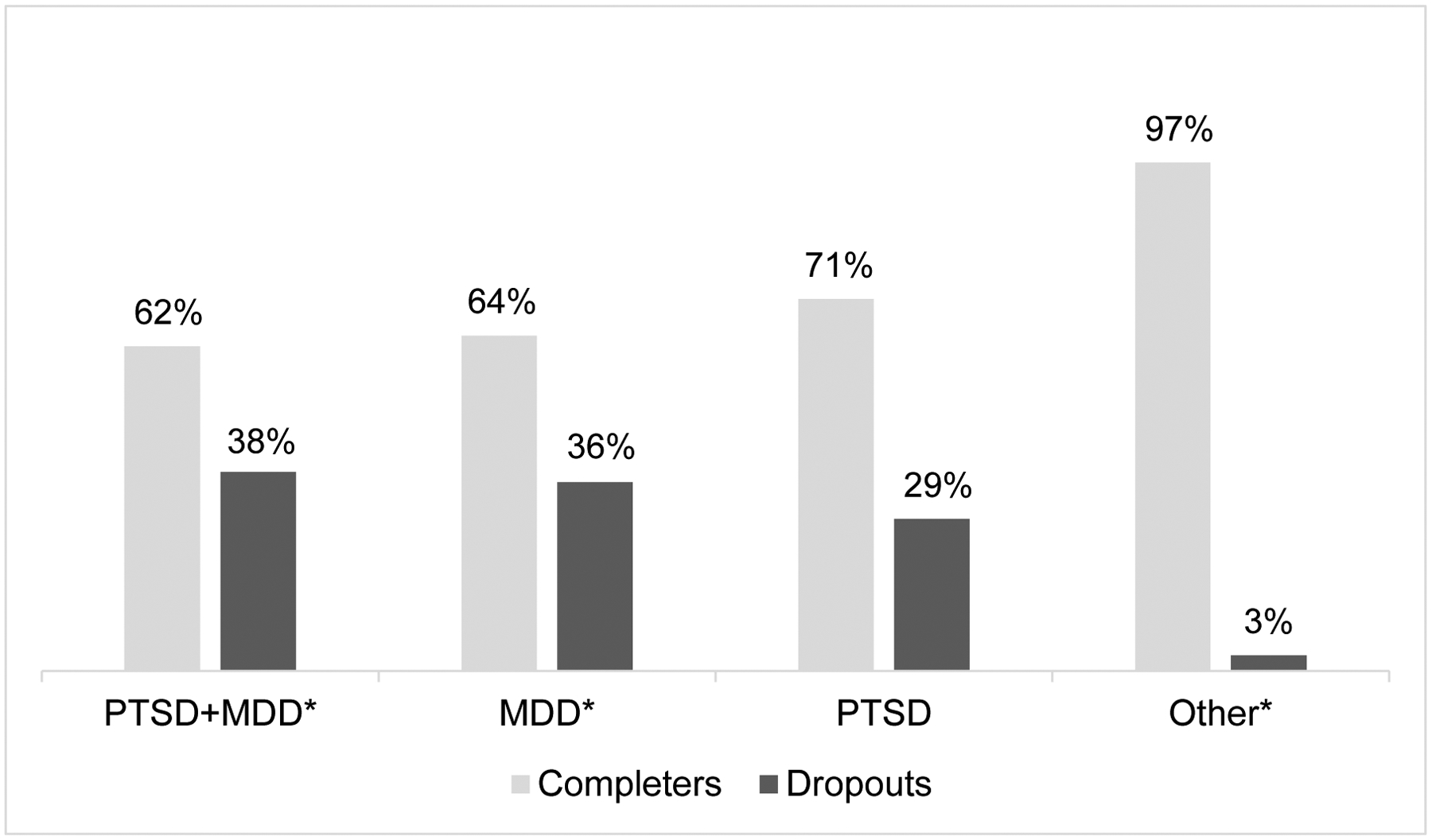
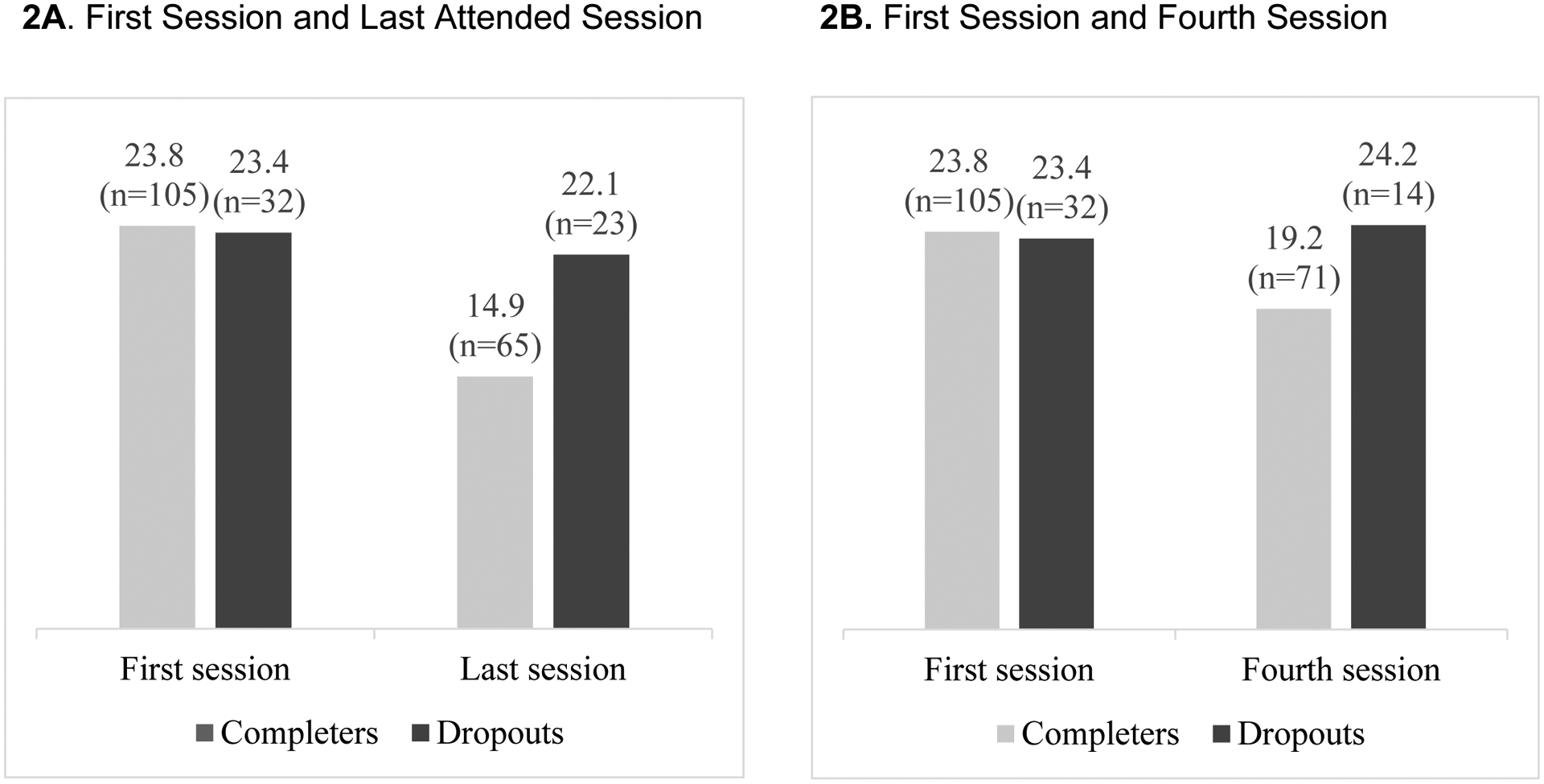
Patient attrition was 24%, not differing significantly between veterans and family members. Diagnosis of major depression (MDD) and exposure-based therapies predicted noncompletion, as did higher baseline Hamilton Depression Rating Scale (HDRS) total scores, severe depression (HDRS > 20), lack of Beck Depression Inventory weekly improvement, and history of military sexual trauma. Clinicians mostly attributed noncompletion to patient difficulties coping with intense emotions, especially in exposure-based therapies.
Noncompletion rate at this study appeared relatively low compared to other veteran-based treatment centers, if still unfortunately substantial. Patients with comorbid MDD/PTSD and exposure-based therapies carried greater noncompletion risk due to the MDD component, and this should be considered in treatment planning. Ongoing discussion of dissatisfaction and patient discontinuation, in the context of a strong therapeutic alliance, might reduce noncompletion in this at-risk population. (PsycInfo Database Record (c) 2022 APA, all rights reserved).
退伍军人及其家属的心理治疗完成率较高。本研究旨在:(a) 衡量一所大学治疗中心此类患者的未完成率,(b) 比较退伍军人和家庭成员的退出率,(c) 确定辍学预测因素,以及(d) 探讨临床医生对治疗未完成的看法。
我们采用定量和定性方法,分析了一所大学治疗中心 141 名患者(90 名退伍军人;51 名家庭成员)的人口统计学和临床特征。我们将辍学定义为未完成有限时间的治疗合同。通过审查评估临床医生对患者辍学看法的半结构化访谈数据,三位独立评估者就关键主题达成一致意见,评估者间kappa系数范围为.74 到 1。
患者退出率为 24%,退伍军人和家庭成员之间无显著差异。主要诊断为重度抑郁症(MDD)和暴露疗法预测了非完成,基线汉密尔顿抑郁量表(HDRS)总分较高、抑郁严重(HDRS > 20)、贝克抑郁量表每周改善情况较差以及有军事性创伤史也是非完成的预测因素。临床医生主要将非完成归因于患者难以应对强烈情绪,尤其是在暴露疗法中。
与其他基于退伍军人的治疗中心相比,本研究的未完成率似乎相对较低,如果仍然不幸很高。共病 MDD/PTSD 和暴露疗法的患者由于 MDD 成分,非完成风险更高,这在治疗计划中应加以考虑。在强大的治疗联盟背景下,持续讨论不满和患者中断,可能会降低这一高危人群的非完成率。(PsycInfo 数据库记录(c)2022 APA,保留所有权利)。