Forte Antonio Jorge, Boczar Daniel, Sarabia-Estrada Rachel, Huayllani Maria T, Avila Francisco R, Torres Ricardo A, Guliyeva Gunel, Aung Thiha, Quiñones-Hinojosa Alfredo
Division of Plastic Surgery, Mayo Clinic, Jacksonville, FL, USA.
Department of Neurosurgery, Mayo Clinic, Jacksonville, FL, USA.
Arch Plast Surg. 2021 Sep;48(5):559-567. doi: 10.5999/aps.2021.00339. Epub 2021 Sep 15.
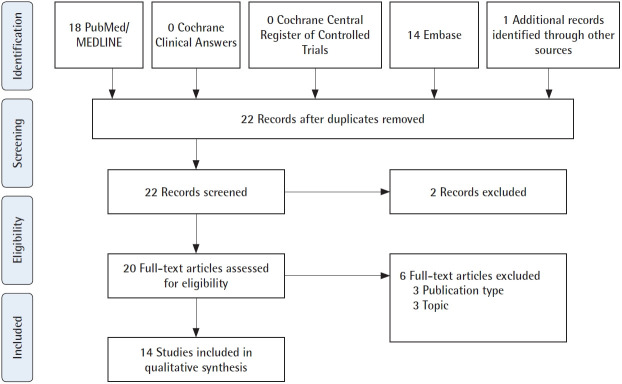
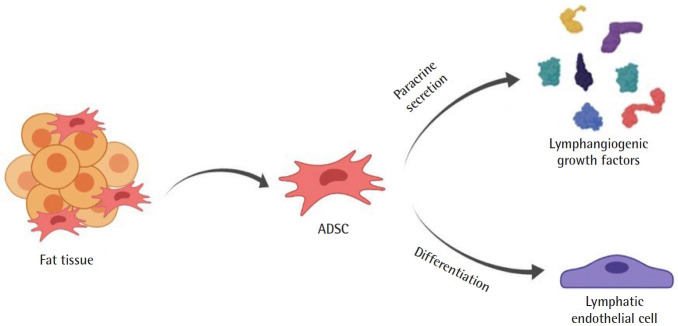
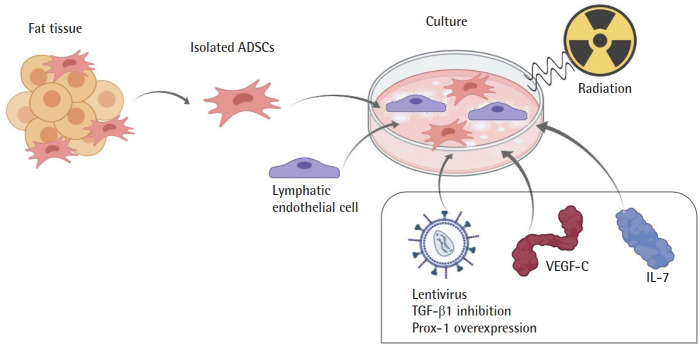
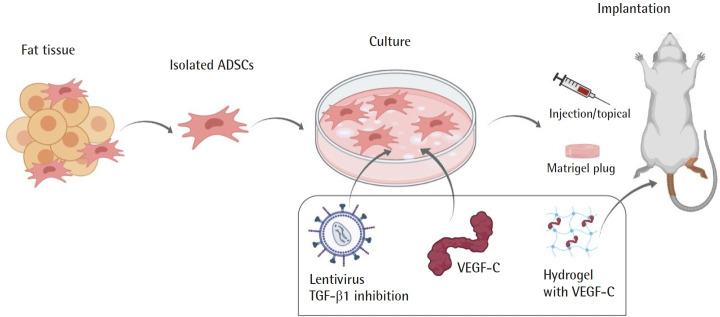
The potential to differentiate into different cell lines, added to the easy and cost-effective method of extraction, makes adipose-derived stem cells (ADSCs) an object of interest in lymphedema treatment. Our study's goal was to conduct a comprehensive systematic review of the use of ADSCs in lymphatic tissue engineering and regeneration. On July 23, 2019, using PubMed/MEDLINE, Cochrane Clinical Answers, Cochrane Central Register of Controlled Trials, and Embase databases, we conducted a systematic review of published literature on the use of ADSCs in lymphatic tissue engineering and regeneration. There were no language or time frame limitations, and the following search strategy was applied: ((Adipose stem cell) OR Adipose-derived stem cell)) AND ((Lymphedema) OR Breast Cancer Lymphedema). Only original research manuscripts were included. Fourteen studies fulfilled the inclusion criteria. Eleven studies were experimental (in vitro or in vivo in animals), and only three were clinical. Publications on the topic demonstrated that ADSCs promote lymphangiogenesis, and its effect could be enhanced by modulation of vascular endothelial growth factor-C, interleukin-7, prospero homeobox protein 1, and transforming growth factor-β1. Pilot clinical studies included 11 patients with breast cancer-related lymphedema, and no significant side effects were present at 12-month follow-up. Literature on the use of ADSCs in lymphatic tissue engineering and regeneration demonstrated promising data. Clinical evidence is still in its infancy, but the scientific community agrees that ADSCs can be useful in regenerative lymphangiogenesis. Data collected in this review indicate that unprecedented advances in lymphedema treatment can be anticipated in the upcoming years.
脂肪来源干细胞(ADSCs)具有分化为不同细胞系的潜力,再加上其提取方法简便且经济高效,这使得它成为淋巴水肿治疗领域的一个研究热点。我们研究的目的是对ADSCs在淋巴组织工程和再生中的应用进行全面的系统评价。2019年7月23日,我们利用PubMed/MEDLINE、Cochrane临床答案、Cochrane对照试验中央注册库和Embase数据库,对已发表的关于ADSCs在淋巴组织工程和再生中应用的文献进行了系统评价。没有语言或时间框架限制,并采用了以下检索策略:((脂肪干细胞)或脂肪来源干细胞))与((淋巴水肿)或乳腺癌淋巴水肿)。仅纳入原创研究手稿。14项研究符合纳入标准。11项研究为实验性研究(体外或动物体内),只有3项为临床研究。关于该主题的出版物表明,ADSCs可促进淋巴管生成,通过调节血管内皮生长因子-C、白细胞介素-7、prospero同源框蛋白1和转化生长因子-β1可增强其效果。初步临床研究纳入了11例乳腺癌相关淋巴水肿患者,12个月随访时未出现明显副作用。关于ADSCs在淋巴组织工程和再生中应用的文献显示出了有前景的数据。临床证据仍处于起步阶段,但科学界一致认为ADSCs可用于再生性淋巴管生成。本综述收集的数据表明,未来几年淋巴水肿治疗有望取得前所未有的进展。