Niu Li, Liu Yan, Wang Xin
School of Medicine, Jiujiang University, Jiujiang, Jiangxi, People's Republic of China.
Risk Manag Healthc Policy. 2021 Sep 21;14:3945-3954. doi: 10.2147/RMHP.S301234. eCollection 2021.
Migrants are one of the most vulnerable populations facing many health issues. Inadequate health care access and unequal insurance are the most challenging. This study aimed to construct a nomogram to predict the risk of hospitalization forgone among internal migrants in China.
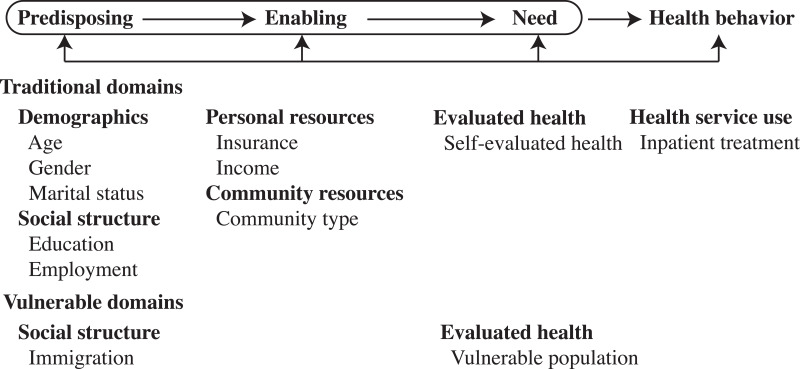
We analyzed the 2014 Mobile Population Social Integration and Mental Health Survey (MPSIMHS) launched by National Health and Family Planning Commission. Using the Probability Proportionate to Size Sampling method (PPS), MPSIMHS sampled from eight cities (districts) with a total sample size of 15,999. Of total 589 patients who were diagnosed with hospitalization requirement, 116 forwent their hospitalization, 473 had no forgone. Demographics, socioeconomic status, and health conditions were analyzed using univariate analysis and multivariate logistic regression. A nomogram was built and validated by applying bootstrap resampling.
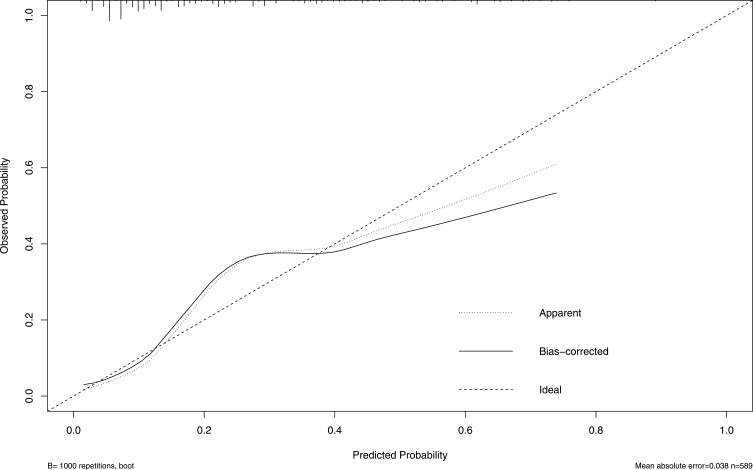
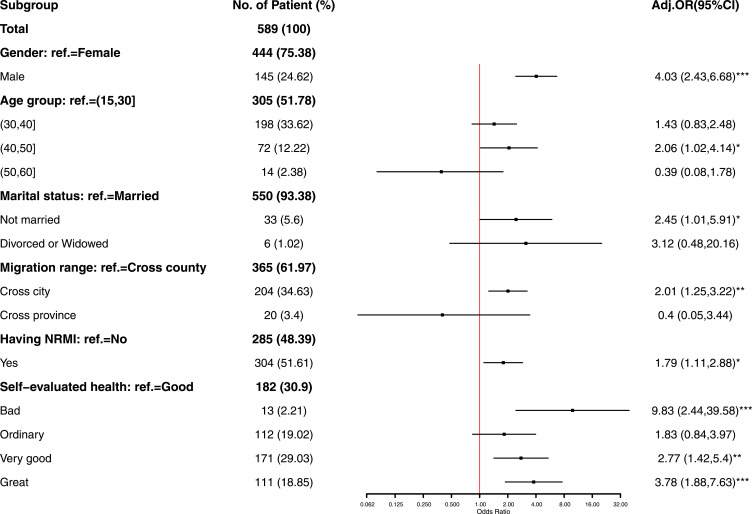
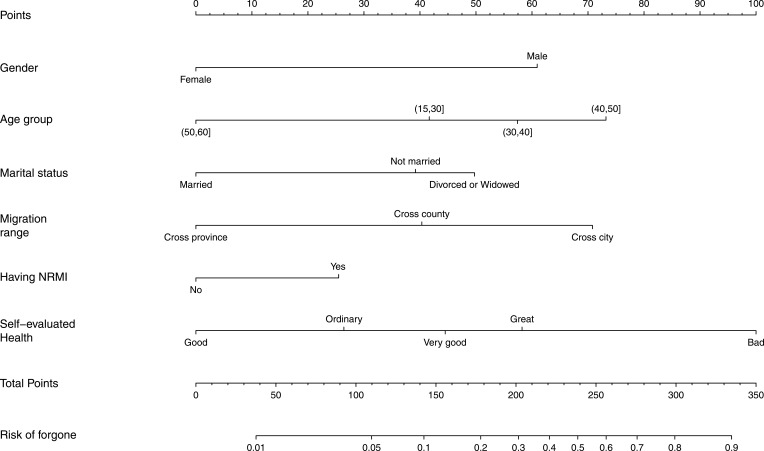
After model selection, gender, age group, marital status, migration range, insurance (having NRMI), and self-evaluated health were chosen into the nomogram to predict the risk of hospitalization forgone. The nomogram that predicted the risk of hospitalization forgone was validated for discrimination and calibration using bootstrap resampling. The calibration curves illustrated optimal agreement between the actual and predicted probabilities of the nomogram. The value of C-index from bootstrap was 0.80 (95% CI: 0.76-0.85).
This study identified some possible factors contributing to migrant's hospitalization forgone: being single, male and middle-aged, having fixed health insurance, and having bad or great self-evaluated health. By integrating significant and easy-to-get prognostic factors, a nomogram was developed to estimate an individual patient's risk of hospitalization forgone, which might have practical utility and the potential to assist clinicians in making hospitalization recommendations.
移民是面临诸多健康问题的最脆弱人群之一。医疗保健服务不足和保险不平等是最具挑战性的问题。本研究旨在构建一个列线图,以预测中国国内移民放弃住院治疗的风险。
我们分析了国家卫生和计划生育委员会发起的2014年流动人口社会融合与心理健康调查(MPSIMHS)。采用概率与规模成比例抽样方法(PPS),MPSIMHS从8个城市(区)抽样,总样本量为15999。在总共589名被诊断需要住院治疗的患者中,116人放弃了住院治疗,473人没有放弃。使用单因素分析和多因素逻辑回归分析人口统计学、社会经济状况和健康状况。通过应用自助重抽样构建并验证列线图。
经过模型选择,将性别、年龄组、婚姻状况、迁移范围、保险(拥有新农合)和自我评估健康状况纳入列线图,以预测放弃住院治疗的风险。使用自助重抽样对预测放弃住院治疗风险的列线图进行了区分度和校准验证。校准曲线显示列线图的实际概率与预测概率之间具有最佳一致性。自助法得到的C指数值为0.80(95%CI:0.76 - 0.85)。
本研究确定了一些可能导致移民放弃住院治疗的因素:单身、男性、中年、拥有固定医疗保险以及自我评估健康状况差或良好。通过整合重要且易于获得的预后因素,开发了一个列线图来估计个体患者放弃住院治疗的风险,这可能具有实际应用价值,并有可能协助临床医生做出住院治疗建议。