Tiefensee Ribeiro Camila, Peixoto Daniel Oppermann, Santos Lucas, Saibro-Girardi Carolina, Brum Pedro Ozorio, Carazza-Kessler Flávio Gabriel, Somensi Nauana, Behrens Luiza Marques Prates, Bittencourt Reykla Ramon, Soares Laíssa Santos, Silveira Alexandre Kleber, de Oliveira Jade, Moreira José Cláudio Fonseca, Gasparotto Juciano, Gelain Daniel Pens
Centro de Estudos em Estresse Oxidativo, Departamento de Bioquímica, Instituto de Ciências Básicas da Saúde, Universidade Federal do Rio Grande do Sul, Porto Alegre, RS, Brazil.
Brain Behav Immun Health. 2021 Mar 31;14:100253. doi: 10.1016/j.bbih.2021.100253. eCollection 2021 Jul.
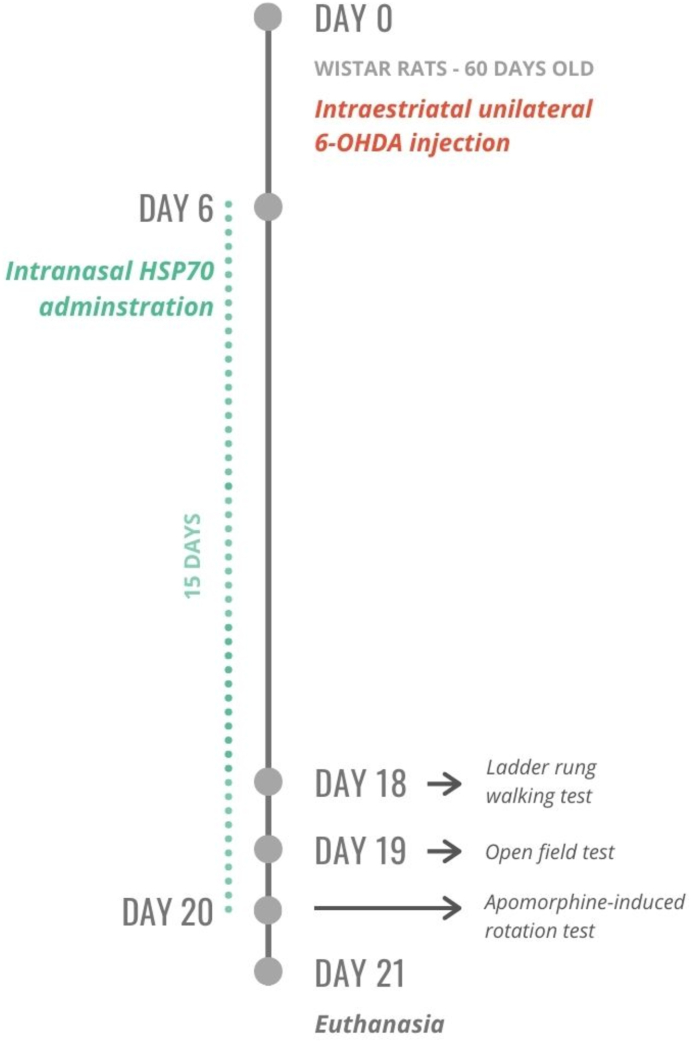
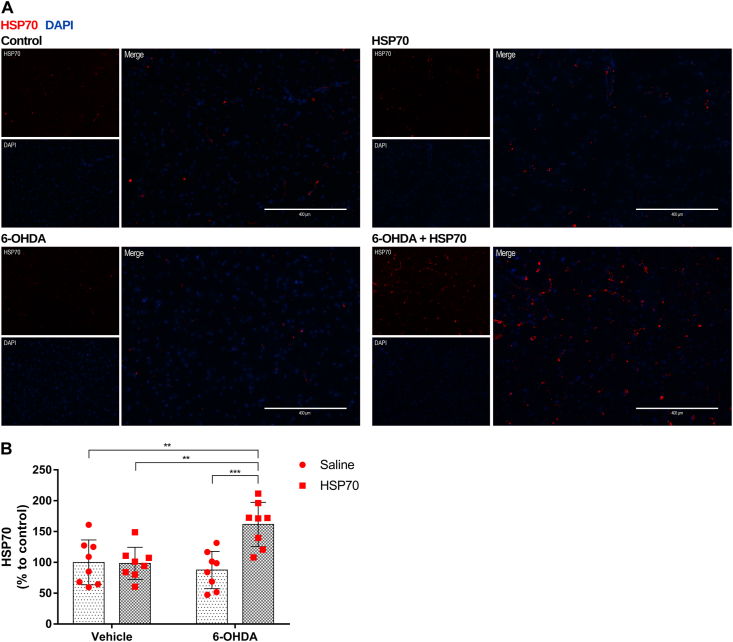
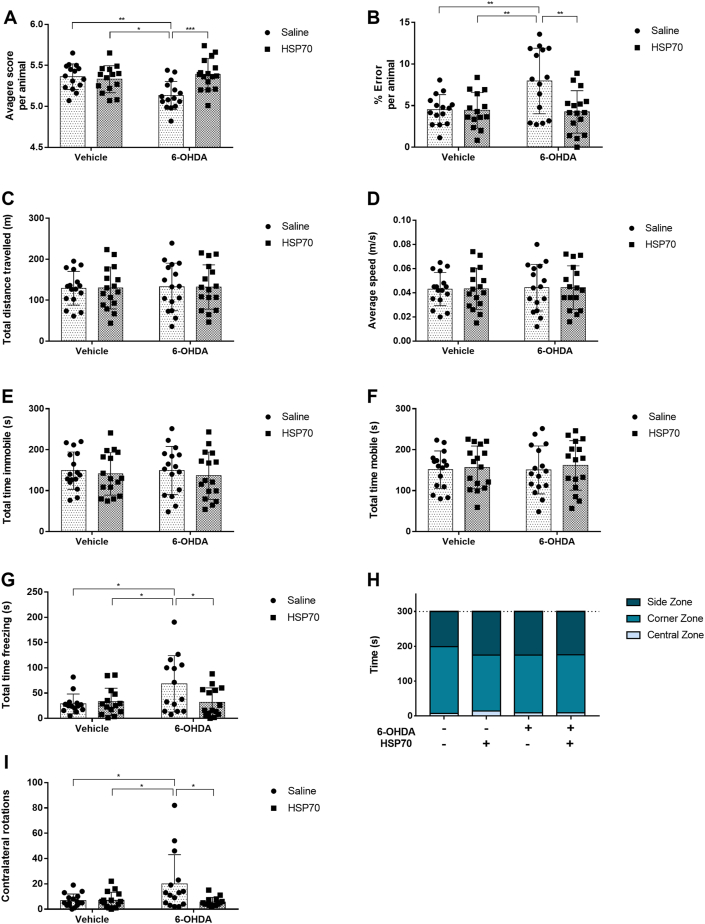
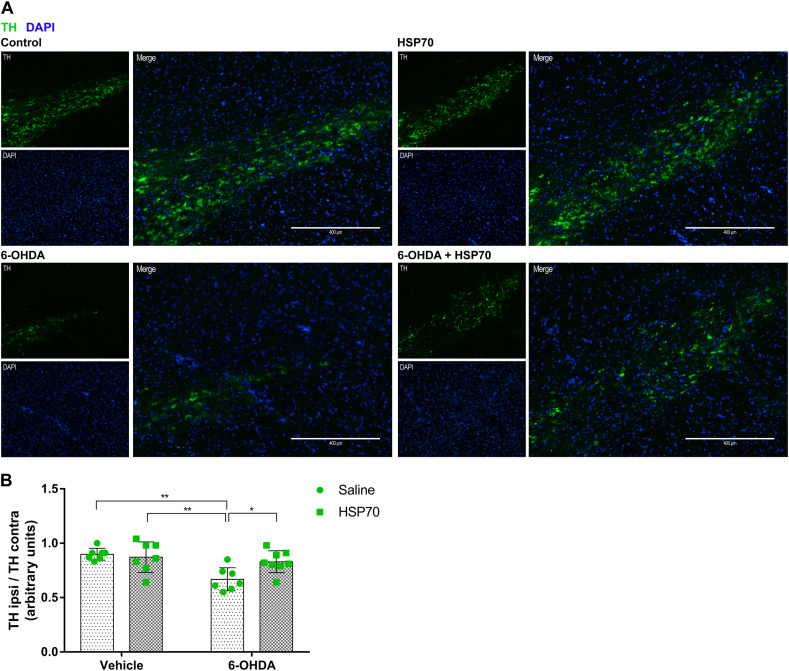
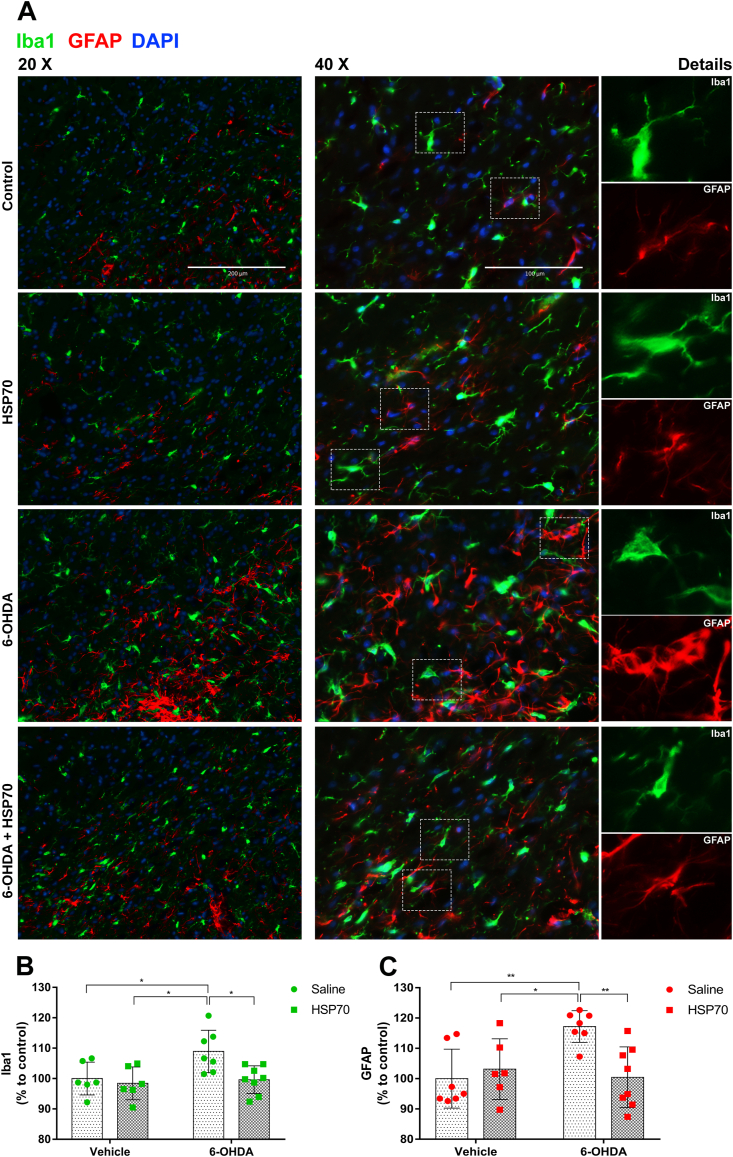
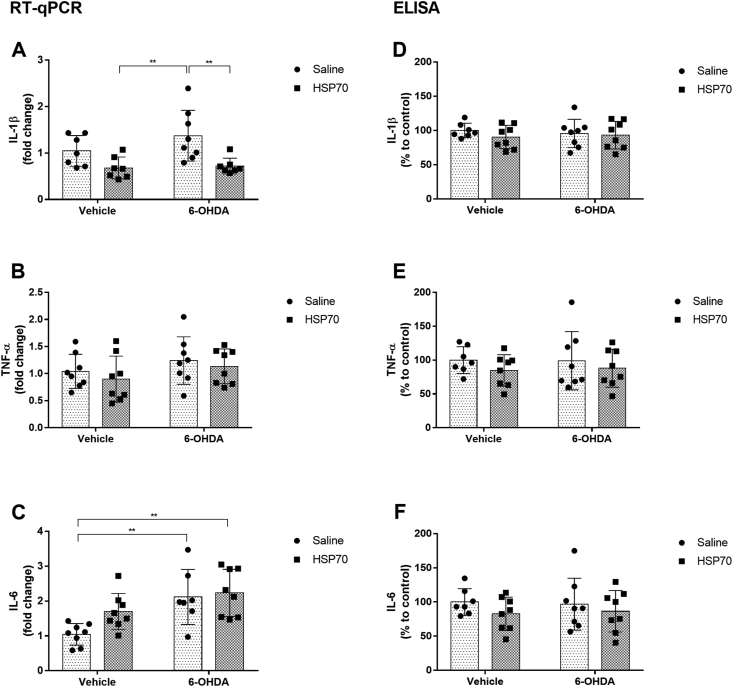
HSP70 is one of the main molecular chaperones involved in the cellular stress response. Besides its chaperone action, HSP70 also modulates the immune response. Increased susceptibility to toxic insults in intra- and extracellular environments has been associated with insufficient amounts of inducible HSP70 in adult neurons. On the other hand, exogenous HSP70 administration has demonstrated neuroprotective effects in experimental models of age-related disorders. In this regard, this study investigated the effects of exogenous HSP70 in an animal model of dopaminergic denervation of the nigrostriatal axis. After unilateral intrastriatal injection with 6-hydroxydopamine (6-OHDA), the animals received purified recombinant HSP70 through intranasal administration (2 μg/rat/day) for 15 days. Our results indicate a neuroprotective effect of intranasal HSP70 against dopaminergic denervation induced by 6-OHDA. Exogenous HSP70 improved motor impairment and reduced the loss of dopaminergic neurons caused by 6-OHDA. Moreover, HSP70 modulated neuroinflammatory response in the , an important event in Parkinson's disease pathogenesis. Specifically, HSP70 treatment reduced microglial activation and astrogliosis induced by 6-OHDA, as well as IL-1β mRNA expression in this region. Also, recombinant HSP70 increased the protein content of HSP70 in the of rats that received 6-OHDA. These data suggest the neuroprotection of HSP70 against dopaminergic neurons damage after cellular stress. Finally, our results indicate that HSP70 neuroprotective action against 6-OHDA toxicity is related to inflammatory response modulation.
热休克蛋白70(HSP70)是参与细胞应激反应的主要分子伴侣之一。除了其伴侣作用外,HSP70还调节免疫反应。成年神经元中诱导型HSP70含量不足与细胞内和细胞外环境中对毒性损伤的易感性增加有关。另一方面,外源性给予HSP70已在与年龄相关疾病的实验模型中显示出神经保护作用。在这方面,本研究调查了外源性HSP70在黑质纹状体轴多巴胺能去神经支配动物模型中的作用。在单侧纹状体内注射6-羟基多巴胺(6-OHDA)后,动物通过鼻内给药(2μg/大鼠/天)接受纯化的重组HSP70,持续15天。我们的结果表明,鼻内给予HSP70对6-OHDA诱导的多巴胺能去神经支配具有神经保护作用。外源性HSP70改善了运动障碍,并减少了6-OHDA引起的多巴胺能神经元损失。此外,HSP70调节了神经炎症反应,这是帕金森病发病机制中的一个重要事件。具体而言,HSP70治疗减少了6-OHDA诱导的小胶质细胞活化和星形胶质细胞增生,以及该区域白细胞介素-1βmRNA的表达。此外,重组HSP70增加了接受6-OHDA的大鼠纹状体中HSP70的蛋白质含量。这些数据表明,HSP70对细胞应激后多巴胺能神经元损伤具有神经保护作用。最后,我们的结果表明,HSP70对6-OHDA毒性的神经保护作用与炎症反应调节有关。