Ryan Karen M, Allers Kelly A, Harkin Andrew, McLoughlin Declan M
Trinity College Institute of Neuroscience, Trinity College Dublin, Dublin 2, Ireland.
Department of Psychiatry, Trinity College Dublin, St. Patrick's University Hospital, James Street, Dublin 8, Ireland.
Brain Behav Immun Health. 2020 Mar 28;4:100063. doi: 10.1016/j.bbih.2020.100063. eCollection 2020 Apr.
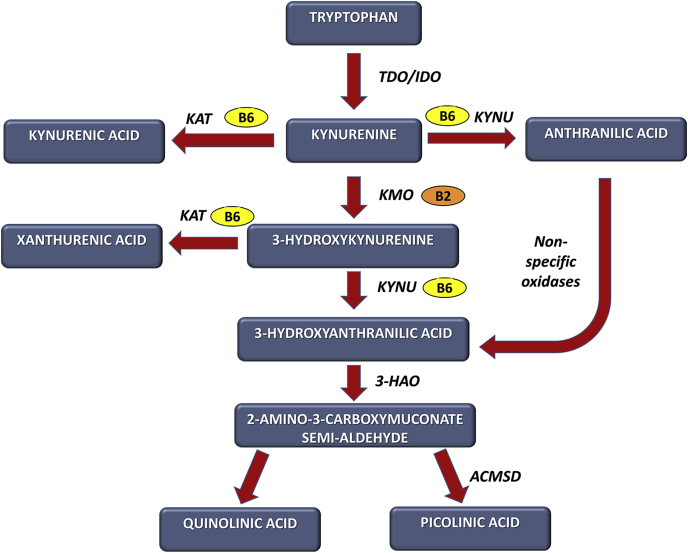
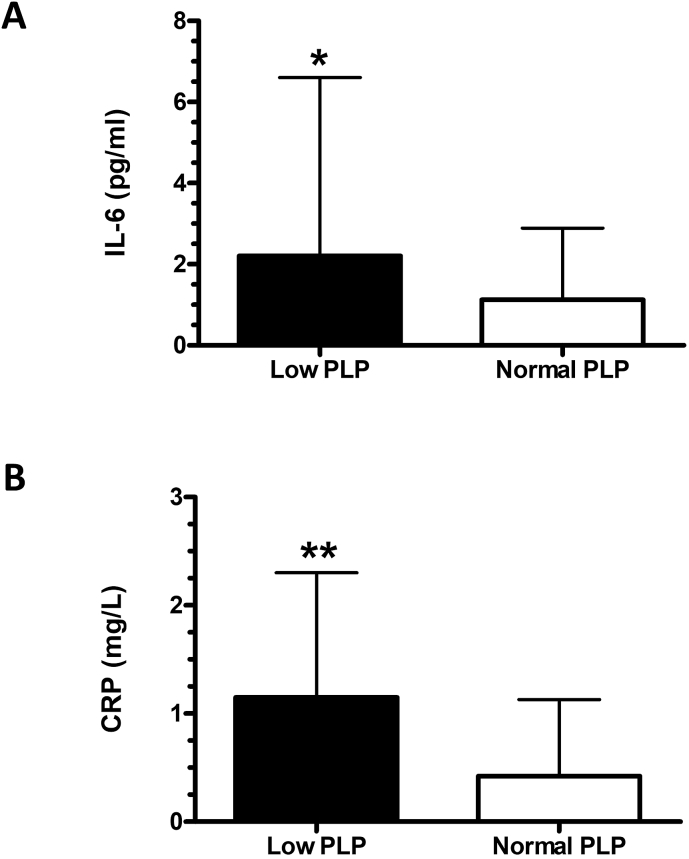
A growing body of research has indicated a role for B vitamins in depression, with some previous studies suggesting that B vitamin status in patients with depression can impact on antidepressant response. Here we aimed to investigate B vitamin plasma concentrations in medicated patients with depression ( = 94) compared to age- and sex-matched healthy controls ( = 57), and in patients with depression after electroconvulsive therapy (ECT) in a real-world clinical setting. Our results show that nicotinamide (vitamin B3), N1-methylnicotinamide (vitamin B3 metabolite), and pyridoxal 5'-phosphate (PLP; vitamin B6) concentrations were significantly reduced in patients with depression compared to controls. The Cohen's d effect sizes for nicotinamide, N1-methylnicotinamide, and PLP were moderate-large (-0.47, -0.51, and -0.59, respectively), and likely to be of clinical relevance. Functional biomarkers of vitamin B6 status (PAr index, 3-hydroxykynurenine: hydroxyanthranilic acid ratio, 3-hydroxykynurenine: xanthurenic acid ratio, and HKr) were elevated in depressed patients compared to controls, suggestive of reduced vitamin B6 function. Over 30% of the patient cohort were found to have low to deficient PLP concentrations, and exploratory analyses revealed that these patients had higher IL-6 and CRP concentrations compared to patients with PLP levels within the normal range. Treatment with ECT did not alter B vitamin concentrations, and B vitamin concentrations were not associated with depression severity or the therapeutic response to ECT. Overall, reduced plasma PLP, nicotinamide, and N1-methylnicotinamide concentrations could have wide ranging effects on pathways and systems implicated in depression. Further studies are required to understand the reasons why patients with depression present with low plasma B vitamin concentrations.
越来越多的研究表明B族维生素在抑郁症中发挥作用,之前的一些研究表明,抑郁症患者的B族维生素状态会影响抗抑郁反应。在此,我们旨在调查与年龄和性别匹配的健康对照者(n = 57)相比,接受药物治疗的抑郁症患者(n = 94)以及在现实临床环境中接受电休克治疗(ECT)后的抑郁症患者的血浆B族维生素浓度。我们的结果显示,与对照组相比,抑郁症患者的烟酰胺(维生素B3)、N1-甲基烟酰胺(维生素B3代谢物)和磷酸吡哆醛(PLP;维生素B6)浓度显著降低。烟酰胺、N1-甲基烟酰胺和PLP的Cohen's d效应量为中等至大(分别为-0.47、-0.51和-0.59),可能具有临床相关性。与对照组相比,抑郁症患者中维生素B6状态的功能生物标志物(PAr指数、3-羟基犬尿氨酸:羟基邻氨基苯甲酸比率、3-羟基犬尿氨酸:黄尿酸比率和HKr)升高,提示维生素B6功能降低。超过30%的患者队列被发现PLP浓度低至缺乏,探索性分析显示,与PLP水平在正常范围内的患者相比,这些患者的IL-6和CRP浓度更高。ECT治疗并未改变B族维生素浓度,且B族维生素浓度与抑郁症严重程度或ECT治疗反应无关。总体而言,血浆PLP、烟酰胺和N1-甲基烟酰胺浓度降低可能对与抑郁症相关的通路和系统产生广泛影响。需要进一步研究以了解抑郁症患者血浆B族维生素浓度低的原因。