Bynke Annie, Julin Per, Gottfries Carl-Gerhard, Heidecke Harald, Scheibenbogen Carmen, Bergquist Jonas
Analytical Chemistry and Neurochemistry, Department of Chemistry - BMC, Box 599, Uppsala University, 75124, Uppsala, Sweden.
The ME/CFS Collaborative Research Centre at Uppsala University, Sweden.
Brain Behav Immun Health. 2020 Jul 18;7:100107. doi: 10.1016/j.bbih.2020.100107. eCollection 2020 Aug.
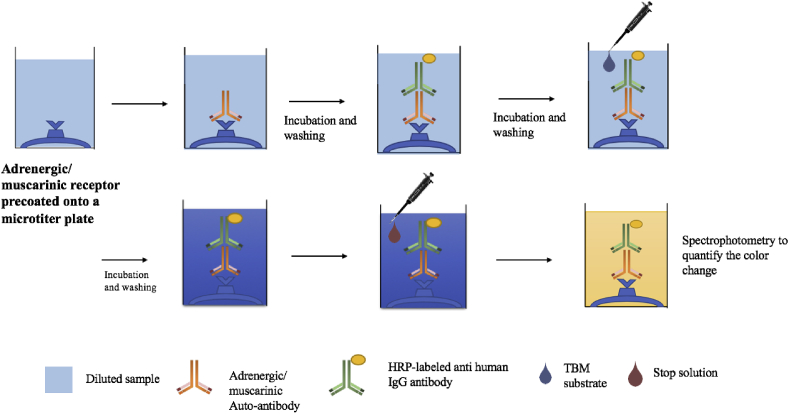
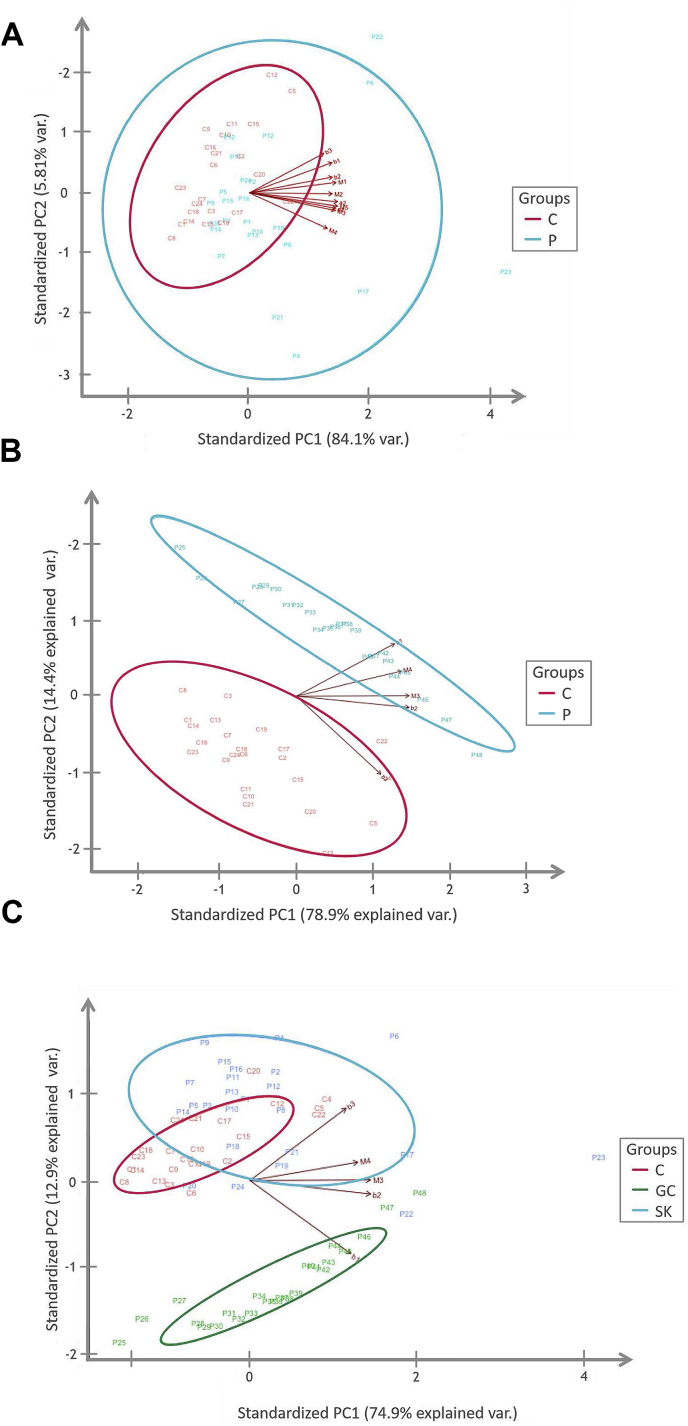
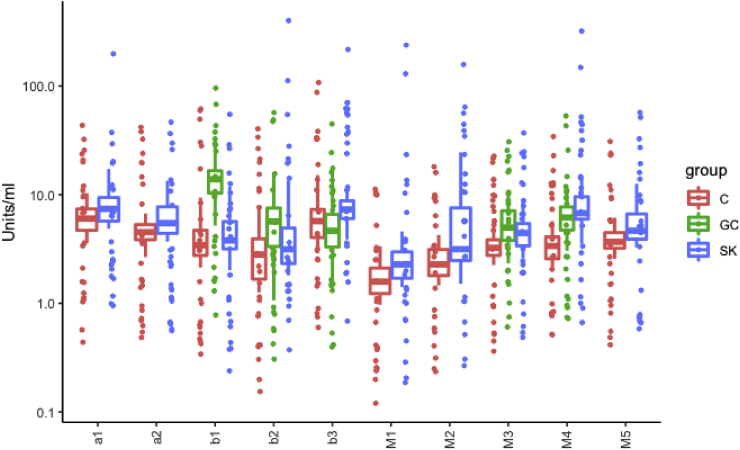
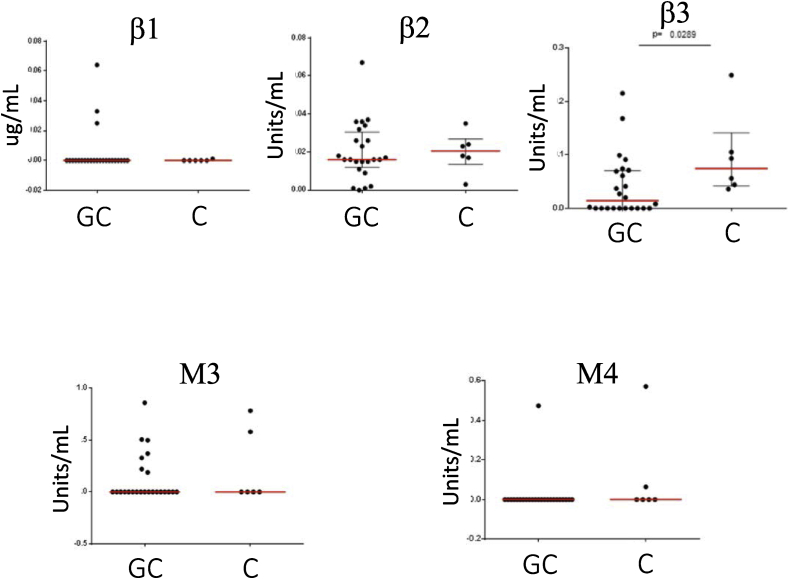
Myalgic encephalomyelitis (ME) also known as ME/CFS (Chronic Fatigue Syndrome) or ME/SEID (Systemic Exertion Intolerance Disorder), is a disabling and often long-lasting disease that can drastically impair quality of life and physical/social functioning of the patients. Underlying pathological mechanisms are to a large extent unknown, but the presence of autoantibodies, cytokine pattern deviations and the presentation of cognitive and autonomic nervous system related symptoms provide evidence for ME being an immunological disorder with elements of autoimmunity. Increased levels of autoantibodies binding to adrenergic and muscarinic receptors in ME-patients have been reported. It is hypothesized that these autoantibodies have pathological significance and contribute to the ME-specific symptoms, however, these observations need to be validated. This study was designed to investigate potential differences in adrenergic and muscarinic receptor autoantibody levels in plasma and cerebrospinal fluid (CSF) samples between ME patients and gender and age-matched healthy controls, and to correlate the autoantibody levels to disease severity. We collected bodyfluids and health-related questionnaires from two Swedish ME cohorts, plasma and CSF from one of the cohorts (n = 24), only plasma from the second cohort (n = 24) together with plasma samples (n = 24) and CSF (n = 6) from healthy controls. All samples were analysed for IgG autoantibodies directed against Alpha- (α1, α2) and Beta- (β1-3) adrenergic receptors and Muscarinic (M) 1-5 acetylcholine receptors using an ELISA technique. The questionnaires were used as measures of disease severity. Significant increases in autoantibody levels in ME patients compared to controls were found for M3 and M4 -receptors in both cohorts and β1, β2, M3 and M4-receptors in one cohort. No significant correlations were found between autoantibody levels and disease severity. No significant levels of autoantibodies were detected in the CSF samples. These findings support previous findings that there exists a general pattern of increased antibody levels to adrenergic and muscarinic receptors within the ME patient group. However, the role of increased adrenergic and muscarinic receptor autoantibodies in the pathogenesis of ME is still uncertain and further research is needed to evaluate the clinical significance of these findings.
肌痛性脑脊髓炎(ME),也称为ME/CFS(慢性疲劳综合征)或ME/SEID(系统性劳累不耐受疾病),是一种致残且往往持续时间较长的疾病,会严重损害患者的生活质量以及身体/社会功能。其潜在的病理机制在很大程度上尚不清楚,但自身抗体的存在、细胞因子模式偏差以及认知和自主神经系统相关症状的表现,为ME是一种具有自身免疫成分的免疫性疾病提供了证据。已有报道称ME患者中与肾上腺素能和毒蕈碱受体结合的自身抗体水平升高。据推测,这些自身抗体具有病理意义,并导致了ME的特异性症状,然而,这些观察结果需要得到验证。本研究旨在调查ME患者与性别和年龄匹配的健康对照者血浆和脑脊液(CSF)样本中肾上腺素能和毒蕈碱受体自身抗体水平的潜在差异,并将自身抗体水平与疾病严重程度相关联。我们从两个瑞典ME队列中收集了体液和健康相关问卷,从其中一个队列(n = 24)收集了血浆和脑脊液,从第二个队列(n = 24)仅收集了血浆,同时还收集了健康对照者的血浆样本(n = 24)和脑脊液(n = 6)。使用酶联免疫吸附测定(ELISA)技术分析了所有样本中针对α-(α1、α2)和β-(β1 - 3)肾上腺素能受体以及毒蕈碱(M)1 - 5乙酰胆碱受体的IgG自身抗体。问卷用作疾病严重程度的衡量指标。在两个队列中,与对照组相比,ME患者中M3和M4受体以及在一个队列中β1、β2、M3和M4受体的自身抗体水平显著升高。未发现自身抗体水平与疾病严重程度之间存在显著相关性。在脑脊液样本中未检测到显著水平的自身抗体。这些发现支持了先前的研究结果,即ME患者组中存在针对肾上腺素能和毒蕈碱受体的抗体水平升高的总体模式。然而,肾上腺素能和毒蕈碱受体自身抗体水平升高在ME发病机制中的作用仍不确定,需要进一步研究来评估这些发现的临床意义。