Univ Lyon, Université Claude Bernard Lyon 1, Inserm, Stem Cell and Brain Research Institute U1208, 69500 Bron, France.
Centre for Developmental Neurobiology, Institute of Psychiatry, Psychology & Neuroscience, King's College London, London SE1 1UL, UK; MRC Centre for Neurodevelopmental Disorders, King's College London, London SE1 1UL, UK.
Cell Stem Cell. 2021 Dec 2;28(12):2104-2121.e10. doi: 10.1016/j.stem.2021.09.002. Epub 2021 Sep 29.
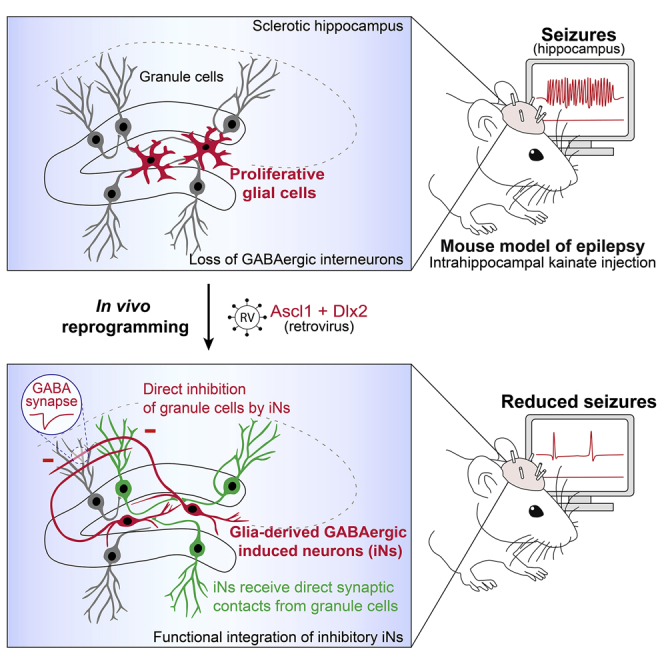
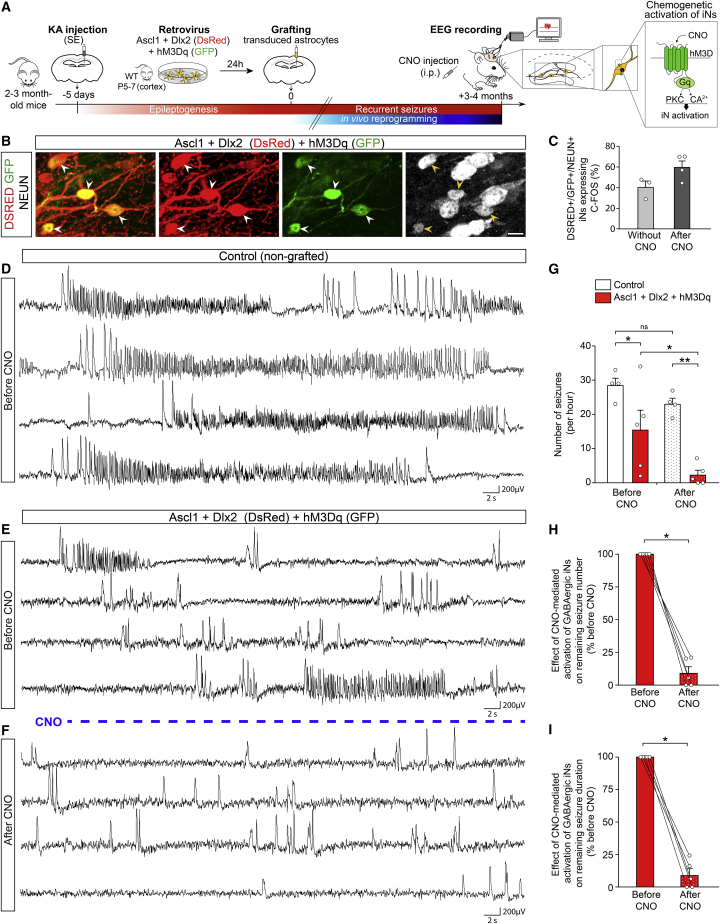
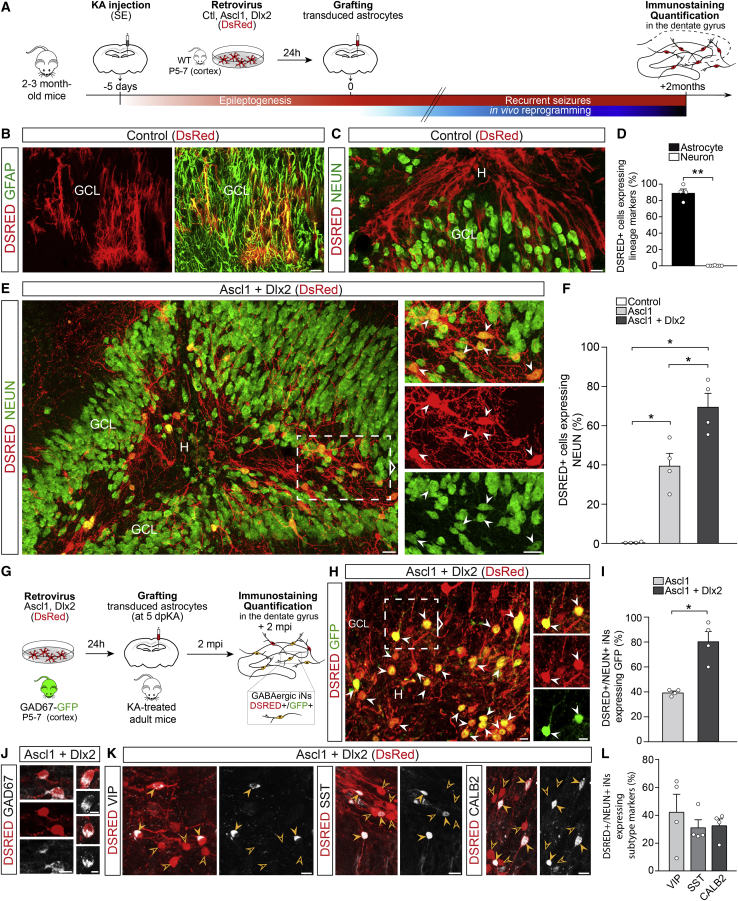
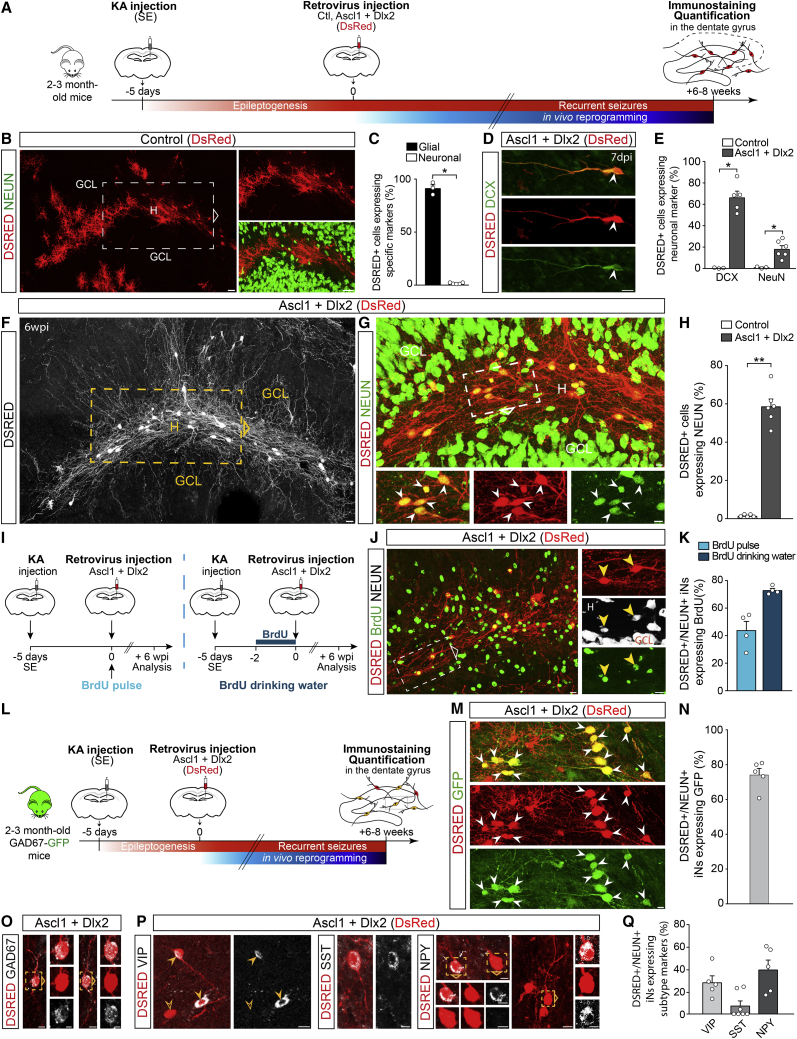
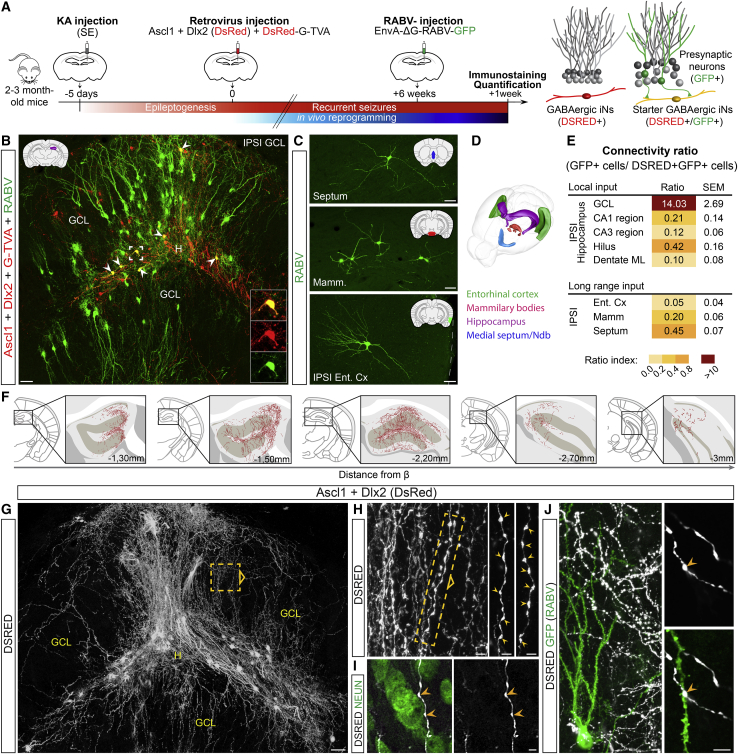
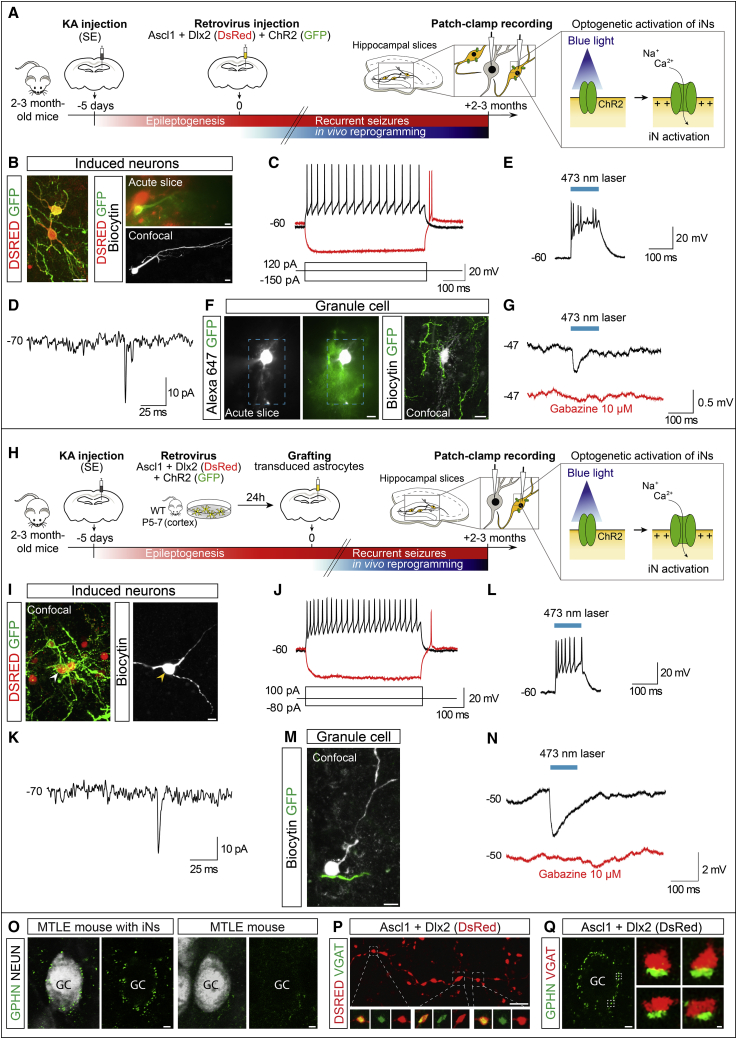
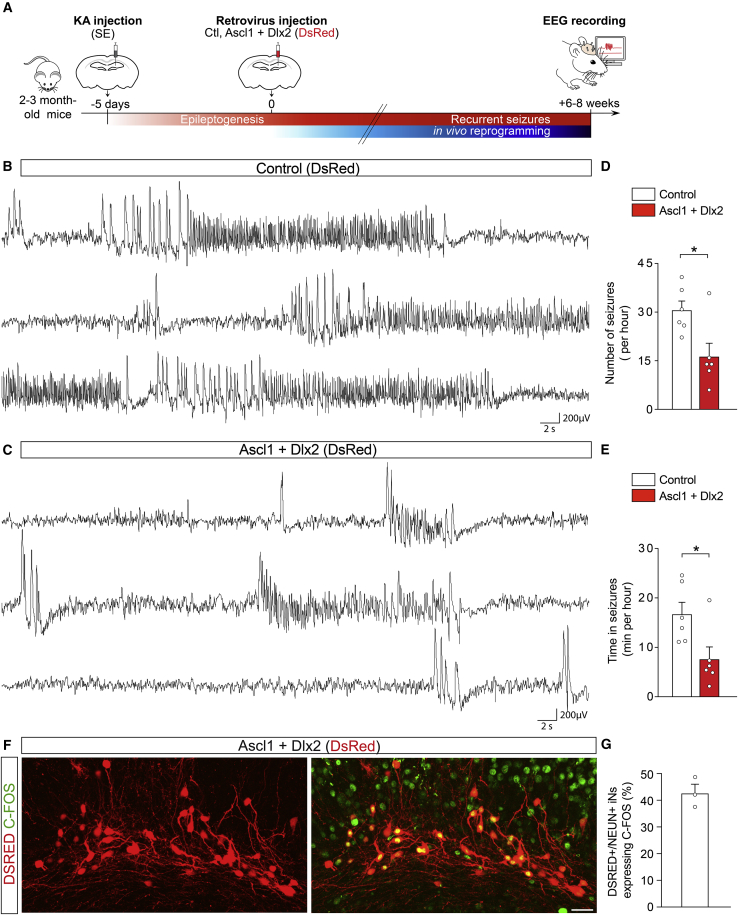
Reprogramming brain-resident glial cells into clinically relevant induced neurons (iNs) is an emerging strategy toward replacing lost neurons and restoring lost brain functions. A fundamental question is now whether iNs can promote functional recovery in pathological contexts. We addressed this question in the context of therapy-resistant mesial temporal lobe epilepsy (MTLE), which is associated with hippocampal seizures and degeneration of hippocampal GABAergic interneurons. Using a MTLE mouse model, we show that retrovirus-driven expression of Ascl1 and Dlx2 in reactive hippocampal glia in situ, or in cortical astroglia grafted in the epileptic hippocampus, causes efficient reprogramming into iNs exhibiting hallmarks of interneurons. These induced interneurons functionally integrate into epileptic networks and establish GABAergic synapses onto dentate granule cells. MTLE mice with GABAergic iNs show a significant reduction in both the number and cumulative duration of spontaneous recurrent hippocampal seizures. Thus glia-to-neuron reprogramming is a potential disease-modifying strategy to reduce seizures in therapy-resistant epilepsy.
将脑内胶质细胞重编程为具有临床意义的诱导神经元(iNs)是一种替代丢失神经元和恢复丢失脑功能的新兴策略。现在的一个基本问题是 iNs 是否可以在病理环境中促进功能恢复。我们在治疗抵抗性内侧颞叶癫痫(MTLE)的背景下解决了这个问题,MTLE 与海马发作和海马 GABA 能中间神经元的退化有关。使用 MTLE 小鼠模型,我们表明,逆转录病毒驱动的 Ascl1 和 Dlx2 在反应性海马胶质细胞中的原位表达,或在癫痫海马中移植的皮质星形胶质细胞中表达,可有效地重编程为具有中间神经元特征的 iNs。这些诱导的中间神经元可有效整合到癫痫网络中,并在齿状回颗粒细胞上建立 GABA 能突触。具有 GABA 能 iNs 的 MTLE 小鼠自发性复发性海马发作的数量和累积持续时间均显著减少。因此,胶质细胞到神经元的重编程是一种潜在的疾病修饰策略,可以减少治疗抵抗性癫痫中的发作。