JSI Research and Training Institute, Inc., Addis Ababa, Ethiopia.
JSI Research and Training Institute, Inc., Boston, MA, USA.
Glob Health Sci Pract. 2021 Sep 30;9(3):668-681. doi: 10.9745/GHSP-D-20-00685.
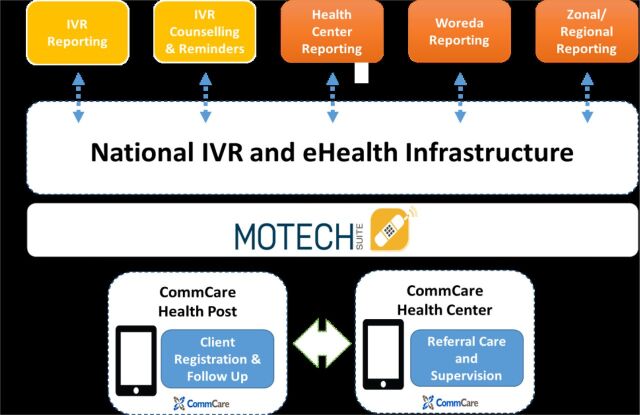
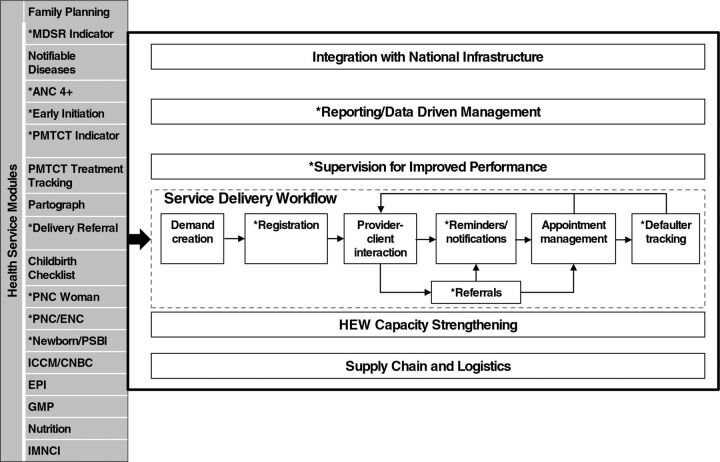
The Last Ten Kilometers 2020 Project (L10K 2020) designed a strategy for piloting, implementing, and scaling a mobile health (mHealth) digital solution to improve the quality of community-level maternal and child health service delivery in Ethiopia. L10K 2020 first conducted a landscape assessment to design a context-appropriate smartphone-based mHealth solution for the Health Extension Workers and tablets for their supervisors and the midwives managing the same clients at the health center level. These applications included multiple modules and packages including client registration and appointment management; follow-up and notifications; digital job aids for each of the maternal and child health program packages (for Health Extension Workers only); and referral and client tracking systems.Findings from the process evaluation of the mHealth app usage and user experience indicated that the application was user-friendly and facilitated real-time information exchange, defaulter tracing, referral, and feedback systems. It improved the timely identification and registration of pregnant mothers. Adherence to treatment protocols also increased in all domains across the pregnancy continuum of care.L10K 2020 has developed a user-friendly model for implementing mHealth solutions at the community level through stakeholder engagement across levels when developing, testing, and deploying the applications, which was critical to effectively cultivating ownership as well as skills and knowledge transfer at all levels. To replicate and scale this model, context-based scoping, resource analysis, and mapping are essential to determine the infrastructure, cost, time, risks, and key stakeholders involved throughout the implementation of the intervention. During implementation, vigilance in consistently mitigating the challenges related to mHealth infrastructure, such as mobile data capacity, electricity, smartphones and tablets, solar chargers, and internet connectivity, is critical for continued success.
2020 年最后十公里项目(L10K 2020)设计了一项策略,旨在试点、实施和扩大移动医疗(mHealth)数字解决方案,以提高埃塞俄比亚社区一级母婴保健服务的质量。L10K 2020 首先进行了景观评估,为卫生推广工作者设计了一个基于智能手机的适合国情的 mHealth 解决方案,为监督他们的主管和在卫生中心层面管理同一客户的助产士设计了平板电脑。这些应用程序包括多个模块和包,包括客户注册和预约管理;后续通知;每个母婴保健方案包的数字作业辅助工具(仅适用于卫生推广工作者);以及转诊和客户跟踪系统。从对 mHealth 应用程序使用情况和用户体验的过程评估中发现,该应用程序用户友好,便于实时信息交流、追查违约者、转诊和反馈系统。它改善了孕妇的及时识别和登记。在整个妊娠护理连续体中,所有领域的治疗方案依从性都有所提高。L10K 2020 通过在各级利益攸关方参与的情况下,开发、测试和部署应用程序,开发了一个在社区层面实施 mHealth 解决方案的用户友好模式,这对于在各级有效地培养所有权以及技能和知识转移至关重要。为了复制和扩大这种模式,基于上下文的范围界定、资源分析和映射对于确定基础设施、成本、时间、风险以及整个干预实施过程中涉及的关键利益攸关方至关重要。在实施过程中,必须保持警惕,不断减轻与 mHealth 基础设施相关的挑战,如移动数据容量、电力、智能手机和平板电脑、太阳能充电器和互联网连接,这对于持续成功至关重要。