Shanghai Institute of Hematology, State Key Laboratory of Medical Genomics, National Research Center for Translational Medicine at Shanghai, Ruijin Hospital Affiliated to Shanghai Jiao Tong University School of Medicine, Shanghai, China.
Department of Medical Oncology, Fudan University Shanghai Cancer Center, Shanghai, 200032, China.
Cell Death Dis. 2021 Oct 1;12(10):900. doi: 10.1038/s41419-021-04187-5.
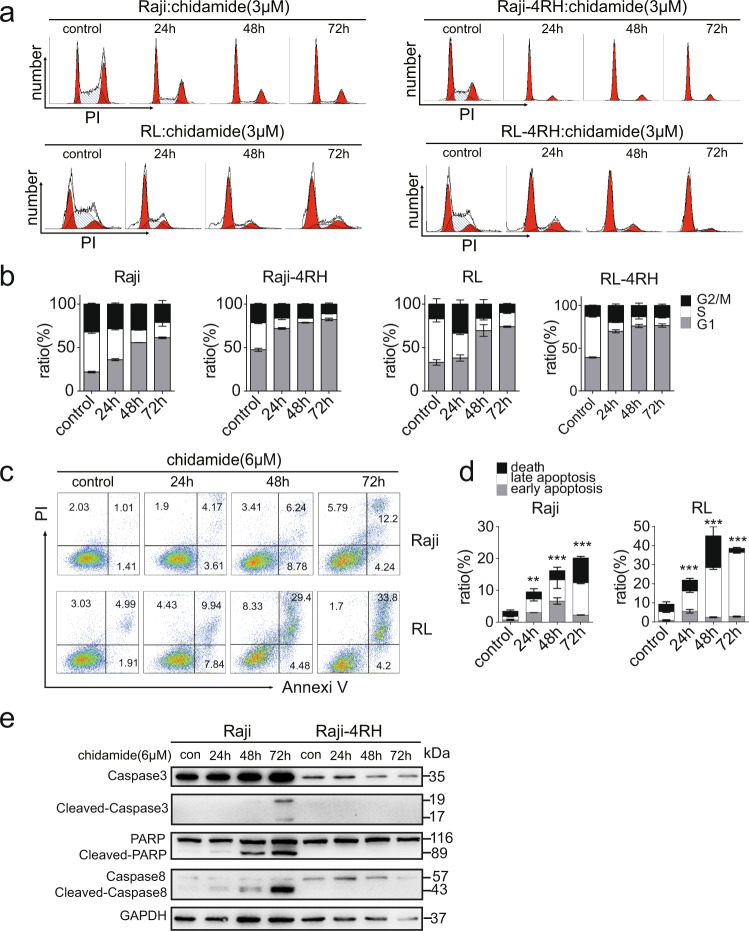
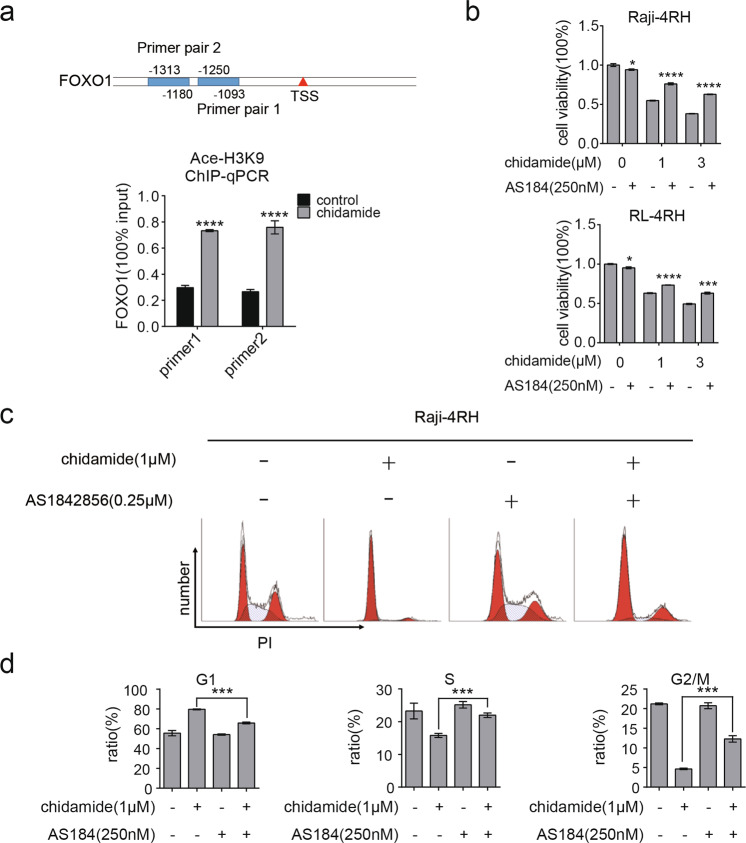
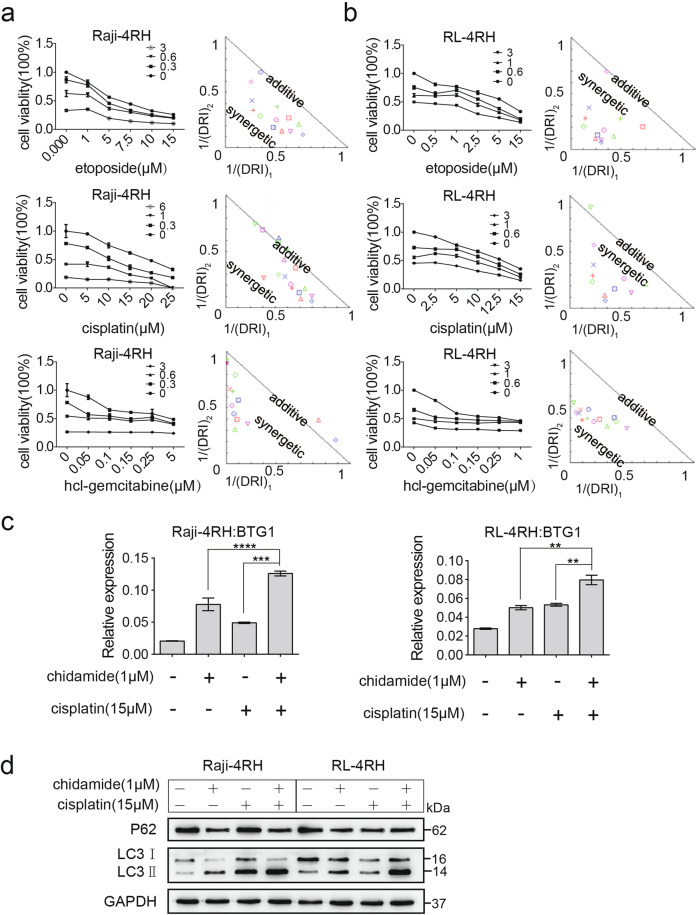
Rituximab/chemotherapy relapsed and refractory B cell lymphoma patients have a poor overall prognosis, and it is urgent to develop novel drugs for improving the therapy outcomes. Here, we examined the therapeutic effects of chidamide, a new histone deacetylase (HDAC) inhibitor, on the cell and mouse models of rituximab/chemotherapy resistant B-cell lymphoma. In Raji-4RH/RL-4RH cells, the rituximab/chemotherapy resistant B-cell lymphoma cell lines (RRCL), chidamide treatment induced growth inhibition and G0/G1 cell cycle arrest. The primary B-cell lymphoma cells from Rituximab/chemotherapy relapsed patients were sensitive to chidamide. Interestingly, chidamide triggered the cell death with the activation of autophagy in RRCLs, likely due to the lack of the pro-apoptotic proteins. Based on the RNA-seq and chromatin immunoprecipitation (ChIP) analysis, we identified BTG1 and FOXO1 as chidamide target genes, which control the autophagy and the cell cycle, respectively. Moreover, the combination of chidamide with the chemotherapy drug cisplatin increased growth inhibition on the RRCL in a synergistic manner, and significantly reduced the tumor burden of a mouse lymphoma model established with engraftment of RRCL. Taken together, these results provide a theoretic and mechanistic basis for further evaluation of the chidamide-based treatment in rituximab/chemotherapy relapsed and refractory B-cell lymphoma patients.
利妥昔单抗/化疗耐药的 B 细胞淋巴瘤患者总体预后较差,迫切需要开发新的药物来改善治疗效果。在这里,我们研究了组蛋白去乙酰化酶(HDAC)抑制剂西达本胺对利妥昔单抗/化疗耐药 B 细胞淋巴瘤细胞和小鼠模型的治疗作用。在 Raji-4RH/RL-4RH 细胞(利妥昔单抗/化疗耐药的 B 细胞淋巴瘤细胞系 [RRCL])中,西达本胺治疗诱导细胞生长抑制和 G0/G1 细胞周期停滞。利妥昔单抗/化疗复发患者的原发性 B 细胞淋巴瘤细胞对西达本胺敏感。有趣的是,西达本胺在 RRCL 中引发细胞死亡,同时激活自噬,可能是由于缺乏促凋亡蛋白。基于 RNA-seq 和染色质免疫沉淀(ChIP)分析,我们确定 BTG1 和 FOXO1 是西达本胺的靶基因,分别控制自噬和细胞周期。此外,西达本胺与化疗药物顺铂联合使用以协同方式增加对 RRCL 的生长抑制作用,并显著降低 RRCL 移植建立的小鼠淋巴瘤模型的肿瘤负担。总之,这些结果为进一步评估西达本胺在利妥昔单抗/化疗复发和难治性 B 细胞淋巴瘤患者中的治疗提供了理论和机制基础。