Department of Hearing Implant Sciences, Shinshu University School of Medicine, 3-1-1 Asahi, Matsumoto, 390-8621, Japan.
Hum Genet. 2022 Apr;141(3-4):665-681. doi: 10.1007/s00439-021-02371-3. Epub 2021 Oct 1.
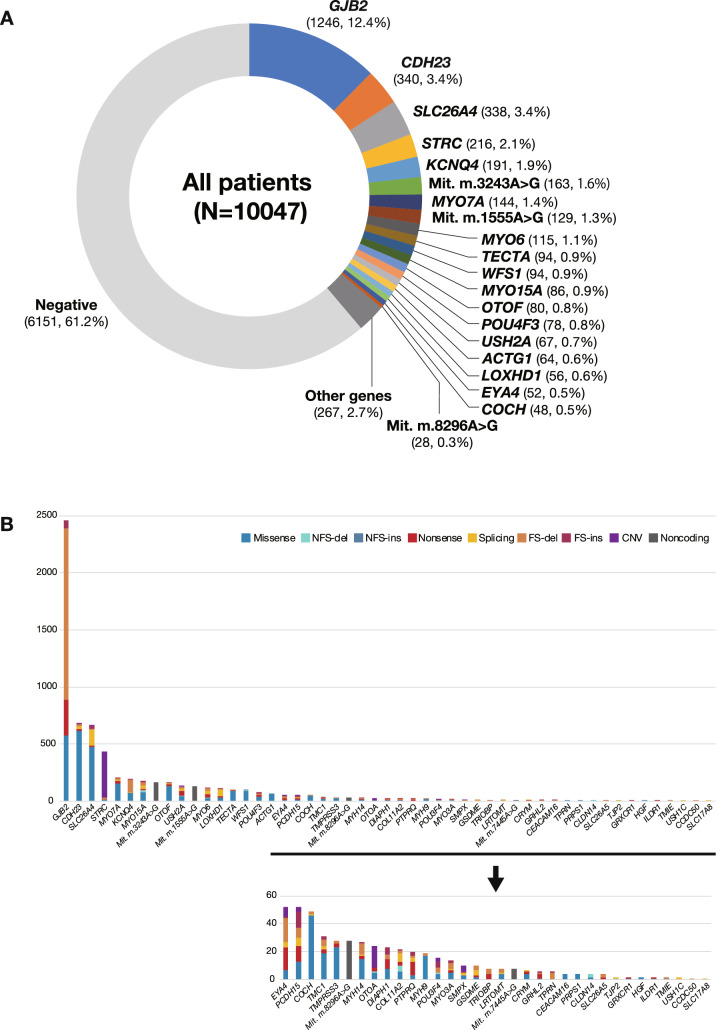
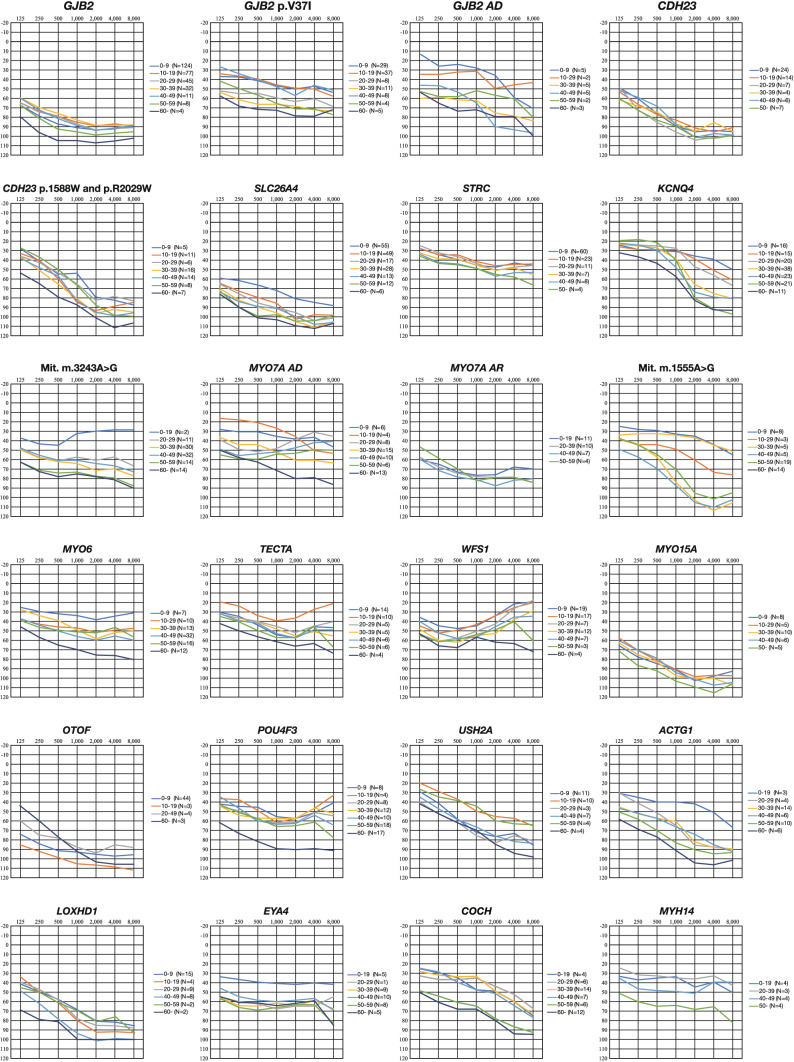
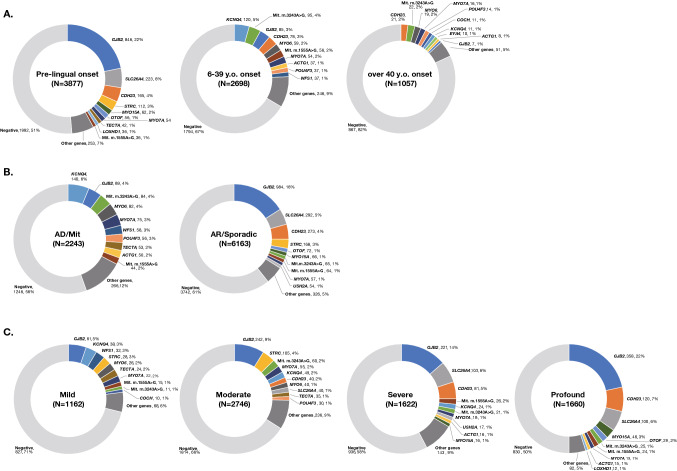
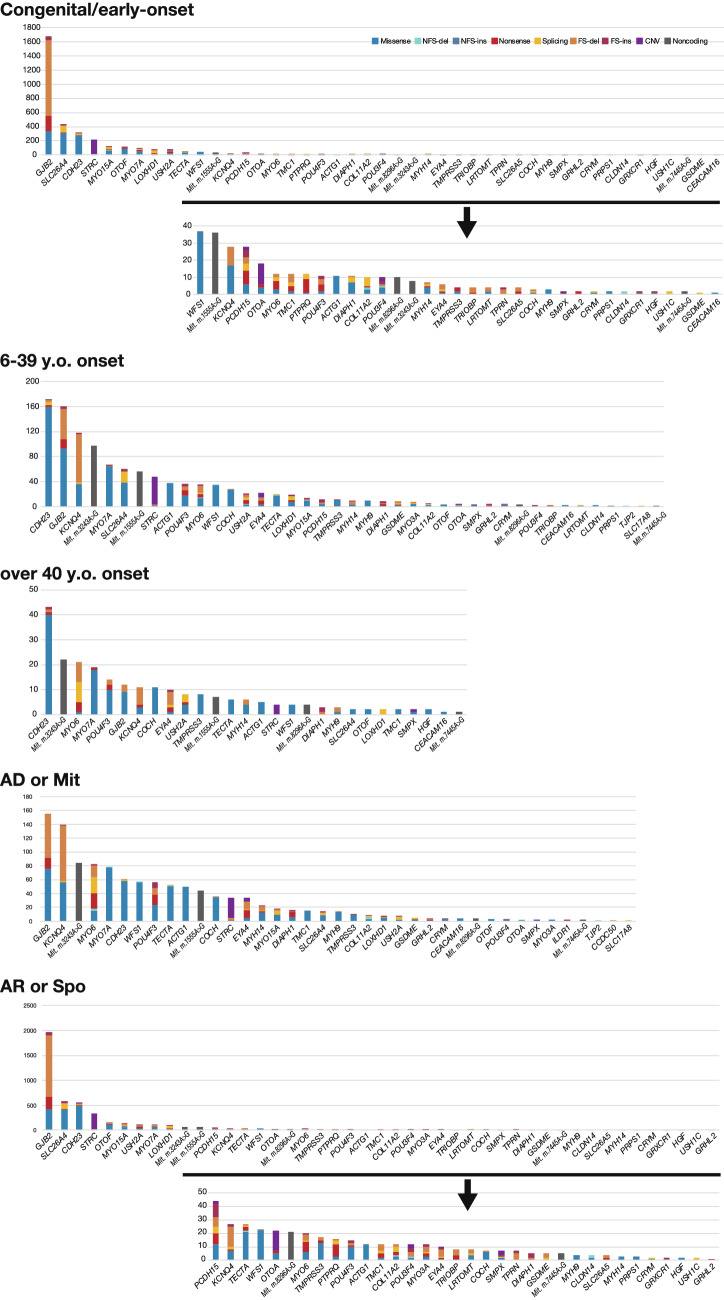
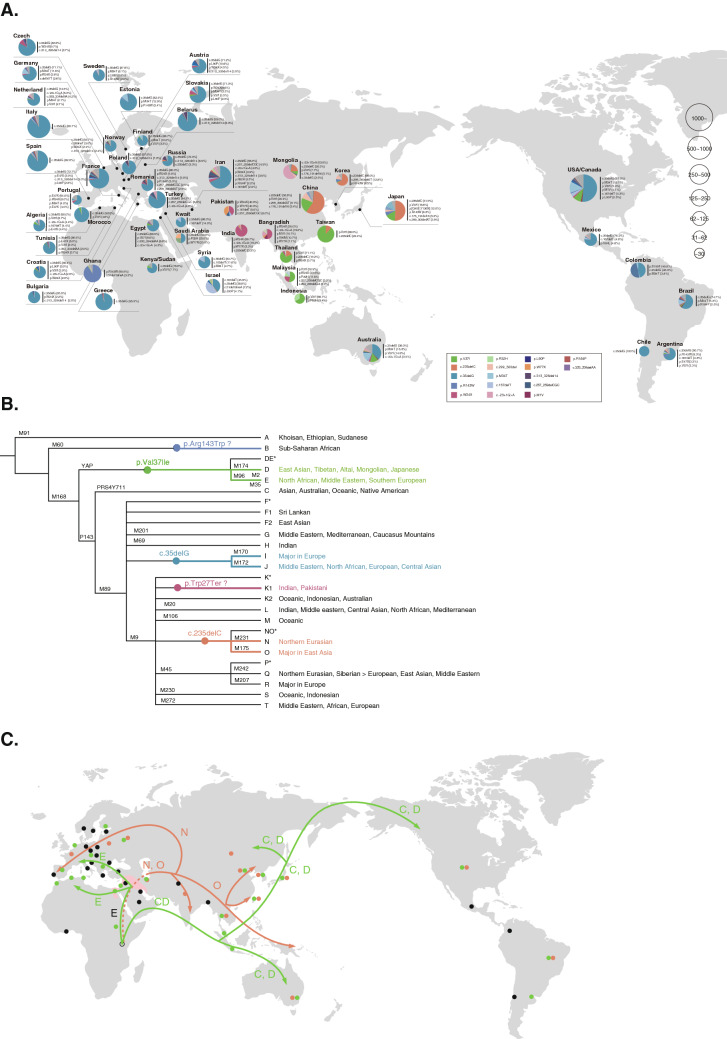
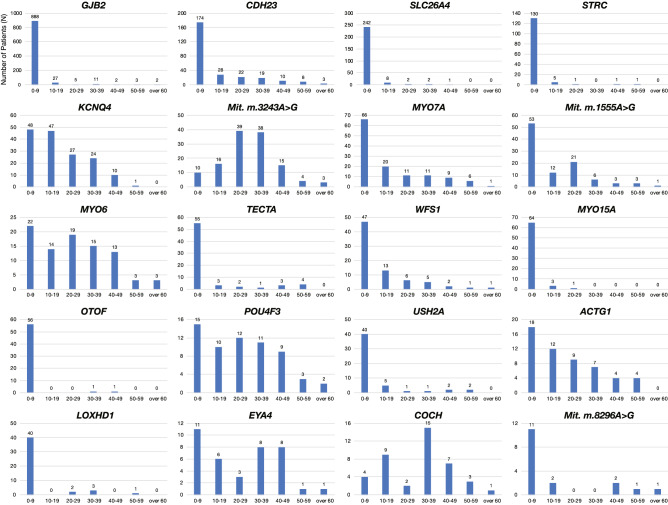
Etiological studies have shown genetic disorders to be a major cause of sensorineural hearing loss, but there are a limited number of comprehensive etiological reports based on genetic analysis. In the present study, the same platform using a diagnostic DNA panel carrying 63 deafness genes and the same filtering algorithm were applied to 10,047 samples obtained from social health insurance-based genetic testing of hearing loss. The most remarkable result obtained in this comprehensive study was that the data first clarified the genetic epidemiology from congenital/early-onset deafness to late-onset hearing loss. The overall diagnostic rate was 38.8%, with the rate differing for each age group; 48.6% for the congenital/early-onset group (~5y.o.), 33.5% for the juvenile/young adult-onset group, and 18.0% for the 40+ y.o. group. Interestingly, each group showed a different kind of causative gene. With regard to the mutational spectra, there are certain recurrent variants that may be due to founder effects or hot spots. A series of haplotype studies have shown many recurrent variants are due to founder effects, which is compatible with human migration. It should be noted that, regardless of differences in the mutational spectrum, the clinical characteristics caused by particular genes can be considered universal. This comprehensive review clarified the detailed clinical characteristics (onset age, severity, progressiveness, etc.) of hearing loss caused by each gene, and will provide useful information for future clinical application, including genetic counseling and selection of appropriate interventions.
病因研究表明,遗传疾病是感音神经性听力损失的主要原因,但基于遗传分析的综合病因报告数量有限。在本研究中,相同的平台使用了携带 63 个耳聋基因的诊断性 DNA 面板和相同的过滤算法,对来自社会医疗保险听力损失基因检测的 10047 个样本进行了分析。这项全面研究中最显著的结果是,数据首次阐明了从先天性/早发性耳聋到迟发性听力损失的遗传流行病学。总体诊断率为 38.8%,每个年龄组的诊断率不同;先天性/早发性组(~5 岁)为 48.6%,青少年/青年组为 33.5%,40 岁以上组为 18.0%。有趣的是,每个组都显示出不同的致病基因。关于突变谱,存在一些可能由于奠基者效应或热点而导致的常见变异。一系列单倍型研究表明,许多常见变异是由于奠基者效应所致,这与人类迁移相吻合。值得注意的是,无论突变谱的差异如何,特定基因引起的临床特征都可以被认为是普遍存在的。本综述详细阐明了每个基因引起的听力损失的临床特征(发病年龄、严重程度、进展性等),并将为未来的临床应用提供有用的信息,包括遗传咨询和选择适当的干预措施。