Shaheen Saira, Iqbal Azhar, Ikram Muhammad, Ul-Ain Kashaf, Naz Sadia, Ul-Hamid Anwar, Shahzadi Anum, Haider Ali, Nabgan Walid, Haider Junaid
Department of Physics, School of Science, University of Management and Technology, Lahore 54000, Pakistan.
Solar Cell Applications Research Lab, Government College University Lahore, Lahore 54000, Pakistan.
ACS Omega. 2021 Sep 20;6(38):24866-24878. doi: 10.1021/acsomega.1c03723. eCollection 2021 Sep 28.
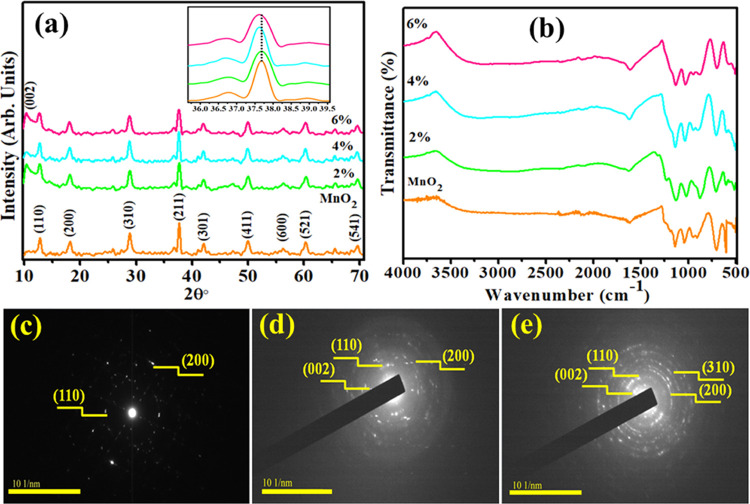
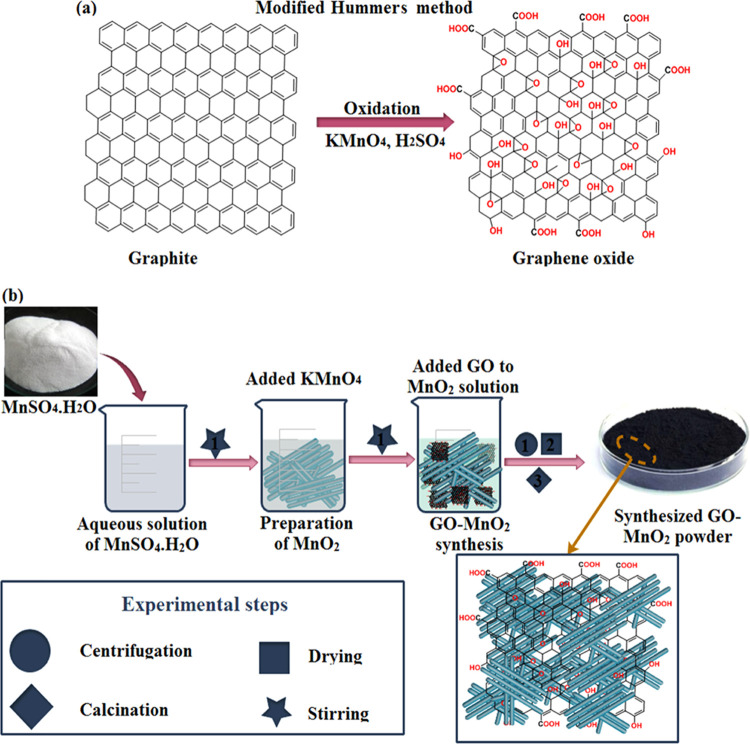
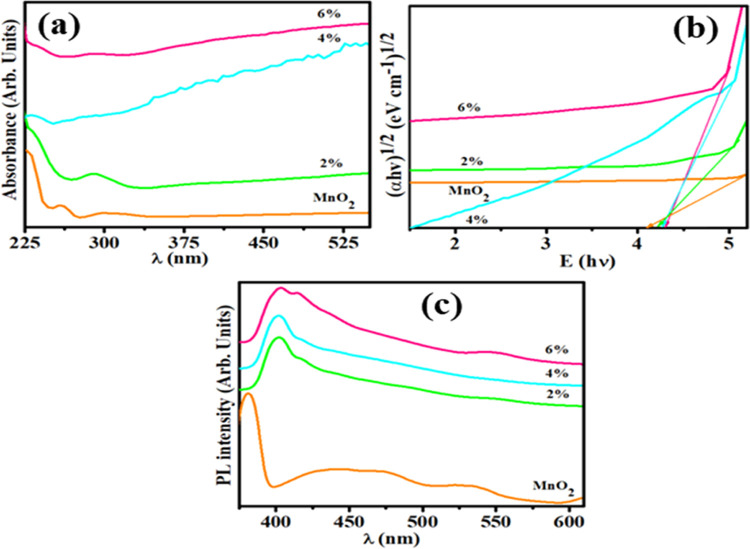
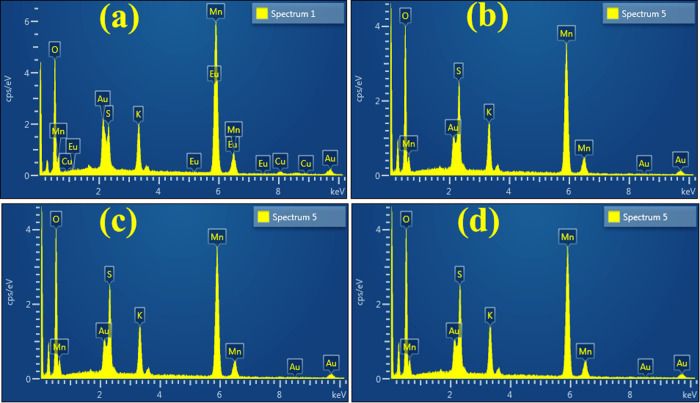
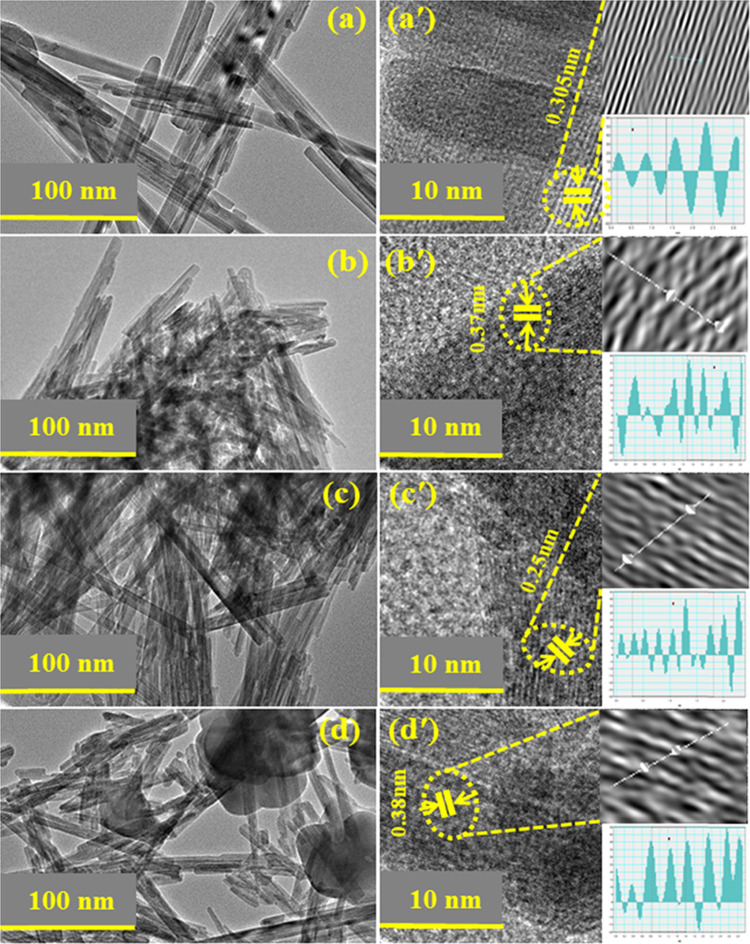
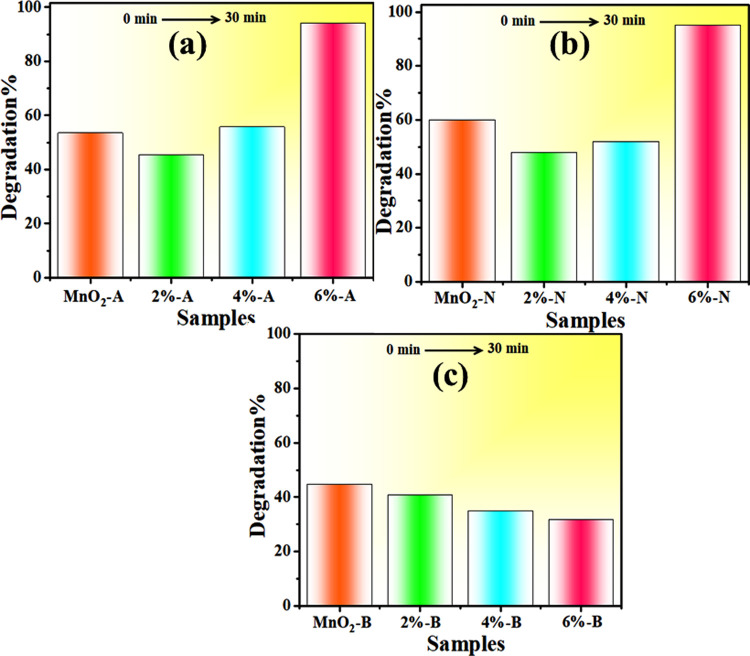
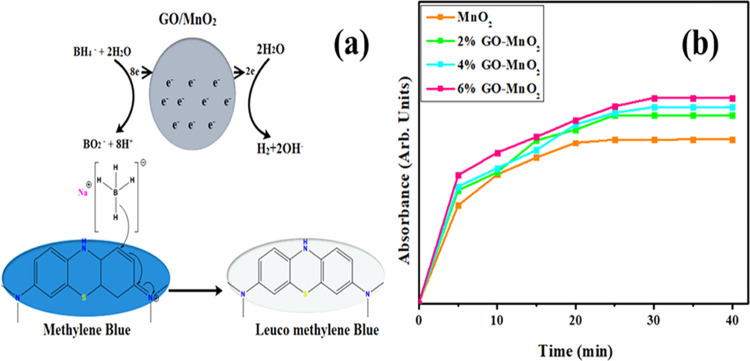
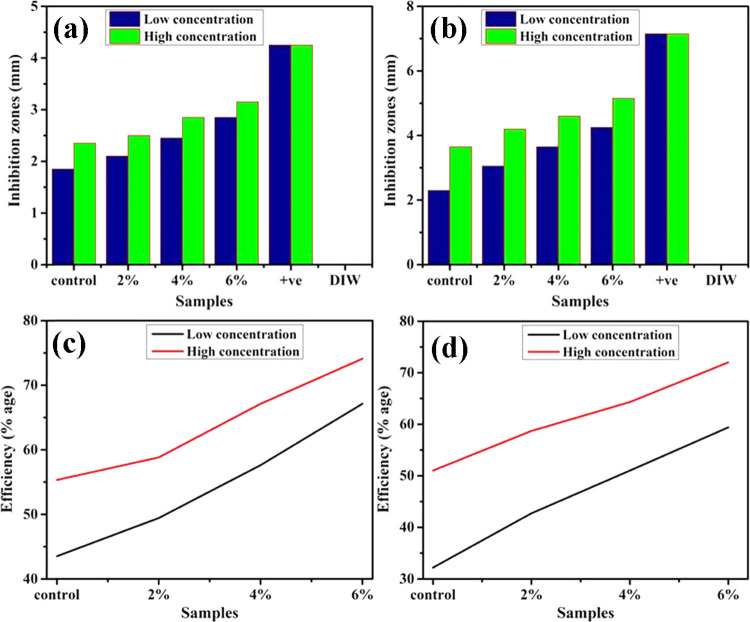
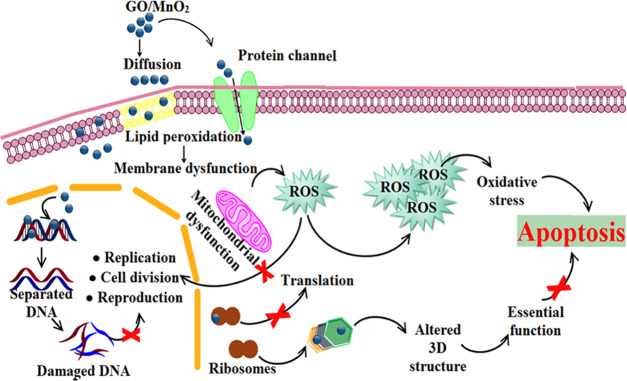
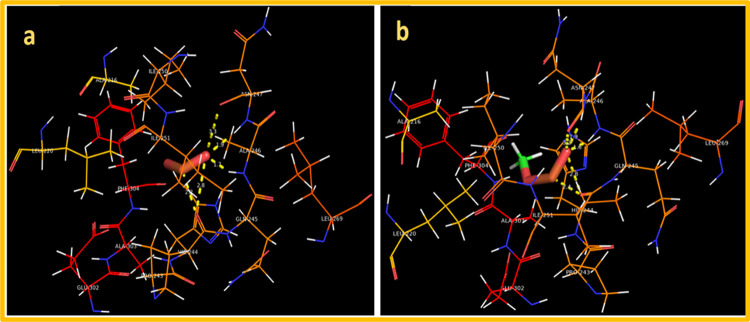
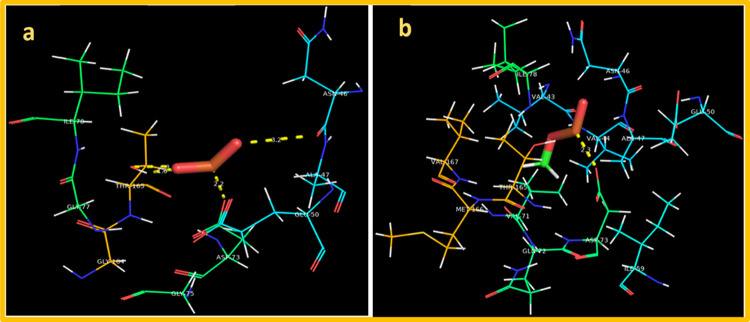
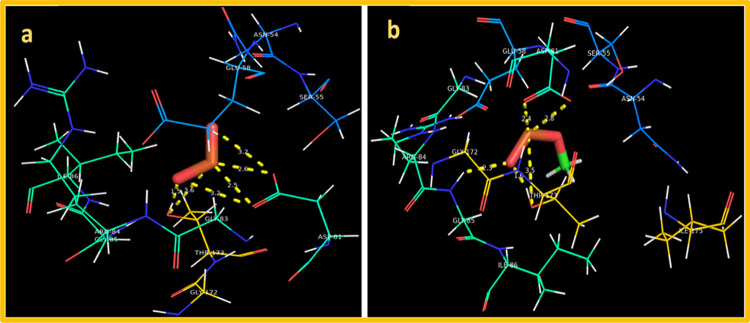
Graphene oxide (GO)-doped MnO nanorods loaded with 2, 4, and 6% GO were synthesized via the chemical precipitation route at room temperature. The aim of this work was to determine the catalytic and bactericidal activities of prepared nanocomposites. Structural, optical, and morphological properties as well as elemental composition of samples were investigated with advanced techniques such as X-ray diffraction (XRD), Fourier transform infrared (FTIR) spectroscopy, UV-visible (vis) spectroscopy, photoluminescence (PL), energy-dispersive spectrometry (EDS), and high-resolution transmission electron microscopy (HR-TEM). XRD measurements confirmed the monoclinic structure of MnO. Vibrational mode and rotational mode of functional groups (O-H, C=C, C-O, and Mn-O) were evaluated using FTIR results. Band gap energy and blueshift in the absorption spectra of MnO and GO-doped MnO were identified with UV-vis spectroscopy. Emission spectra were attained using PL spectroscopy, whereas elemental composition of prepared materials was recorded with scanning electron microscopy (SEM)-EDS. Moreover, HR-TEM micrographs of doped and undoped MnO revealed elongated nanorod-like structure. Efficient degradation of methylene blue enhanced the catalytic activity in the presence of a reducing agent (NaBH); this was attributed to the implantation of GO on MnO nanorods. Furthermore, substantial inhibition areas were measured for (EC) ranging 2.10-2.85 mm and 2.50-3.15 mm at decreased and increased levels for doped MnO nanorods and 3.05-4.25 mm and 4.20-5.15 mm for both attentions against SA, respectively. In silico molecular docking studies suggested the inhibition of FabH and DNA gyrase of and as a possible mechanism behind the bactericidal activity of MnO and MnO-doped GO nanoparticles (NPs).
通过化学沉淀法在室温下合成了负载2%、4%和6%氧化石墨烯(GO)的氧化锰(MnO)纳米棒。这项工作的目的是确定所制备的纳米复合材料的催化和杀菌活性。使用X射线衍射(XRD)、傅里叶变换红外(FTIR)光谱、紫外可见(vis)光谱、光致发光(PL)、能量色散光谱(EDS)和高分辨率透射电子显微镜(HR-TEM)等先进技术研究了样品的结构、光学和形态特性以及元素组成。XRD测量证实了MnO的单斜结构。利用FTIR结果评估了官能团(O-H、C=C、C-O和Mn-O)的振动模式和旋转模式。用紫外可见光谱确定了MnO和GO掺杂MnO吸收光谱中的带隙能量和蓝移。使用PL光谱获得发射光谱,而制备材料的元素组成用扫描电子显微镜(SEM)-EDS记录。此外,掺杂和未掺杂MnO的HR-TEM显微照片显示出细长的纳米棒状结构。亚甲基蓝的有效降解增强了在还原剂(NaBH)存在下的催化活性;这归因于GO在MnO纳米棒上的植入。此外,对于掺杂的MnO纳米棒,在浓度降低和升高时,对金黄色葡萄球菌(SA)的抑菌圈直径分别为2.10-2.85毫米和2.50-3.15毫米,而对于两种浓度的MnO掺杂GO纳米颗粒,抑菌圈直径分别为3.05-4.25毫米和4.20-5.15毫米。计算机模拟分子对接研究表明,抑制金黄色葡萄球菌的FabH和DNA促旋酶可能是MnO和MnO掺杂GO纳米颗粒(NPs)杀菌活性的潜在机制。