Lymphoma Program, Abramson Cancer Center, University of Pennsylvania, Philadelphia, PA, USA; and.
Center for Cellular Immunotherapies, Perelman School of Medicine, University of Pennsylvania, Philadelphia, PA, USA.
Blood Adv. 2021 Oct 26;5(20):4291-4302. doi: 10.1182/bloodadvances.2021005304.
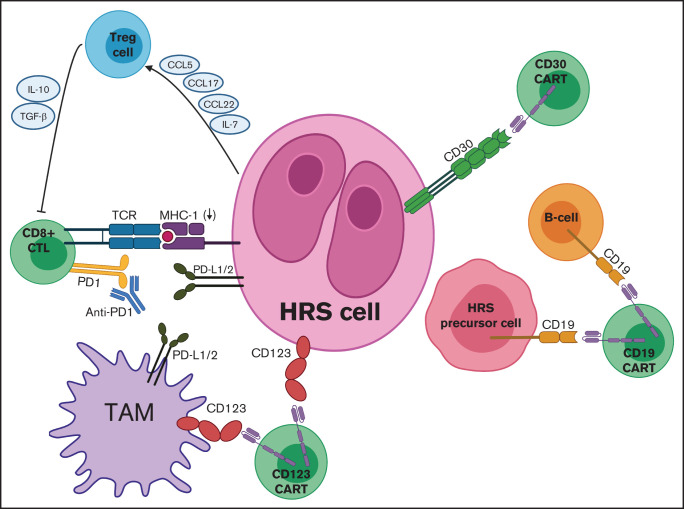
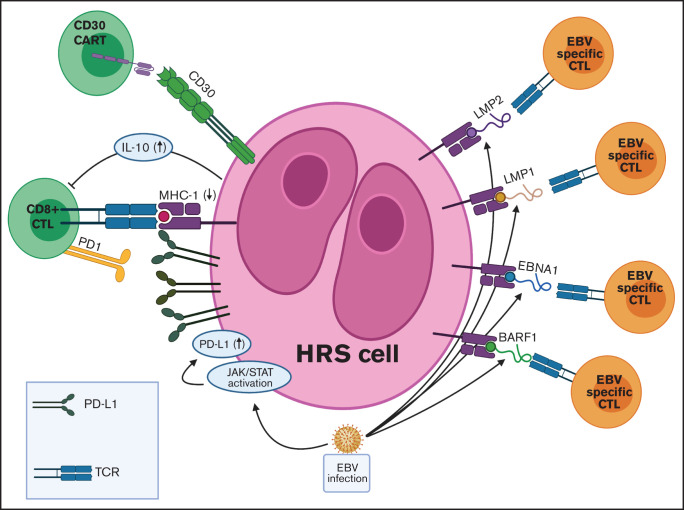
Although CAR T-cell therapy is US Food and Drug Administration-approved for B-cell non-Hodgkin lymphomas, the development of adoptive immunotherapy for the treatment of classic Hodgkin lymphoma (cHL) has not accelerated at a similar pace. Adoptive T-cell therapy with Epstein-Barr virus-specific cytotoxic T lymphocytes and CD30 CAR T cells have demonstrated significant clinical responses in early clinical trials of patients with cHL. Additionally, CD19 and CD123 CAR T cells that target the immunosuppressive tumor microenvironment in cHL have also been investigated. Here we discuss the landscape of clinical trials of adoptive immunotherapy for patients with cHL with a view toward current challenges and novel strategies to improve the development of CAR T-cell therapy for cHL.
尽管嵌合抗原受体 T 细胞(CAR T)疗法已获得美国食品和药物管理局(FDA)批准用于治疗 B 细胞非霍奇金淋巴瘤,但采用过继性免疫疗法治疗经典型霍奇金淋巴瘤(cHL)的进展速度却并未跟上。在 cHL 患者的早期临床试验中,针对 EBV 特异性细胞毒性 T 淋巴细胞和 CD30 CAR T 细胞的过继性 T 细胞疗法已显示出显著的临床疗效。此外,针对 cHL 中免疫抑制性肿瘤微环境的 CD19 和 CD123 CAR T 细胞也得到了研究。本文讨论了 cHL 患者过继免疫疗法的临床试验现状,以期了解当前的挑战和新策略,从而促进 cHL 的 CAR T 细胞疗法的发展。