Division of Protein and Nucleic Acid Chemistry, MRC Laboratory of Molecular Biology, Francis Crick Avenue, Cambridge CB2 0QH, UK; Department of Biochemistry, University of Oxford, South Parks Road, Oxford OX1 3QU, UK.
Ludwig Institute for Cancer Research, University of Oxford, Old Road Campus Research Building, Off-Roosevelt Drive, Oxford OX3 7DQ, UK.
Cell Rep. 2021 Oct 5;37(1):109777. doi: 10.1016/j.celrep.2021.109777.
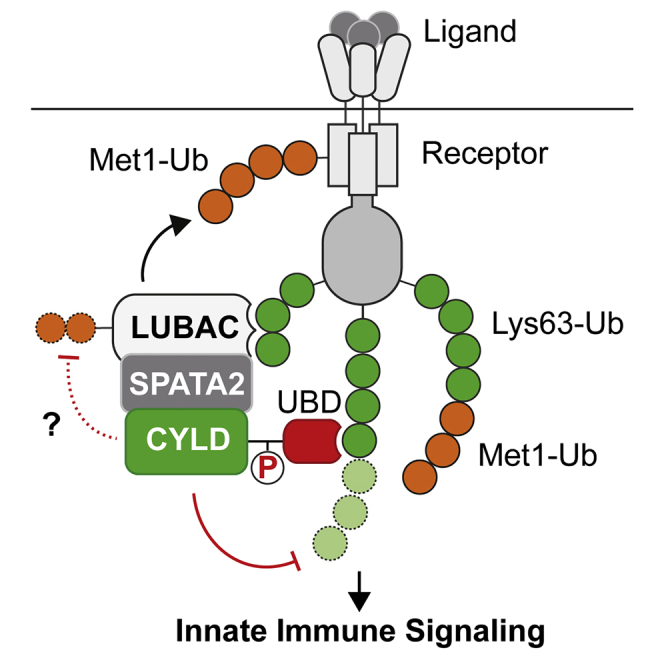
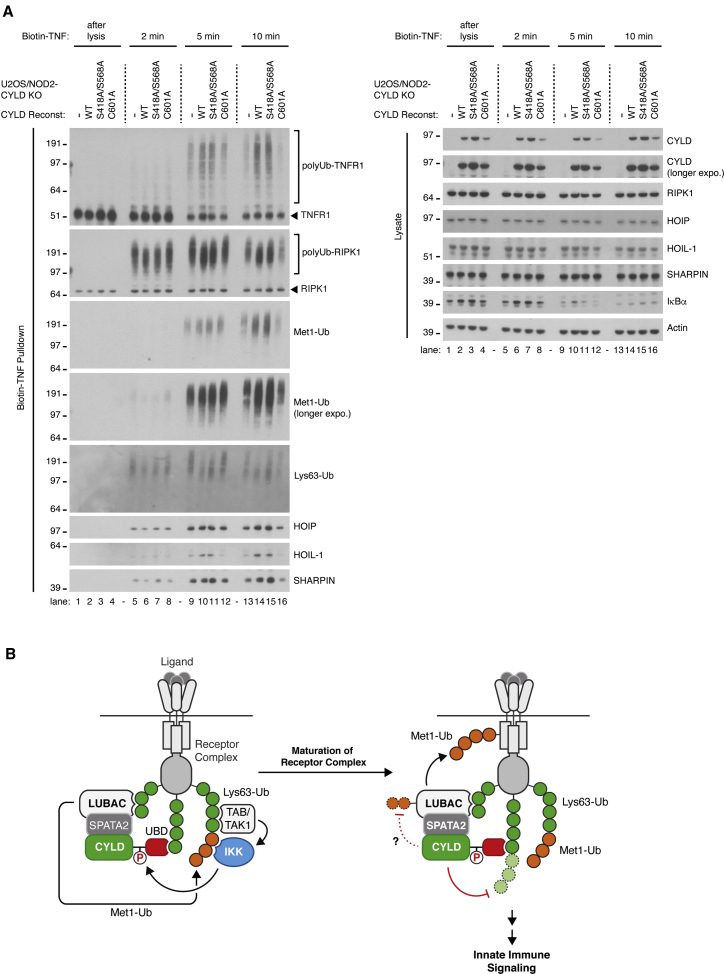
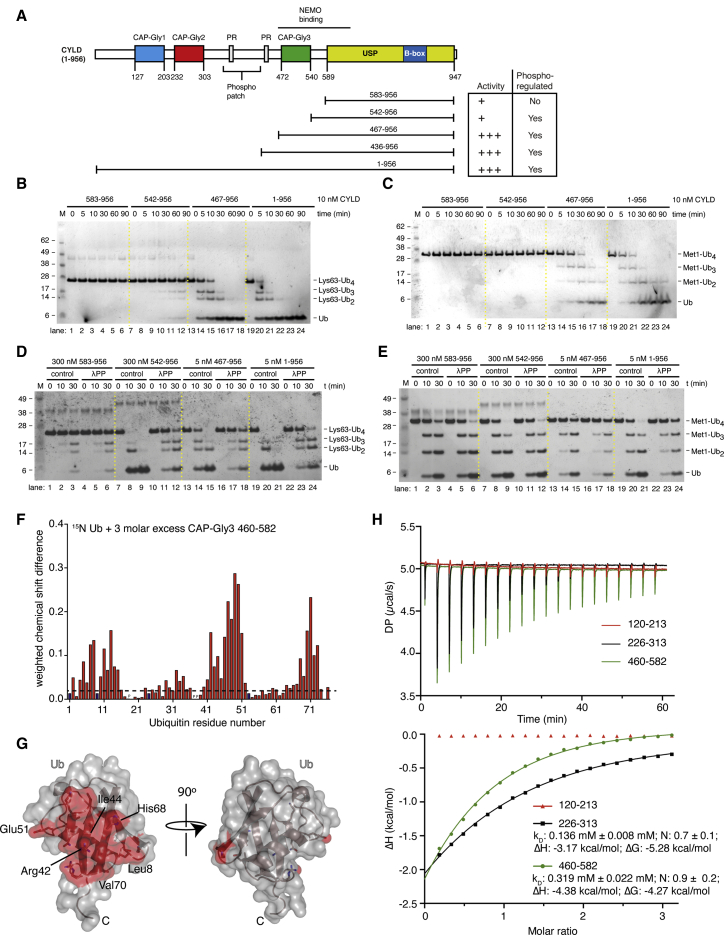
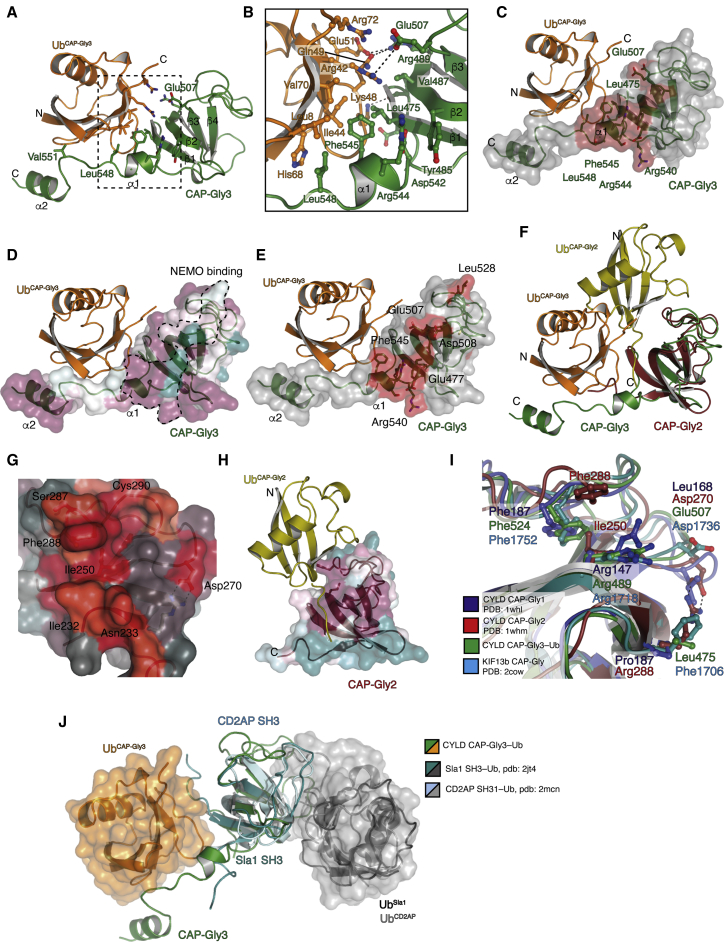
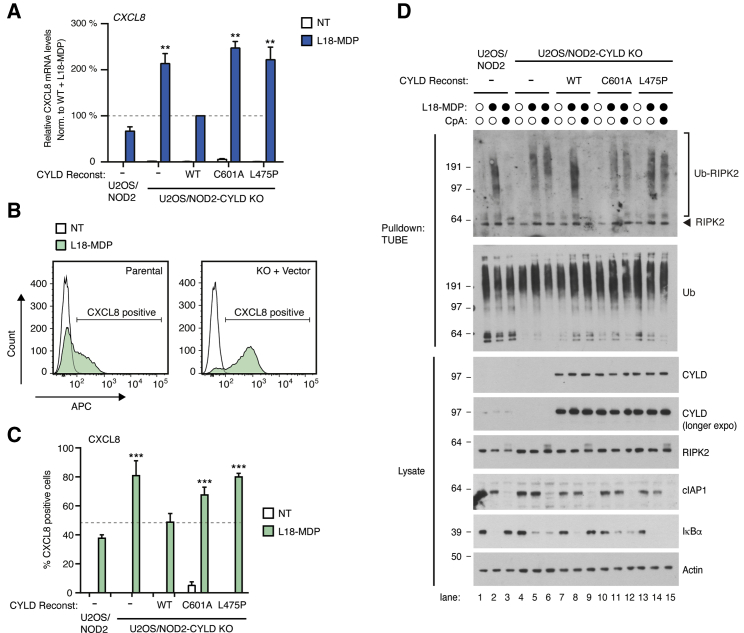
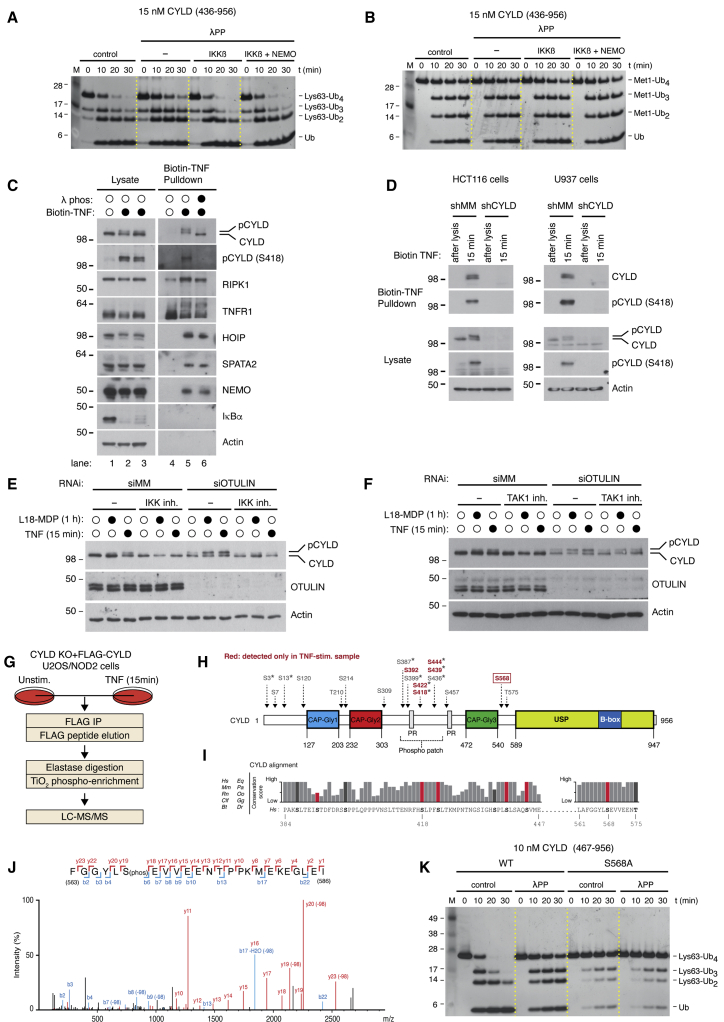
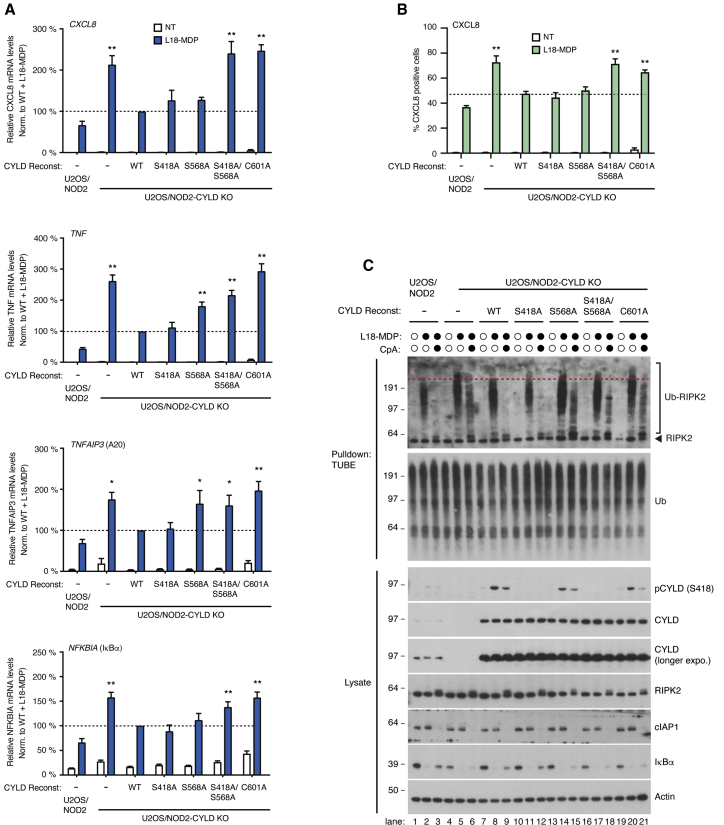
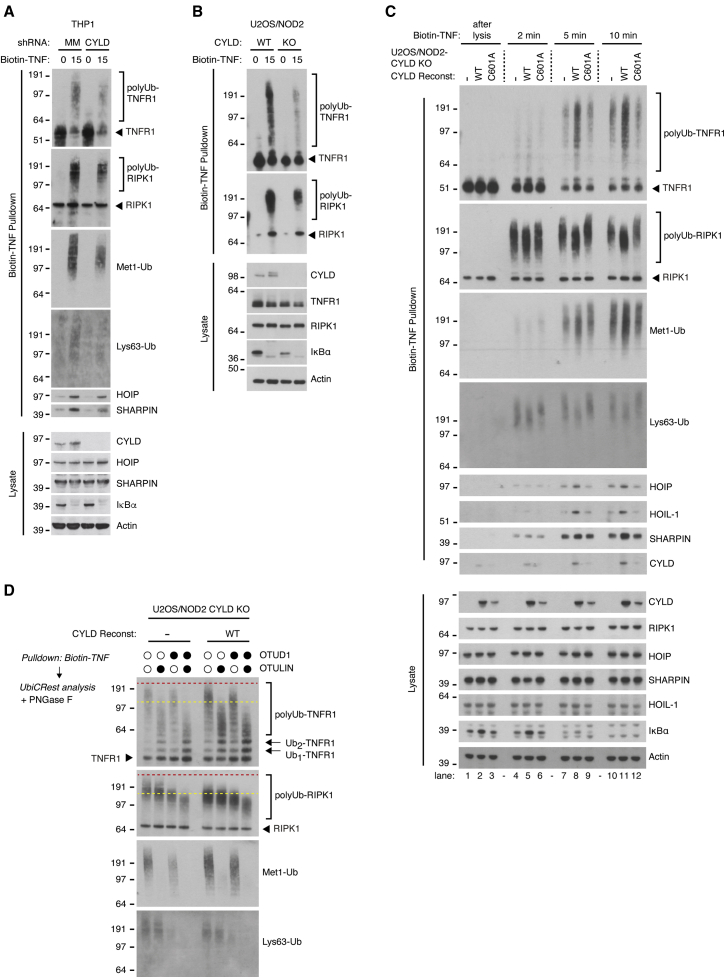
Non-degradative ubiquitin chains and phosphorylation events govern signaling responses by innate immune receptors. The deubiquitinase CYLD in complex with SPATA2 is recruited to receptor signaling complexes by the ubiquitin ligase LUBAC and regulates Met1- and Lys63-linked polyubiquitin and receptor signaling outcomes. Here, we investigate the molecular determinants of CYLD activity. We reveal that two CAP-Gly domains in CYLD are ubiquitin-binding domains and demonstrate a requirement of CAP-Gly3 for CYLD activity and regulation of immune receptor signaling. Moreover, we identify a phosphorylation switch outside of the catalytic USP domain, which activates CYLD toward Lys63-linked polyubiquitin. The phosphorylated residue Ser568 is a novel tumor necrosis factor (TNF)-regulated phosphorylation site in CYLD and works in concert with Ser418 to enable CYLD-mediated deubiquitination and immune receptor signaling. We propose that phosphorylated CYLD, together with SPATA2 and LUBAC, functions as a ubiquitin-editing complex that balances Lys63- and Met1-linked polyubiquitin at receptor signaling complexes to promote LUBAC signaling.
非降解泛素链和磷酸化事件调控先天免疫受体的信号反应。去泛素化酶 CYLD 与 SPATA2 复合物通过泛素连接酶 LUBAC 被招募到受体信号复合物,并调节 Met1-和 Lys63 连接的多泛素和受体信号转导结果。在这里,我们研究了 CYLD 活性的分子决定因素。我们揭示了 CYLD 中的两个 CAP-Gly 结构域是泛素结合结构域,并证明 CAP-Gly3 是 CYLD 活性和免疫受体信号转导调节所必需的。此外,我们在催化 USP 结构域外发现了一个磷酸化开关,该开关激活了 CYLD 对 Lys63 连接的多泛素的作用。磷酸化残基 Ser568 是 CYLD 中一个新的肿瘤坏死因子 (TNF) 调节磷酸化位点,与 Ser418 协同作用,使 CYLD 介导的去泛素化和免疫受体信号转导成为可能。我们提出,磷酸化的 CYLD 与 SPATA2 和 LUBAC 一起作为一个泛素编辑复合物,在受体信号复合物上平衡 Lys63-和 Met1-连接的多泛素,以促进 LUBAC 信号转导。