Hong Heejeong, Song Hyun-Kuk, Jang Bohee, Park Eunhye, Han Dong Soo, Kim Seong-Eun, Oh Eok-Soo
Department of Life Sciences, Ewha Womans University, Seoul, South Korea.
Department of Internal Medicine, Hanyang University College of Medicine, Guri, South Korea.
J Inflamm Res. 2021 Sep 29;14:4987-5000. doi: 10.2147/JIR.S329234. eCollection 2021.
Syndecan-2 expression is elevated during chronic inflammation and cancer development, and its shedding is observed in cancer patients. However, it remained unknown whether inflammation triggers syndecan-2 shedding.
The colitis model was produced in C57BL/6 mice by oral administration of 2-3% dextran sulfate sodium (DSS) in the drinking water. Syndecan-2 and MMP-7 expression levels in tissues and cells were detected by real-time PCR, Western blotting, and immunohistochemistry. Shed syndecan-2 levels were detected by slot blotting. For tissue culture, colon tissues were divided into proximal, transverse, and distal parts, and incubated in culture media.
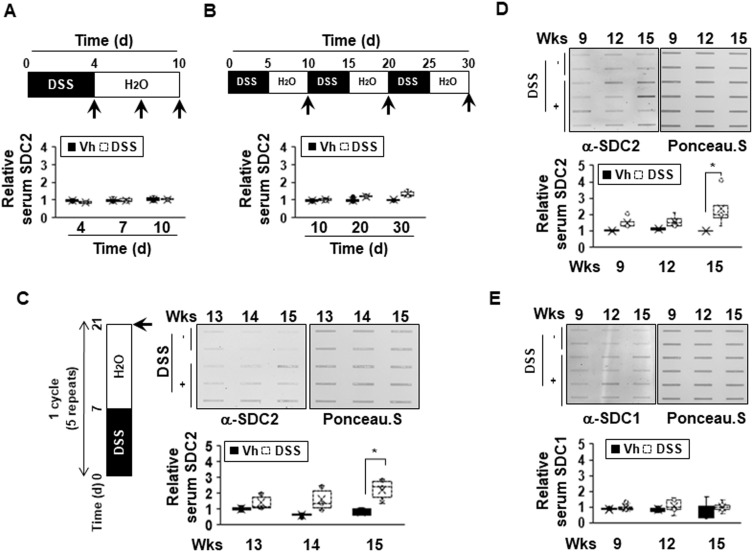
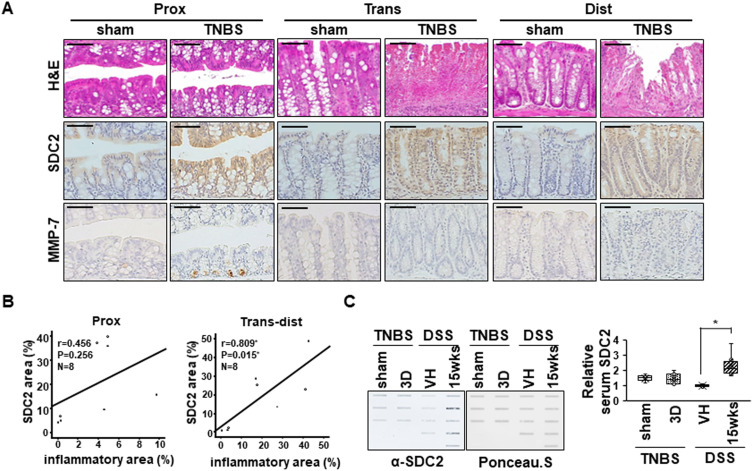
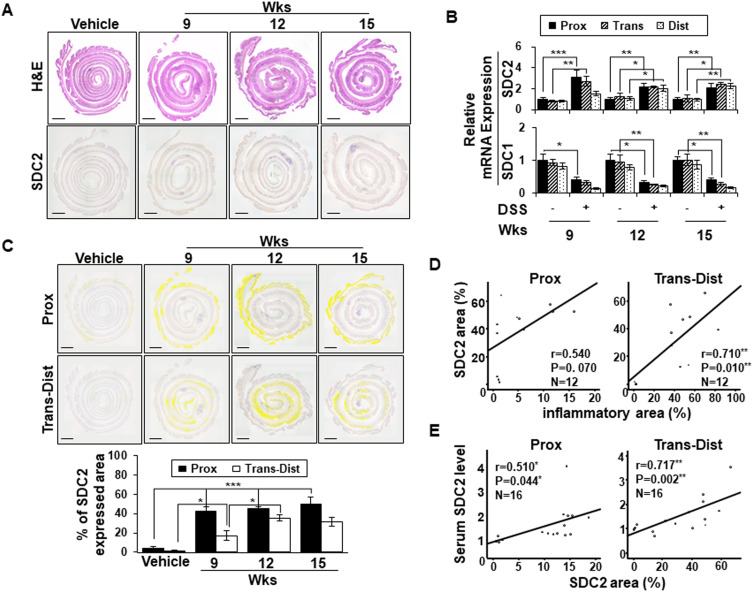
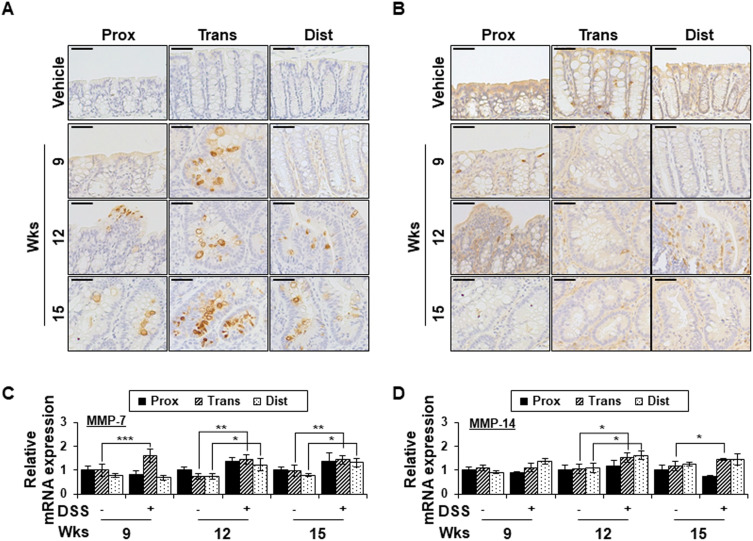
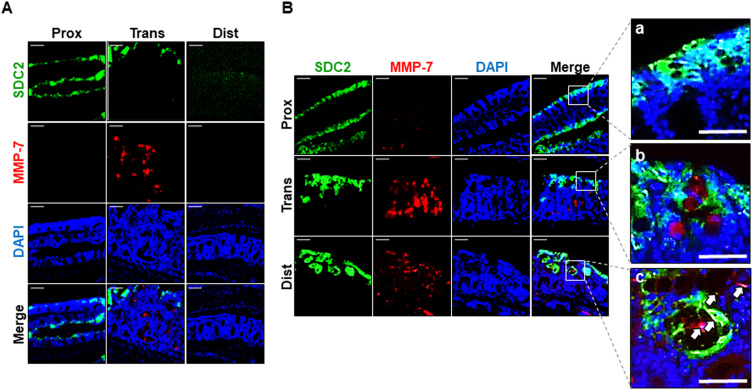
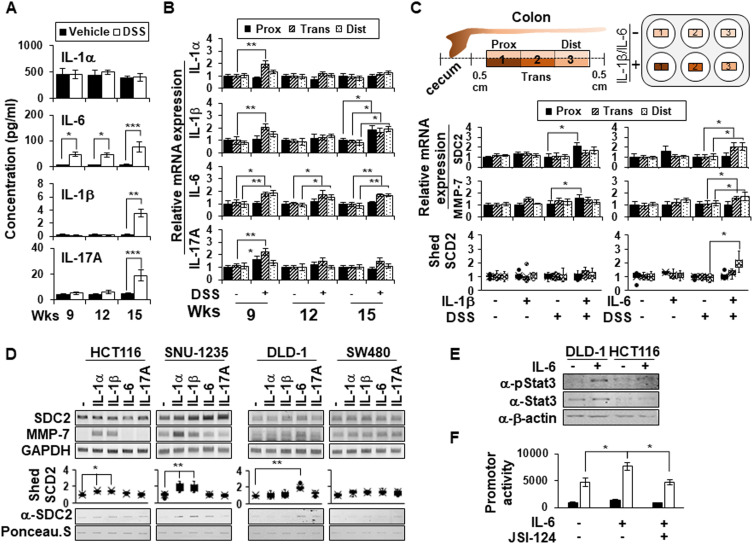
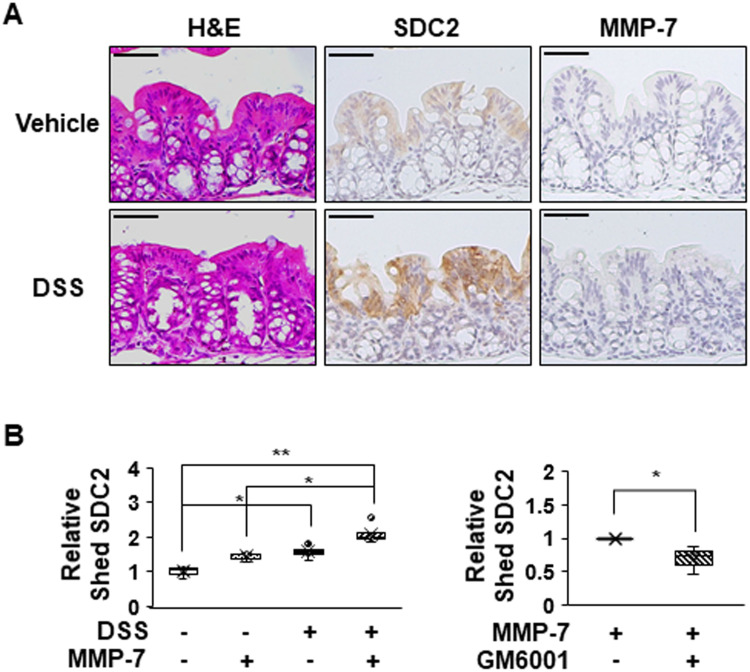
In C57BL/6 mice with DSS-induced colitis, syndecan-2 shedding began to increase after week 12 of chronic inflammation and continued to increase at week 15. The level of shed syndecan-2 correlated with the colocalization of syndecan-2 and MMP-7 in distal colon tissues. The mRNA expression of IL-6 was increased specifically in trans-distal colon tissues from weeks 9 to 15. IL-6 induced syndecan-2 expression and shedding and MMP-7 expression in ex vivo-cultured distal colon tissues and adenoma cell lines derived from the distal colon. IL-6 treatment induced STAT3 phosphorylation and MMP-7 expression in DLD-1 cells. The application of MMP-7 to ex vivo-cultured colon tissues increased the shedding of syndecan-2 to the culture medium.
Our findings suggest that chronic inflammation induces syndecan-2 shedding via the site-specific colocalization of syndecan-2 with MMP-7 in the distal colon.
Syndecan-2在慢性炎症和癌症发展过程中表达升高,且在癌症患者中观察到其脱落现象。然而,炎症是否触发Syndecan-2脱落仍不清楚。
通过在C57BL/6小鼠饮用水中口服2-3%硫酸葡聚糖钠(DSS)建立结肠炎模型。采用实时PCR、蛋白质印迹法和免疫组织化学检测组织和细胞中Syndecan-2和MMP-7的表达水平。通过狭缝印迹法检测脱落的Syndecan-2水平。对于组织培养,将结肠组织分为近端、横段和远端部分,并在培养基中孵育。
在DSS诱导的C57BL/6小鼠结肠炎中,慢性炎症12周后Syndecan-2脱落开始增加,并在第15周持续增加。脱落的Syndecan-2水平与远端结肠组织中Syndecan-2和MMP-7的共定位相关。从第9周到第15周,IL-6的mRNA表达在远端结肠组织中特异性增加。IL-6诱导体外培养的远端结肠组织和源自远端结肠的腺瘤细胞系中Syndecan-2的表达和脱落以及MMP-7的表达。IL-6处理诱导DLD-1细胞中STAT3磷酸化和MMP-7表达。将MMP-7应用于体外培养的结肠组织可增加Syndecan-2向培养基中的脱落。
我们的研究结果表明,慢性炎症通过远端结肠中Syndecan-2与MMP-7的位点特异性共定位诱导Syndecan-2脱落。